Table of Contents

The Universe Had a Minimum Size — And It Was Surprisingly Large
When we gaze into the night sky, we’re not just looking at stars and galaxies — we’re peering into the deep past. The light from distant galaxies has traveled for billions of years, crossing an expanding cosmos to reach our telescopes. The farthest we can see stretches back to just 380,000 years after the birth of the Universe — a time when the first light was finally able to travel freely through space. But what if we could rewind the clock even further? What did the Universe look like at the very beginning of the hot Big Bang? Contrary to popular belief, it wasn’t infinitely small. In fact, the early Universe had a minimum possible size — a hard limit imposed by the laws of physics. This revelation challenges the long-standing image of a singularity and opens a new window into understanding the true nature of cosmic origins.
The Observable Universe: A Cosmic Horizon
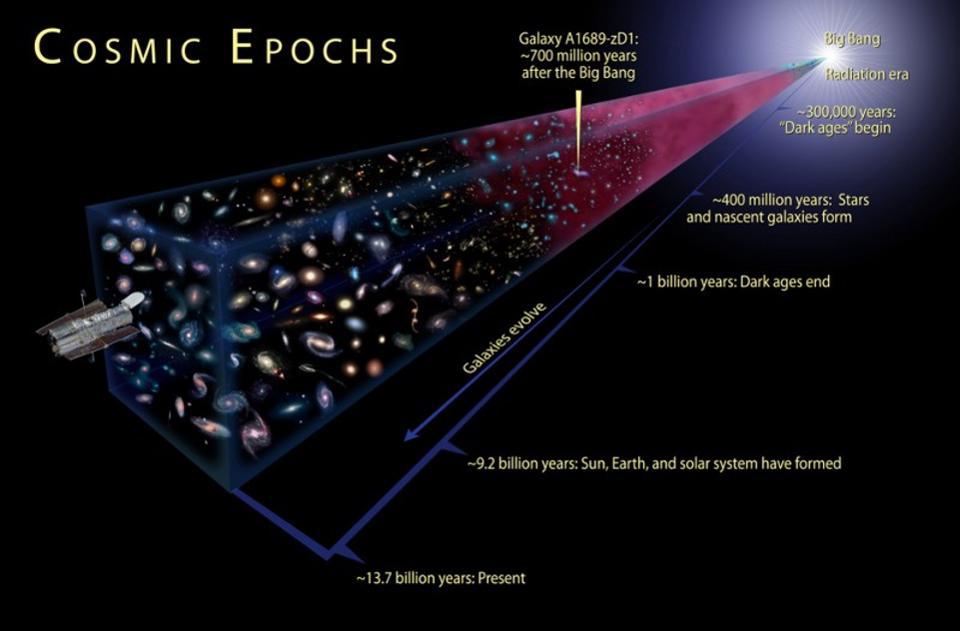
Our view of the cosmos is limited not by technology, but by the fundamental properties of space and time. The observable Universe — the region from which light has had time to reach us since the Big Bang — spans about 93 billion light-years in diameter. That’s a sphere so vast it contains over 2 trillion galaxies, each with billions of stars. Yet, this observable patch is just a tiny fraction of the entire Universe, which may well be infinite in extent.
The most ancient light we detect is the Cosmic Microwave Background (CMB), a faint glow left over from the hot, dense early Universe. This radiation was emitted when the Universe was just 380,000 years old, at a time when atoms first formed and photons could travel freely. Today, that light has been stretched by the expansion of space into microwave wavelengths, and it comes to us from a distance of about 46.1 billion light-years away. How can something emitted 13.8 billion years ago now be 46 billion light-years away? Because space itself has been stretching during the light’s journey.
As time goes on, we’ll be able to see even farther. Light currently on its way to us from regions now 61 billion light-years away will eventually arrive, expanding our cosmic horizon. But no matter how much time passes, there will always be a limit — a boundary beyond which light hasn’t had time to reach us. This is known as the cosmic event horizon, and it’s a direct consequence of the finite speed of light and the accelerating expansion of the Universe.
Why the Big Bang Wasn’t a Singularity
For decades, the Big Bang was imagined as a point of infinite density and temperature — a singularity where all known laws of physics break down. But modern cosmology suggests a different story. While the early Universe was unimaginably hot and dense, it was not infinitely small. Instead, there’s a minimum size it could have had — a lower limit set by quantum mechanics and the nature of spacetime itself.
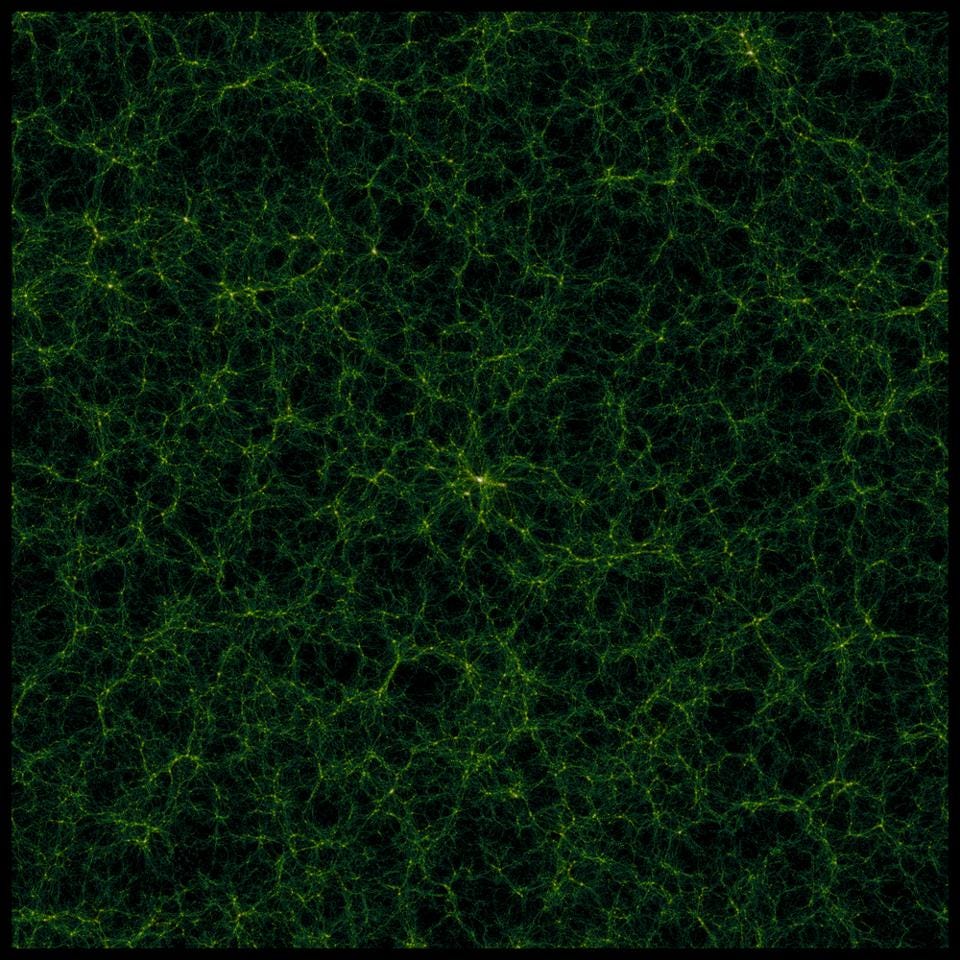
This insight comes from combining Einstein’s theory of general relativity with quantum physics. General relativity describes gravity as the curvature of spacetime caused by mass and energy. It works beautifully on large scales, predicting the expansion of the Universe, black holes, and gravitational waves. But when we try to apply it to the very beginning — to scales smaller than the Planck length (about 1.6 × 10⁻³⁵ meters) — it fails. At such tiny scales, quantum effects dominate, and spacetime itself may become grainy or foamy.
Because of this, physicists believe that the Universe could not have been smaller than a certain quantum scale at the moment of the hot Big Bang. This doesn’t mean the Big Bang was “small” in the everyday sense — it means that infinite density is unphysical. Instead, the Universe began in a state of extreme but finite density, with a size governed by quantum gravity effects we’re only beginning to understand.
The Role of Cosmic Inflation
To understand why the early Universe had a minimum size, we must consider cosmic inflation — a theory proposing that the Universe underwent a brief but explosive expansion in the first fraction of a second after the Big Bang. During this period, space expanded by a factor of at least 10²⁶ — possibly much more — in less than 10⁻³² seconds.
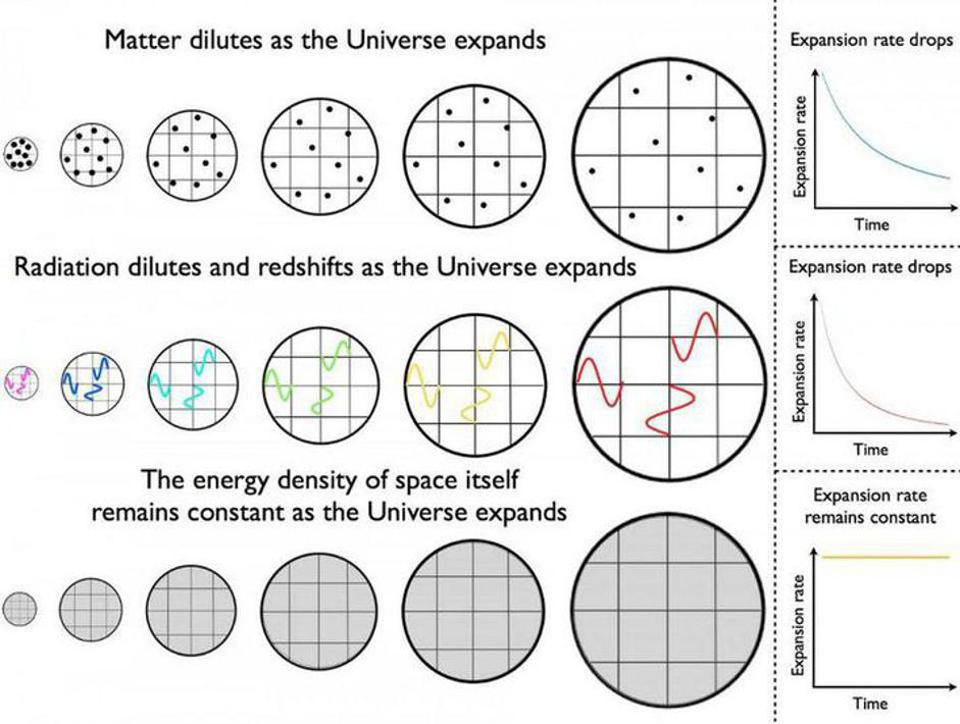
Inflation solves several cosmological puzzles: it explains why the Universe appears so uniform, why it’s flat, and why there are no magnetic monopoles. But more importantly for our discussion, inflation implies that the pre-inflationary Universe — the region that inflated to become our observable cosmos — was already much larger than a single point.
The entire observable Universe came from a region smaller than a proton before inflation.
Quantum fluctuations during inflation became the seeds for galaxy formation.
Inflation predicts a flat Universe — confirmed by CMB observations.
Without inflation, the Big Bang singularity problem would be even more severe.
Because inflation stretched quantum fluctuations into macroscopic density variations, it also means that the Universe before inflation must have had a finite size — one large enough to contain these quantum fields. Thus, even at the very beginning, the Universe wasn’t a mathematical point. It was a quantum system with a minimum scale.
The Minimum Size: A Quantum Limit
So what is the smallest the Universe could have been? While we don’t have a complete theory of quantum gravity, current models suggest that the minimum size of the early Universe was on the order of the Hubble radius at that time — the distance over which causal processes could operate.

At the moment of the hot Big Bang, the Hubble radius was incredibly small — perhaps just a few centimeters across. But this is still vastly larger than a singularity. For comparison, a singularity would be smaller than a single subatomic particle. A few centimeters, while tiny by cosmic standards, is enormous in quantum terms.
This minimum size is also tied to the entropy of the early Universe. The second law of thermodynamics tells us that entropy — a measure of disorder — always increases. The early Universe had extremely low entropy, which is why it was able to evolve into the structured cosmos we see today. But if the Universe had started at a singularity, its entropy would have been zero — a condition that violates quantum mechanics.
Thus, the minimum size of the Universe isn’t just a mathematical curiosity — it’s a physical necessity. It ensures that the laws of thermodynamics and quantum mechanics remain valid, even at the dawn of time.
Implications for the Origin of Everything
The idea that the Universe had a minimum size reshapes our understanding of cosmic origins. It suggests that the Big Bang wasn’t the beginning of space and time, but rather a phase transition — a moment when the Universe entered a hot, dense, radiation-dominated state. Before that, something else may have existed: perhaps a quantum state, a prior contracting phase, or even a multiverse.
Some theories, like loop quantum cosmology, propose that the Big Bang was actually a “Big Bounce” — a rebound from a previous collapsing phase. In such models, the Universe never reaches infinite density; instead, quantum effects cause a reversal at a finite size. Others suggest that our Universe emerged from a quantum fluctuation in a larger “parent” spacetime.
These ideas are still speculative, but they’re supported by mathematical consistency and indirect evidence. For example, the BICEP/Keck experiments have searched for primordial gravitational waves — ripples in spacetime from inflation — which could provide clues about the quantum nature of the early Universe.
Looking Ahead: The Future of Cosmic Origins
As our telescopes grow more powerful and our theories more refined, we’re getting closer to understanding what happened in the first moments after the Big Bang. Upcoming missions like the James Webb Space Telescope and future CMB observatories (such as CMB-S4) will map the Universe’s earliest light with unprecedented precision, potentially revealing signatures of quantum gravity.
Meanwhile, advances in quantum computing and string theory may help us simulate the conditions of the early Universe, testing whether a minimum size is required by the math. Some researchers even propose that the holographic principle — the idea that the Universe is like a 3D projection of information encoded on a 2D surface — could explain why there’s a fundamental limit to how small space can be.
Ultimately, the realization that the Universe had a minimum size is a reminder that nature abhors infinities. From black holes to the Big Bang, the cosmos operates within physical limits — boundaries that keep the laws of physics intact. And while we may never see the very first moment, we can be confident that it wasn’t a point of nothingness. It was a quantum realm — finite, hot, and brimming with the potential to become everything we know.
The story of the Universe isn’t one of infinite collapse, but of finite beginnings and infinite possibilities.
This article was curated from Space wasn’t infinitely small when the hot Big Bang began via Big Think