Table of Contents
- The Human Blind Spot: Why America’s Inability to Spot Deepfakes Is a Corporate Time Bomb
- The Scale of the Problem: When Awareness Doesn’t Equal Accuracy
- The 7% Problem: The Overconfident and the Vulnerable
- The Infrastructure Crisis: Identity Verification Can’t Be an Afterthought
- The Global Context: America Is Falling Behind
- The Path Forward: Building a New Defense Layer
- Conclusion: The Eye Is No Longer Enough
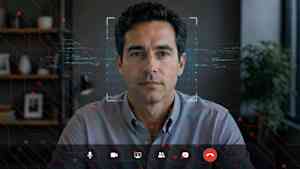
The Human Blind Spot: Why America’s Inability to Spot Deepfakes Is a Corporate Time Bomb
In 2024, a video of a U.S. senator allegedly accepting a bribe went viral across social media. Within hours, it was debunked as a deepfake—an AI-generated fabrication so convincing that even seasoned journalists initially believed it. But by then, the damage was done: stocks in the senator’s affiliated industries dipped, public trust eroded, and misinformation spread like wildfire. This wasn’t science fiction. It was a preview of a new reality: Americans can’t reliably tell real from fake, and that’s not just a media literacy crisis—it’s a full-blown business emergency.
The problem isn’t awareness. Most people know deepfakes exist. The real issue is performance. According to a groundbreaking 2026 study by Veriff and Kantar, involving 3,000 respondents across the U.S., U.K., and Brazil, Americans scored a dismal 0.07 on a scale where 0 means random guessing. That’s barely better than flipping a coin. And when people can’t distinguish authentic visuals, they can’t distinguish authentic identities—creating a systemic vulnerability in the digital economy.
This isn’t just about fake news or political manipulation. It’s about identity verification, the invisible backbone of modern digital commerce. From opening a bank account to logging into a corporate network, millions of transactions rely on visual confirmation—photos, selfies, video calls. But if users can’t tell a real face from a synthetic one, then every system built on human judgment is fundamentally compromised.
The Scale of the Problem: When Awareness Doesn’t Equal Accuracy
Despite widespread knowledge of AI-generated content, the gap between perception and performance is staggering. The Veriff-Kantar study revealed that while 89% of Americans believe they can spot a deepfake, their actual detection rate hovers near 50%—essentially random. This overconfidence is dangerous. It creates a false sense of security in systems that depend on human vigilance.
Consider online banking. When a customer opens a new account, many institutions still rely on photo ID checks and live selfie comparisons. But if a user can’t tell whether the face in the selfie is real or AI-generated, the entire verification chain breaks. The same applies to e-commerce marketplaces, where sellers are vetted via video interviews, or enterprise systems that use facial recognition for access control.
Over 70% of identity fraud cases in 2025 involved some form of AI-generated imagery or video.
The average time to detect a deepfake-based fraud attempt is 11 days, giving criminals ample time to exploit accounts.
The consequences are already material. In 2025, a major U.S. credit union reported a 300% increase in account takeovers linked to deepfake verification bypasses. Fraudsters used AI-generated selfies that mimicked real customers, fooling both automated systems and human reviewers. These weren’t isolated incidents—they were symptoms of a systemic flaw.
The 7% Problem: The Overconfident and the Vulnerable
One of the most alarming findings from the study is the existence of a high-risk cohort: roughly 7% of users who perform poorly at detecting deepfakes yet remain highly confident in their ability. This group rarely double-checks content and is disproportionately targeted by fraudsters.
At first glance, 7% seems small. But in a country of over 330 million people, that’s more than 23 million individuals who are both vulnerable and unaware. These users are prime targets for phishing scams, fake customer support calls, and synthetic identity attacks. They’re the weak link in the chain—millions of exploitable accounts waiting to be breached.
This overconfidence isn’t just a personal risk—it’s a corporate liability. Businesses that rely on user-submitted identity verification are only as strong as their weakest user. If a single employee or customer can be tricked into approving a fake identity, the entire system is compromised. And with AI tools becoming more accessible, the threat is growing exponentially.
The Infrastructure Crisis: Identity Verification Can’t Be an Afterthought
For decades, identity verification has been treated as a compliance checkbox—a necessary evil to meet regulatory requirements. But the rise of deepfakes demands a paradigm shift. Identity verification must become core digital infrastructure, not a peripheral function.
Think of it like cybersecurity in the 2000s. Early on, firewalls and antivirus software were add-ons. Then came massive data breaches, and suddenly, security became foundational. The same transformation is needed now for identity.
AI-powered verification tools can detect deepfakes with 98% accuracy, compared to 50% for humans.
Companies using automated verification saw a 75% reduction in synthetic fraud attempts in 2025.
The global market for AI identity verification is projected to reach $15 billion by 2027.
Automated systems don’t just outperform humans—they scale. While a human reviewer might catch a blurry photo or mismatched lighting, AI can analyze micro-expressions, skin texture, and even blood flow patterns in real time. These systems don’t get tired, don’t overestimate their skills, and don’t fall for social engineering.
Yet adoption remains slow. Many companies fear the cost or complexity of upgrading legacy systems. Others worry about false positives or user friction. But the cost of inaction is far greater. Every day without robust verification is a day criminals can exploit.
The Global Context: America Is Falling Behind
While the U.S. struggles with deepfake detection, other countries are moving faster. The European Union’s AI Act, passed in 2025, mandates strict labeling of synthetic media and requires platforms to deploy detection tools. In Estonia, a national digital ID system uses blockchain and biometric verification to prevent identity spoofing.
Even Brazil, despite lower overall awareness, scored higher than the U.S. in the Veriff-Kantar study, with a detection accuracy of 0.21. That’s still low, but it shows that cultural and technological factors play a role.
The U.S. was once a leader in digital identity innovation—pioneering biometric passports and e-signatures in the early 2000s. But fragmented regulation and slow private-sector adoption have left the country playing catch-up.
The U.S. needs a coordinated response. That means federal guidelines for synthetic media, investment in AI detection research, and incentives for businesses to upgrade verification systems. Without it, American companies risk becoming the easiest targets in the global digital economy.
The Path Forward: Building a New Defense Layer
The solution isn’t to train humans to be better deepfake detectors—it’s to remove the burden from them entirely. Automated verification technologies are the only scalable defense.
Companies like Veriff, Jumio, and Onfido now offer AI-powered platforms that analyze thousands of data points in a single selfie or ID scan. These systems can detect inconsistencies in lighting, facial symmetry, and even the subtle artifacts left by generative AI models.
But technology alone isn’t enough. Businesses must also redesign their user experiences. Instead of asking customers to “prove they’re real,” they should embed verification seamlessly—using passive biometrics, behavioral analytics, and multi-factor authentication.
Just as the human body has multiple immune responses, digital identity systems need layered defenses. Relying on a single checkpoint—like a selfie—is like having only skin to protect against infection.
Policymakers also have a role. The U.S. needs a national strategy for digital identity, similar to the cybersecurity frameworks developed after the 2017 Equifax breach. This includes funding for AI safety research, standards for synthetic media labeling, and public awareness campaigns.
Conclusion: The Eye Is No Longer Enough
The human eye was once our first line of defense against deception. But in the age of AI, that defense is obsolete. As Ira Bondar-Mucci of Veriff puts it: “Now that AI-generated content is becoming indistinguishable from reality, the human eye alone is no longer a reliable line of defense.”
The crisis isn’t coming—it’s here. Synthetic fraud is already costing billions. Millions of users are vulnerable. And the tools to exploit them are in the hands of anyone with a smartphone and an internet connection.
The choice is clear: businesses can either treat identity verification as a compliance burden and risk collapse, or they can rebuild it as the foundation of trust in the digital world. The time for half-measures is over. The future of digital commerce depends on it.
This article was curated from Americans can’t spot a deepfake, and that’s a business crisis, not just a consumer problem via VentureBeat