Table of Contents
The Silent Revolution: How NASA’s Lithium-Fed Thruster Could Rewrite the Rules of Space Travel
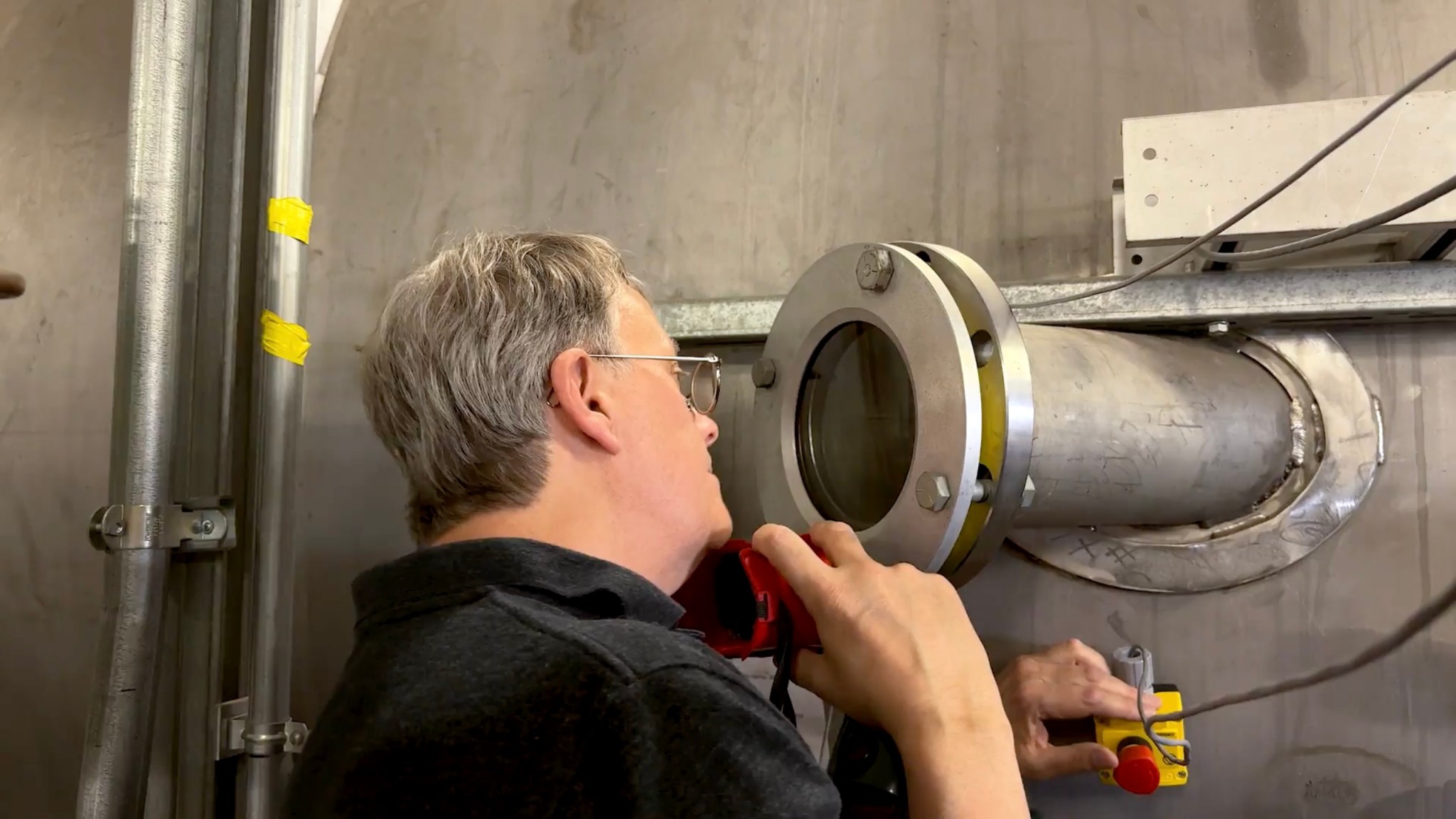
In the quiet, sterile environment of NASA’s Jet Propulsion Laboratory in Southern California, a quiet but seismic shift in space propulsion occurred on February 24, 2026. Inside a specialized vacuum chamber, a prototype thruster—unassuming in appearance but revolutionary in potential—ignited with a brilliance unseen in American space technology for decades. This wasn’t just another engine test. It was the first successful firing of a lithium-fed magnetoplasmadynamic (MPD) thruster in the United States at power levels exceeding 120 kilowatts, a milestone that could redefine how humanity reaches Mars and explores the solar system.
This breakthrough represents more than just a technical achievement; it’s a pivotal step toward making long-duration, crewed missions to Mars not just possible, but practical. Unlike traditional chemical rockets that burn fuel in explosive bursts, this electromagnetic thruster uses electric and magnetic fields to accelerate ionized gas—in this case, vaporized lithium—to generate thrust. The result? A propulsion system that is far more efficient, capable of sustained operation, and potentially powerful enough to carry astronauts across the 140 million miles to Mars in a fraction of the time currently required.
The Engine That Could Change Everything
At the heart of this innovation lies the magnetoplasmadynamic (MPD) thruster, a type of electric propulsion that has long been theorized but rarely tested at meaningful scales. Unlike ion thrusters, which use grids to accelerate charged particles, MPD thrusters generate thrust by passing a high-current electrical arc through a propellant—here, lithium metal vapor—creating a plasma. This plasma is then accelerated by the interaction of the current with its own induced magnetic field, a process known as the Lorentz force.
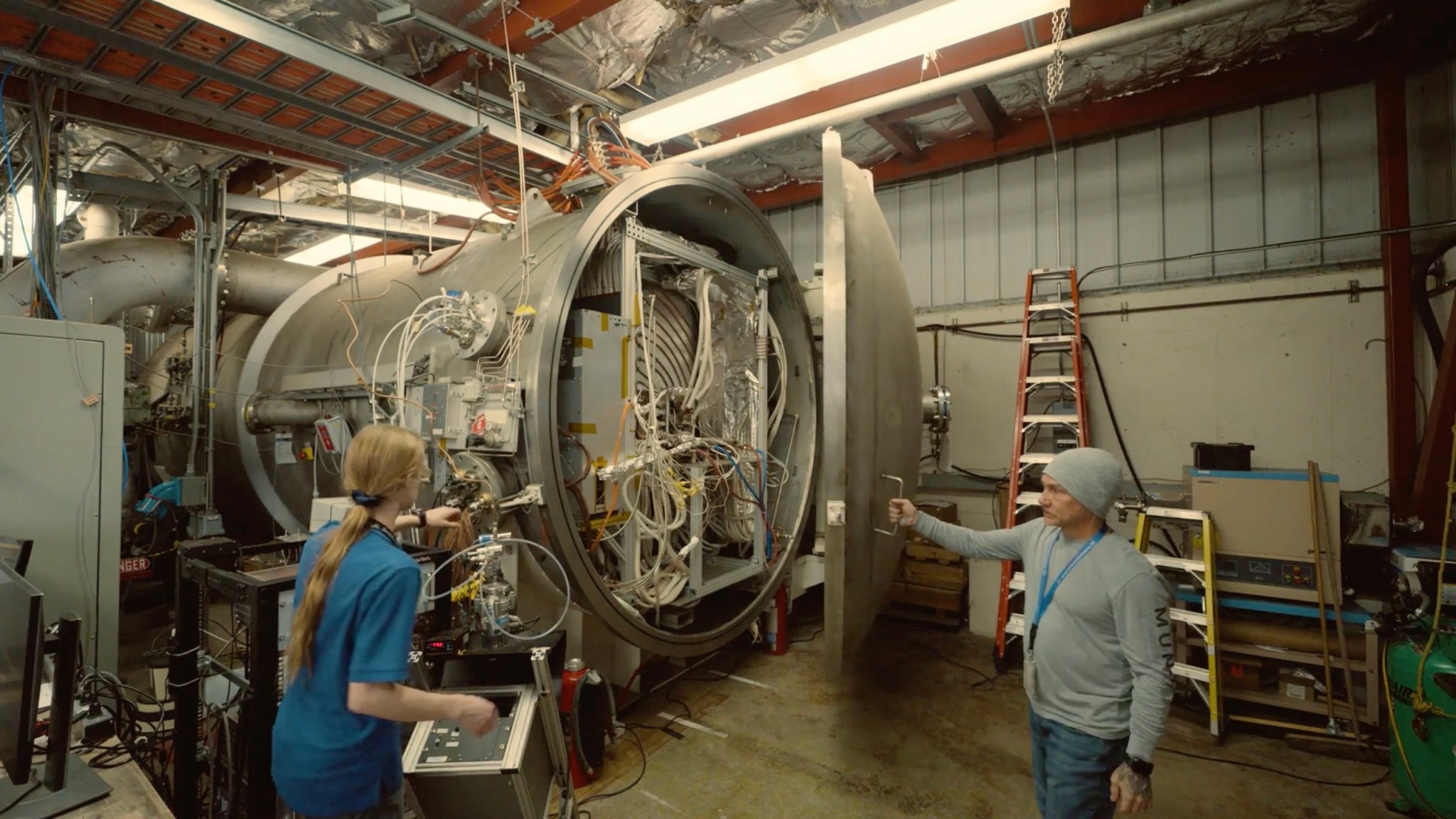
The February 2026 test marked a turning point. The thruster, housed within JPL’s Condensable Metal Propellant (CoMeT) vacuum facility, operated at up to 120 kilowatts of power—more than 25 times the output of the thrusters currently powering NASA’s Psyche spacecraft. Psyche, which is en route to explore a metal-rich asteroid, uses solar-electric propulsion and achieves a top speed of 124,000 mph through gentle but continuous thrust. But even that impressive feat pales in comparison to the potential of the new lithium-fed system.
What makes this test so groundbreaking is not just the power level, but the propellant choice: lithium. Lithium is abundant, energy-dense, and—crucially—can be stored as a solid and vaporized on demand. This is a major advantage over traditional gaseous propellants like xenon, which require heavy, high-pressure tanks. By using a condensable metal, NASA engineers can design more compact, efficient propulsion systems that are better suited for deep-space missions where every kilogram counts.
A Leap Toward Nuclear Electric Propulsion
The lithium-fed MPD thruster isn’t meant to fly solo. Instead, it’s envisioned as a key component of a nuclear electric propulsion (NEP) system—a hybrid architecture that combines a compact nuclear reactor with electric thrusters. In this setup, the reactor generates electricity, which powers the thrusters to ionize and accelerate propellant. This approach offers a dramatic improvement in efficiency over chemical rockets, which are limited by the energy stored in chemical bonds.
NASA’s long-term vision involves launching a nuclear-powered spacecraft with a high-power electric propulsion system capable of delivering astronauts to Mars in under six months, compared to the current 8–9 month journey using chemical propulsion. The 120-kilowatt test is a critical stepping stone toward megawatt-class systems that could one day propel massive interplanetary vehicles.
“We’re not just testing a thruster—we’re testing the foundation of a new era of space travel,” said Dr. Elena Vasquez, lead propulsion engineer at JPL. “This technology could enable sustained human presence on Mars, robotic missions to the outer planets, and even interstellar probes within our lifetime.”
The test also marks a resurgence of U.S. leadership in high-power electric propulsion. While the Soviet Union and Russia have tested similar systems in the past—most notably the VASIMR (Variable Specific Impulse Magnetoplasma Rocket) engine developed by Ad Astra Rocket Company—this is the first time in decades that the U.S. has achieved such power levels domestically.
The Fiery Heart of the Thruster: Tungsten and Plasma
During the five ignition sequences, the thruster’s central electrode—made of tungsten, one of the most heat-resistant metals known—reached temperatures exceeding 5,000 degrees Fahrenheit (2,800 degrees Celsius). That’s hotter than the surface of the planet Mercury and approaching the melting point of tungsten itself. The glow was so intense that it illuminated the chamber like a miniature star, a visual testament to the immense energy being channeled through the system.
Tungsten was chosen for its ability to withstand extreme heat without degrading, a necessity given the plasma temperatures involved. But even with such robust materials, managing thermal stress and electrode erosion remains a key engineering challenge. The data collected from this test will help refine electrode design and cooling strategies for future iterations.

The plasma generated during the test reached velocities of over 60,000 meters per second—more than 10 times faster than the exhaust from a chemical rocket. While the thrust produced is relatively low compared to chemical engines (measured in newtons rather than kilonewtons), the specific impulse—a measure of fuel efficiency—is orders of magnitude higher. This means the thruster can operate for months or even years, gradually accelerating a spacecraft to incredible speeds.
Why Lithium? The Science Behind the Choice
Lithium wasn’t chosen at random. Its unique properties make it exceptionally well-suited for electric propulsion. As an alkali metal, lithium ionizes easily, meaning it readily gives up electrons to form a plasma. This allows the thruster to generate a highly conductive stream of charged particles with relatively low energy input.
Moreover, lithium’s low atomic mass means that when accelerated, it imparts more momentum per unit of energy—boosting overall efficiency. And because it’s a solid at room temperature, it can be stored compactly and vaporized as needed, eliminating the need for bulky cryogenic tanks or high-pressure gas systems.

Another advantage is abundance. Lithium is relatively common in the Earth’s crust and is increasingly extracted for use in batteries. While space mining is still in its infancy, future missions could potentially harvest lithium from lunar regolith or asteroids, creating a sustainable supply chain for deep-space propulsion.
The thruster’s electrode reached over 5,000°F, hotter than Mercury’s surface.
Plasma exhaust speeds exceeded 60,000 m/s—10x faster than chemical rockets.
Specific impulse exceeds 5,000 seconds, making it one of the most efficient propulsion systems ever tested.
The test was conducted in JPL’s CoMeT facility, the only U.S. lab capable of testing metal-vapor thrusters at megawatt-class power.
The Road to Mars: From Prototype to Mission
While the February 2026 test was a success, significant work remains before this technology can be deployed on a Mars mission. The next phase involves scaling up the system, integrating it with a nuclear power source, and testing it in conditions that simulate the vacuum and radiation of deep space.
NASA’s current roadmap includes a series of follow-up tests at increasing power levels, with the goal of reaching megawatt-class performance within the next decade. Such a system could power a spacecraft capable of carrying a crew of four to Mars in under 180 days, with enough power left over for life support, communications, and scientific instruments.
Private companies are also taking notice. SpaceX, Blue Origin, and other aerospace firms are investing in electric and nuclear propulsion research, recognizing that traditional rockets may not be sufficient for sustained interplanetary travel. The success of this lithium-fed thruster could accelerate collaboration between government agencies and private industry.
The concept of MPD thrusters dates back to the 1960s, when NASA and Soviet scientists first explored electromagnetic propulsion. Early tests were limited by power availability and materials science. Today’s advances in high-temperature alloys, plasma physics, and nuclear technology are finally making these systems viable.
A New Era of Exploration
The successful test of the lithium-fed MPD thruster is more than a technical milestone—it’s a symbol of renewed ambition. For decades, human spaceflight has been constrained by the limitations of chemical propulsion. Rockets are powerful, but inefficient. They burn through fuel in minutes, leaving spacecraft coasting for months. Electric propulsion, by contrast, offers a slow but steady push that can build to extraordinary velocities over time.
With systems like this, NASA isn’t just planning to visit Mars—it’s planning to stay. A nuclear electric spacecraft could serve as a mobile habitat, ferrying crews and supplies between Earth and Mars, or even acting as a base for exploring the moons of Jupiter and Saturn.
And the implications go beyond Mars. High-power electric propulsion could enable missions to the Kuiper Belt, the Oort Cloud, or even interstellar space within a human lifetime. The Voyager probes, now in interstellar space, took over 40 years to leave the solar system. A spacecraft powered by a megawatt-class electric thruster could make the same journey in under 20.
As NASA Administrator Jared Isaacman stated, “We haven’t lost sight of Mars.” But with breakthroughs like this, the Red Planet is no longer a distant dream—it’s a destination within reach. The silent hum of a lithium-fed thruster may one day echo across the Martian plains, marking the moment humanity truly became a multiplanetary species.
This article was curated from NASA Fires Up Powerful Lithium-Fed Thruster for Trips to Mars via NASA Breaking News