Table of Contents
- The Southern Fire: Patagonia’s Dazzling Autumn Spectacle
- The Architects of Autumn: The Southern Beech
- A Satellite’s-Eye View: Capturing Nature’s Masterpiece
- The Science Behind the Color: Why Leaves Turn Red
- Patagonia’s Parks: Where Fire Meets Ice
- Climate Change and the Future of Fall
- A Global Perspective: Why Patagonia’s Fall Matters
The Southern Fire: Patagonia’s Dazzling Autumn Spectacle
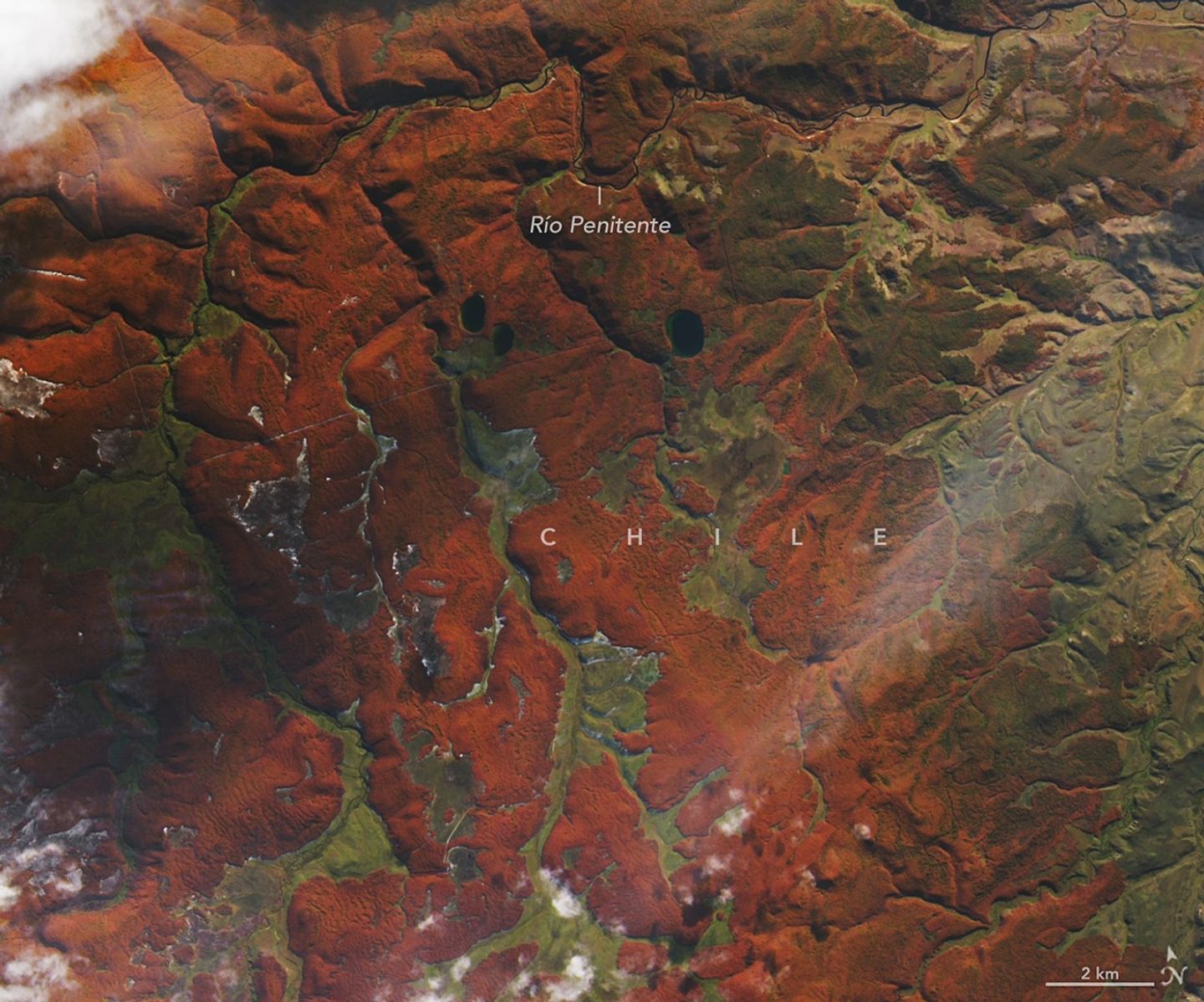
In the vast, wind-swept wilderness of southern Chile, where glaciers carve through ancient mountains and the Andes stand like silent sentinels, nature stages one of its most breathtaking performances each autumn. While New England and Japan are celebrated for their fall foliage, a lesser-known but equally stunning display unfolds thousands of miles to the south—where fiery reds and golden yellows ignite the slopes of Patagonia. This natural phenomenon, captured in vivid detail by NASA’s Landsat 9 satellite on April 12, 2026, reveals a landscape transformed. Amidst the usual palette of snow-capped peaks, turquoise glacial lakes, and arid plains, entire hillsides burst into warm, glowing hues—a fleeting masterpiece painted by the southern beech trees of the Magallanes region.
This annual transformation is not just a visual marvel; it’s a testament to the resilience and adaptability of life at the edge of the world. As the austral autumn descends—bringing shorter days and cooler temperatures—the deciduous forests of Patagonia undergo a dramatic metamorphosis. The lenga beech (Nothofagus pumilio) and its relatives shed their summer greens in favor of brilliant reds and golds, creating a contrast so striking it seems almost surreal against the stark whites of mountain snow and the deep blues of glacial waters.
What makes this spectacle even more remarkable is its rarity. These are the southernmost temperate forests on Earth, thriving in a region where few trees can survive. Stretching from approximately 36°S down to Tierra del Fuego at 55°S, these forests span nearly 2,000 kilometers along the spine of South America. They endure freezing temperatures, fierce winds, and rainfall that varies from near-desert conditions to heavy downpours. Yet, each year, they respond to the changing seasons with a synchronized burst of color that draws scientists, photographers, and nature lovers alike.

The Architects of Autumn: The Southern Beech
At the heart of Patagonia’s autumnal drama are the trees of the Nothofagus genus—commonly known as southern beeches. These trees are not true beeches (which belong to the Fagus genus in the Northern Hemisphere), but they share a similar ecological role and evolutionary history. Over millions of years, Nothofagus species have adapted to the isolated and often harsh conditions of the Southern Hemisphere, evolving into keystone species across New Zealand, Australia, New Guinea, and South America.
In Patagonia, several species dominate the landscape. The lenga beech (Nothofagus pumilio) is perhaps the most iconic, forming dense forests on mountain slopes and high-altitude valleys. Its leaves, small and leathery during the summer, turn a brilliant crimson in autumn. Another standout is the ñire (Nothofagus antarctica), nicknamed “Antarctic fire” for its intense red foliage. This hardy species thrives even in boggy soils and exposed ridges, often growing in twisted, wind-sculpted forms that add to its dramatic presence.
These trees are more than just seasonal showstoppers—they are ecological linchpins. Their root systems stabilize soil on steep slopes, preventing erosion in a region prone to heavy rains and glacial melt. Their canopies provide habitat for rare birds like the Magellanic woodpecker and the Austral parakeet, while their fallen leaves enrich the soil with nutrients, supporting a rich understory of mosses, ferns, and fungi.

A Satellite’s-Eye View: Capturing Nature’s Masterpiece
On April 12, 2026, a rare break in the typically overcast skies of southern Chile allowed the Operational Land Imager (OLI) aboard NASA’s Landsat 9 satellite to capture an extraordinary image. From 705 kilometers above Earth, the sensor recorded the vibrant hues of autumn across the Magallanes region. The resulting photograph reveals a striking band of reddish vegetation clinging to the slopes of a snow-capped mountain, about 40 kilometers west of the main scene.
This image is more than just a pretty picture—it’s a scientific tool. By analyzing the spectral signatures of the forest, researchers can determine the health of the trees, the timing of seasonal changes, and the impacts of climate variability. The red coloration, for instance, is caused by anthocyanins—pigments produced in response to cold temperatures and bright sunlight. These compounds act as a kind of natural sunscreen, protecting leaves from excess light as they prepare to fall.
Landsat data also helps track long-term changes in forest cover. In recent decades, Patagonia has experienced shifts in precipitation patterns and increasing temperatures, which could alter the timing and intensity of autumn colors. Some studies suggest that warmer autumns may delay leaf senescence (aging), potentially shortening the window for this spectacular display.
The Science Behind the Color: Why Leaves Turn Red
The fiery hues of Patagonian autumn are the result of a complex biochemical dance triggered by seasonal change. As daylight shortens and temperatures drop in April and May, deciduous trees like the lenga beech begin to prepare for winter. Chlorophyll—the green pigment essential for photosynthesis—breaks down and is not replenished, revealing other pigments that were always present but masked.
Carotenoids, responsible for yellow and orange tones, are relatively stable and become visible as chlorophyll fades. But the reds and purples are a different story. These colors come from anthocyanins, pigments that are actively produced in the fall. Unlike carotenoids, anthocyanins are not present during the growing season—they are synthesized in response to environmental cues.
Scientists believe that anthocyanins serve multiple protective functions. They may shield leaf cells from harmful UV radiation, act as antioxidants to reduce cellular damage, and even deter herbivores by signaling that the leaves are less nutritious. In the high-altitude, high-light environment of the Andes, these protective qualities are especially valuable.
Patagonia’s Parks: Where Fire Meets Ice
While the Landsat image captures a remote stretch of forest, the autumn colors of Patagonia are most accessible—and most celebrated—in its national parks. Torres del Paine National Park, a UNESCO Biosphere Reserve, is perhaps the most famous. Here, the contrast between the red and gold of Nothofagus forests and the jagged granite spires of the Paine Massif creates a landscape of almost otherworldly beauty. Visitors hiking the W Trek or the Full Circuit are treated to panoramic views where fiery foliage frames glacial lakes like Pehoé and Nordenskjöld.
Farther south, Tierra del Fuego National Park offers a different but equally stunning experience. On the island at the southern tip of South America, the ñire trees paint the coastline in blazing reds, their reflections shimmering in the still waters of the Beagle Channel. The park’s mix of forest, peat bogs, and coastal dunes supports a rich diversity of wildlife, including the endangered southern river otter and the flightless steamer duck.
Even Conguillío National Park, located farther north in the Araucanía Region, joins the autumn chorus. Nestled among active volcanoes like Llaima and Sierra Nevada, the park’s ancient araucaria forests mix with stands of lenga beech, creating a mosaic of color that changes with elevation and exposure.
The lenga beech can grow at elevations up to 2,000 meters (6,500 feet).
Over 90% of Nothofagus species are found only in the Southern Hemisphere.
Torres del Paine receives over 200,000 visitors annually, many drawn by autumn colors.
The name “Tierra del Fuego” means “Land of Fire,” named by early explorers who saw native campfires—not autumn leaves.
Climate Change and the Future of Fall
As beautiful as Patagonia’s autumn is, it is not immune to the pressures of a changing climate. Rising temperatures, shifting precipitation patterns, and increased frequency of extreme weather events pose real threats to these fragile ecosystems. Warmer autumns may delay the onset of leaf color change, while prolonged droughts could stress trees and reduce their ability to produce vibrant pigments.
In some areas, invasive species and land-use changes are also altering forest composition. The spread of non-native pines and eucalyptus for timber plantations threatens to displace native Nothofagus forests, which regenerate slowly and are sensitive to disturbance.
Yet, there is also hope. Conservation efforts across Chile and Argentina are working to protect these unique biomes. National parks and private reserves are expanding, and scientific monitoring—aided by satellites like Landsat 9—helps track forest health and guide management decisions.
A Global Perspective: Why Patagonia’s Fall Matters
While autumn in Patagonia may not draw the crowds of New England or the cultural festivals of Kyoto, its significance extends far beyond tourism. These forests are part of a global network of temperate ecosystems that play a critical role in regulating the planet’s climate. They store vast amounts of carbon, influence regional weather patterns, and support biodiversity found nowhere else.
Moreover, the Nothofagus forests are living relics of Earth’s geological past. Their distribution tells the story of Gondwana’s breakup and the slow migration of species across ancient land bridges. Studying them helps scientists understand how plants adapt to isolation, climate extremes, and environmental change.
For those who witness it, Patagonia’s autumn is more than a seasonal shift—it’s a reminder of nature’s resilience and beauty. In a world increasingly shaped by human activity, these fiery hillsides stand as a testament to the power of natural cycles and the importance of preserving wild places.
As the leaves fall and the snows return, the forests of southern Chile prepare for another long winter. But each year, they rise again—green, growing, and ready to paint the world in fire once more.
This article was curated from Fiery Fall Color in Southern Chile via NASA Breaking News