Table of Contents
- A Legacy of Curiosity: From Family Inspiration to Space Innovation
- The Artemis II Breakthrough: Light-Speed Communication Beyond the Moon
- Why Laser Beats Radio: The Science of Space Communication
- The Human Element: Keeping Astronauts Connected
- The Road Ahead: Artemis III and the Future of Deep Space Networks
- A New Era of Exploration: One Beam at a Time
From Apollo Dreams to Laser Beams: The Man Who Connected Astronauts to Earth with Light
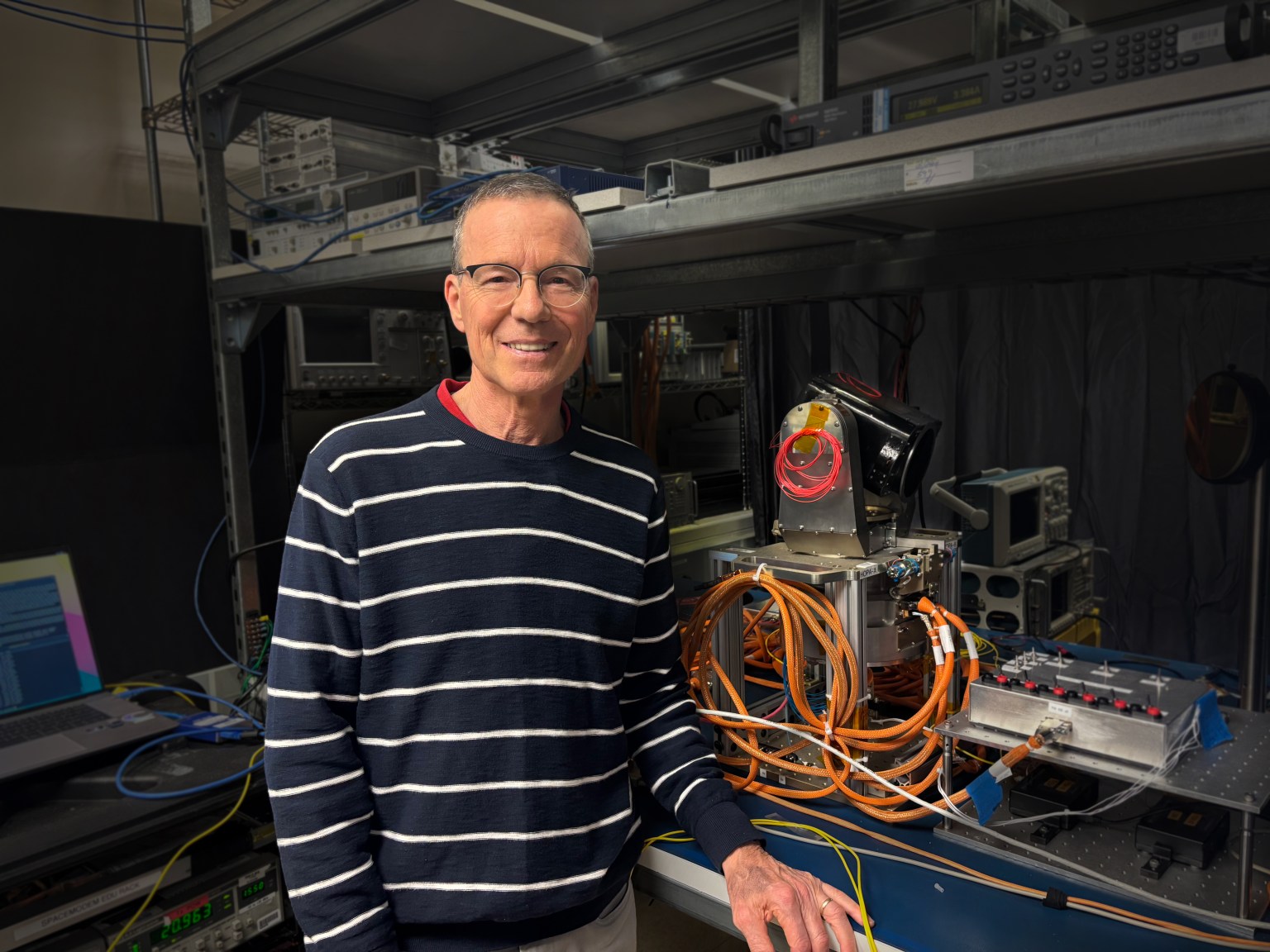
When Peter Rossoni was a boy, he sat cross-legged on a living room rug, eyes glued to a grainy television screen as Saturn V rockets thundered into the sky. His family gathered around, breathless, as Neil Armstrong took that first historic step. Those moments—etched into his memory like constellations in a night sky—planted a seed: I want to be part of that. Decades later, that dream didn’t just come true—it evolved. In April 2026, Rossoni wasn’t just watching from the sidelines. He was in the nerve center of NASA’s Mission Control, ensuring that four astronauts orbiting the Moon could send high-definition video, scientific data, and even personal messages back to Earth—using nothing but beams of laser light.
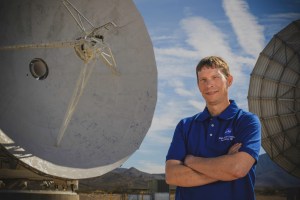
Rossoni’s journey from wide-eyed child to flight manager of the Orion Artemis II Optical Communications System is a testament to how childhood wonder can transform into cutting-edge science. Today, he oversees one of the most advanced deep-space communication technologies ever deployed, a system that redefined how humans stay connected beyond low Earth orbit.
A Legacy of Curiosity: From Family Inspiration to Space Innovation
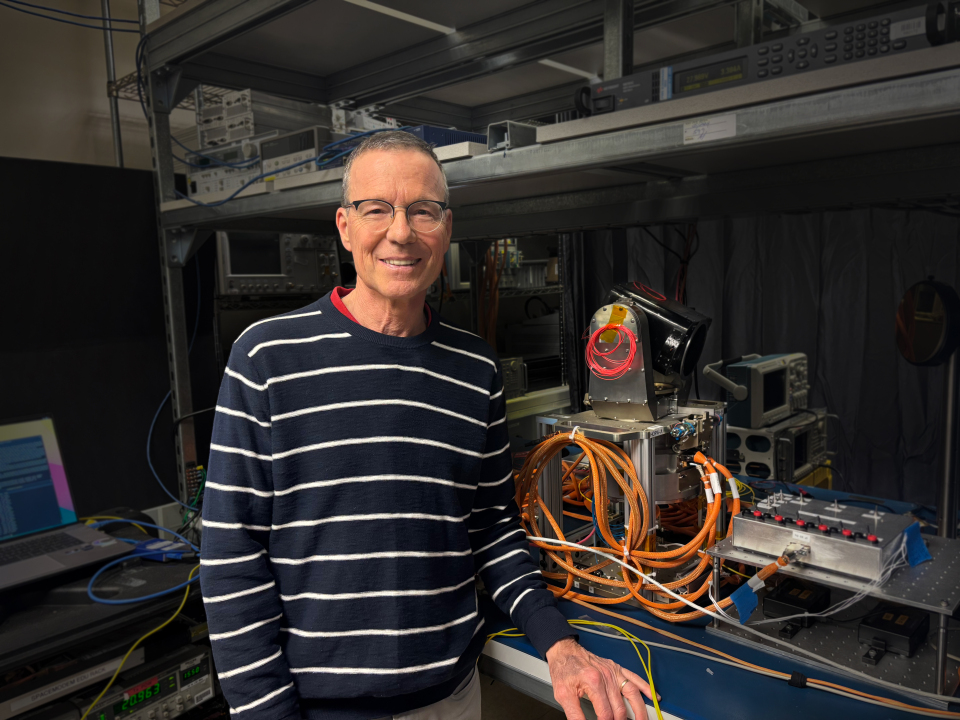
Peter Rossoni didn’t stumble into aerospace engineering by accident. His parents, both scientists, filled their home with books, microscopes, and spirited debates about the universe. Dinner table conversations often drifted from school projects to the latest discoveries in astrophysics. “Science wasn’t just a subject in our house,” Rossoni recalls. “It was a way of thinking.” This environment nurtured a natural curiosity, one that led him to pursue optics and photonics—fields that would later become central to his work at NASA.
After earning degrees in electrical engineering and photonics, Rossoni joined the Massachusetts Institute of Technology Lincoln Laboratory (MIT-LL), a federally funded research center known for pioneering defense and space technologies. There, he worked on advanced optical systems, including laser-based communication prototypes. It was at MIT-LL that he first encountered the concept of using lasers to transmit data across vast interplanetary distances—a radical idea compared to the radio waves that had dominated space communication since the 1960s.
Rossoni’s expertise didn’t go unnoticed. When NASA began developing the Orion spacecraft’s next-generation communication system, his background in optical engineering made him a natural fit. By the time Artemis II was greenlit, he was leading the charge to integrate laser technology into a mission that would carry humans farther than they’d been in over 50 years.
The Artemis II Breakthrough: Light-Speed Communication Beyond the Moon
Artemis II wasn’t just another test flight. It was a bold leap into the future of deep space exploration. The mission carried NASA astronauts Reid Wiseman, Victor Glover, and Christina Koch, along with Canadian Space Agency astronaut Jeremy Hansen, on a 10-day journey around the Moon and back. But what made this mission revolutionary wasn’t just the destination—it was how the crew stayed connected.
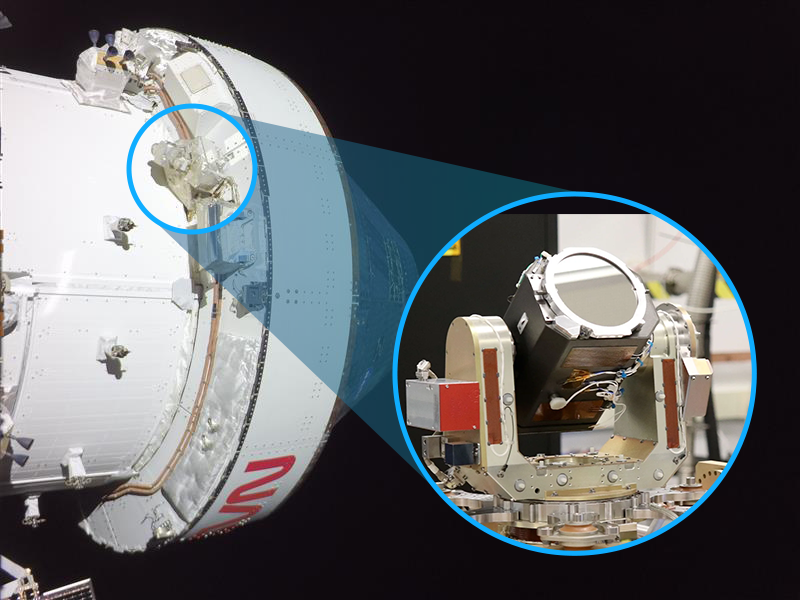
The Orion spacecraft was equipped with the Optical Communications System, nicknamed O2O (Orion to Optical). This system used a compact laser terminal to beam data to Earth at unprecedented speeds. Unlike traditional radio frequency (RF) systems, which rely on large antennas and broad signal dispersion, O2O used a precise laser beam directed at ground-based receivers. The result? A data transfer rate of up to 260 megabits per second—fast enough to stream live video from lunar orbit.
Rossoni’s role was critical. As flight manager, he monitored the laser link in real time, coordinating with teams at NASA’s Goddard Space Flight Center and Johnson Space Center. He ensured that the laser remained locked on Earth-based receivers despite the spacecraft’s movement and the Moon’s gravitational perturbations. “It’s like trying to shine a flashlight from a speeding car onto a moving target,” he explains. “But we did it—flawlessly.”
Why Laser Beats Radio: The Science of Space Communication
To understand the significance of Rossoni’s work, it helps to grasp why laser communications represent a paradigm shift. For over six decades, NASA has relied on radio waves to communicate with spacecraft. These signals are reliable and well-understood, but they have limitations. As spacecraft venture farther from Earth, radio signals weaken and data rates drop. For example, the Voyager probes, now in interstellar space, transmit data at a mere 160 bits per second—slower than a dial-up modem.
Laser communication, or optical communication, solves this problem. Because laser beams are coherent and directional, they don’t spread out as much as radio waves. This allows them to carry vastly more information over the same distance. Think of it like comparing a flashlight (radio) to a laser pointer (laser comms). The flashlight illuminates a wide area but quickly fades; the laser stays bright and focused across miles.
The O2O system used a 4-inch telescope to send and receive laser signals.
Data was received at the Jet Propulsion Laboratory’s Optical Communications Telescope Laboratory in California.
The system operated at a wavelength of 1,550 nanometers—invisible to the human eye but ideal for space transmission.
Even with atmospheric interference, the link maintained 99.9% data integrity.
But lasers aren’t without challenges. Cloud cover, atmospheric turbulence, and precise alignment are major hurdles. To overcome these, NASA used adaptive optics—technology that adjusts the laser beam in real time to compensate for atmospheric distortion. It’s the same tech used in advanced telescopes to sharpen images of distant galaxies.

The Human Element: Keeping Astronauts Connected
While the technology is impressive, Rossoni emphasizes that the real goal is human connection. “We’re not just sending data,” he says. “We’re sending stories.” During Artemis II, the crew used the laser link to transmit live video of Earth rising over the lunar horizon, personal messages to their families, and even a surprise birthday greeting for a mission controller in Houston.
This emotional dimension is crucial. Long-duration missions—like those planned for Mars—will require astronauts to be mentally resilient. Being able to see loved ones, share experiences, and receive real-time support from Earth can make the difference between mission success and psychological strain.
Rossoni recalls one moment when Christina Koch sent a video of herself floating in the Orion capsule, waving at the camera. “That clip went viral on Earth,” he says. “It wasn’t just science—it was joy. And that’s what we’re building toward: a future where space feels less like isolation and more like home.”
The Road Ahead: Artemis III and the Future of Deep Space Networks
Artemis II was just the beginning. With laser communications proven in crewed flight, NASA is now integrating the technology into future missions. Artemis III, planned to land astronauts on the Moon’s South Pole, will use an upgraded version of the O2O system to support surface operations, including rover control and real-time science collaboration.
Beyond the Moon, laser communications will be essential for Mars missions. The distance to Mars—up to 250 million miles—makes radio communication painfully slow. A one-way message can take 20 minutes to reach Earth. With laser systems, that delay remains, but the data volume increases exponentially. Imagine streaming 4K video from the Martian surface or sending terabytes of geological data in hours instead of weeks.
Rossoni is already working on next-gen systems, including space-based laser relays that could create a “highway” of light across the solar system. These relays would bounce signals between spacecraft, reducing reliance on direct Earth links and enabling communication even when planets are on opposite sides of the Sun.
A New Era of Exploration: One Beam at a Time
Peter Rossoni’s story is more than a personal triumph—it’s a symbol of how far we’ve come since the Apollo era. Where once we relied on bulky radios and grainy TV signals, we now use the precision of light to stay connected across the void. His work ensures that as humanity ventures deeper into space, we won’t lose touch with who we are.
As Rossoni looks ahead, he sees a future where laser networks link Earth, Moon, Mars, and beyond—creating a connected solar system. “We’re not just exploring space,” he says. “We’re building a community.”
And it all started with a boy watching rockets rise into the sky, dreaming of the stars.
This article was curated from I Am Artemis: Peter Rossoni via NASA Breaking News