Table of Contents

A Giant Leap Forward: What NASA Learned from Artemis II and Why It Matters for the Future of Lunar Exploration
After more than five decades of silence, humanity has once again sent astronauts on a journey around the Moon—and this time, the mission marks not an end, but a bold new beginning. NASA’s Artemis II mission, which concluded earlier this month, was far more than a symbolic return to lunar orbit. It was a meticulously planned test flight designed to validate every system, every procedure, and every piece of hardware that will carry future crews not just around the Moon, but onto its surface. With four astronauts aboard the Orion spacecraft, launched atop the powerful Space Launch System (SLS) rocket, the mission achieved a historic milestone: the farthest human spaceflight since Apollo 17 in 1972.
The successful completion of Artemis II is already yielding invaluable insights. NASA engineers and mission planners are now poring over reams of telemetry, video, and crew feedback to assess performance across the board. From the heat shield’s resilience during reentry to the precision of the SLS rocket’s trajectory, the data collected is shaping the next phase of lunar exploration. But beyond the technical triumphs, Artemis II has reignited public imagination—offering breathtaking visuals, emotional milestones, and a renewed sense of purpose in deep space exploration.
A Flawless Reentry: The Heat Shield Holds Strong
One of the most critical phases of any crewed space mission is atmospheric reentry. At speeds exceeding 24,000 miles per hour, the Orion spacecraft slams into Earth’s atmosphere, generating temperatures hotter than the surface of the Sun—up to 5,000 degrees Fahrenheit. The heat shield, a critical component designed to absorb and dissipate this extreme thermal energy, must perform flawlessly to protect both the spacecraft and its crew.
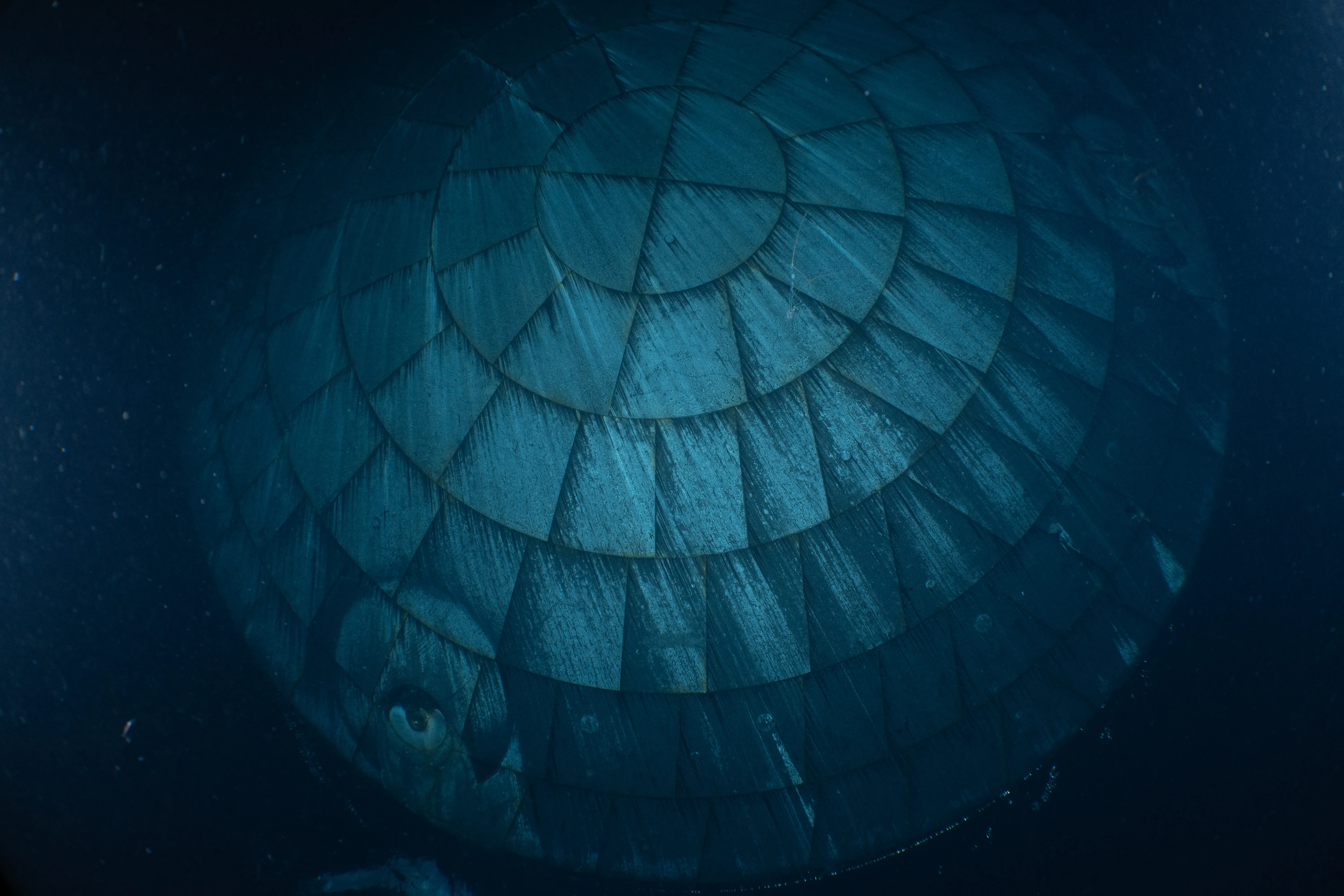
According to NASA’s initial assessments, the heat shield on Artemis II “performed as expected, with no unusual conditions identified.” This is especially significant when compared to the uncrewed Artemis I mission in 2022, where engineers observed more char loss—material burning away—than anticipated. The improved performance suggests design refinements and manufacturing upgrades have paid off. Navy divers even captured stunning underwater images of the heat shield post-splashdown, revealing a charred but intact surface that speaks to its durability.
The precision of the reentry was equally impressive. Orion splashed down just 2.9 miles from its intended landing site in the Pacific Ocean, a testament to the accuracy of NASA’s navigation and guidance systems. Even more remarkable, the spacecraft’s entry interface velocity was “within one mile-per-hour of predictions,” underscoring the maturity of the mission’s flight dynamics models. Such precision reduces risk and increases confidence for future missions, especially those aiming for pinpoint lunar landings.
The SLS Rocket: A Powerful, Reliable Beast
Behind every successful deep space mission is a launch vehicle capable of delivering the necessary thrust and precision. The Space Launch System (SLS), NASA’s most powerful rocket ever built, proved its mettle during Artemis II. Standing 322 feet tall and generating 8.8 million pounds of thrust at liftoff—more than the Saturn V that carried Apollo astronauts—the SLS is engineered for the rigors of lunar missions.
At main engine cutoff, when the core stage’s four RS-25 engines shut down, the spacecraft was traveling at over 18,000 miles per hour, achieving the precise velocity needed to enter a trans-lunar injection trajectory. NASA described the insertion as a “precise bullseye,” hitting the intended orbital parameters with remarkable accuracy. This level of performance is crucial, as even small deviations can result in missed lunar flybys or excessive fuel consumption.
While the SLS performed exceptionally, NASA is still conducting post-flight analyses to evaluate engine performance, structural integrity, and thermal management. These reviews will inform upgrades for future flights, including Artemis III, which aims to land astronauts on the lunar surface as early as 2027.
The Human Element: Crew Experience and Anomalies
Beyond hardware and software, Artemis II was a test of human endurance and adaptability in deep space. Commander Reid Wiseman, pilot Victor Glover, mission specialist Christina Koch, and mission specialist Jeremy Hansen spent 10 days in space, conducting experiments, monitoring systems, and providing real-time feedback to mission control.
One unexpected challenge arose early in the mission: a malfunction in the spacecraft’s urine vent line. Shortly after launch, the crew reported issues with the waste management system—a critical but often overlooked component of long-duration spaceflight. Mission specialist Christina Koch, drawing on her experience as a veteran astronaut and electrical engineer, worked with ground teams to troubleshoot the problem remotely. Her quick thinking prevented a potential hygiene or health issue, but the incident highlighted a vulnerability in an essential system.
In microgravity, waste management is far more complex than on Earth. Without gravity to guide fluids, specialized airflow systems are needed to direct urine and feces into collection devices. A failure can lead to contamination, odors, or even equipment damage.
NASA has now formed dedicated teams to investigate the root cause of the toilet malfunction and implement design improvements. Given that future Artemis missions will last longer and involve more crew members, reliable life support systems are non-negotiable. This incident serves as a reminder that even in the most advanced spacecraft, everyday human needs remain a top engineering priority.
A View Like No Other: The Earthset Phenomenon
Perhaps the most poetic moment of Artemis II came not from a technical milestone, but from a simple video shared by Commander Reid Wiseman. As Orion looped around the Moon, Wiseman captured the Earth “setting” behind the lunar horizon—a sight unseen by human eyes since the Apollo era.
“Like watching sunset at the beach from the most foreign seat in the cosmos,” Wiseman wrote, “I couldn’t resist a cell phone video of Earthset.” The footage, grainy yet profound, shows our planet—a vibrant blue marble—slowly disappearing behind the rugged, gray lunar surface. It’s a perspective that underscores both the fragility and the uniqueness of Earth, a theme that has resonated deeply with scientists, artists, and the public alike.
The Apollo 8 mission in 1968 gave us the first “Earthrise” photo, taken by astronaut William Anders. That image became a symbol of environmental awareness and global unity. Now, Artemis II has given us the reverse—Earthset—offering a new visual metaphor for our place in the universe.
This moment wasn’t just symbolic; it was also a scientific opportunity. The crew conducted observations of Earth’s atmosphere and albedo (reflectivity) from lunar distance, data that can improve climate models and remote sensing techniques. Moreover, the psychological impact of such views on astronauts—known as the “overview effect”—can influence their mental health and mission performance, making such experiences valuable for long-duration spaceflight research.
Preparing for the Next Giant Leap: Artemis III and Beyond
Artemis II was never intended to be the final destination. It was a stepping stone—a necessary test flight to ensure that the systems, procedures, and crew protocols are ready for the next phase: landing humans on the Moon. NASA’s current timeline aims for Artemis III to achieve this historic goal as early as 2027, with Artemis IV following in 2028 to deliver the first crew to the Lunar Gateway, a space station in orbit around the Moon.
The mission will target the Moon’s south pole, where water ice is believed to exist in permanently shadowed craters.
Astronauts will spend up to 6.5 days on the surface, conducting science and testing technologies for sustained presence.
The Lunar Gateway will serve as a staging point for lunar and deep space missions, including future Mars expeditions.
NASA plans to land the first woman and the next man on the Moon during Artemis III.
The data from Artemis II is already shaping these future missions. Engineers are refining thermal protection systems, improving waste management, and enhancing communication protocols. Meanwhile, international partners—including ESA, JAXA, and CSA—are contributing modules and expertise to the Lunar Gateway, turning Artemis into a truly global endeavor.
The Bigger Picture: Why Artemis Matters
Beyond the engineering feats and stunning visuals, Artemis represents a fundamental shift in how humanity approaches space exploration. Unlike the Apollo program, which was driven by Cold War competition, Artemis is focused on sustainability, international collaboration, and scientific discovery. The goal isn’t just to visit the Moon—it’s to build a permanent presence there, using lunar resources to support life and prepare for missions to Mars.
The success of Artemis II proves that this vision is within reach. With each mission, NASA and its partners are learning, adapting, and pushing the boundaries of what’s possible. And as astronauts continue to share their experiences—from troubleshooting toilets to capturing Earthset—they’re not just advancing science; they’re inspiring a new generation to look up, dream big, and reach for the stars.
As we stand on the brink of a new age of lunar exploration, one thing is clear: Artemis II wasn’t the end of a journey, but the beginning of something far greater. The Moon is no longer a distant memory—it’s a destination, a laboratory, and a stepping stone to the cosmos. And thanks to the courage of four astronauts and the dedication of thousands of engineers, scientists, and dreamers, we’re finally on our way back.
This article was curated from NASA's initial takeaways from the Artemis II mission, and more science stories via Engadget