Table of Contents
- The Unsung Architect of Artemis: Meet the Woman Building the Future of Lunar Exploration
- From Blueprint to Reality: The Life Inside the Operations and Checkout Building
- The Artemis II Milestone: A Mission That Brought the Moon Within Reach
- The Human Side of Space: Leadership, Mentorship, and Teamwork
- The Road to Artemis III: Building the Next Giant Leap
- A Legacy Written in Metal and Moon Dust
The Unsung Architect of Artemis: Meet the Woman Building the Future of Lunar Exploration
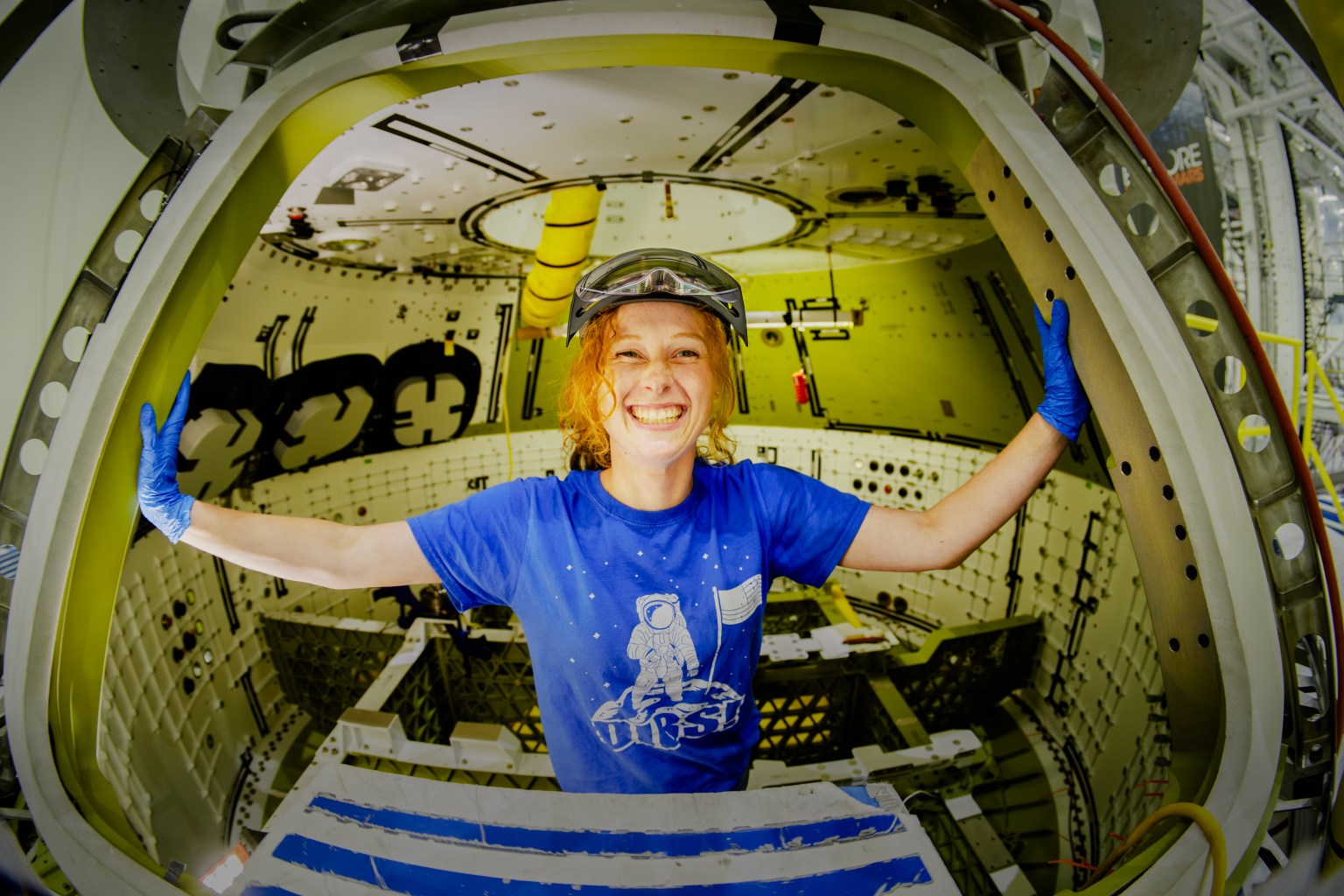
In the quiet hum of NASA’s Kennedy Space Center in Florida, beneath the towering shadow of the Vehicle Assembly Building, a different kind of hero is at work. Not in a lab coat or behind a computer screen, but with her hands deep inside the sleek, futuristic shell of the Orion spacecraft. Her name is Rebekah Tolatovicz, and while the world watches astronauts prepare for lunar missions, she’s the one ensuring those missions can even happen.
Tolatovicz, a mechanical technician lead for the Arctic Slope Regional Corporation (ASRC Federal) supporting Lockheed Martin, is one of the invisible architects of the Artemis program. Her fingerprints—literally and figuratively—are on every Orion spacecraft that has rolled through the Operations and Checkout Building. From the bare skeletal structure to the final integration of delicate avionics, Tolatovicz has helped shape the vehicles that will carry humanity back to the Moon for the first time in over 50 years.
Her journey into space exploration wasn’t a childhood dream scribbled in a notebook. Instead, it was forged through hands-on experience, technical precision, and a deep curiosity about how things work. Today, she stands at the intersection of engineering, teamwork, and innovation—leading a team of technicians while personally installing everything from massive titanium components to the tiniest circuit connectors.
Tolatovicz’s role is a blend of leadership and craftsmanship. She doesn’t just supervise—she gets her hands dirty. Whether it’s guiding a team through the installation of a crew hatch or troubleshooting a hydraulic system, her expertise is both technical and intuitive. “We don’t do just one technical thing—it’s all the technical things,” she says, capturing the essence of her multidimensional role.
And she’s not alone. Behind every successful space mission is a network of thousands of engineers, technicians, and support staff working in concert. But Tolatovicz represents a rare breed: someone who bridges the gap between high-level engineering and ground-level execution. She translates complex blueprints into real-world assembly, ensuring that every bolt, wire, and seal meets the unforgiving standards of spaceflight.
From Blueprint to Reality: The Life Inside the Operations and Checkout Building
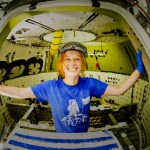
Inside NASA’s Operations and Checkout (O&C) Building, the air hums with quiet intensity. This is where spacecraft are born. Rows of towering clean rooms house the Orion capsules in various stages of assembly—some just bare pressure vessels, others nearly complete with life support systems, avionics, and crew seats.
Tolatovicz spends her days here, moving between workstations with the confidence of someone who knows every inch of the spacecraft. Her typical day begins with a team briefing, where she reviews the day’s objectives—perhaps installing a new thruster module or conducting leak checks on the environmental control system. Then, it’s time to suit up in bunny suits and step into the clean room, where even a single speck of dust could jeopardize a $2 billion mission.
The work is meticulous. Installing a single hatch, for example, involves aligning it within microns of tolerance, securing it with dozens of high-strength bolts, and running pressure tests to ensure it can withstand the vacuum of space. Tolatovicz and her team must also verify that all electrical connections are secure and that no tools are left behind—a critical safety protocol in an environment where a stray wrench could become a deadly projectile in zero gravity.
But it’s not just about precision. It’s about problem-solving. When an unexpected issue arises—a misaligned component, a faulty sensor—Tolatovicz doesn’t panic. She collaborates with engineers, runs diagnostics, and devises solutions on the fly. “You have to think like a detective,” she explains. “Every problem has a root cause. You just have to find it.”
Her adaptability is one of her greatest strengths. One day she might be installing a life-support valve; the next, she’s training a new technician on proper torque specifications for titanium fasteners. She’s both a mentor and a doer, a rare combination in an industry where specialization often silos workers into narrow roles.
The Artemis II Milestone: A Mission That Brought the Moon Within Reach
When Artemis II launched in November 2024, it marked a historic moment: the first crewed mission to venture beyond low Earth orbit since Apollo 17 in 1972. The Orion spacecraft carried four astronauts—NASA’s Reid Wiseman, Victor Glover, and Christina Koch, along with Canadian Space Agency astronaut Jeremy Hansen—on a 10-day journey around the Moon and back.
Tolatovicz played a pivotal role in making that mission possible. She was deeply involved in the final integration and closeout of the Artemis II Orion capsule, ensuring that every system was flight-ready before the spacecraft was fueled and stacked atop the massive Space Launch System (SLS) rocket.
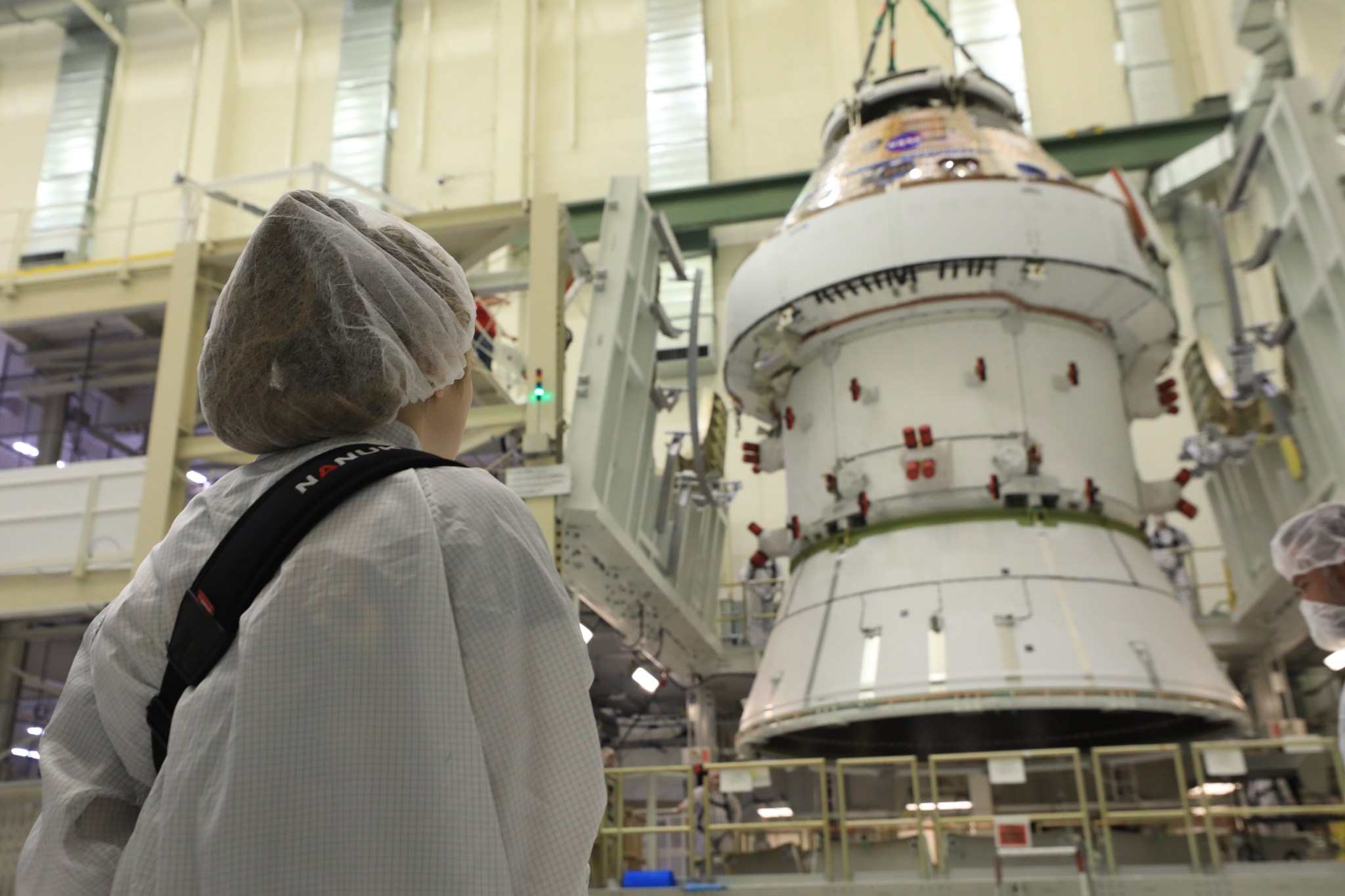
Her contributions ranged from overseeing the installation of the crew seats to conducting final checks on the spacecraft’s propulsion system. She also helped coordinate with the engineering team to resolve last-minute issues, such as a minor anomaly in the communication array that required a software patch and hardware recalibration.
The mission traveled over 430,000 miles from Earth—farther than any human-rated spacecraft in history.
The crew conducted critical tests on Orion’s life support, navigation, and communication systems.
The spacecraft splashed down in the Pacific Ocean on April 10, 2024, after a flawless re-entry.
Data from Artemis II will inform the design and safety protocols for Artemis III, the first crewed lunar landing since 1972.
“Seeing that spacecraft launch was surreal,” Tolatovicz recalls. “I remember thinking, ‘I helped build that. I touched that.’ It wasn’t just a machine—it was a piece of history.”
Her pride is shared by thousands of technicians, engineers, and support staff across the country. But Tolatovicz’s hands-on involvement gives her a unique connection to the mission. She knows the spacecraft not just as a system, but as a physical object—one she helped shape with her own two hands.
The Human Side of Space: Leadership, Mentorship, and Teamwork
What sets Tolatovicz apart isn’t just her technical skill—it’s her leadership. As a mechanical technician lead, she’s responsible for guiding a diverse team of technicians, many of whom are early in their careers. She doesn’t just assign tasks; she teaches, coaches, and empowers.

“I want my team to feel confident,” she says. “If they don’t understand something, I want them to ask. There’s no such thing as a dumb question when lives are on the line.”
Her leadership style is rooted in respect and collaboration. She leads by example, rolling up her sleeves and working alongside her team rather than dictating from a distance. This hands-on approach fosters trust and camaraderie, essential ingredients in a high-stakes environment where mistakes can have catastrophic consequences.
Tolatovicz is also a role model for young women in STEM. In a field historically dominated by men, her presence is a quiet but powerful statement. She often speaks at schools and career fairs, encouraging students—especially girls—to pursue careers in engineering and technology.
“I didn’t always know I’d end up here,” she admits. “But if I can do it, so can they. You don’t have to have it all figured out. You just have to be curious and willing to learn.”
The Road to Artemis III: Building the Next Giant Leap
With Artemis II successfully completed, the focus now shifts to Artemis III—the mission that will return humans to the lunar surface. Scheduled for no earlier than 2026, Artemis III will carry astronauts to the Moon’s South Pole, where they’ll explore a region rich in water ice and potential resources for future bases.
Tolatovicz is already deep in the work. She’s currently supporting the assembly of the Orion crew module that will carry the Artemis III astronauts. This includes installing advanced life support systems, upgrading avionics for longer-duration missions, and integrating new safety features based on lessons learned from Artemis II.
One of the biggest challenges is ensuring the spacecraft can sustain astronauts for extended periods in the harsh lunar environment. This means rigorous testing of every system—from oxygen generation to waste management—under simulated mission conditions.
Tolatovicz and her team are also preparing for the integration of the Human Landing System (HLS), a separate spacecraft that will ferry astronauts from lunar orbit down to the surface. This requires precise coordination between multiple contractors and NASA centers, a logistical ballet that Tolatovicz helps choreograph from the ground up.
A Legacy Written in Metal and Moon Dust
Rebekah Tolatovicz may not be a household name, but her impact on the future of space exploration is undeniable. She represents a new generation of space workers—hands-on, collaborative, and deeply committed to pushing the boundaries of what’s possible.
Her story is a reminder that space exploration isn’t just about astronauts and rocket scientists. It’s about the technicians who tighten the bolts, the engineers who write the code, and the leaders who inspire teams to reach for the stars.
As Artemis III inches closer to launch, Tolatovicz continues her work with quiet determination. She knows that when the next crew steps aboard Orion, they’ll be trusting their lives to the systems she helped build. And when they return safely to Earth, she’ll be among the first to celebrate—not for the glory, but for the mission.
Because in the end, it’s not about recognition. It’s about building something that lasts—something that carries humanity farther than it’s ever gone before.
And in the quiet hum of the O&C Building, with her hands deep inside the future of spaceflight, Rebekah Tolatovicz is doing exactly that.
This article was curated from I Am Artemis: Rebekah Tolatovicz via NASA Breaking News