Table of Contents
- The Tooth Fairy Principle: Why Imagination Must Respect Reality in Theoretical Physics
- The Limits of Intuition in a Counterintuitive Universe
- The Power—and Peril—of Creative Hypotheses
- Parsimony and the Art of Scientific Economy
- When the Tooth Fairy Visits Too Often
- The Balance Between Wonder and Rigor
- Conclusion: The Fairy That Guides Discovery

The Tooth Fairy Principle: Why Imagination Must Respect Reality in Theoretical Physics
When children lose a baby tooth, many families celebrate with a visit from the tooth fairy—a magical creature who exchanges a small gift for the tiny pearly offering. But in the rarefied world of theoretical physics, the “tooth fairy” takes on a far more profound meaning. Far from a bedtime story, this whimsical figure has become a metaphor for a critical scientific principle: the importance of restraint in theoretical invention. As cosmologist Mike Turner famously declared in the 1990s, “You can only invoke the tooth fairy once.” This seemingly playful adage carries a deep and essential lesson about how science advances—not through boundless fantasy, but through imaginative yet disciplined reasoning.
At first glance, theoretical physics might seem like the ultimate playground for wild ideas. After all, it’s a field where particles can exist in multiple states at once, time can stretch and warp, and the universe itself may be just one of many. But beneath the surface of these mind-bending concepts lies a rigorous framework that demands consistency, testability, and parsimony. The tooth fairy, in this context, isn’t just a symbol of magic—it’s a warning against over-reliance on untestable assumptions. Just as a child’s belief in a fairy who collects teeth under pillows can’t be proven or disproven, a scientific theory that depends too heavily on speculative entities risks becoming unmoored from reality.
The Limits of Intuition in a Counterintuitive Universe
Our everyday experiences are governed by Newtonian physics—objects fall, trains move at predictable speeds, and cause leads neatly to effect. But when we peer into the quantum realm or approach the speed of light, these familiar rules break down. Electrons don’t follow definite paths; they exist in superpositions, passing through multiple slits simultaneously until measured. Radioactive decay is inherently probabilistic—we can’t predict exactly when an atom will decay, only the odds. And in the realm of relativity, velocities don’t simply add up: if you’re on a train moving at 90% the speed of light and throw a ball forward at 90% the speed of light, the ball doesn’t reach 180% the speed of light. Instead, relativistic mechanics ensures that the speed never exceeds c, the universal speed limit.
These phenomena defy intuition not because they’re illogical, but because they operate outside the scale of human experience. Our brains evolved to navigate a world of medium-sized objects moving at moderate speeds. To understand the universe at its extremes, we need tools that go beyond gut feeling. That’s where theoretical physics steps in—not to confirm what feels right, but to uncover what is right, even when it feels impossible.
The Power—and Peril—of Creative Hypotheses
Some of the most revolutionary ideas in physics began as seemingly absurd speculations. James Clerk Maxwell’s “demon”—a hypothetical being that could sort fast and slow molecules to violate the second law of thermodynamics—was never meant to be real. Instead, it was a thought experiment designed to probe the limits of statistical mechanics. Similarly, Richard Feynman once proposed a “one-electron universe,” suggesting that all electrons might be manifestations of a single electron zigzagging through time. Though never proven, this idea helped illuminate the symmetries of quantum field theory.
These imaginative leaps were valuable not because they were true, but because they forced scientists to confront assumptions and refine their models. However, the key was that they were testable or at least constrained by existing evidence. Maxwell’s demon led to deeper insights into entropy and information theory. Feynman’s electron universe, while likely false, contributed to our understanding of antimatter and time symmetry.

This is where the tooth fairy principle comes into play: creativity is essential, but it must be tempered by empirical responsibility. You can propose a magical entity once—like a single unobserved particle or a novel force—to explain a puzzling phenomenon. But if your theory starts requiring a second, third, or tenth “fairy”—a cascade of untestable assumptions—it risks becoming pseudoscience.
Parsimony and the Art of Scientific Economy
In science, simplicity is not just elegant—it’s essential. This principle, known as Occam’s Razor, suggests that among competing theories, the one with the fewest assumptions should be preferred. When analyzing the light curves of Type Ia supernovae—exploding stars that serve as cosmic mile markers—astronomers don’t just record their brightness over time. They apply a “stretch factor” to normalize the data, revealing a universal pattern. This process reduces complex, variable observations into a single, predictable model.
Their consistent peak luminosity allows astronomers to measure cosmic distances with precision.
In 1998, observations of distant supernovae revealed that the universe’s expansion is accelerating—a discovery that earned the 2011 Nobel Prize in Physics.
This acceleration is attributed to dark energy, a mysterious force that makes up about 68% of the universe’s total energy content.
Despite its dominance, dark energy remains one of the greatest unsolved puzzles in physics.
The success of this approach hinges on using the fewest parameters possible. If every supernova required its own unique explanation, cosmology would be chaos. Instead, scientists seek universal laws—patterns that apply broadly. The tooth fairy principle reinforces this: invoke a new assumption only when absolutely necessary. Each additional “fairy” weakens the theory’s predictive power and increases the risk of coincidence masquerading as causation.
When the Tooth Fairy Visits Too Often
Imagine a physicist trying to explain the anomalous rotation of galaxies. One approach might be to propose a new type of invisible matter—dark matter—that exerts gravitational pull without emitting light. This single “tooth fairy” has been remarkably successful, explaining not just galaxy rotation but also gravitational lensing and the cosmic microwave background.
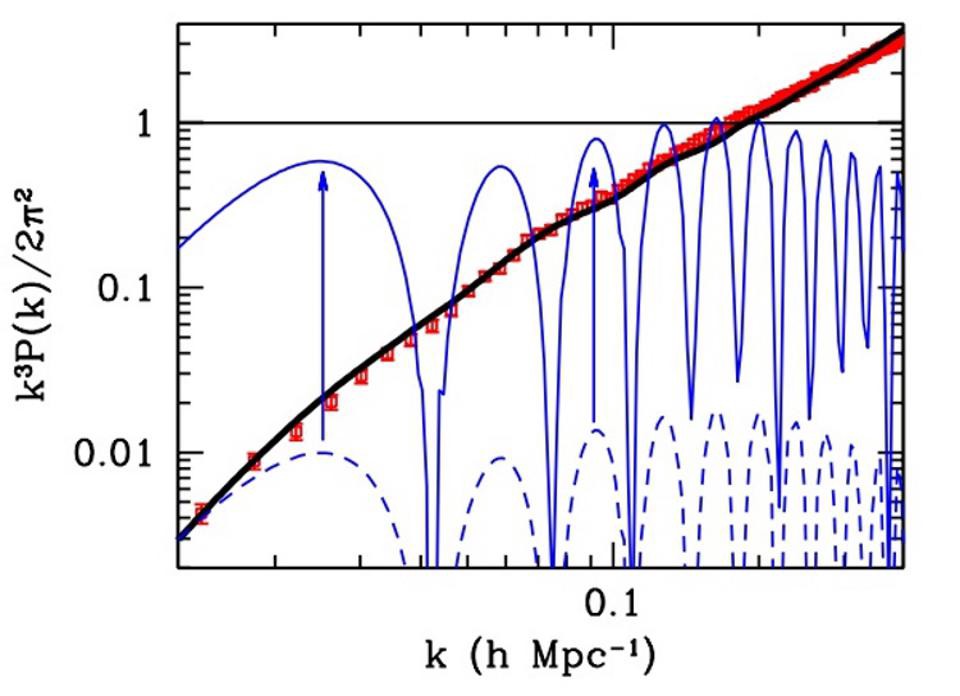
But what if, instead of one dark matter particle, the theory required dozens of new particles, each with finely tuned properties, none of which have been detected after decades of searching? At some point, the model becomes unwieldy. This is where the tooth fairy principle sounds the alarm: if your theory needs multiple unobservable entities to stay afloat, it may be time to reconsider the foundation.
The same scrutiny applies to modern theories. String theory, for example, posits that fundamental particles are tiny vibrating strings in multiple dimensions. While mathematically elegant, it currently lacks experimental verification and requires a vast landscape of possible solutions—some argue too many to be testable. Critics warn that without empirical anchors, such theories risk becoming philosophical speculation rather than science.
The Balance Between Wonder and Rigor
The tooth fairy principle doesn’t discourage imagination—it channels it. Great theorists like Einstein, Dirac, and Hawking were dreamers who dared to question reality. But they also grounded their ideas in mathematics, consistency, and the possibility of testing. Einstein didn’t just imagine riding a beam of light; he worked out the implications and made predictions that were later confirmed.
The lesson is clear: creativity is the spark, but evidence is the fuel. You can invoke the tooth fairy once—to propose a dark energy field, a multiverse, or a new quantum state. But if your theory starts requiring a fairy for every anomaly, it’s time to pause and ask: Are we explaining nature, or are we building a castle of assumptions?
Conclusion: The Fairy That Guides Discovery
The tooth fairy, in the lexicon of theoretical physics, is not a dismissal of wonder—it’s a celebration of disciplined imagination. It reminds us that while the universe is stranger than we can suppose, our explanations must be tighter than we often allow. The greatest advances come not from unchecked fantasy, but from bold ideas that respect the boundaries of evidence and logic.
As we peer deeper into the cosmos—from the quantum foam to the edge of the observable universe—we must carry this principle with us. Invoke the tooth fairy once, if you must. But remember: the most enduring theories are those that explain the most with the least. In the end, it’s not magic that reveals the secrets of the universe—it’s the careful, courageous, and restrained art of scientific reasoning.
This article was curated from Why the tooth fairy is important for theoretical physics via Big Think