When we peer into the night sky, we aren’t just gazing at distant stars—we’re looking back in time. Every twinkle from a star or galaxy is a message from the past, carried across light-years by photons that began their journey long before human civilization existed. This cosmic time machine, powered by the finite speed of light, allows astronomers to reconstruct the history of the universe in ways that resemble detective work. But despite the poetic label, the field known as “galactic archaeology” isn’t archaeology at all—at least not in the traditional sense. It’s a powerful metaphor, yes, but one that obscures the true nature of how we uncover the Milky Way’s ancient past.
Unlike terrestrial archaeologists who unearth pottery shards and fossilized bones, astronomers don’t dig. They don’t excavate. Instead, they decode the light from stars to read the chemical signatures of long-dead stellar generations. This process—stellar archaeology—and its broader cousin, galactic archaeology, rely on spectroscopy, kinematics, and stellar evolution models to piece together the formation of stars, planets, and entire galaxies. Yet calling it “archaeology” risks misleading the public into thinking we’re uncovering physical relics. In truth, we’re interpreting cosmic fingerprints left behind by events billions of years ago.
The universe began 13.8 billion years ago in a hot, dense state known as the Big Bang. In its earliest moments, only the lightest elements—hydrogen and helium—existed. There were no carbon, no oxygen, no iron—no building blocks for planets or life. The first stars, known as Population III stars, ignited in this primordial soup, burning fiercely and dying young in supernovae that seeded the cosmos with heavier elements. These stellar forges laid the groundwork for everything that followed: the formation of rocky planets, the emergence of life, and eventually, us.
Today, when astronomers study the chemical composition of stars, they’re essentially reading a star’s birth certificate. By analyzing the absorption lines in a star’s spectrum—those dark lines that reveal which elements are absorbing light in the star’s atmosphere—scientists can determine its metallicity, or abundance of elements heavier than helium. Stars born early in the universe’s history have low metallicity, while younger stars, like our Sun, are metal-rich because they formed from gas enriched by previous stellar generations.
This is where the analogy to archaeology breaks down. Archaeologists uncover physical artifacts—tools, bones, ruins—that survived the ravages of time. Astronomers, by contrast, don’t recover physical remnants of ancient stars. Instead, they infer their existence from the chemical imprints left in newer stars and interstellar gas. It’s less like unearthing a fossil and more like reconstructing a dinosaur from its shadow in the sediment.
The Milky Way itself is a cosmic mosaic, assembled over billions of years through the accretion of smaller galaxies, star clusters, and gas clouds. This galactic assembly process, known as hierarchical formation, means our galaxy is built from the ruins of its predecessors. Galactic archaeology aims to map this history by studying the motions, ages, and compositions of stars across the galaxy.
One of the most powerful tools in this endeavor is Gaia, the European Space Agency’s space observatory launched in 2013. Gaia has mapped the positions, distances, and motions of over a billion stars with unprecedented precision. By tracking how stars move—their proper motion and radial velocity—astronomers can identify stellar streams: long, thin trails of stars that were once part of a dwarf galaxy or globular cluster torn apart by the Milky Way’s gravity.
These stellar streams are like cosmic fossils—not in the sense of preserved remains, but as kinematic and chemical relics of past galactic interactions. By analyzing their composition and trajectories, scientists can reconstruct when and how these mergers occurred, much like a historian piecing together events from fragmented documents.
But here’s the catch: unlike archaeologists who can carbon-date bones or analyze toolmaking techniques, astronomers can’t directly observe the original dwarf galaxies. They infer their existence from the debris. It’s a bit like reconstructing a lost civilization solely from the scattered pottery shards found in a riverbed, without ever seeing the city itself.

This indirect method is both a strength and a limitation. On one hand, it allows us to probe events that occurred billions of years before Earth even existed. On the other, it means our reconstructions are always models—best guesses based on incomplete data. We can’t dig up a 10-billion-year-old galaxy; we can only interpret its echoes.
The confusion around the term “archaeology” stems from a deeper issue: the human tendency to anthropomorphize science. We use familiar metaphors to make the unfamiliar accessible. But in doing so, we risk distorting the reality. Archaeology implies excavation, discovery, and physical evidence. Galactic archaeology offers none of that. It’s a science of inference, simulation, and spectral analysis.
Consider the difference between finding a fossilized dinosaur bone and deducing the existence of a dinosaur from fossilized footprints and coprolites (fossilized poop). Both are valuable, but only one involves direct contact with the organism. In galactic archaeology, we’re often in the latter camp—reading the universe’s footprints, not its bones.
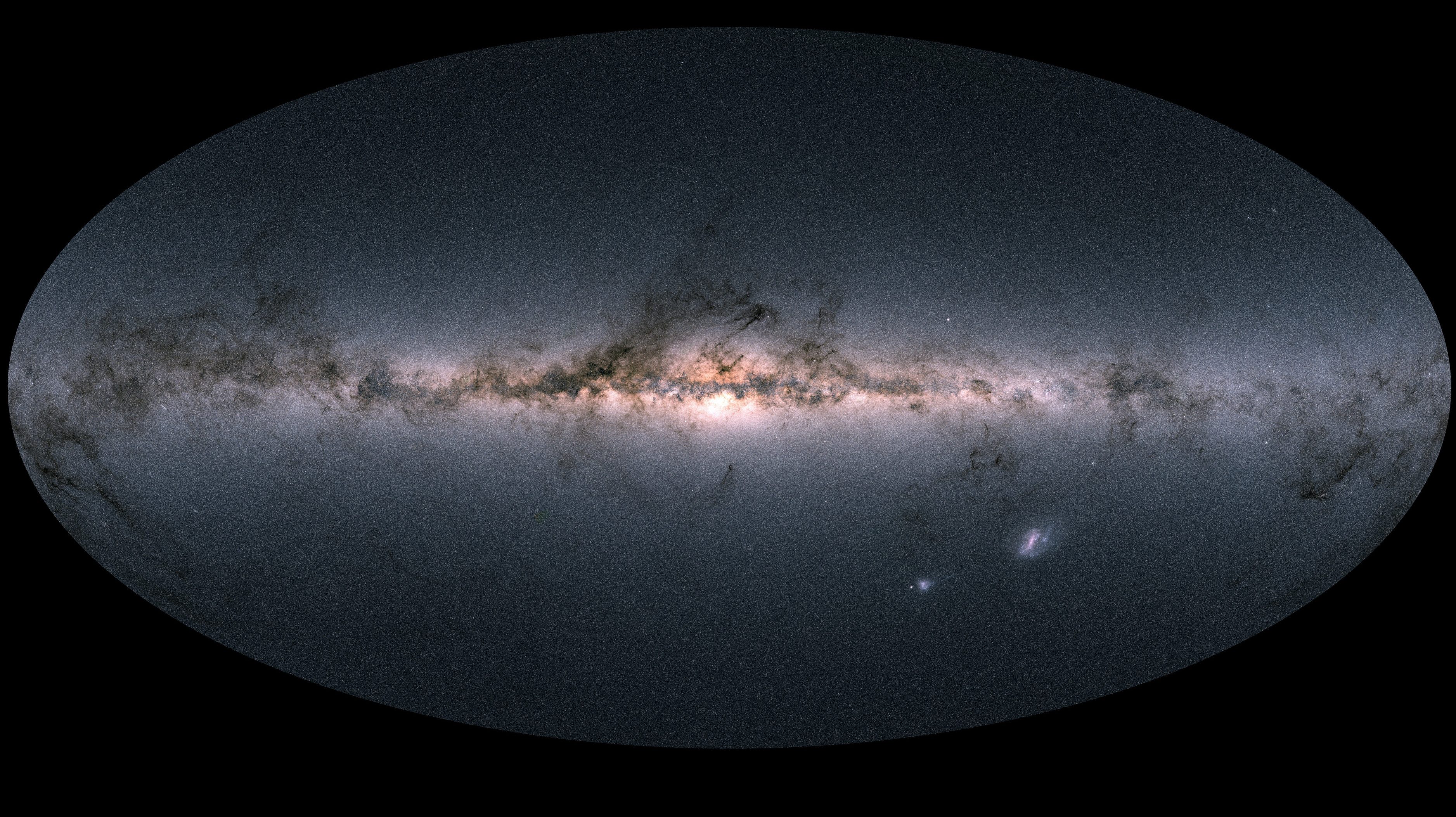
Despite the misnomer, the science behind galactic archaeology is revolutionary. It’s reshaping our understanding of galaxy formation, dark matter distribution, and the chemical evolution of the cosmos. Projects like the Sloan Digital Sky Survey (SDSS) and the upcoming Vera C. Rubin Observatory are mapping millions of stars, building a 3D chemical and kinematic atlas of the Milky Way.
One of the most exciting frontiers is the search for Population III stars—the very first stars ever formed. Though none have been directly observed, their theoretical existence is supported by the chemical patterns seen in the oldest known stars. These primordial stars would have been massive, short-lived, and composed almost entirely of hydrogen and helium. Their supernovae would have polluted the early universe with the first heavy elements, setting the stage for everything that followed.
The Milky Way’s halo contains stars with retrograde orbits—moving opposite to the galaxy’s rotation—suggesting they were captured from other galaxies.
Astronomers use “chemical tagging” to group stars by composition, helping identify stars born from the same molecular cloud.
The Gaia mission has detected stellar streams stretching over 30,000 light-years across the sky.
Some stars in the Milky Way’s halo have such unusual orbits that they may have originated from outside the Local Group of galaxies.
The dream of true galactic archaeology—one where we could directly observe ancient galaxies or recover physical remnants of the first stars—remains out of reach. But that doesn’t diminish the power of what we can do. By combining spectroscopy, astrometry, and simulations, astronomers are building a detailed narrative of cosmic evolution.

In many ways, galactic archaeology is more like forensic science than traditional archaeology. We don’t have the crime scene—the original galaxy—but we have the evidence: the chemical fingerprints, the orbital anomalies, the stellar motions. From these clues, we reconstruct the story of galactic cannibalism, star formation, and chemical enrichment.
And just as forensic scientists use DNA to trace ancestry, astronomers use elemental abundances to trace stellar lineages. A star rich in alpha elements (like oxygen and magnesium) likely formed in a region of rapid star formation, while one rich in iron may have formed later, after multiple supernovae had enriched the interstellar medium.
This chemical genealogy allows us to sort stars into families, much like tracing human ancestry through genetic markers. Some stars are “locals,” born in the Milky Way’s disk. Others are “immigrants,” torn from dwarf galaxies and now orbiting our galaxy as relics of a violent past.
The irony is that while we can’t physically excavate the galaxy’s past, we are, in a sense, made of it. The calcium in your bones, the iron in your blood, the oxygen you breathe—all were created in the furnaces of ancient stars. We are not just observers of cosmic history; we are its products.
So while “galactic archaeology” may be a misnomer, it’s a powerful one. It captures the imagination, evoking images of cosmic detectives piecing together the universe’s origin story. And in doing so, it reminds us that we are not separate from the cosmos—we are part of its ongoing narrative.
The next time you look up at the stars, remember: you’re not just seeing light. You’re seeing history. You’re seeing the echoes of dead stars, the remnants of ancient galaxies, the chemical signatures of a universe that has been evolving for 13.8 billion years. And though we may never dig up a fossil from the dawn of time, we carry its story in every atom of our being.
This article was curated from Why “galactic archaeology” is not archaeology at all via Big Think