Table of Contents
- The Hidden Battlefield at the Edge of Space: How Citizen Scientists Are Unlocking Secrets of the Solar Wind
- A Sonic Boom in Space: Understanding the Bow Shock
- Why the Bow Shock Matters to Life on Earth
- Meet the Detectives: How Citizen Science Is Revolutionizing Space Research
- The Science Behind the Chaos: What Makes Plasma Flip?
- Beyond Earth: How This Research Helps Us Explore the Cosmos
- How You Can Join the Mission
- The Future of Space Weather: A Safer, Smarter Tomorrow
The Hidden Battlefield at the Edge of Space: How Citizen Scientists Are Unlocking Secrets of the Solar Wind
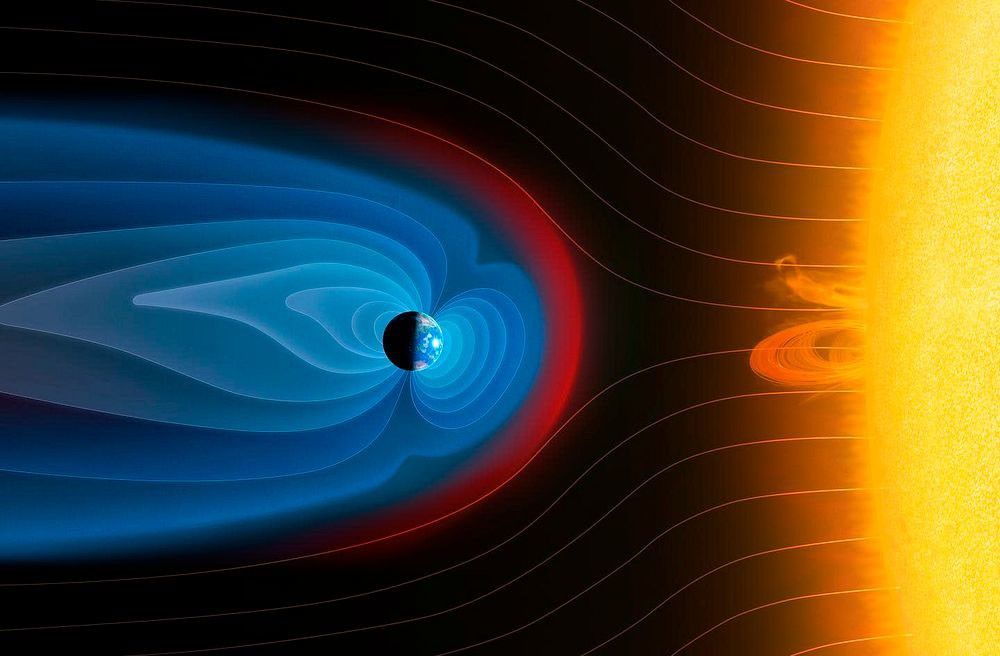
Every second, a torrent of charged particles—mostly protons and electrons—streams outward from the Sun at speeds exceeding a million miles per hour. This relentless flow, known as the solar wind, carves a protective bubble around our solar system called the heliosphere. But before it even reaches Earth, it slams into our planet’s magnetic field, creating a cosmic shockwave akin to a supersonic jet breaking the sound barrier. This invisible boundary, known as the bow shock, is where the solar wind slows, heats up, and changes character—sometimes violently. Now, NASA is calling on everyday people to help decode its mysteries through a groundbreaking citizen science initiative: Shock Detectives.
This isn’t just about understanding space weather—it’s about safeguarding the technology that powers modern life. From GPS navigation to satellite communications and national power grids, our infrastructure is deeply vulnerable to disruptions caused by solar storms. And the key to predicting those disruptions lies in the chaotic, ever-shifting plasma just beyond Earth’s magnetic shield.
A Sonic Boom in Space: Understanding the Bow Shock
Imagine a speedboat cutting through calm water. As it accelerates, it creates a V-shaped wake—a shockwave formed when the boat moves faster than the waves it generates. In space, a similar phenomenon occurs when the solar wind, traveling at supersonic speeds, encounters Earth’s magnetosphere. The result is the bow shock, a curved boundary that acts like a cosmic speed bump.
This shock wave isn’t solid, of course—it’s a region of compressed, heated plasma where magnetic fields twist and currents surge. The thickness of this transition zone can stretch up to 10 miles (17 kilometers), a vast but invisible buffer between the calm of Earth’s magnetic field and the wild, turbulent solar wind.
What makes the bow shock so fascinating—and so difficult to study—is its dual nature. Depending on the orientation and strength of the interplanetary magnetic field, the plasma at the bow shock can behave in two distinct ways: “peaceful” or “chaotic.” In peaceful conditions, the solar wind flows smoothly, transferring minimal energy to Earth’s magnetosphere. But when the magnetic field flips or weakens, the plasma becomes turbulent, unleashing bursts of energy that can ripple through space and down to our planet.
This duality is crucial. When the plasma turns chaotic, it can funnel more energy into Earth’s magnetosphere, triggering geomagnetic storms. These storms don’t just produce stunning auroras—they can also disrupt satellite operations, degrade GPS accuracy, and even induce currents in power lines that can overload transformers and cause blackouts.
Why the Bow Shock Matters to Life on Earth
You might think space weather is a distant concern, relevant only to astronauts and satellite engineers. But the truth is, the bow shock’s behavior has direct, real-world consequences for billions of people.
Consider the Halloween Storms of 2003, a series of powerful solar eruptions that knocked out power in Sweden, disrupted airline communications across the globe, and damaged satellites. One satellite, the $640 million ADEOS-2, was completely lost. The event was so intense that it pushed the aurora borealis as far south as Florida and Texas.
These storms originated from coronal mass ejections (CMEs)—massive bursts of solar wind and magnetic fields—but their impact on Earth was amplified by the state of the bow shock. When the shock was in a chaotic phase, it acted like a funnel, channeling more energy into our magnetosphere and intensifying the storm’s effects.
Modern society is more dependent on space-based technology than ever. Over 3,000 operational satellites orbit Earth, providing everything from weather forecasting to global internet coverage. GPS alone is used by billions daily for navigation, timing, and financial transactions. Even a minor disruption can have cascading effects—imagine delivery trucks losing navigation, airlines rerouting flights, or emergency services struggling to locate callers.
By studying the bow shock, scientists hope to develop better space weather forecasts, much like meteorologists predict hurricanes or thunderstorms. The goal isn’t just to understand the science—it’s to give us early warnings so we can protect critical infrastructure.
Meet the Detectives: How Citizen Science Is Revolutionizing Space Research
NASA has long embraced citizen science, but Shock Detectives represents a new frontier. This project invites volunteers from around the world to analyze data from NASA’s Magnetospheric Multiscale (MMS) mission, a fleet of four spacecraft that orbit Earth and measure magnetic fields, electric currents, and plasma behavior in unprecedented detail.
The challenge? The MMS satellites generate terabytes of data, far too much for a small team of scientists to process manually. That’s where the public comes in.
Volunteers are shown images of the bow shock region—visualizations of plasma density and magnetic field lines—and asked to classify them as either “peaceful” or “chaotic.” These classifications help scientists identify patterns and triggers for the plasma’s shifting behavior. Over time, this crowdsourced data could reveal the “fingerprints” of instability—specific magnetic configurations that precede chaotic events.
Its instruments can measure magnetic fields with a precision of less than a nanotesla—thinner than a human hair in space terms.
The spacecraft fly in a tight tetrahedral formation, allowing them to capture 3D snapshots of plasma dynamics.
Data from MMS has already led to over 500 scientific publications.
Citizen scientists have contributed to discoveries in plasma physics, including the detection of electron-scale magnetic reconnection.
This approach isn’t just efficient—it’s transformative. Human eyes are often better than algorithms at spotting subtle patterns or anomalies in complex visual data. In fact, similar citizen science projects, like Galaxy Zoo and Planet Hunters, have led to major astronomical discoveries, including new types of galaxies and exoplanets.
Shock Detectives is part of a broader movement to democratize science. Anyone with a computer and curiosity can contribute—no PhD required. And the impact is global: volunteers from over 100 countries have already signed up.
The Science Behind the Chaos: What Makes Plasma Flip?
So what causes the plasma at the bow shock to switch between peaceful and chaotic states? The answer lies in the interplanetary magnetic field (IMF)—the magnetic field carried by the solar wind.
When the IMF is aligned in a certain way relative to Earth’s magnetic field, the interaction is relatively smooth. But when the IMF points southward (opposite Earth’s northward field), it can “reconnect” with Earth’s magnetosphere, opening a door for solar wind energy to flood in.
This magnetic reconnection is like a cosmic short circuit. It allows charged particles to stream into the magnetosphere, accelerating them to high speeds and creating turbulence. The result? A chaotic bow shock that pumps energy into Earth’s space environment.
Scientists are still unraveling the precise conditions that trigger these transitions. Factors like solar wind speed, density, and temperature all play a role. But the timing and location of the switch from peaceful to chaotic remain unpredictable.
That’s why data from Shock Detectives is so valuable. By analyzing thousands of bow shock images, volunteers can help identify precursors—early signs that the plasma is about to become unstable. This could lead to predictive models that give us hours or even days of warning before a geomagnetic storm hits.
Beyond Earth: How This Research Helps Us Explore the Cosmos
While the immediate goal of Shock Detectives is to protect Earth, the long-term implications stretch far beyond our planet.
Every star in the universe emits a stellar wind—some more intense than the Sun’s. When that wind hits a planet’s magnetic field, it creates a bow shock, just like Earth’s. Understanding how these shocks behave could help us assess the habitability of exoplanets.
For example, a planet with a weak magnetic field might experience constant bombardment from its star’s wind, stripping away its atmosphere over time—much like what happened to Mars. But if we can predict how stellar winds interact with planetary magnetic fields, we can better identify worlds that might support life.
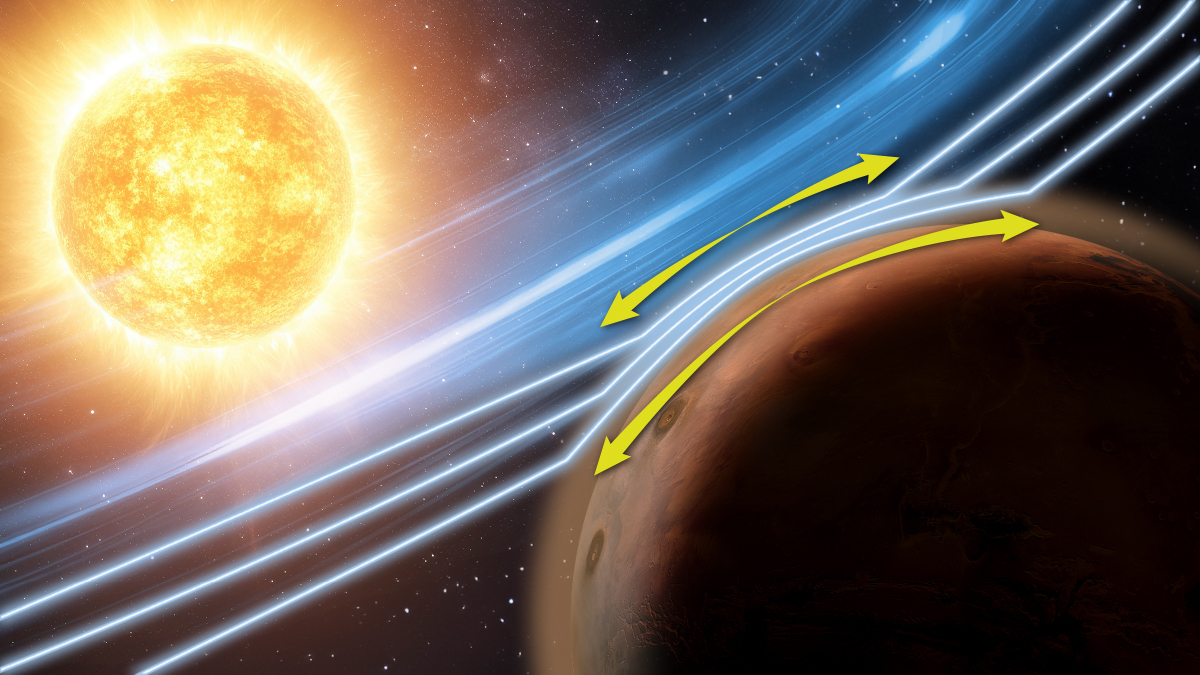
Shock Detectives isn’t just about Earth. It’s about building a universal understanding of how stars and planets interact across the cosmos. The same physics that governs our bow shock applies to red dwarfs, neutron stars, and even black holes.
And as we prepare for future missions to Mars and beyond, this knowledge will be critical. Spacecraft traveling through the solar system will encounter shock waves at the boundaries of planetary magnetospheres. Understanding these regions could help engineers design better shielding and navigation systems.
How You Can Join the Mission
Ready to become a Shock Detective? The process is simple and accessible to all.
Visit the official project page at https://go.nasa.gov/4wILD6Y and create a free account. You’ll be guided through a short tutorial that explains how to identify peaceful and chaotic plasma states. Then, you’ll start analyzing real data from the MMS mission.
Each classification you make contributes to a growing database that scientists use to train machine learning models and test new theories. And you don’t need to be an expert—many volunteers report that the tutorial makes the science easy to grasp.
The project is part of NASA’s broader Citizen Science Program, which includes over 50 active projects spanning astronomy, climate science, biology, and more. Whether you’re a student, a teacher, or just a curious mind, there’s a role for you.
And your contributions matter. In the vast, silent expanse of space, even small insights can lead to giant leaps in understanding.
The Future of Space Weather: A Safer, Smarter Tomorrow
As our reliance on technology grows, so does our vulnerability to space weather. But with projects like Shock Detectives, we’re not just reacting to solar storms—we’re learning to predict them.
By combining cutting-edge satellite data with the collective power of citizen scientists, NASA is building a new kind of space weather forecasting system. One that’s faster, more accurate, and more inclusive than ever before.
The bow shock may be invisible, but its effects are very real. And thanks to the growing army of Shock Detectives, we’re finally beginning to see the patterns in the chaos.
So the next time you check your GPS, send a text, or flip on a light switch, remember: you’re connected to a vast, dynamic system that stretches from the Sun to the edge of space. And now, you can help protect it.
Join the mission. Become a detective. Help NASA solve one of the universe’s most electrifying mysteries.
This article was curated from NASA’s New Shock Detectives Project Invites Volunteers to Help Study Solar Wind via NASA Breaking News