The Vanishing Night: How Light Pollution Is Erasing the Stars from Human Sight
For most of human history, the night sky was a celestial tapestry—a vast, shimmering expanse of stars, nebulae, and galaxies that inspired myths, guided navigation, and fueled scientific discovery. Our ancestors looked up and saw not just darkness, but a universe alive with light. Today, that same sky is disappearing. More than 80% of the world’s population now lives under light-polluted skies, and in many urban areas, the number of visible stars has plummeted from thousands to just a few dozen. The Milky Way, once so bright it cast shadows on the ground, is now invisible to nearly one-third of humanity. This isn’t just a loss of beauty—it’s a profound disconnection from our cosmic heritage.
The transformation began slowly with gas lighting in the 18th century, but accelerated dramatically with the advent of electric lighting in the 20th century. What was once a tool for safety and productivity has become an environmental and cultural crisis. Artificial light now bathes cities, highways, and even remote areas in a perpetual twilight, drowning out the natural glow of the cosmos. The result? A sky that feels emptier, colder, and less wondrous than ever before.
A Sky Once Full of Stars: The Pristine Night Experience
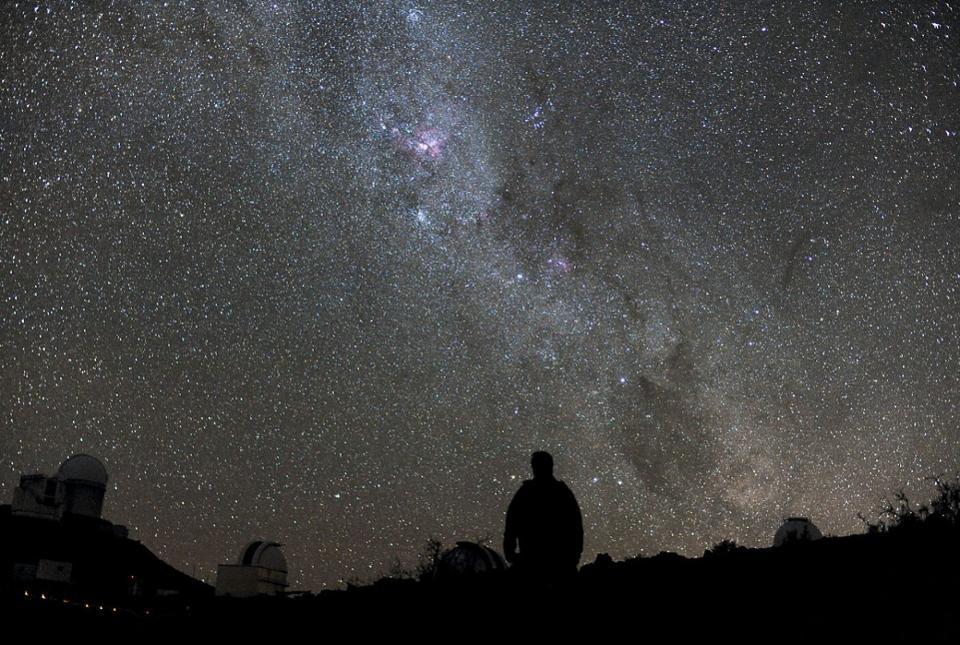
Imagine standing on a mountain peak far from city lights, the air crisp and clear. Above you, the sky is not black, but a deep velvet blue, pierced by thousands of pinpricks of light. The Milky Way arcs across the heavens like a river of diamonds, so dense and bright that it casts faint shadows on the ground. To the unaided eye, between 6,000 and 9,000 stars are visible at any given moment—assuming you could see the entire sky at once. This is the view our ancestors experienced for tens of thousands of years.
Before artificial lighting, the night sky was humanity’s primary source of celestial illumination. The Moon, planets, and stars were not just points of light—they were guides, calendars, and storytellers. Ancient civilizations built monuments aligned with solstices and equinoxes, tracked seasons by the movement of constellations, and wove myths around the patterns they saw above. The night was alive with meaning.
Even faint objects like the Large and Small Magellanic Clouds—satellite galaxies of the Milky Way—were visible to the naked eye in the Southern Hemisphere. And though most people today don’t realize it, only four galaxies beyond our own are visible without a telescope: the Magellanic Clouds, Andromeda (M31), and the Triangulum Galaxy (M33). These distant islands of stars were unknown as galaxies until the 1920s, long after Einstein had revolutionized physics with general relativity. Their visibility reminds us how much the night sky once revealed—and how much we’ve lost.
The Bortle Scale: Measuring the Darkness We’ve Lost
To quantify the loss of night sky quality, astronomers use the Bortle Scale, a nine-level system that ranks sky darkness from Class 1 (pristine, dark-sky sites) to Class 9 (inner-city skies). A Class 1 sky, found in remote locations like the Atacama Desert or Antarctica, offers views of the Milky Way so vivid it appears to have texture and depth. In such places, zodiacal light—the faint glow from sunlight reflecting off interplanetary dust—is clearly visible.
But in Class 9 skies, like those over New York City or Tokyo, the Milky Way is utterly invisible. Only the brightest stars and planets remain, and even they are often drowned out by the orange haze of sodium-vapor streetlights. The difference is staggering: a Class 1 sky may show 7,000 stars, while a Class 9 sky reveals fewer than 50.
The scale also accounts for natural phenomena. A full Moon, for example, can elevate a dark sky to a Bortle 7 or 8, temporarily mimicking moderate light pollution. This underscores how powerful artificial lighting has become—our cities now rival or exceed the brightness of a moonlit night.
In Europe, over 60% of people live under skies where the Milky Way is invisible.
The Bortle Scale was developed in 2001 by John E. Bortle, a contributing editor for Sky & Telescope magazine.
True dark-sky preserves—areas with minimal light pollution—cover less than 1% of Earth’s land surface.
The International Dark-Sky Association (IDA) has certified over 200 dark-sky parks and reserves worldwide.
Light Pollution: The Invisible Pollutant
Light pollution is often called the “invisible pollutant” because its effects are subtle but widespread. Unlike smog or plastic waste, it doesn’t leave a physical residue—but its impact on ecosystems, human health, and astronomy is profound. Artificial light at night (ALAN) disrupts circadian rhythms in humans, suppresses melatonin production, and is linked to increased risks of sleep disorders, depression, and even certain cancers.
For wildlife, the consequences are even more severe. Sea turtle hatchlings, which rely on the natural glow of the horizon to find the ocean, are disoriented by beachfront lighting and crawl inland, where they die. Migratory birds, which navigate by starlight, collide with brightly lit skyscrapers in the millions each year. Insects, crucial pollinators, are drawn to streetlights and die in droves, contributing to global declines in insect populations.
Even astronomy is under siege. Ground-based telescopes, no matter how powerful, struggle to see faint objects when the sky background is artificially brightened. The European Southern Observatory’s Very Large Telescope in Chile, for instance, sits atop a remote mountain to escape light pollution—but even there, the glow from distant cities is increasing.
Satellites and the New Frontier of Sky Pollution
Just as we were beginning to understand the impact of ground-based lighting, a new threat has emerged: megaconstellations of satellites. Companies like SpaceX, Amazon, and OneWeb are launching thousands of satellites into low Earth orbit to provide global internet coverage. While beneficial for connectivity, these satellites reflect sunlight and appear as bright, moving streaks across the night sky.
Astronomers have raised alarms: these satellites interfere with long-exposure imaging, creating bright trails that ruin deep-sky photographs. The Vera C. Rubin Observatory in Chile, designed to survey the entire sky every few nights, is particularly vulnerable. Scientists estimate that by the mid-2020s, up to 10% of twilight images could be affected by satellite trails.
Even casual stargazers are affected. What was once a serene, unchanging backdrop is now punctuated by artificial “stars” moving in unison. For Indigenous communities, whose cultural practices and oral histories are tied to the stars, this intrusion feels like a desecration of sacred space.
The Cultural and Psychological Cost of a Diminished Sky

Beyond science and ecology, the loss of the night sky carries a deeper, more personal cost. For millennia, the stars have been a source of wonder, inspiration, and connection. Poets, philosophers, and scientists have looked upward and asked fundamental questions about our place in the universe. Today, many children grow up never having seen the Milky Way.
This “extinction of experience,” as researchers call it, weakens our emotional and cultural bond with nature. Studies show that people who spend time under dark skies report higher levels of awe, well-being, and environmental concern. Conversely, light pollution contributes to a sense of disconnection—not just from the cosmos, but from each other and the natural world.
Indigenous cultures, in particular, have long viewed the night sky as a living text. The Aboriginal Australians, for example, see the Milky Way as a river in the sky, with constellations representing ancestral beings. For them, light pollution isn’t just an inconvenience—it’s an erasure of identity and heritage.
Fighting Back: The Dark Sky Movement
Despite the challenges, a global movement to reclaim the night is gaining momentum. The International Dark-Sky Association (IDA), founded in 1988, works to preserve and protect the night sky through education, policy advocacy, and certification of dark-sky places. Communities are adopting “dark sky ordinances” that require shielded, downward-facing lighting and warmer color temperatures.

Cities like Tucson, Arizona, and Flagstaff, Arizona, have long been leaders in outdoor lighting reform. Flagstaff became the world’s first International Dark-Sky City in 2001, and its efforts have preserved conditions for both astronomers and residents. New technologies, such as motion-sensor lighting and LED fixtures with reduced blue-light emission, are helping reduce skyglow without sacrificing safety.
Even individuals can make a difference. Simple changes—like using motion-activated lights, closing curtains at night, and choosing warm-colored bulbs—can significantly reduce light pollution. Apps like “Loss of the Night” allow users to measure sky brightness with their smartphones, turning citizen science into a tool for change.
Reclaiming the Night: A Call to Wonder
The night sky is not a luxury—it’s a birthright. It belongs to every person, regardless of where they live. Reclaiming it requires more than policy changes; it demands a cultural shift. We must relearn how to live with darkness, not against it. We must teach children to look up, not just at screens.
Imagine a world where city dwellers can see the Milky Way again. Where astronomers no longer fight to protect their view. Where a child in Mumbai or Mexico City can point to Andromeda and say, “That’s another galaxy.” That world is still possible—but only if we act now.
The stars are still there. They haven’t gone anywhere. But we’ve built a veil of light between us and the cosmos. It’s time to lift it.
This article was curated from Less of the night sky is visible than ever before via Big Think