Table of Contents

Hubble Spies a Galactic Ghost: The Mysterious Case of NGC 1266
In the vast cosmic theater of the universe, galaxies are not static monuments—they are dynamic, evolving entities shaped by collisions, star births, and silent transformations. One such enigmatic performer recently stepped into the spotlight thanks to the sharp eye of the Hubble Space Telescope: NGC 1266, a galaxy caught in a rare and fleeting cosmic transition. Located 100 million light-years away in the constellation Eridanus, this lenticular galaxy is not just another spiral or elliptical—it’s a celestial hybrid, a post-starburst galaxy frozen in a moment of profound change. With its bright core, dusty lanes, and lack of spiral arms, NGC 1266 offers astronomers a rare window into how galaxies evolve, die, and reinvent themselves over billions of years.
What makes NGC 1266 so extraordinary isn’t just its appearance—it’s what it represents: a galaxy in the midst of a quiet revolution. Once a bustling metropolis of star formation, it now stands as a ghostly remnant, its stellar nurseries extinguished, its spiral structure faded into a lens-shaped silhouette. This transition, though common over cosmic timescales, is rarely observed in real time. Hubble’s high-resolution imaging has allowed scientists to peer through the dust and gas, revealing not just the galaxy’s current state, but clues to its violent past and uncertain future.
The Anatomy of a Transitional Galaxy
NGC 1266 belongs to a class known as lenticular galaxies—a cosmic middle child between spirals like our Milky Way and featureless ellipticals. These galaxies possess a bright central bulge and a flattened disk, much like spiral galaxies, but they lack the sweeping arms of star-forming regions. Imagine a galaxy that once had the elegant swirl of a pinwheel but has since lost its momentum, collapsing into a more subdued, lens-like form. This structural shift is not just cosmetic; it signals a deep internal transformation.
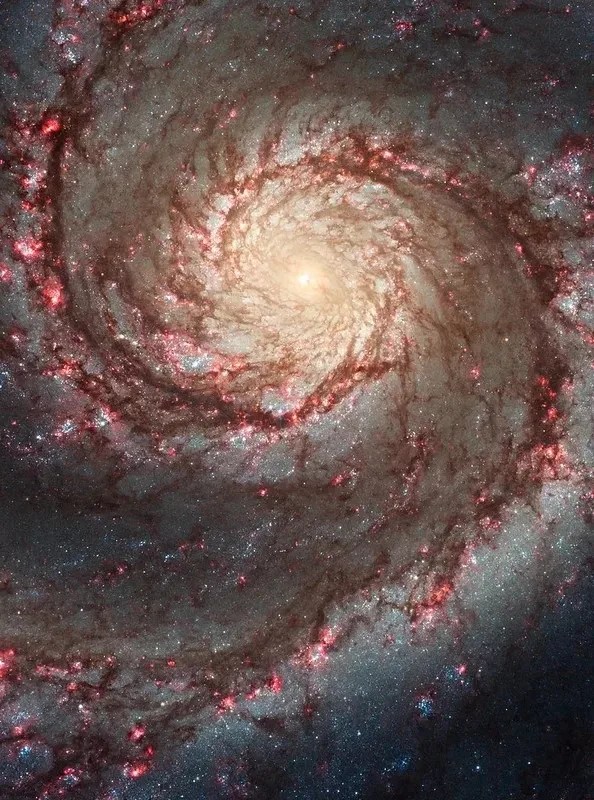
Lenticular galaxies are often considered evolutionary stepping stones. They may begin as spirals, rich with gas and dust, where new stars ignite in brilliant nurseries. But over time, gravitational interactions, mergers, or internal processes can strip away the raw materials needed for star formation. The result is a galaxy that looks like a spiral but behaves like an elliptical—quiet, aging, and slowly fading. NGC 1266 fits this description perfectly, but with a twist: it’s not just any lenticular. It’s a post-starburst galaxy, meaning it recently underwent a massive burst of star formation that has since abruptly ended.
This recent burst, likely triggered by a minor merger about 500 million years ago, would have flooded the galaxy with newborn stars. But instead of continuing, the process screeched to a halt. The gas needed to fuel new stars was either consumed, expelled, or heated beyond usability. Now, NGC 1266 is left with a population of young, hot stars, but no new ones are being born. It’s a galaxy caught between youth and old age—a celestial adolescent unsure of its identity.
Hubble’s Role in Unveiling Galactic Evolution
The Hubble Space Telescope has been instrumental in decoding the life stories of galaxies like NGC 1266. Orbiting above Earth’s atmosphere, Hubble avoids the blurring effects of air turbulence, allowing it to capture images with unprecedented clarity. Its suite of instruments—including the Wide Field Camera 3 and the Advanced Camera for Surveys—can peer through dust clouds and resolve fine details that ground-based telescopes miss.
In the case of NGC 1266, Hubble’s ability to detect multiple wavelengths of light is crucial. The reddish-brown filaments seen in the image are not just aesthetic—they are dense clouds of dust and gas, remnants of the galaxy’s active past. These dusty lanes partially obscure the galaxy’s face, much like smudges on a window, but Hubble’s infrared capabilities allow scientists to peer through them. Meanwhile, the blue and orange pinpricks in the background are distant galaxies, their light shining through NGC 1266’s diffuse outer regions, offering a cosmic backdrop that highlights the galaxy’s transparency and age.
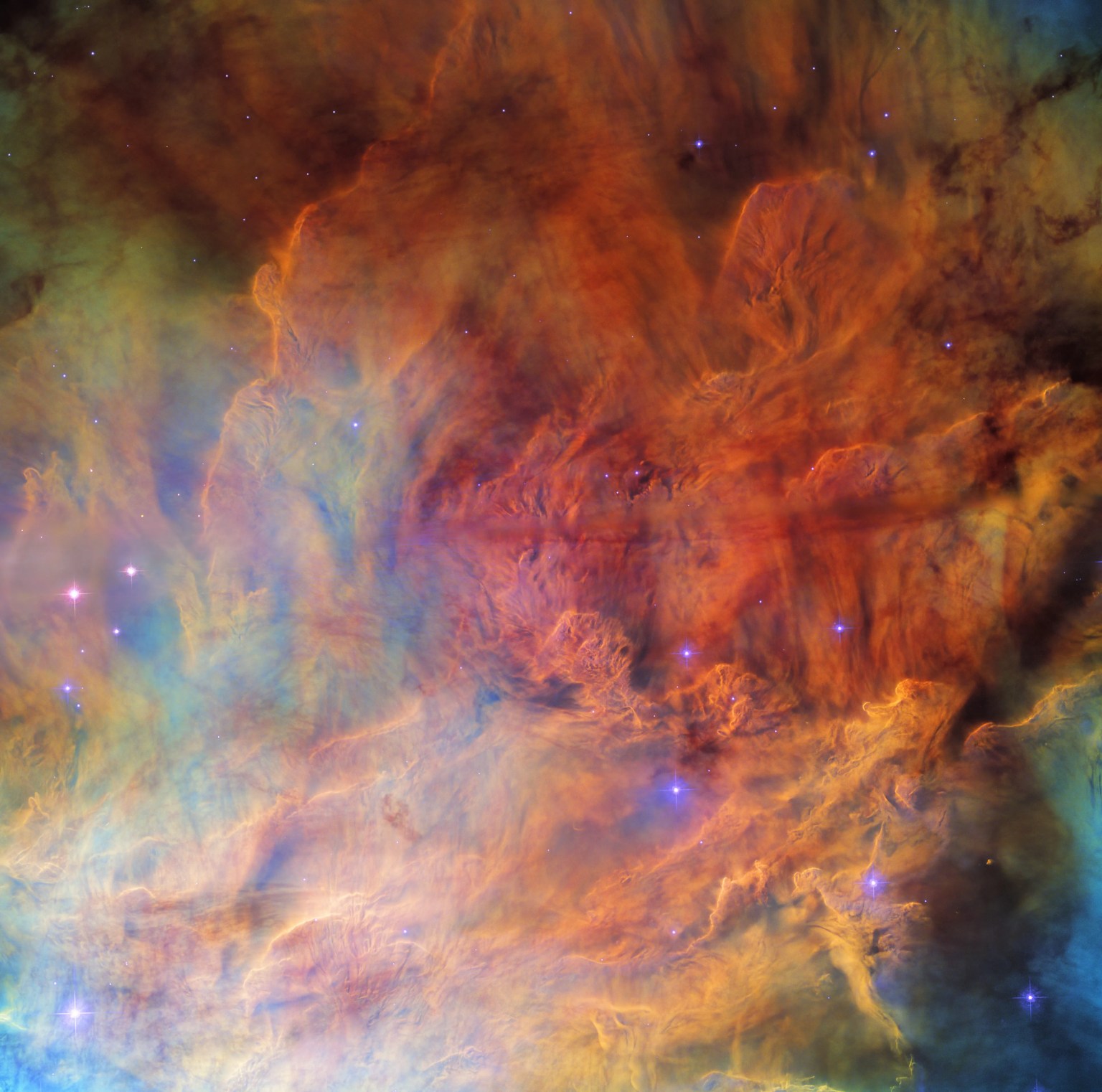
What makes Hubble’s view of NGC 1266 so valuable is not just the image itself, but the data behind it. By analyzing the colors and spectra of light from different regions, astronomers can determine the age, temperature, and composition of stars. In NGC 1266, they’ve found a mix: a dominant population of young, blue stars near the center, surrounded by older, redder stars in the outer disk. This age gradient supports the theory of a recent starburst followed by quenching—a sudden shutdown of star formation.
The Violent Past of a Quiet Galaxy
So what caused NGC 1266’s dramatic transformation? The leading theory points to a minor merger—a collision with a smaller galaxy roughly 500 million years ago. Unlike major mergers that can create chaotic, irregular galaxies, minor mergers are subtler but still powerful enough to disrupt a galaxy’s equilibrium. When the smaller galaxy passed through or near NGC 1266, its gravitational pull would have stirred up the gas and dust, triggering a wave of star formation.
This burst would have been spectacular. For a brief cosmic moment, NGC 1266 may have shone brighter than usual, churning out stars at a rate dozens of times faster than the Milky Way. But such frenzies are unsustainable. The very process of star formation consumes gas, and without a steady supply, the fuel runs out. Additionally, the energy from supernovae—explosions of massive stars—can heat and expel remaining gas, preventing new stars from forming.
Only about 1% of nearby galaxies are post-starburst types, making NGC 1266 a rare specimen.
The galaxy’s central black hole may have played a role in quenching star formation by emitting powerful jets of energy.
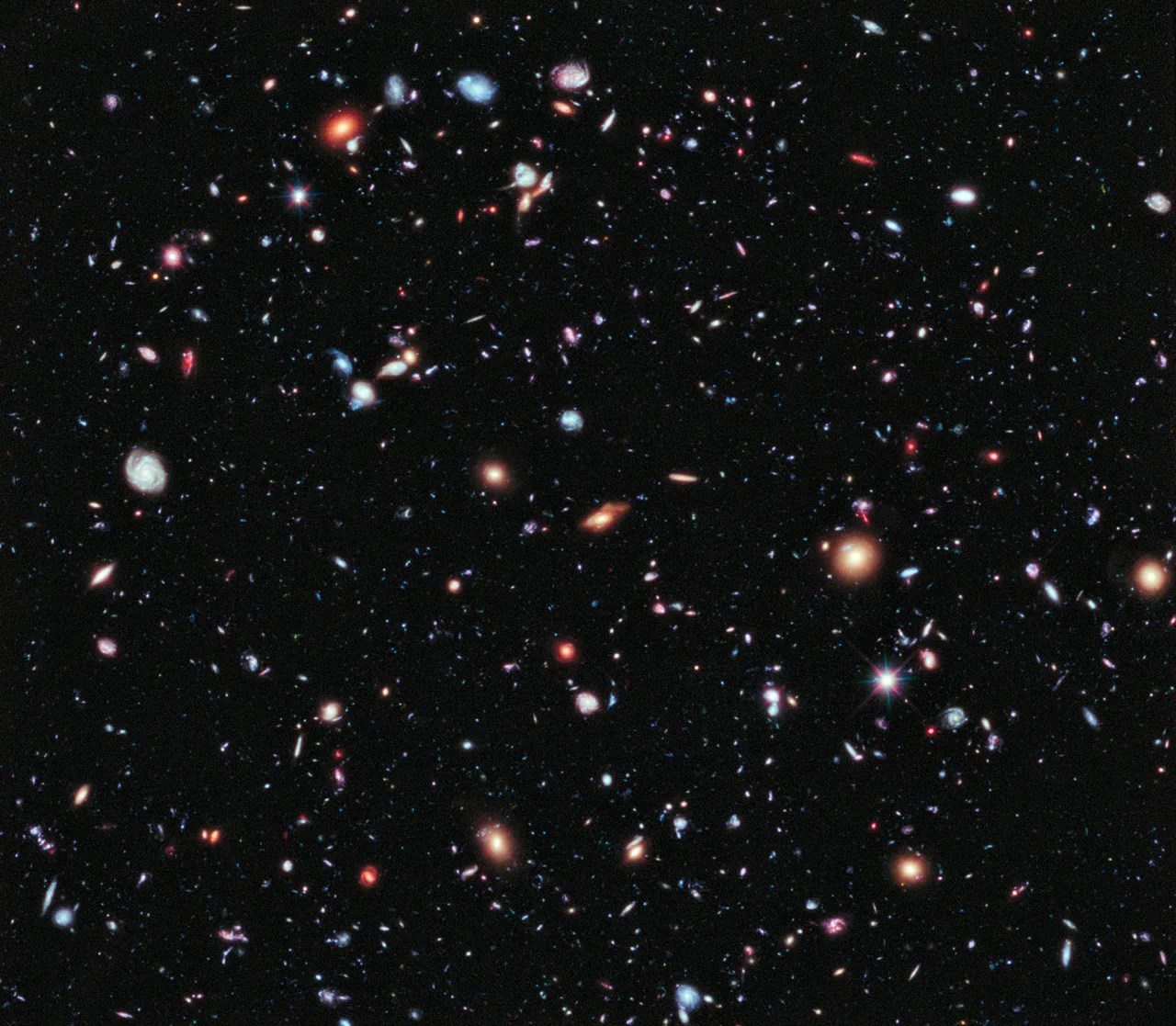
Hubble has observed over 1.5 million objects since 1990, but only a fraction are as dynamically intriguing as NGC 1266.
The merger that affected NGC 1266 occurred when the universe was about 13 billion years old—relatively recent in cosmic terms.
Interestingly, supermassive black holes may also contribute to this quenching process. Many galaxies, including NGC 1266, host a massive black hole at their center. When gas falls toward the black hole, it can release enormous amounts of energy in the form of radiation and jets. This energy can heat surrounding gas, preventing it from cooling and collapsing into new stars. In NGC 1266, evidence suggests that such feedback mechanisms may have helped shut down star formation after the merger-induced burst.
Why Post-Starburst Galaxies Matter
Studying galaxies like NGC 1266 isn’t just about satisfying curiosity—it’s about understanding the life cycle of the universe itself. Galaxies are the building blocks of cosmic structure, and their evolution shapes everything from the distribution of matter to the formation of planets and life. Post-starburst galaxies are particularly important because they represent a critical transition phase—a moment when a galaxy shifts from active growth to passive aging.
These galaxies help astronomers test theories of galaxy evolution. For example, the merger-driven evolution model suggests that most galaxies evolve through collisions and interactions. NGC 1266 supports this idea, showing how a minor merger can trigger and then halt star formation. But not all post-starburst galaxies are created equal. Some may result from internal processes, like the depletion of gas reservoirs, while others are influenced by their environment—such as falling into a galaxy cluster where hot gas strips away cooler material.
Moreover, post-starburst galaxies may hold clues to the future of our own Milky Way. In about 4 billion years, the Milky Way is expected to collide with the Andromeda Galaxy. While this won’t destroy Earth, it will dramatically alter our galaxy’s structure, likely triggering a starburst followed by quenching. Studying NGC 1266 gives us a preview of what that future might look like—a quieter, redder galaxy with fewer new stars and a more centralized bulge.
Hubble’s Legacy and the Future of Galactic Astronomy
The discovery and analysis of NGC 1266 underscore Hubble’s enduring impact on astronomy. Since its launch in 1990, Hubble has revolutionized our understanding of the universe, from measuring the rate of cosmic expansion to capturing the deepest views of the early universe. Its observations of transitional galaxies like NGC 1266 fill in critical gaps in our knowledge, revealing how galaxies change over time.
But Hubble is not alone. It works in concert with other observatories, both in space and on the ground. The James Webb Space Telescope, for instance, can peer even deeper into dusty regions with its infrared vision, potentially uncovering hidden star formation or black hole activity in galaxies like NGC 1266. Meanwhile, radio telescopes can map the distribution of cold gas, helping scientists understand what fuels—or stifles—star formation.
As technology advances, so does our ability to study galactic evolution. Citizen science projects, AI-driven data analysis, and 3D modeling tools are making astronomy more accessible and powerful than ever. And while Hubble may one day retire, its discoveries—like the enigmatic NGC 1266—will continue to inspire future missions and generations of stargazers.
In the end, galaxies like NGC 1266 remind us that the universe is not static. It is a place of constant change, where even the most distant objects are shaped by forces both violent and subtle. Through Hubble’s lens, we don’t just see a galaxy—we witness a story of birth, transformation, and quiet decline, written in light across 100 million years of cosmic history.
This article was curated from Hubble Sights Galaxy in Transition via NASA Breaking News