Table of Contents
- The Rise of the Dragon: How China Became an EV Powerhouse
- Tech That Turns Heads: Infotainment, AI, and the “Living Room on Wheels”
- Range, Charging, and the Myth of the “Gas Tank Comparison”
- The U.S. Tariff Wall: Protectionism or Prudence?
- Consumer Appetite vs. Political Reality
- The Road Ahead: Can the West Catch Up?
China’s Electric Revolution: Are Chinese EVs Really the Future of Driving?
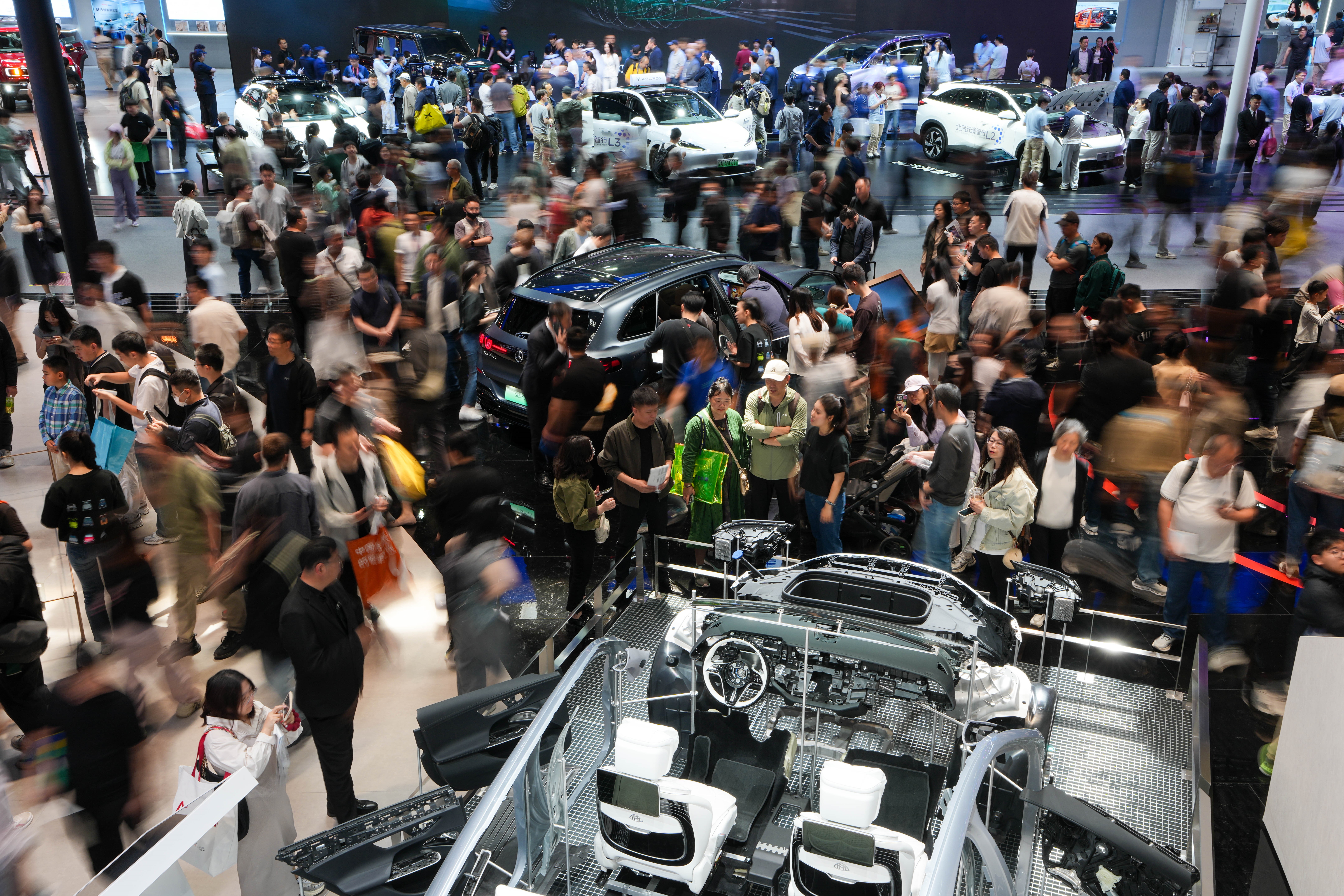
In a world where electric vehicles (EVs) are no longer a futuristic fantasy but a rapidly evolving reality, one country has surged to the forefront with breathtaking speed: China. From sleek sedans that double as mobile offices to SUVs with range figures that dwarf their Western counterparts, Chinese automakers are redefining what an electric car can be. The Beijing Auto Show—currently in full swing—serves as a dazzling showcase of this transformation, offering a rare glimpse into a market that’s not just catching up, but arguably leading the global EV race. But behind the glossy displays and jaw-dropping specs lies a complex web of innovation, geopolitics, and consumer skepticism. Are Chinese EVs truly as revolutionary as they appear? Or is the hype outpacing the reality?
To answer that, we must look beyond the headlines and tariffs, beyond the political posturing and protectionist policies, and into the heart of a technological and industrial shift that’s reshaping transportation as we know it.
The Rise of the Dragon: How China Became an EV Powerhouse
China’s ascent in the EV world didn’t happen overnight. It was the result of a decades-long strategy that blended government vision, massive investment, and a willingness to experiment at scale. Starting in the early 2000s, the Chinese government began aggressively promoting electric mobility as part of a broader effort to reduce air pollution, curb dependence on imported oil, and establish technological leadership. Subsidies, tax breaks, and mandates for state-owned enterprises to purchase EVs laid the foundation for a domestic market that could support homegrown innovation.
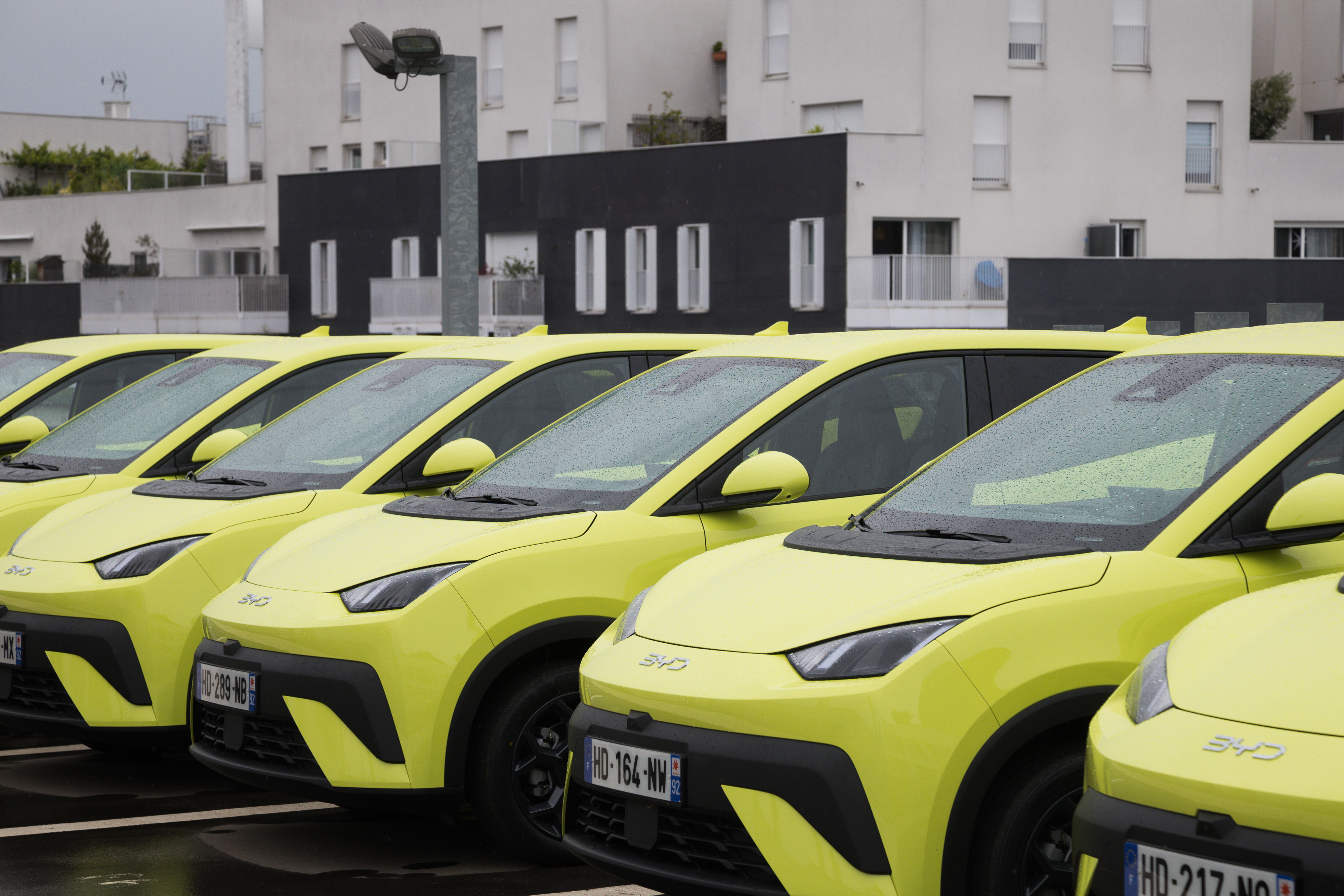
By 2023, China accounted for over 60% of global EV sales, with more than 8 million electric vehicles sold—more than the entire U.S. auto market. Companies like BYD, NIO, XPeng, and Li Auto have emerged as serious contenders, not just in China but increasingly in Europe, Southeast Asia, and Latin America. BYD, for instance, surpassed Tesla in global EV sales in late 2023, a milestone that sent shockwaves through the industry.
What’s more, Chinese automakers aren’t just building cars—they’re building entire ecosystems. From battery production to charging infrastructure, software integration to autonomous driving, Chinese firms are vertically integrated in ways that Western automakers are only beginning to emulate. This holistic approach allows them to innovate faster, cut costs, and respond to consumer demands with remarkable agility.
Tech That Turns Heads: Infotainment, AI, and the “Living Room on Wheels”
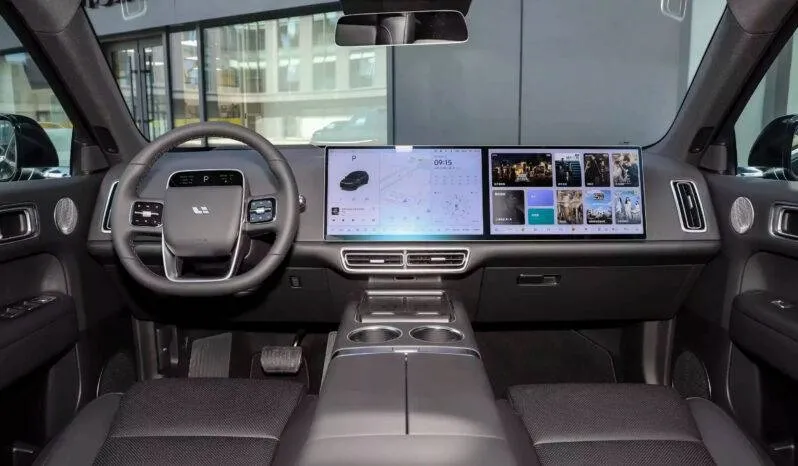
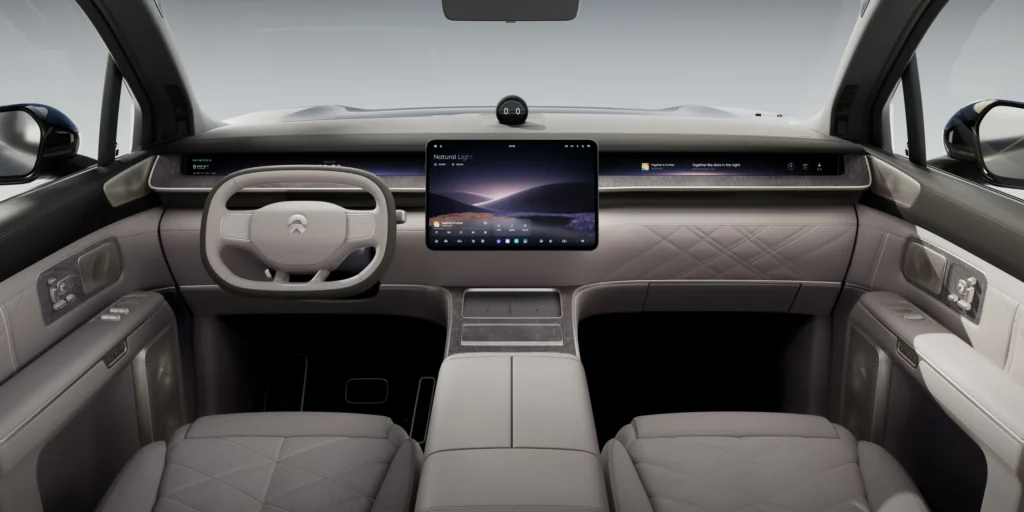
One of the most striking differences between Chinese EVs and their Western counterparts is the level of digital integration. Step inside a NIO ET7 or a XPeng G9, and you’re not just entering a car—you’re stepping into a high-tech command center. Massive curved OLED screens span the dashboard, voice assistants respond to natural language with near-human fluency, and augmented reality navigation projects directions onto the windshield like something out of a sci-fi movie.
These vehicles are designed not just for driving, but for living. Many Chinese EVs feature built-in karaoke systems, gaming consoles, and even mini-refrigerators. Some models come with swiveling front seats that transform the cabin into a meeting room or lounge space. It’s no exaggeration to say that Chinese automakers are reimagining the car as a “third space”—a mobile extension of home and office.
This focus on user experience is driven by a cultural shift. In China, where smartphone penetration is nearly universal and digital lifestyles are deeply embedded, consumers expect seamless connectivity and constant innovation. Automakers have responded by treating software as a core product, not an afterthought. Over-the-air updates can add new features overnight, from improved autopilot capabilities to entirely new entertainment apps.
Range, Charging, and the Myth of the “Gas Tank Comparison”
Range anxiety remains one of the biggest barriers to EV adoption worldwide. But Chinese automakers are tackling it head-on. Many new models boast ranges exceeding 700 kilometers (over 430 miles) on a single charge—surpassing even the longest-range Teslas. The Zeekr 001, for example, offers up to 780 km (485 miles) under China’s CLTC testing cycle, while the BYD Seal can go over 700 km (435 miles).
But range is only half the story. Charging speed is where Chinese EVs are truly breaking new ground. With advancements in 800-volt architectures and silicon carbide semiconductors, charging times are plummeting. The aforementioned NIO ET5 isn’t an outlier—dozens of models now support charging speeds that can add 300+ kilometers of range in under 15 minutes.
To put this in perspective, filling a gas tank takes about 5 minutes, but you’re limited by the size of the tank. An EV with a 100 kWh battery can theoretically accept energy faster than a gas pump can deliver fuel, especially as charging infrastructure improves. In China, where ultra-fast charging networks are expanding rapidly, the gap between refueling a gas car and recharging an EV is shrinking fast.
The U.S. Tariff Wall: Protectionism or Prudence?
Despite the technological leap, Chinese EVs remain largely absent from American roads. The reasons are less about performance and more about politics. In 2024, President Biden imposed a 100% tariff on Chinese EVs, effectively doubling their price and making them uncompetitive in the U.S. market. This move was followed by additional tariffs under the Trump administration and bipartisan legislation restricting the use of Chinese-connected car software due to national security concerns.
Critics argue these measures are less about safety and more about protecting domestic automakers from disruption. The U.S. auto industry, still transitioning from internal combustion engines, fears being overwhelmed by cheaper, more advanced Chinese imports. But supporters of the tariffs say they’re necessary to prevent data harvesting, cyber espionage, and unfair trade practices.
The irony? Many of the components in American-made EVs—from batteries to semiconductors—are already sourced from China. The global supply chain is so intertwined that complete decoupling is nearly impossible. Moreover, Chinese automakers like BYD are building factories in Mexico and Hungary, potentially bypassing U.S. tariffs through third countries.
The U.S. has a long history of protecting its auto industry—from the 1980s “voluntary export restraints” on Japanese cars to the 2009 bailout of GM and Chrysler. Tariffs on Chinese EVs may be the latest chapter in a recurring story of economic nationalism.
Consumer Appetite vs. Political Reality
While Washington debates tariffs and security risks, online communities are buzzing with excitement. On platforms like Reddit, Bluesky, and YouTube, American car enthusiasts are raving about Chinese EVs. Videos comparing the $25,000 BYD Dolphin to the $40,000 Tesla Model 3 have gone viral, with many viewers stunned by the value proposition.
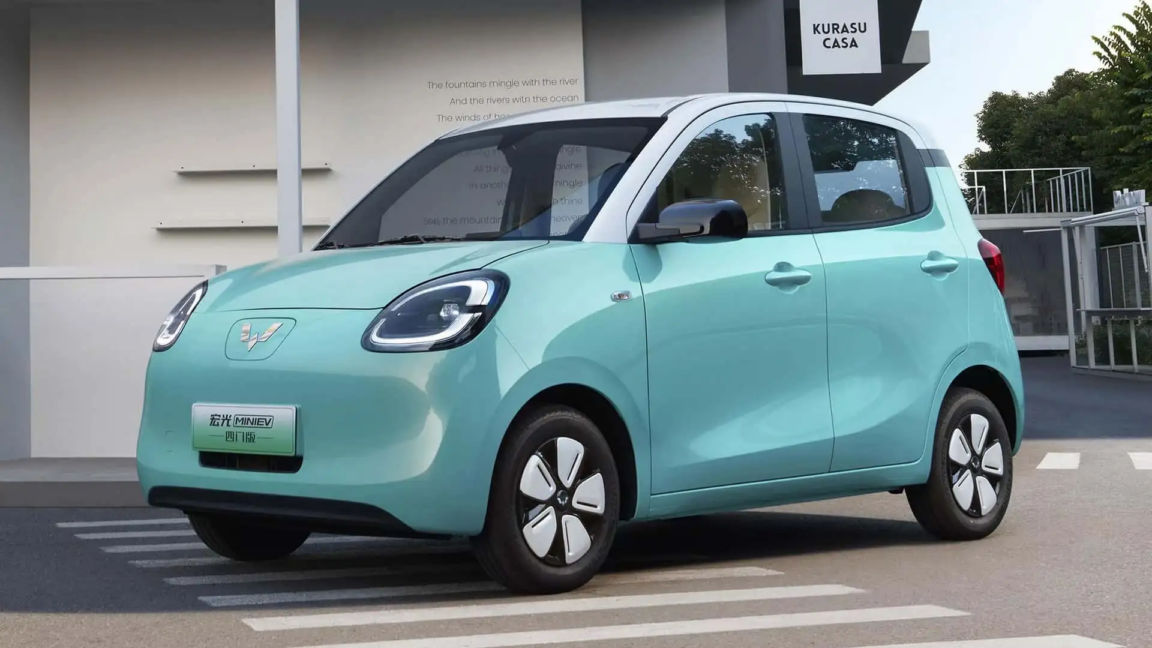
Headlines like “For the price of one American car, you could buy five Chinese EVs” are not entirely hyperbolic. The BYD Seagull, for example, starts at around $11,000 in China—less than a used Toyota Corolla. Even after shipping and tariffs, it would likely undercut most entry-level EVs in the U.S.
This disconnect between policy and public interest highlights a deeper tension. Consumers want affordable, high-tech transportation. Politicians want to protect jobs and national security. But in an age of climate urgency and rising living costs, can the U.S. afford to shut out innovation—even if it comes from a geopolitical rival?
Transportation is the largest source of greenhouse gas emissions in the U.S. Switching to EVs could prevent over 100,000 premature deaths annually by reducing air pollution. Delaying access to cheaper, cleaner vehicles has real public health consequences.
The Road Ahead: Can the West Catch Up?
China’s EV dominance isn’t just a matter of cheaper labor or state subsidies. It’s a systemic advantage built on speed, scale, and strategic vision. While Western automakers are still grappling with legacy costs, union contracts, and slow software development, Chinese firms are iterating at startup pace.
But the gap isn’t insurmountable. Tesla continues to innovate, and legacy automakers like Ford and GM are investing billions in EV platforms. Europe, too, is pushing back with its own regulations and incentives. The real question is whether the West can embrace the same level of agility and integration that defines the Chinese model.
One thing is clear: the future of mobility is electric, connected, and increasingly global. Whether Chinese EVs ever roam American highways may depend less on technology and more on whether we’re willing to rethink our assumptions about trade, security, and progress.
BYD surpassed Tesla in global EV sales in Q4 2023.
Chinese EVs can charge from 10% to 80% in under 15 minutes.
The U.S. has a 100% tariff on Chinese EVs, effectively blocking their entry.
China controls over 70% of global lithium-ion battery production.
The average price of a new car in the U.S. is $48,000—enough to buy five BYD Seagulls.
China has over 2.8 million public charging points, the most in the world.
Chinese automakers are expanding into Europe, Southeast Asia, and Latin America.
As the Beijing Auto Show rolls on, one message is unmistakable: the age of the Chinese EV has arrived. Whether the rest of the world is ready to ride along—or build walls against it—remains the defining question of the electric age.
This article was curated from There's a lot of hype about Chinese EVs—is any of it true? via Ars Technica