Table of Contents
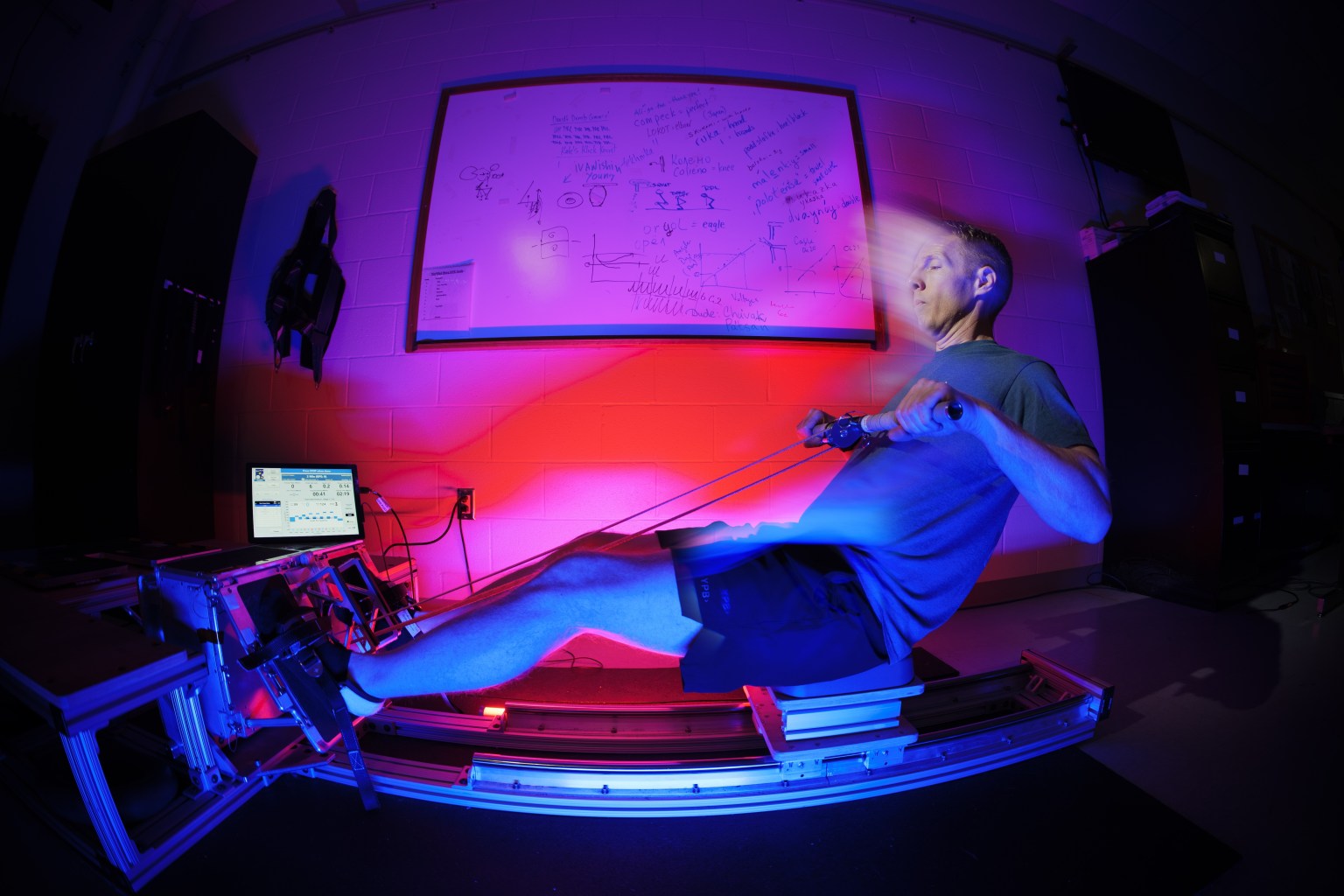
The Hidden Hero of Artemis II: How a Shoebox-Sized Flywheel Keeps Astronauts Fit in Deep Space
When the Artemis II mission launched in November 2023, it wasn’t just a triumph of propulsion and navigation—it was a milestone in human endurance. Four astronauts embarked on a 694,481-mile journey around the Moon and back, a voyage that tested not only spacecraft systems but the very limits of human physiology. Among the most critical yet understated tools aboard the Orion spacecraft was a device no larger than a shoebox: the flywheel exercise system. At the heart of its development was Ryan Schulte, Orion’s flywheel project manager at NASA’s Johnson Space Center in Houston, whose team engineered a compact, power-free solution to one of spaceflight’s oldest challenges: keeping astronauts physically and mentally strong in microgravity.
In the weightless void beyond Earth’s orbit, muscles atrophy and bones lose density at an alarming rate. Without gravity to resist, the human body begins to deteriorate within days. On the International Space Station (ISS), astronauts spend up to two hours a day exercising to counteract these effects. But the ISS has room—and power. Orion, designed for deep space missions with limited volume and energy, required something entirely new. That’s where Schulte’s flywheel came in: a mechanical marvel that delivers high-intensity workouts without a single watt of electricity.

The Challenge of Exercise in Deep Space
Long-duration spaceflight presents a paradox: the human body, evolved for life under Earth’s gravity, becomes a liability in orbit. Without regular resistance training, astronauts can lose up to 15% of muscle mass and 1-2% of bone density per month in microgravity. These losses aren’t just inconvenient—they’re mission-critical. Upon return to Earth, weakened astronauts face risks ranging from fractures to cardiovascular instability.
Traditional exercise equipment like treadmills and stationary bikes require significant space, power, and maintenance. On the ISS, the Advanced Resistive Exercise Device (ARED) uses vacuum cylinders and flywheels to simulate free weights, but it’s the size of a small refrigerator and consumes substantial energy. For Orion, which must travel far beyond low Earth orbit with limited resources, such equipment was impractical.
Ryan Schulte and his team faced a daunting task: create a device that could deliver the equivalent of a full gym workout in a fraction of the space, without relying on electrical power. The solution had to be lightweight, durable, and intuitive enough for astronauts to use during high-stress mission phases. It also had to operate quietly—noise could interfere with communication and rest, both vital for crew performance.
The Flywheel: A Mechanical Marvel
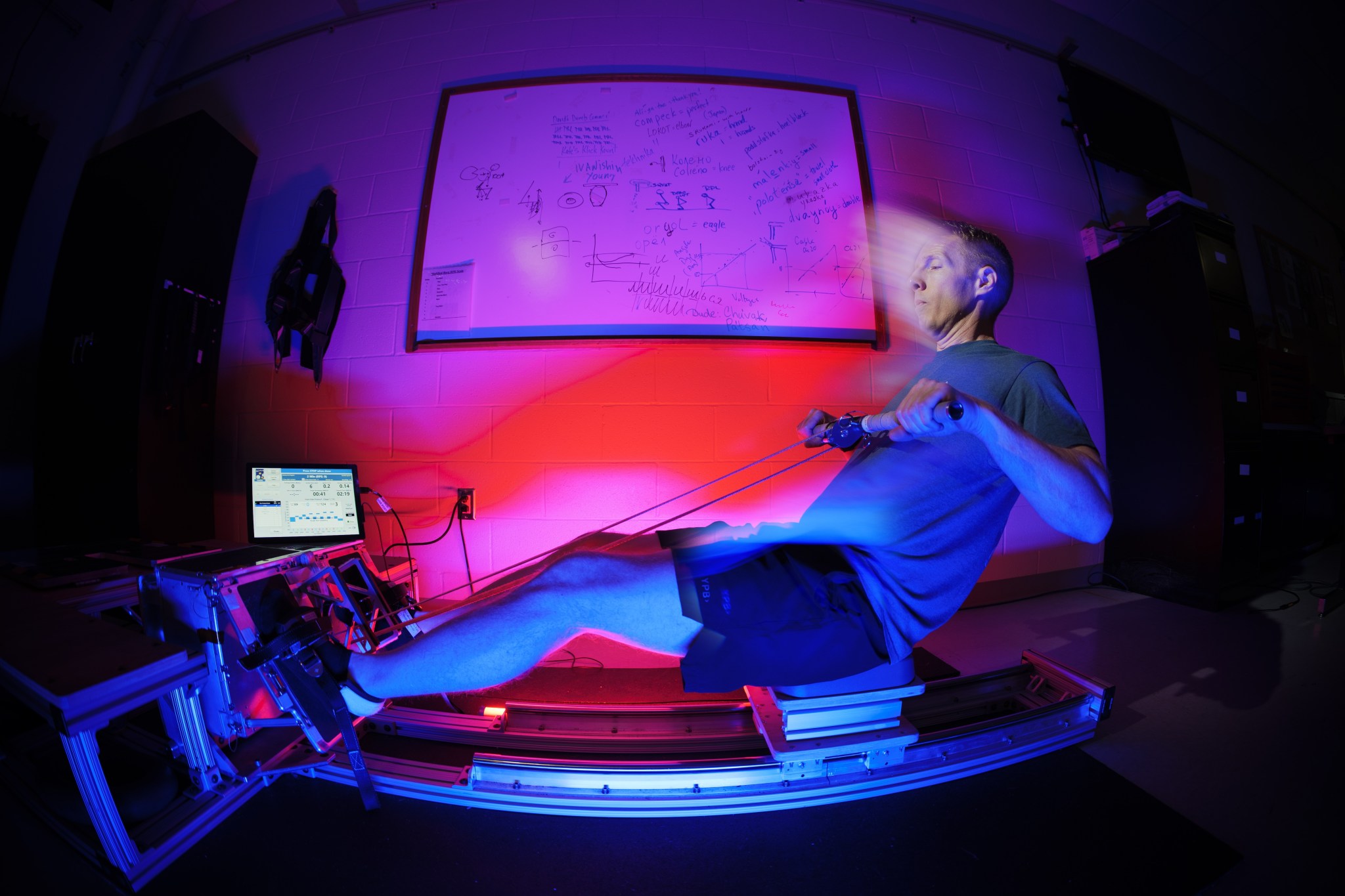
The Orion flywheel is a compact, multi-functional device that operates on the principle of rotational inertia. “It works kind of like an inertial yo-yo,” Schulte explained. When an astronaut pulls a handle, they spin a weighted rotor inside the device. The faster they pull, the more resistance they feel—up to 500 pounds of force, depending on the user’s effort and selected gear ratio.
Unlike electric machines, the flywheel generates resistance purely through physics. No motors, no batteries, no complex electronics. This simplicity makes it incredibly reliable—a crucial feature when help is millions of miles away. The device can be adjusted to provide different resistance levels, allowing astronauts to perform a wide range of exercises: squats, deadlifts, bent rows, high pulls, curls, heel raises, and even aerobic rowing.
“The crew can do squats, deadlifts, bent rows, high-pulls, curls, heel raises, and aerobic rowing all in one device,” Schulte said. “It’s really all dependent upon how much effort you put in.” This adaptability is key. On a mission lasting weeks or months, variety prevents boredom and ensures balanced muscle development.

It fits in a volume of approximately 1.5 cubic feet—small enough to stow in a corner of the Orion cabin.
It requires zero electrical power, reducing strain on the spacecraft’s energy systems.
The device underwent over 10,000 hours of ground testing before flight certification.
It supports seven distinct exercise types, covering both aerobic and anaerobic needs.
Engineering in the Shadows: Overcoming Design Challenges
Developing the flywheel wasn’t just about mechanics—it was about human factors. Schulte’s team had to consider everything from ergonomics to acoustics. “One of the biggest challenges was trying to fit everything into this compact box,” he said. “And also to be able to have enough space inside the rest of the capsule for someone to fully stand up and fully extend at high rates of speed and repetitions.”
Astronauts on Orion don’t have the luxury of open space. The crew module is tightly packed with life support systems, navigation equipment, and supplies. Every inch counts. The flywheel had to be small enough to stow efficiently yet large enough to allow full-range motion. Engineers used 3D modeling and human-in-the-loop simulations to optimize the design, ensuring astronauts could perform exercises like squats and overhead presses without hitting walls or equipment.
Noise was another critical concern. In the confined, acoustically sensitive environment of a spacecraft, even a low hum can become distracting. The flywheel had to operate quietly to avoid disrupting communication, sleep, or concentration. Schulte’s team used precision bearings and vibration-dampening materials to minimize sound output, achieving a noise level comparable to a whisper.
A Legacy of Innovation: From Apollo to Artemis
The flywheel isn’t NASA’s first foray into space fitness. Exercise in space has evolved dramatically since the early days of human spaceflight. During the Apollo missions, astronauts had no formal exercise equipment—relying instead on manual resistance and bodyweight movements. The results were sobering: Apollo 17 astronaut Harrison Schmitt reported significant muscle fatigue and joint pain after just a few days on the lunar surface.
By the time Skylab launched in 1973, NASA had learned its lesson. The station featured a rudimentary treadmill and a device called the Exergym, which used elastic cords for resistance. These early systems laid the groundwork for today’s advanced equipment, but they were bulky and limited in scope.
The ISS revolutionized space exercise with devices like the ARED and the Combined Operational Load-Bearing External Resistance Treadmill (COLBERT). But these systems are designed for a permanent, power-rich environment. For Artemis missions—aimed at establishing a sustainable lunar presence and eventually reaching Mars—NASA needed something more portable, efficient, and resilient.
The term “flywheel” in exercise dates back to the 1960s, when engineers at MIT developed the first inertial resistance machines for rehabilitation. These early devices inspired modern flywheel training, now used by elite athletes and physical therapists worldwide.
The Human Element: Why This Matters
Beyond the engineering, the flywheel represents a deeper truth: that human performance is inseparable from mission success. “What we’re doing with this exercise device has a direct impact on the crew’s safety, health, and their mission success,” Schulte emphasized. “I feel lucky to work on hardware that the crew is physically using, interacting with, and benefiting from on a daily basis.”
For astronauts on Artemis II, the flywheel wasn’t just a tool—it was a lifeline. Daily workouts helped maintain cardiovascular health, preserve muscle mass, and reduce psychological stress. Exercise in space has been shown to improve mood, sleep quality, and cognitive function—critical factors on a high-stakes mission far from home.
Moreover, the flywheel’s reusability makes it ideal for future Artemis missions. Schulte’s team is now developing a fleet of these devices for use on the Lunar Gateway, surface habitats, and even Mars-bound spacecraft. Each unit can be refurbished and reflown, reducing cost and waste—a key principle of sustainable exploration.
Regular resistance exercise in space can reduce bone density loss by up to 50% and muscle atrophy by nearly 70%, according to NASA’s Human Research Program. Without it, astronauts risk permanent musculoskeletal damage.
Looking Ahead: The Future of Space Fitness
As NASA prepares for Artemis III—the first crewed lunar landing since 1972—and beyond, the flywheel will play an even greater role. Future versions may incorporate biometric sensors to monitor workout intensity, recovery rates, and overall fitness. They could be integrated with virtual reality systems to simulate Earth-like environments, combating the psychological strain of isolation.
Schulte envisions a future where exercise devices are as essential as life support systems. “We’re not just building hardware,” he said. “We’re building confidence. Confidence that the crew can stay strong, stay focused, and come home safely.”
In the silent expanse of deep space, where every system must perform flawlessly, the humble flywheel stands as a testament to human ingenuity. It’s a reminder that even in the most extreme environments, the body’s needs remain profoundly human. And thanks to pioneers like Ryan Schulte, those needs are being met—one revolution at a time.
This article was curated from I Am Artemis: Ryan Schulte via NASA Breaking News