Table of Contents
- The Science Behind the Power: Why Silicon-Carbon Batteries Are a Game-Changer
- Motorola’s Strategic Gambit: Beating the Tech Titans to the Punch
- The Foldable Advantage: Why Silicon-Carbon Is Perfect for Flip Phones
- Consumer Impact: What This Means for U.S. Smartphone Buyers
- The Road Ahead: Will Silicon-Carbon Become the New Standard?
- Conclusion: A Quiet Revolution in Your Pocket
Motorola’s Silent Revolution: How Silicon-Carbon Batteries Are Reshaping the U.S. Smartphone Landscape
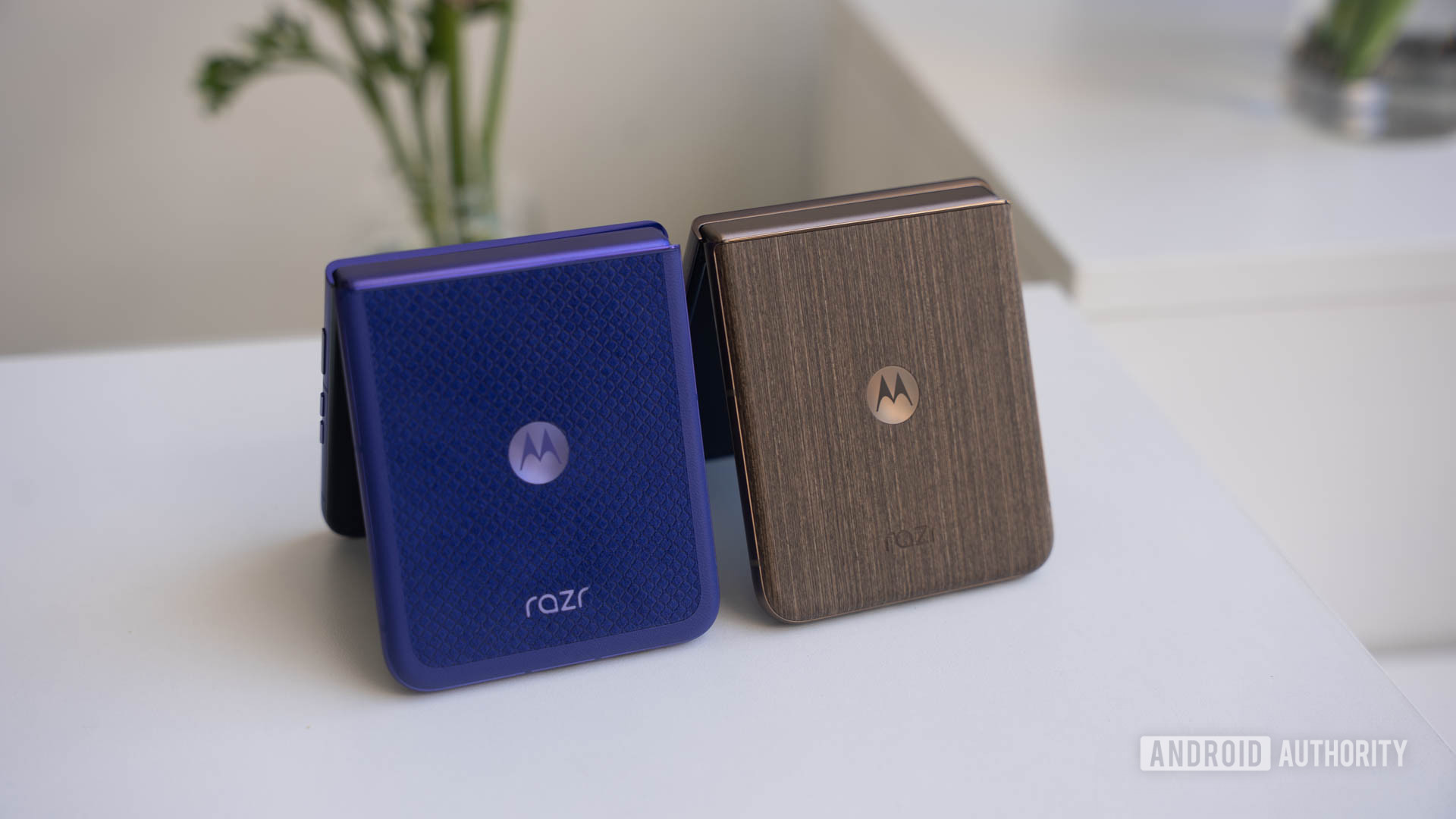
In a bold move that could redefine the future of mobile power, Motorola has quietly leapfrogged tech giants like Samsung, Google, and Apple by becoming the first major U.S. smartphone brand to adopt silicon-carbon battery technology. While competitors continue to rely on traditional lithium-ion cells—proven but plateauing in innovation—Motorola is charging ahead with its 2026 flagship foldables, the Razr Ultra 2026 and Razr Fold. These devices don’t just offer incremental upgrades; they represent a paradigm shift in how compact, high-performance smartphones can be engineered. With the Razr Ultra 2026 packing a 5,000mAh battery and the Razr Fold boasting a staggering 6,000mAh cell—both using silicon-carbon chemistry—Motorola is proving that bigger power doesn’t have to mean bigger phones.
This technological leap is especially significant in the foldable market, where space is at a premium and every millimeter counts. Foldables demand batteries that can deliver endurance without compromising sleekness, and Motorola’s new approach delivers exactly that. The Razr Ultra 2026, for instance, maintains its razor-thin profile and featherlight feel while gaining a full 500mAh over its predecessor—all thanks to the higher energy density of silicon-carbon cells. As the first flip phone with this advanced battery tech available in the U.S., Motorola isn’t just refreshing its iconic Razr line; it’s setting a new benchmark for what foldables can achieve.
The Science Behind the Power: Why Silicon-Carbon Batteries Are a Game-Changer
At the heart of Motorola’s innovation lies a fundamental advancement in battery chemistry. Traditional lithium-ion batteries, used in nearly every smartphone today, rely on graphite anodes to store lithium ions. While reliable and well-understood, graphite has a hard limit on how much energy it can hold per unit of volume. Silicon, by contrast, can theoretically store up to 10 times more lithium ions than graphite—making it a tantalizing alternative. However, silicon expands dramatically during charging, often cracking and degrading the battery over time. This has made it impractical for consumer electronics—until now.
Silicon-carbon batteries solve this problem by blending silicon nanoparticles with carbon matrices. The carbon acts as a buffer, absorbing the expansion and contraction of silicon during charge cycles, thereby preserving structural integrity. This hybrid approach allows manufacturers to harness silicon’s superior energy density while mitigating its weaknesses. The result? Batteries that are not only more compact but also longer-lasting and more efficient.
Motorola’s implementation of this technology is particularly impressive. By integrating silicon-carbon cells into the Razr Ultra 2026 and Razr Fold, the company has achieved a 20% increase in energy density compared to equivalent lithium-ion packs. This means more power in the same space—or the same power in a smaller, lighter form. For users, this translates to longer screen-on time, fewer midday charges, and a more satisfying overall experience, especially in power-hungry foldables that demand constant energy for dual displays and multitasking.

Motorola’s Strategic Gambit: Beating the Tech Titans to the Punch
While Apple, Samsung, and Google have dominated headlines with their AI features and camera innovations, Motorola has taken a quieter, more foundational path. By prioritizing battery technology, the company is addressing one of the most persistent pain points in modern smartphones: battery life. In an era where users expect all-day endurance from devices that are thinner, lighter, and more powerful than ever, Motorola’s decision to embrace silicon-carbon batteries is both pragmatic and visionary.
The timing is also strategic. Foldables, once considered niche, are gaining traction, with global shipments expected to surpass 30 million units by 2026. Yet, battery limitations have held back adoption. Many foldables still struggle with endurance, especially when both screens are active. Motorola’s Razr Ultra 2026 and Razr Fold directly confront this issue, offering capacities that rival traditional slab phones while maintaining the sleekness that makes foldables desirable.
Moreover, Motorola’s move could spark a broader industry shift. For years, Chinese brands like OnePlus and Oppo have used silicon-carbon batteries in select models, but U.S. consumers have had limited access. With Motorola now offering these advanced cells in universally unlocked devices available at Best Buy and Amazon, the technology is no longer a regional novelty—it’s a mainstream reality. This democratization of innovation could pressure competitors to accelerate their own battery research or risk falling behind in a key area of user satisfaction.
Silicon-carbon batteries can achieve energy densities of 700–900 Wh/L, compared to 500–600 Wh/L for standard lithium-ion.
Motorola’s foldables will debut on May 21, 2026, with pre-orders starting May 14.
The Foldable Advantage: Why Silicon-Carbon Is Perfect for Flip Phones
Foldables present unique engineering challenges. Their compact, hinge-based designs leave little room for bulky components, and their dual-screen operation demands consistent power delivery. Traditional lithium-ion batteries often struggle to balance capacity with form factor, leading manufacturers to either compromise on size or accept shorter battery life. Silicon-carbon technology changes this equation entirely.
Take the Razr Ultra 2026, for example. As a flip phone, it must house a battery within a clamshell frame that unfolds to reveal a large internal display. Every millimeter saved in battery thickness can be used to improve hinge mechanics, reduce weight, or add features. With silicon-carbon cells, Motorola has managed to increase capacity without altering the phone’s dimensions—something that would be impossible with conventional batteries. The result is a device that feels familiar yet performs like a powerhouse.
The Razr Fold takes this further. With a 6,000mAh battery—unheard of in a foldable of its size—it rivals the endurance of traditional flagship phones like the iPhone 15 Pro Max or Samsung Galaxy S24 Ultra. Yet, it does so in a form factor that’s significantly more portable and stylish. For travelers, commuters, or anyone who values all-day battery life, this is a game-changer.

Consumer Impact: What This Means for U.S. Smartphone Buyers
For American consumers, Motorola’s adoption of silicon-carbon batteries marks a turning point. Until now, U.S. shoppers interested in this technology had to turn to niche brands like OnePlus or import devices from overseas. With the Razr Ultra 2026 and Razr Fold, Motorola is making advanced battery tech accessible to the mainstream. These devices will be sold unlocked through major retailers, ensuring broad availability and competitive pricing.
The implications extend beyond just battery life. Longer endurance means less reliance on power banks and charging stations, greater convenience for travelers, and improved sustainability—since longer-lasting batteries reduce the need for frequent replacements. Additionally, the reduced size and weight of high-capacity cells could inspire new form factors and designs across the industry.
Motorola’s move also challenges the dominance of Apple and Samsung in the premium foldable space. While both companies have released foldables, they’ve been cautious about adopting new battery technologies, prioritizing safety and reliability. Motorola, by contrast, is betting that consumers are ready for innovation—even if it means stepping slightly outside the comfort zone of lithium-ion.
Silicon-carbon batteries operate at lower internal temperatures than lithium-ion, reducing the risk of overheating and improving long-term device safety—especially important in tightly packed foldables.
The Road Ahead: Will Silicon-Carbon Become the New Standard?
Motorola’s breakthrough raises a critical question: Will silicon-carbon batteries become the new norm? The answer may depend on how competitors respond. If users embrace the Razr Ultra 2026 and Razr Fold for their endurance and compactness, other brands may be forced to follow suit. Samsung, for instance, has been researching silicon anodes for years, and Google’s Pixel team has hinted at interest in next-gen battery tech.
However, challenges remain. Silicon-carbon batteries are still more expensive to produce than lithium-ion, and scaling up manufacturing will take time. There are also concerns about long-term cycle life—how well the batteries hold up after hundreds of charge cycles. Motorola will need to demonstrate reliability over time to win over skeptics.
Still, the momentum is building. As foldables gain popularity and consumers demand more from their devices, battery innovation will become a key differentiator. Motorola’s early adoption positions it as a leader in this emerging space, potentially reshaping the competitive landscape.
The first commercial lithium-ion battery was introduced by Sony in 1991. Over three decades later, it’s still the dominant technology—making Motorola’s shift to silicon-carbon one of the most significant battery advancements in smartphone history.
Conclusion: A Quiet Revolution in Your Pocket
Motorola’s decision to embrace silicon-carbon batteries isn’t just a technical upgrade—it’s a statement. In a market obsessed with cameras, AI, and software, the company has focused on the one thing that truly powers everything: energy. By delivering more capacity in less space, Motorola is proving that innovation doesn’t always have to be flashy to be transformative.
As the Razr Ultra 2026 and Razr Fold hit shelves in May 2026, they won’t just represent the next step in foldable evolution—they’ll signal a broader shift in how we think about smartphone design. With competitors still clinging to the past, Motorola is charging into the future, one silicon-carbon cell at a time. And for users, that means longer days, lighter pockets, and a smarter way to stay connected.
This article was curated from Motorola beats Samsung, Google to silicon-carbon batteries in the US via Android Authority