Table of Contents
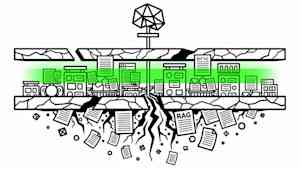
The era of simple retrieval for artificial intelligence is drawing to a close. As agentic AI—autonomous systems that plan, act, and adapt—moves from prototype to production, the foundational architecture that once powered intelligent chatbots is buckling under new demands. The once-dominant paradigm of retrieval-augmented generation (RAG) is proving insufficient for the complex, multi-step reasoning required by agents that must navigate vast enterprise data landscapes, resolve conflicting information, and deliver precise, actionable outputs. In response, a new wave of innovation is emerging: a compilation-stage knowledge layer that pre-processes, structures, and contextualizes data before agents ever query it. At the forefront of this shift is Pinecone, a pioneer in vector databases, which has unveiled Nexus, a knowledge engine designed not to improve retrieval, but to redefine it.
The transition from RAG to a more intelligent, context-aware system isn’t just a technical upgrade—it’s a philosophical shift in how we think about AI’s relationship with knowledge. Where RAG treated data as a passive repository to be queried on demand, Nexus treats knowledge as a dynamic, pre-compiled asset tailored for autonomous agents. This evolution reflects a broader trend in AI infrastructure: moving from reactive to proactive systems. Just as compilers transformed programming by translating high-level code into optimized machine instructions before runtime, Nexus compiles raw enterprise data into structured, task-specific knowledge artifacts before agents begin their work.
The Limits of RAG in an Agentic World
Retrieval-augmented generation was a breakthrough when it emerged. By combining the generative power of large language models (LLMs) with the factual grounding of vector databases, RAG enabled chatbots and assistants to provide accurate, up-to-date responses without retraining the entire model. But RAG was designed with a human in the loop—someone to interpret ambiguous results, spot inconsistencies, and refine follow-up questions. Agents, by contrast, operate autonomously. They don’t ask clarifying questions; they must infer, decide, and act.
Consider a financial analyst agent tasked with evaluating a company’s quarterly performance. A RAG pipeline might retrieve scattered documents—earnings reports, press releases, analyst notes—and pass them to an LLM. But without understanding which data points are authoritative, how different tables in a database relate, or which metrics are most relevant to the task, the agent risks generating flawed conclusions. Worse, each session starts from scratch: no memory of prior queries, no compiled understanding of data relationships, no conflict resolution between contradictory sources.
The problem isn’t that RAG is broken—it’s that it was never built for what agents actually do. RAG assumes a single query, a single response, and a human to interpret the result. Agents, however, operate in sequences: they plan tasks, retrieve context from multiple sources, resolve conflicts, and decide what to query next. This requires a persistent, evolving understanding of the data landscape—something RAG cannot provide.
Enter the Compilation-Stage Knowledge Layer
Nexus introduces a radical new approach: a compilation-stage knowledge layer that transforms raw enterprise data into structured, task-specific knowledge artifacts before agents query them. Think of it as a compiler for knowledge. Instead of retrieving documents at inference time, Nexus pre-processes data into optimized, contextualized units that agents can consume efficiently and reliably.
At the heart of Nexus is the context compiler, a system that analyzes enterprise data—databases, documents, APIs, and more—and builds a persistent, queryable knowledge graph. This graph doesn’t just store embeddings; it encodes relationships, hierarchies, and domain-specific logic. For example, in a healthcare setting, it might understand that a patient’s lab results are linked to their diagnosis history, and that certain medications interact with specific conditions. This pre-compiled context allows agents to reason more deeply and accurately.
Alongside the compiler, Nexus features a composable retriever that serves these knowledge artifacts with field-level citations and deterministic conflict resolution. When an agent requests information, the retriever doesn’t just return a list of documents—it delivers structured, annotated knowledge with provenance. If two sources conflict, the system applies predefined rules (e.g., “use the most recent audit report” or “prioritize data from the CFO’s office”) to resolve the discrepancy automatically.
This shift from retrieval to compilation mirrors the evolution of software engineering. Just as modern compilers optimize code for performance and memory usage before execution, Nexus optimizes knowledge for agent consumption before task execution. The result is faster, more reliable, and far more efficient AI systems.
KnowQL: A Language for Agentic Intelligence
To unlock the full potential of this new architecture, Pinecone has introduced KnowQL, a declarative query language designed specifically for agents. Unlike SQL, which queries structured data, or natural language prompts, which are ambiguous, KnowQL gives agents a precise vocabulary to specify what they need—and how they need it.
With KnowQL, an agent can declare not just what information it wants, but also the shape of the output (e.g., a JSON object with specific fields), the required confidence level (e.g., “only return data verified by two independent sources”), and even a latency budget (e.g., “respond within 500ms”). This level of control is essential for agentic workflows, where timing, accuracy, and format directly impact downstream actions.
It enables field-level citations, so agents can trace every data point to its source.
The language is designed to be composable, allowing agents to chain queries and build complex reasoning pipelines.
It integrates with existing enterprise systems, including Snowflake, Salesforce, and SAP.
Early adopters report a 70% reduction in hallucination rates compared to RAG-based systems.
KnowQL represents a shift from asking questions to issuing commands. Instead of “Find me the latest sales figures,” an agent might say, “Retrieve Q2 revenue by region, with 95% confidence, in CSV format, sourced from the ERP system, and resolve any discrepancies using the CFO’s latest memo.” This precision eliminates ambiguity and ensures that agents receive exactly what they need to complete their tasks.
The Compiler Analogy: Why Pre-Processing Matters
The analogy to compilers is more than metaphorical—it’s foundational. In software, a compiler translates high-level code into machine instructions optimized for a specific architecture. It performs optimizations, resolves dependencies, and catches errors before runtime. Similarly, Nexus compiles raw data into optimized knowledge artifacts tailored for agentic workflows.
This pre-processing stage is where much of the magic happens. The context compiler doesn’t just index data—it understands it. It identifies authoritative sources, maps relationships between datasets, and applies domain-specific rules. For example, in a manufacturing context, it might know that a machine’s maintenance log should be cross-referenced with its production schedule and safety inspection records. This compiled knowledge is then stored in a format that agents can query efficiently, without reprocessing the entire dataset each time.
The result is a system that doesn’t just retrieve information—it understands it. And that understanding is persistent, reusable, and scalable.
Real-World Impact: From Chatbots to Autonomous Agents
The implications of this shift extend far beyond technical efficiency. In industries like finance, healthcare, and logistics, where decisions must be fast, accurate, and auditable, the move from RAG to a compilation-stage knowledge layer could be transformative.
Imagine a supply chain agent that monitors global shipments, predicts delays, and reroutes cargo in real time. With RAG, it might retrieve scattered emails, tracking updates, and weather reports—but struggle to synthesize them into a coherent action plan. With Nexus, the agent receives a pre-compiled knowledge artifact that integrates all relevant data, resolves conflicting reports (e.g., “port A says delayed, port B says on time”), and recommends the optimal rerouting strategy—complete with citations and confidence scores.
In healthcare, a diagnostic agent could use Nexus to compile patient records, lab results, and clinical guidelines into a unified knowledge artifact. When a doctor asks, “What’s the best treatment for this patient?” the agent doesn’t just retrieve papers—it delivers a structured recommendation with evidence, contraindications, and dosage guidelines, all traceable to authoritative sources.
The Road Ahead: Challenges and Opportunities
While Nexus represents a significant leap forward, challenges remain. The system is currently in early access, and real-world validation is still underway. Enterprises will need to invest in data governance, define conflict resolution rules, and train agents to use KnowQL effectively. Moreover, the shift from retrieval to compilation requires a cultural change—from treating data as a passive resource to viewing it as an active, intelligent asset.
Still, the momentum is undeniable. As agentic AI becomes more prevalent—powering everything from autonomous vehicles to self-managing data centers—the need for smarter, more reliable knowledge systems will only grow. The compilation-stage knowledge layer isn’t just an upgrade; it’s a necessity.
Pinecone’s pivot from vector database to knowledge engine signals a broader industry shift. The future of AI isn’t just about better models or faster retrieval—it’s about building systems that understand context, resolve ambiguity, and act with precision. And that future begins not at query time, but at compile time.
This article was curated from The RAG era is ending for agentic AI — a new compilation-stage knowledge layer is what comes next via VentureBeat