The New Space Race: From Lunar Landers to Orbital Shields
The cosmos is no longer just a frontier for exploration—it’s becoming a high-stakes arena for defense, innovation, and geopolitical strategy. This week’s developments in space technology signal a dramatic shift in how nations and private companies are preparing for the next era of orbital dominance. From the return of SpaceX’s Falcon Heavy to Russia’s long-awaited Soyuz-5 debut, and from NASA’s lunar ambitions to the U.S. military’s $3.2 billion push for space-based missile defense, the universe of powerful rockets is evolving faster than ever.
At the heart of this transformation is a growing recognition: space is not just about reaching the stars—it’s about securing Earth. As nations vie for technological superiority and private firms race to commercialize the final frontier, the line between exploration and defense is blurring. This week’s Rocket Report reveals a pivotal moment in space history, where innovation meets national security in ways that could redefine global power dynamics for decades to come.
Falcon Heavy Soars Again: A Testament to Reusability and Power
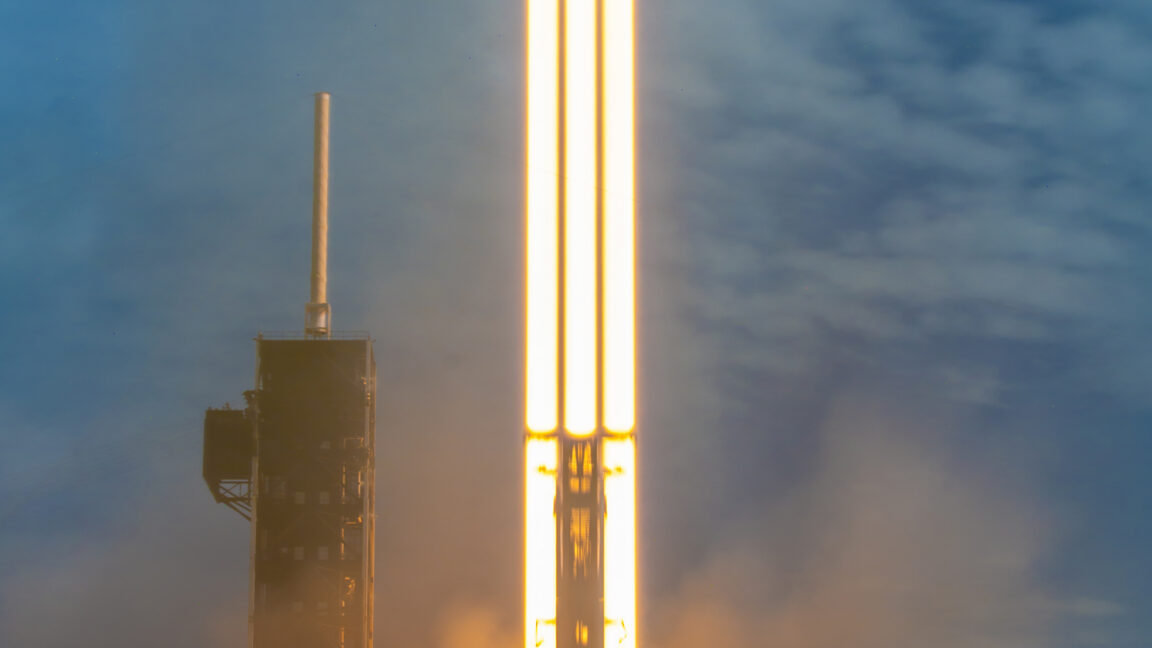
After a nearly three-year hiatus, SpaceX’s Falcon Heavy roared back to life this week, reigniting conversations about the future of heavy-lift launch systems. The rocket, which first stunned the world with its 2018 debut by launching Elon Musk’s Tesla Roadster into space, has since become a symbol of modern rocketry’s ambition. Its latest mission, carrying a classified payload for the U.S. Space Force, underscores its dual role as both a commercial workhorse and a strategic asset.
What makes Falcon Heavy remarkable isn’t just its raw power—it can lift over 64 metric tons to low Earth orbit, second only to NASA’s Space Launch System (SLS)—but its reusability. Both side boosters returned to Earth in a synchronized ballet of precision landings, a feat that continues to captivate engineers and space enthusiasts alike. This reusability drastically cuts launch costs, making ambitious missions more economically viable. For context, a single Falcon Heavy launch costs around $90 million, compared to over $2 billion for a single SLS flight.
The rocket’s return also signals SpaceX’s growing role in national security. With the U.S. increasingly reliant on private companies for defense launches, Falcon Heavy is no longer just a tool for satellite deployment—it’s a strategic asset in an era where space dominance is as critical as air superiority once was.
Russia’s Soyuz-5: A Long-Awaited Debut in a Shifting Landscape
While SpaceX celebrated a triumphant return, Russia marked a milestone of its own with the inaugural launch of the Soyuz-5 rocket. After years of delays and technical setbacks, the new medium-lift vehicle finally lifted off from the Baikonur Cosmodrome, carrying a dummy payload into orbit. Designed to replace older Soyuz variants and compete with Western rockets, Soyuz-5 represents Russia’s attempt to modernize its launch fleet amid growing international isolation.
The rocket, developed by Roscosmos, can deliver up to 17 metric tons to low Earth orbit—comparable to the Falcon 9 but still far behind Falcon Heavy. Its development has been plagued by funding shortages and geopolitical tensions, particularly following Russia’s invasion of Ukraine, which led to the cancellation of joint space projects with Europe and the U.S. Despite these challenges, the successful debut is a symbolic victory for Russia’s space program, signaling its determination to remain a player in the global launch market.
However, the rocket’s long-term impact remains uncertain. With SpaceX dominating the commercial launch market and China rapidly expanding its capabilities, Russia faces an uphill battle to regain its former prominence. The Soyuz-5 may serve niche roles, such as launching military satellites or supporting Russia’s lunar ambitions, but it’s unlikely to disrupt the current market dynamics.
NASA’s Lunar Ambitions: A Race Against Time
Amid these developments, NASA’s Artemis program continues to inch forward, with the agency eyeing a 2028 deadline to return astronauts to the Moon. But the path is fraught with uncertainty. SpaceX’s Starship, the centerpiece of NASA’s lunar lander strategy, has yet to complete a fully successful orbital test flight. While the vehicle showed promise in its third test, it still faces significant technical hurdles before it can safely carry humans.
Meanwhile, Blue Origin’s Blue Moon cargo lander is preparing for its own milestone—a robotic mission to the lunar surface in the coming months. This mission will test critical technologies for future crewed landings, including precision navigation, autonomous landing systems, and cargo delivery mechanisms. If successful, it could bolster confidence in Blue Origin’s ability to support NASA’s goals, especially as the agency diversifies its partnerships beyond SpaceX.

The stakes are high. Delays in Starship or Blue Moon could push back NASA’s 2028 timeline, allowing China—which has already landed rovers on the Moon and plans a crewed mission by 2030—to potentially claim a historic first. For the U.S., the Moon is no longer just a scientific destination; it’s a symbol of technological leadership in a new space race.
The Pentagon’s $3.2 Billion Orbital Shield: Space-Based Interceptors Take Shape
Perhaps the most surprising development this week came not from a rocket launch, but from a Pentagon announcement: the U.S. Space Force has awarded contracts to 12 companies to develop Space-Based Interceptors (SBIs) as part of the “Golden Dome” initiative. This ambitious program aims to create a multilayered defense system capable of intercepting drones, ballistic missiles, hypersonic weapons, and cruise missiles—all from orbit.
The roster of contractors reads like a who’s who of aerospace and defense: Lockheed Martin, Northrop Grumman, Raytheon, and SpaceX are joined by emerging players like Anduril Industries, GITAI USA, and Turion Space. Together, they’ll develop prototypes under contracts totaling $3.2 billion, with full-scale production expected to cost significantly more. The goal is to deploy a constellation of interceptors in low Earth orbit, capable of tracking and neutralizing threats before they reach U.S. soil.
Space-Based Interceptors could reduce reliance on ground-based missile defenses, which are limited by geography and radar coverage.
The system aims to counter hypersonic missiles, which travel at speeds over Mach 5 and can maneuver unpredictably.
Full deployment could take a decade or more, with initial prototypes expected by the late 2020s.
Critics warn of an arms race in space, potentially violating international treaties like the Outer Space Treaty of 1967.
This marks a seismic shift in military strategy. For decades, space was seen as a sanctuary—a domain for observation and communication, not combat. But as adversaries develop advanced missile technologies, the U.S. is moving to extend its defensive perimeter into orbit. The implications are profound: space could soon become the next battlefield.
The Rise of Private Players in National Security
What’s striking about the Golden Dome initiative is the prominent role of private companies. SpaceX, known for its civilian and commercial missions, is now a key defense contractor. Anduril, a startup founded by former Oculus executives, is bringing AI and drone technology to missile defense. Even Quindar, a relatively unknown firm, is contributing to the effort.
This trend reflects a broader transformation in how national security is approached. Traditional defense contractors still dominate, but agile startups are increasingly being tapped for innovation. Their ability to move quickly, embrace risk, and leverage commercial technologies gives them an edge in developing next-generation systems.
The involvement of private firms also raises questions about oversight and accountability. Unlike government agencies, companies are driven by profit and competition. While this can spur innovation, it may also lead to fragmented development or ethical concerns, especially if autonomous interceptors are deployed without clear rules of engagement.
A New Era of Space Competition
Taken together, these developments paint a picture of a rapidly evolving space landscape. The return of Falcon Heavy and the debut of Soyuz-5 reflect the ongoing competition among launch providers. NASA’s lunar ambitions highlight the enduring allure of exploration. But the Pentagon’s push for space-based interceptors reveals a darker, more urgent reality: space is becoming militarized.
This isn’t the first time humanity has faced such a crossroads. During the Cold War, the U.S. and Soviet Union raced to claim space supremacy, leading to the Apollo Moon landings and the birth of satellite technology. Today, the stakes are even higher. With hypersonic weapons, AI-driven systems, and private companies reshaping the playing field, the next decade could see space transition from a frontier of discovery to a domain of conflict.
Yet there’s also hope. International collaboration, such as the Artemis Accords, offers a framework for peaceful exploration. Technological breakthroughs in reusability and sustainability could make space more accessible than ever. And the involvement of diverse players—from legacy aerospace giants to Silicon Valley startups—ensures that innovation will continue at a breakneck pace.
As we stand on the brink of this new era, one thing is clear: the universe of powerful rockets is no longer just about reaching the stars. It’s about securing our future—on Earth and beyond.
This article was curated from Rocket Report: Falcon Heavy is back; Russia's Soyuz-5 finally debuts via Ars Technica – Science