Table of Contents
- The Discovery That Shook Cosmology
- The Speed of Light Isn’t the Final Frontier
- Cosmic Expansion: It’s Not Just About Speed
- The Horizon Problem: What We Can and Can’t See
- No Infinite Energy Required
- The Role of Dark Energy
- Why This Doesn’t Break Physics
- Final Thoughts: A Universe Bigger Than We Imagined

Why Galaxies Can Fly Faster Than Light (And Why It’s Not Breaking Physics)
Imagine standing on a cosmic shoreline, watching galaxies drift away like ships on an endless ocean. Some of them—those impossibly far away—appear to be sailing off at speeds that defy the universe’s ultimate speed limit: the speed of light. At first glance, this seems to violate Einstein’s theory of relativity, which famously declares that nothing can travel faster than light through space. But here’s the mind-bending truth: these distant galaxies are receding faster than light—and physics is perfectly fine with that.
This apparent paradox has puzzled astronomers and curious minds alike since the 1920s, when Edwin Hubble first discovered that the universe is expanding. Today, with telescopes like JWST spotting galaxies billions of light-years away, the question resurfaces: How can something as massive as a galaxy move so fast without requiring infinite energy? The answer lies not in motion through space, but in the expansion of space itself.
The Discovery That Shook Cosmology
The story begins in the early 20th century, when the very idea of “other galaxies” was still revolutionary. Before 1923, most astronomers believed the Milky Way was the entirety of the cosmos. Then, using the newly built 100-inch Hooker Telescope at Mount Wilson, Edwin Hubble measured the distance to the Andromeda Nebula—and found it was over 2 million light-years away, far beyond the boundaries of our galaxy. This single observation shattered the old worldview and opened the door to a universe teeming with galaxies.
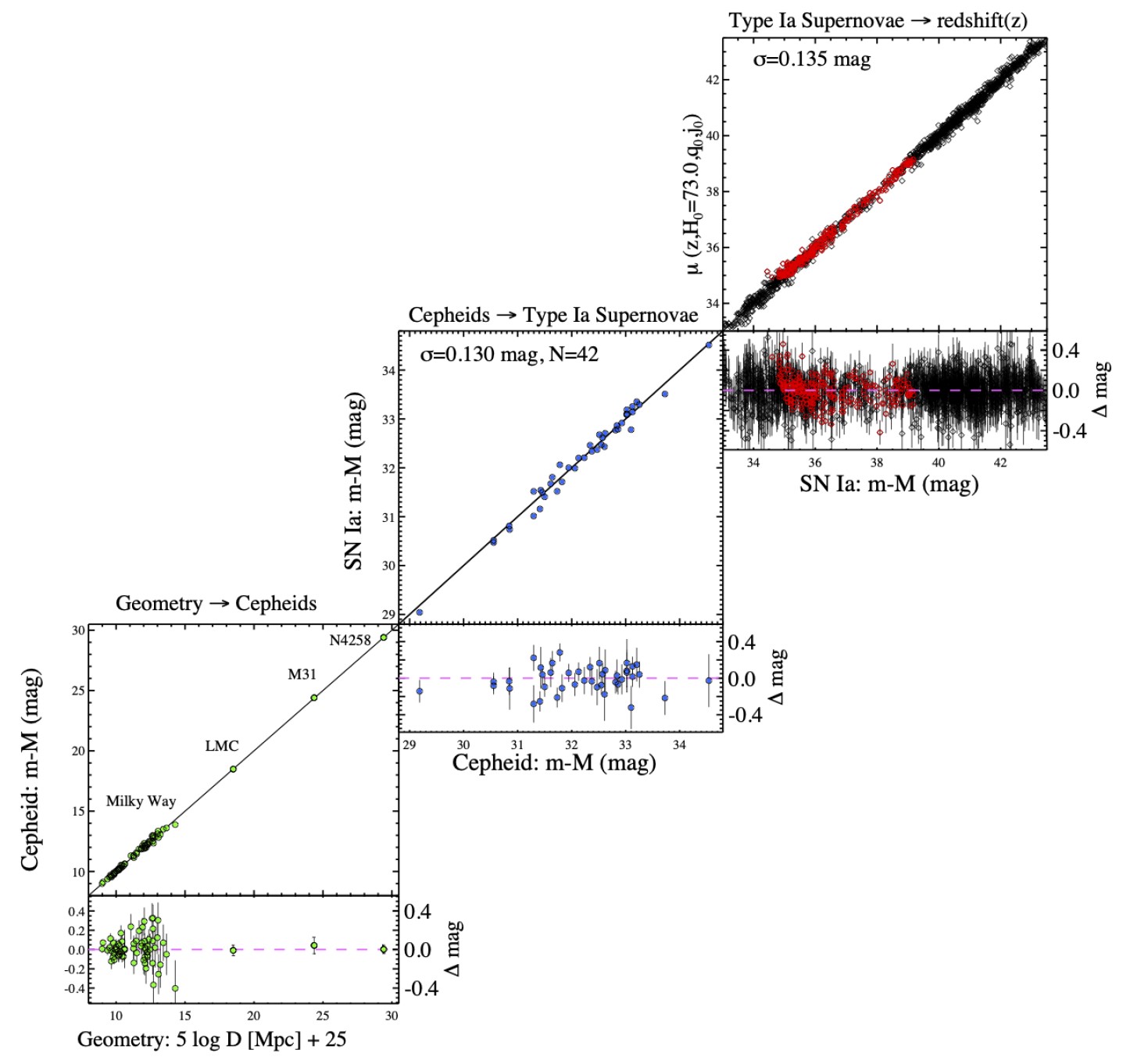
Just a few years later, Hubble and his colleague Milton Humason made an even more startling discovery. By measuring the light from dozens of distant galaxies, they noticed a consistent pattern: the farther away a galaxy was, the more its light was shifted toward the red end of the spectrum—a phenomenon known as redshift. This redshift wasn’t due to the Doppler effect alone (like a siren fading as an ambulance speeds away), but something deeper: space itself was stretching.
This led to Hubble’s Law, a simple but profound equation: v = H₀ × d, where v is the recession velocity, d is the distance, and H₀ is the Hubble constant. In plain terms: the farther a galaxy is from us, the faster it appears to be moving away. Today, we know H₀ is roughly 70 kilometers per second per megaparsec (Mpc)—meaning for every 3.26 million light-years of distance, a galaxy recedes 70 km/s faster.
The Speed of Light Isn’t the Final Frontier
Now comes the crux of the confusion: if Hubble’s Law is linear, then at some distance, the recession velocity should exceed the speed of light. And it does. For galaxies more than about 14 billion light-years away, their recession speed surpasses 300,000 km/s—the speed of light in a vacuum.
This might seem to violate Einstein’s special relativity, which states that nothing with mass can reach or exceed light speed. But here’s the key insight: these galaxies are not moving through space faster than light—they are being carried away by the expansion of space itself.

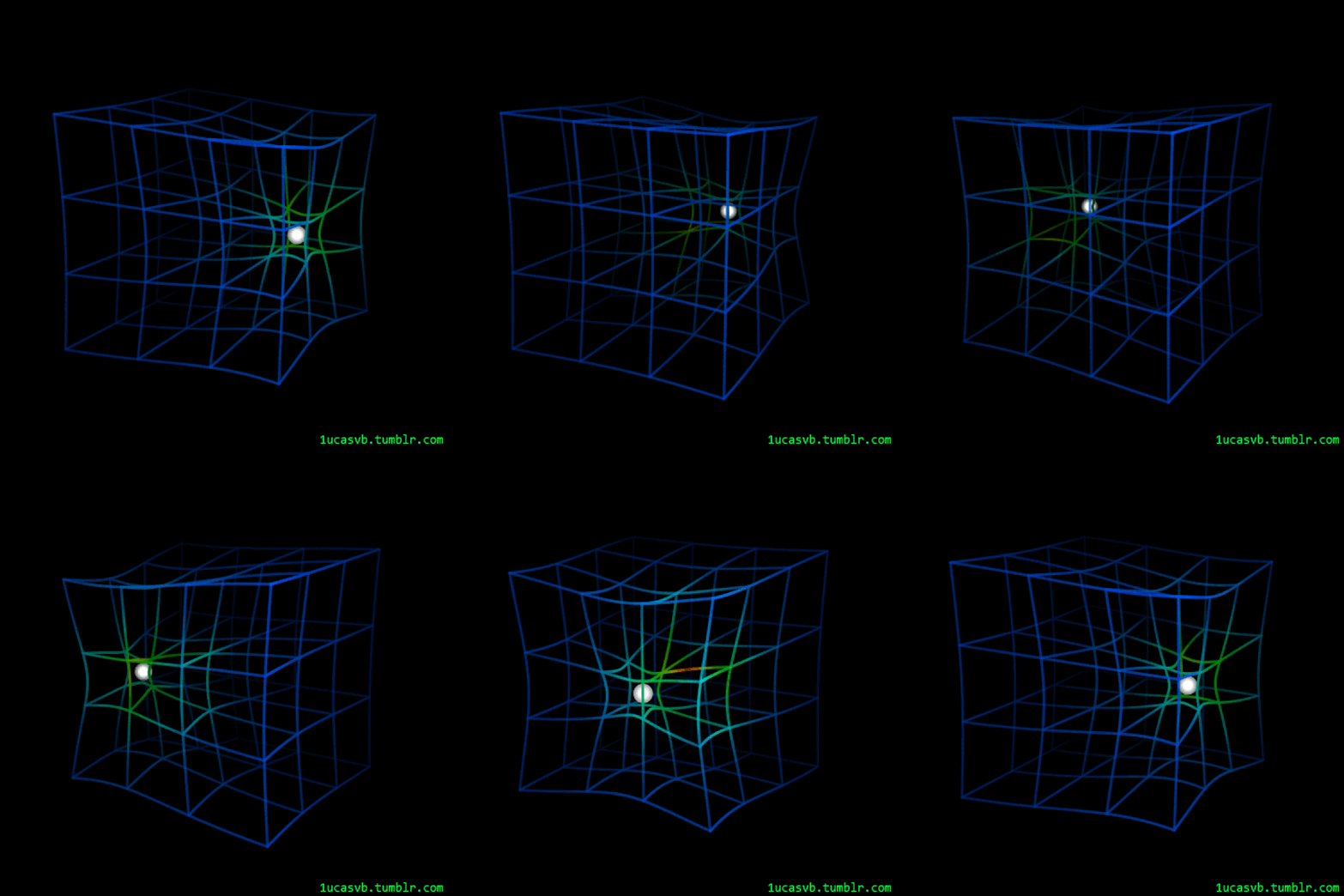
Think of the universe as a loaf of raisin bread baking in an oven. As the dough expands, every raisin moves away from every other raisin. The raisins aren’t moving through the dough; the dough between them is stretching. Similarly, galaxies are like raisins embedded in the fabric of spacetime. When space expands, the distance between galaxies increases, even if they’re “at rest” relative to their local environment.
This distinction is crucial. Special relativity limits motion through space, but general relativity—Einstein’s theory of gravity—allows space itself to expand at any rate, even faster than light. There’s no violation here because no object is accelerating through space; instead, the metric of spacetime is changing.
Galaxies beyond ~14 billion light-years recede faster than light.
The Hubble constant is ~70 km/s/Mpc, meaning a galaxy 4,300 Mpc away recedes at ~300,000 km/s.
Light from galaxies beyond ~16 billion light-years will never reach us due to accelerated expansion.
Cosmic Expansion: It’s Not Just About Speed
To truly grasp how distant galaxies can appear to outpace light, we must understand that cosmic expansion isn’t a force pushing galaxies apart—it’s the geometry of the universe evolving over time. In the early universe, space was incredibly dense and hot. As it expanded and cooled, galaxies formed within this expanding framework.
Importantly, this expansion affects all of space uniformly, but its effects are only noticeable over vast distances. On small scales—like within galaxy clusters—gravity dominates and holds structures together. The Milky Way and Andromeda, for example, are moving toward each other due to gravitational attraction, despite the overall expansion of the universe.

But on the largest scales, where gravity is too weak to counteract expansion, galaxies drift apart. The farther apart they are, the more space there is between them to expand—and thus, the faster they appear to recede.
This is why Hubble’s Law is linear: the recession velocity increases in direct proportion to distance. It’s not that galaxies are being “thrown” outward from a central point (the Big Bang wasn’t an explosion in space, but an expansion of space), but that the cumulative stretching of space over billions of light-years adds up.
The Horizon Problem: What We Can and Can’t See
One consequence of this superluminal recession is the existence of a cosmic horizon. Because space is expanding so rapidly at great distances, light from galaxies beyond a certain point will never reach us—even if we wait an infinite amount of time. This defines the boundary of the observable universe, currently about 46.5 billion light-years in radius.
Interestingly, when we observe a galaxy like MoM-z14—one of the most distant ever detected—we’re seeing it as it was just 300 million years after the Big Bang. At that time, it was much closer to us than it is now. But due to the expansion of space, the light it emitted has been stretched (redshifted) and delayed, taking over 13 billion years to reach us.
Today, that same galaxy is likely receding at over twice the speed of light. Yet we can still see its ancient light because it was emitted when the galaxy was within our observable horizon.
No Infinite Energy Required
Jon Covey’s question—whether accelerating such massive galaxies requires infinite energy—stems from a common misconception: that galaxies are being “pushed” or “accelerated” through space. But in reality, no force is acting on them in the traditional sense. They are comoving with the expansion, like leaves floating on a rising river.
In cosmology, we distinguish between proper motion (movement through space) and Hubble flow (motion due to expansion). Galaxies have both, but their large-scale recession is dominated by Hubble flow. No energy is needed to sustain this motion because it’s not acceleration in the Newtonian sense—it’s the natural consequence of living in an expanding spacetime.
Even during the Big Bang, the universe didn’t “explode” outward from a point. Instead, all of space expanded simultaneously. There was no need to “accelerate” matter to superluminal speeds because the fabric of space itself was stretching. The energy involved wasn’t kinetic energy in the classical sense, but the energy density of the early universe—dominated by radiation and later by dark energy.

Just as your body expands when you eat, but your cells don’t move through your skin faster than light, galaxies aren’t “moving” in the way we intuitively think. The expansion of space is a geometric phenomenon, not a mechanical one.
The Role of Dark Energy
Today, the expansion of the universe isn’t just continuing—it’s accelerating. This discovery, made in the late 1990s using distant supernovae, revealed that a mysterious force called dark energy is driving galaxies apart at an ever-increasing rate.
Dark energy behaves like a kind of anti-gravity, embedded in the fabric of space itself. As the universe expands, more space is created—and with it, more dark energy. This leads to a feedback loop: expansion creates more dark energy, which causes faster expansion.
This acceleration means that in the far future, galaxies beyond our Local Group will vanish from view, receding beyond the cosmic horizon. The universe will become increasingly isolated and dark.
Einstein originally introduced a “cosmological constant” into his equations to keep the universe static—but later called it his “greatest blunder” when Hubble discovered expansion. Ironically, the cosmological constant is now the leading explanation for dark energy.
Why This Doesn’t Break Physics
The idea that galaxies can recede faster than light challenges our intuition, but it doesn’t violate relativity. Einstein’s theories allow for the expansion of space at any rate. What’s forbidden is information or matter traveling through space faster than light.
In fact, general relativity provides the mathematical framework to describe this precisely. The Friedmann equations, which govern the expansion of the universe, show that superluminal recession is not only possible but expected in an expanding cosmos.
Moreover, no galaxy ever “crosses” the speed of light barrier in a local sense. Locally, all galaxies obey the laws of special relativity. It’s only when you consider the cumulative effect of expansion over billions of light-years that recession velocities exceed c.
Galaxies beyond ~14 billion light-years recede faster than light.
Hubble’s Law is linear: v = H₀ × d.
No energy is needed to sustain expansion—it’s a property of spacetime.
Dark energy now dominates the universe’s energy budget (~68%).
Final Thoughts: A Universe Bigger Than We Imagined
The discovery that distant galaxies can recede faster than light is not a flaw in physics—it’s one of its greatest triumphs. It reveals a universe far more vast, dynamic, and mysterious than we once imagined. From Hubble’s first measurements to JWST’s deep-field images, each generation of telescopes has deepened our understanding of cosmic expansion.
So the next time you hear about a galaxy moving faster than light, remember: it’s not breaking the rules. It’s simply riding the wave of an expanding cosmos—a testament to the elegant, counterintuitive beauty of the universe we call home.
This article was curated from Ask Ethan: How can ultra-distant galaxies move so fast? via Big Think