Table of Contents
- A Chamber Fit for the Cosmos: Inside NASA’s Thermal Vacuum Chamber A
- The Birth of Endurance: Blue Origin’s Vision for the Moon
- Precision Landing and Autonomous Navigation: The Brain Behind the Lander
- Cryogenic Propulsion: The Power Behind the Descent
- The Science of Staying Cold in Space
- Science on the Surface: NASA’s Payloads and the CLPS Initiative
- From Cargo to Crew: The Road to Blue Moon Mark 2
- The Bigger Picture: A New Era of Public-Private Partnership
Blue Origin’s Blue Moon Lander Survives NASA’s Ultimate Space Simulator — What It Means for the Future of Lunar Exploration
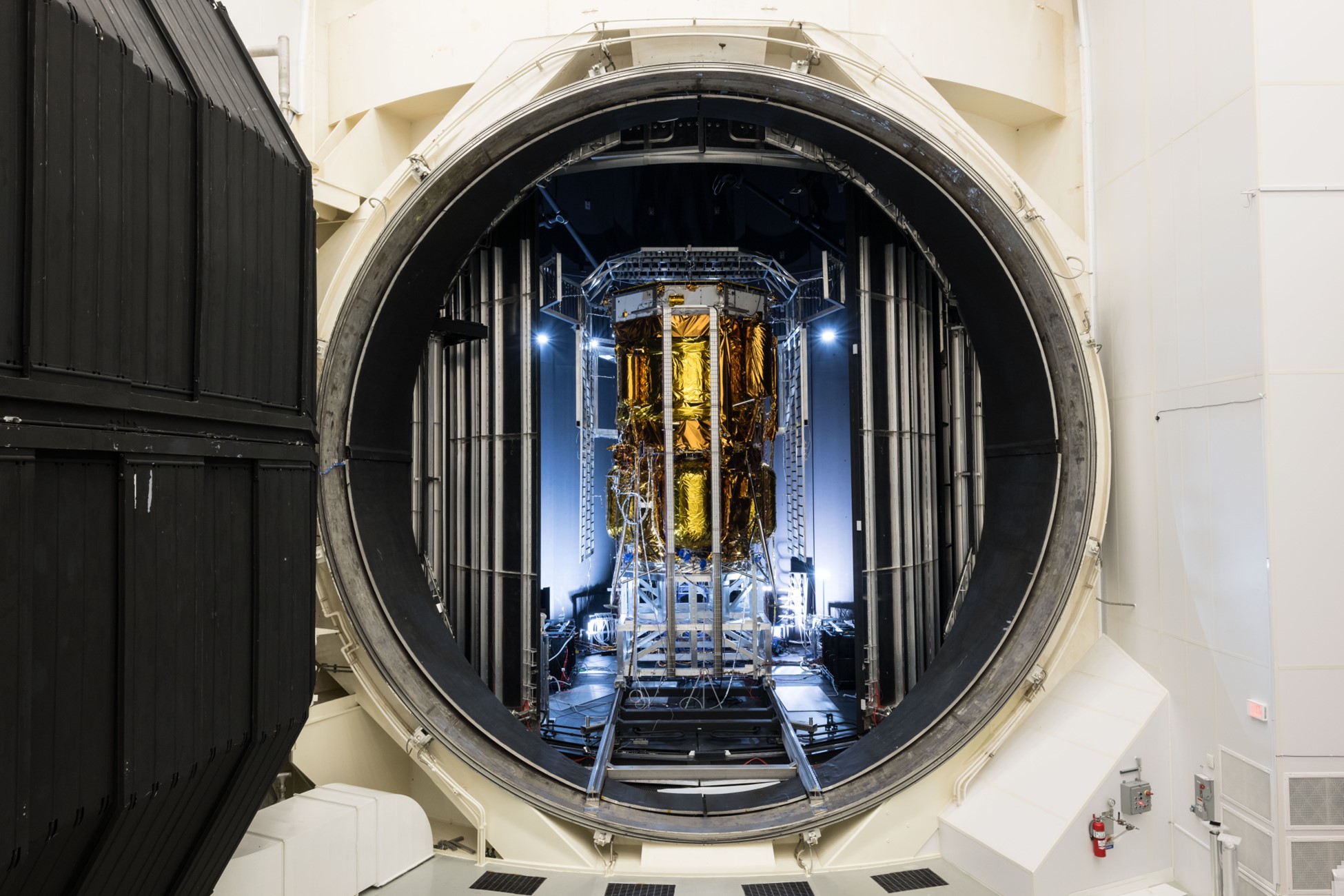
In a cavernous chamber deep within NASA’s Johnson Space Center in Houston, a silent, uncrewed spacecraft recently endured the brutal extremes of space—without ever leaving Earth. Blue Origin’s Blue Moon Mark 1 (MK1), affectionately nicknamed Endurance, has successfully completed rigorous environmental testing inside Thermal Vacuum Chamber A, one of the most advanced space simulation facilities on the planet. This milestone marks a pivotal moment in the evolution of lunar exploration, blending private innovation with public mission goals under NASA’s Artemis program.
The successful tests represent more than just engineering validation—they signal a new era of collaboration between government space agencies and commercial aerospace companies. As humanity prepares to return to the Moon for the first time in over 50 years, missions like MK1 are laying the groundwork for sustainable lunar presence, scientific discovery, and eventual crewed landings. With precision landing, cryogenic propulsion, and autonomous navigation at its core, Endurance is not just a cargo lander—it’s a technological proving ground for the future of deep space travel.
A Chamber Fit for the Cosmos: Inside NASA’s Thermal Vacuum Chamber A
Thermal Vacuum Chamber A at Johnson Space Center is no ordinary testing facility. At over 65 feet tall and 37 feet in diameter, it’s one of the largest thermal vacuum chambers in the world—large enough to house a school bus standing upright. Originally built in the 1960s to test Apollo-era spacecraft, Chamber A has evolved into a state-of-the-art simulation environment capable of replicating the vacuum of space and the extreme temperature swings that spacecraft endure during flight.
Inside Chamber A, engineers subjected Blue Moon MK1 to temperatures ranging from –250°F to +250°F, simulating the harsh thermal cycles of lunar transit and surface operations. The chamber can achieve a near-perfect vacuum, with pressures lower than one billionth of Earth’s atmosphere—conditions that would instantly incapacitate most electronics and mechanical systems not specifically designed for space. During the tests, Blue Origin’s team monitored the lander’s performance, checking for thermal expansion, material integrity, and system functionality under stress.
The importance of such testing cannot be overstated. Space is unforgiving. A single micrometeoroid impact, a thermal contraction failure, or a power system glitch can doom a mission worth hundreds of millions of dollars. By validating the lander’s resilience on the ground, Blue Origin and NASA reduce the risk of in-flight failures, ensuring that when MK1 launches, it’s ready for the real thing.
The Birth of Endurance: Blue Origin’s Vision for the Moon
Blue Moon MK1, or Endurance, is more than a spacecraft—it’s a symbol of Blue Origin’s long-term vision for lunar exploration. Designed as an uncrewed cargo lander, MK1 is the first in a planned family of lunar landers developed by Jeff Bezos’ aerospace company. Its primary mission? To deliver up to 3.6 metric tons of payload to the lunar surface, demonstrating technologies essential for future human missions.
Unlike traditional government-led programs, MK1 is funded entirely by Blue Origin as a commercial demonstration. This self-funded approach allows for faster iteration and innovation, free from the bureaucratic constraints that often slow down public projects. However, the mission is deeply intertwined with NASA’s goals. Through a reimbursable Space Act Agreement, Blue Origin leverages NASA’s expertise and facilities—like Chamber A—while advancing capabilities critical to the Artemis program.
The name Endurance is no accident. It pays homage to Ernest Shackleton’s legendary Antarctic expedition, a story of survival, resilience, and exploration against all odds. Similarly, MK1 is built to endure the Moon’s unforgiving environment—scorching days, freezing nights, and abrasive regolith. Its design emphasizes reliability, autonomy, and precision, qualities essential for landing safely in the shadowed craters of the lunar South Pole, where water ice may lie hidden.
The vacuum inside reaches less than 10⁻⁹ torr—near-perfect space-like conditions.
MK1 can carry up to 3.6 metric tons of cargo to the Moon.
The lander uses liquid oxygen and liquid hydrogen for propulsion—clean, efficient, and powerful.
Testing in Chamber A took place over several weeks, with continuous monitoring by engineers.
Precision Landing and Autonomous Navigation: The Brain Behind the Lander
One of the most critical challenges in lunar landing is precision. Unlike the Apollo missions, which targeted broad landing zones, modern missions require pinpoint accuracy—especially when landing near scientific sites or future habitats. Blue Moon MK1 is equipped with advanced autonomous guidance, navigation, and control (GNC) systems that allow it to land within meters of a target, even in the absence of GPS or ground-based radar.
The lander uses a combination of terrain-relative navigation, laser altimeters, and onboard cameras to map the surface in real time during descent. This system compares live imagery with preloaded 3D maps of the landing zone, adjusting its trajectory to avoid hazards like boulders or craters. It’s a technology similar to what SpaceX uses for Falcon 9 booster landings, but adapted for the Moon’s unique environment—no atmosphere, no GPS, and communication delays that make real-time human control impossible.
This level of autonomy is crucial for future Artemis missions, where astronauts will rely on robotic precursors to deliver supplies, habitats, and equipment before they arrive. MK1’s success in testing validates these systems, proving that robotic landers can operate safely and accurately with minimal human intervention.

Cryogenic Propulsion: The Power Behind the Descent
At the heart of Blue Moon MK1’s propulsion system is a cutting-edge cryogenic engine that burns liquid oxygen (LOX) and liquid hydrogen (LH2). These propellants are among the most efficient known to rocketry, offering high specific impulse—meaning more thrust per unit of fuel. However, they’re also notoriously difficult to handle. Liquid hydrogen must be stored at –423°F, and both propellants are highly volatile.
Blue Origin’s solution involves advanced insulation, active cooling systems, and rapid fueling techniques to keep the propellants stable from launch to landing. The engine, developed in-house, is designed to throttle deeply—adjusting thrust in real time to ensure a smooth, controlled descent. This capability is essential for landing on uneven terrain or in low-gravity environments where even small thrust errors can lead to disaster.
Cryogenic propulsion isn’t just efficient—it’s also clean. The only byproduct of the LOX/LH2 reaction is water vapor, making it an environmentally friendly choice compared to traditional hypergolic fuels, which are toxic and corrosive. This aligns with Blue Origin’s broader vision of sustainable space exploration, where infrastructure can be reused and environmental impact minimized.
The Science of Staying Cold in Space
Storing cryogenic fuels in space is one of the greatest challenges in rocketry. Over time, even the best insulation allows heat to seep in, causing the liquid to boil off into gas. On long-duration missions, this “boil-off” can result in significant fuel loss. Blue Origin is addressing this with innovative technologies like zero-boil-off (ZBO) systems, which use refrigeration to re-condense escaping gas back into liquid.

These advancements aren’t just for the Moon. They’re critical for future Mars missions, where spacecraft may need to store fuel for months or even years. By mastering cryogenics now, Blue Origin is building the foundation for interplanetary travel.
Science on the Surface: NASA’s Payloads and the CLPS Initiative
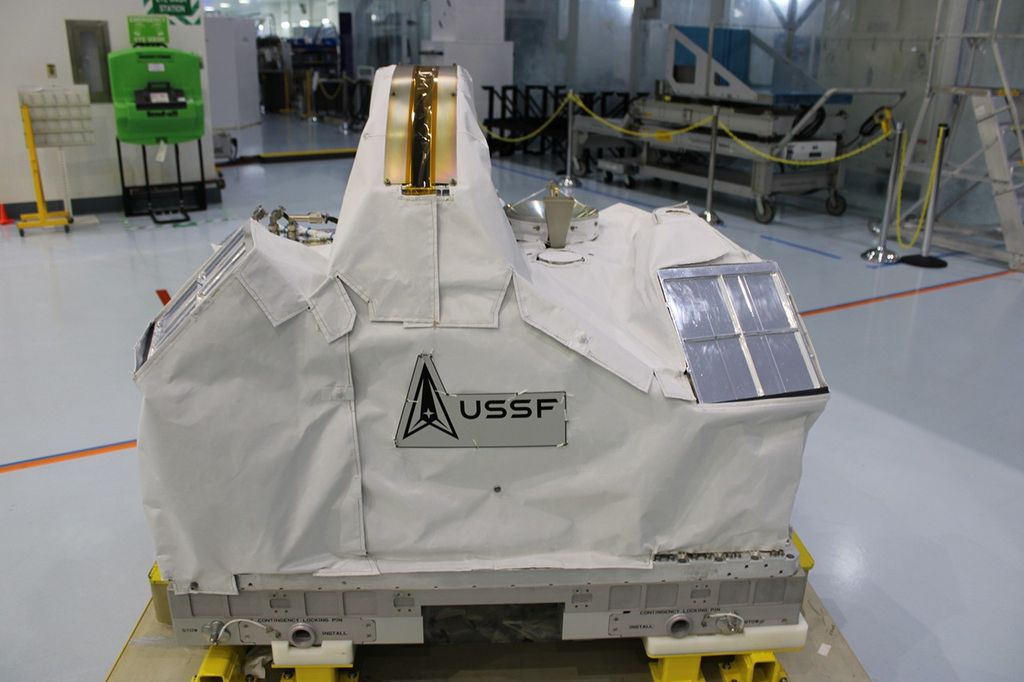
While MK1 is a technology demonstrator, it’s also carrying real science to the Moon. Under NASA’s Commercial Lunar Payload Services (CLPS) program, two scientific instruments will be delivered to the lunar South Pole: the Stereo Cameras for Lunar Plume-Surface Studies (SCALPSS) and the Laser Retroreflective Array (LRA).
SCALPSS consists of a suite of high-resolution cameras that will capture the moment of landing from multiple angles. By recording how the lander’s engine plume interacts with the lunar regolith, scientists can better understand erosion patterns, dust dispersal, and surface stability. This data is vital for designing future landers and habitats, as rocket exhaust can destabilize the ground or kick up abrasive dust that damages equipment.
The LRA, meanwhile, is a passive device made of retroreflectors—mirrors that bounce laser light directly back to its source. Orbiting spacecraft can fire lasers at the LRA and measure the time it takes for the light to return, allowing for ultra-precise tracking of the lander’s position. This technology has been used since Apollo, but modern versions are smaller, lighter, and more durable.
Through CLPS, NASA is fostering a new model of lunar exploration—one where private companies deliver science payloads on a commercial basis. This approach reduces costs, accelerates timelines, and enables more frequent missions. MK1 is one of the first CLPS-enabled landers, but dozens more are in development by companies like Intuitive Machines, Astrobotic, and Firefly Aerospace.
From Cargo to Crew: The Road to Blue Moon Mark 2
While MK1 is uncrewed, it’s a direct precursor to Blue Moon Mark 2 (MK2), a larger, crewed lander designed to carry astronauts from lunar orbit to the surface. MK2 will be capable of transporting up to four astronauts and includes life support systems, radiation shielding, and emergency abort capabilities.
The data and lessons from MK1’s design, testing, and flight operations will directly inform MK2’s development. For example, the performance of the cryogenic propulsion system, the reliability of the autonomous navigation, and the thermal behavior of the structure under lunar conditions will all be analyzed to improve the crewed version.
NASA’s Artemis program envisions sustained human presence at the lunar South Pole by the end of the decade. To achieve this, the agency needs reliable, reusable landers that can deliver crews and cargo safely. Blue Origin, along with SpaceX and other partners, is competing to provide these systems under the Human Landing System (HLS) contract.
The Bigger Picture: A New Era of Public-Private Partnership
The collaboration between Blue Origin and NASA on MK1 exemplifies a shift in how space exploration is conducted. Gone are the days when only government agencies could afford to build and launch spacecraft. Today, commercial companies are not just suppliers—they’re full partners in exploration.
This public-private model offers several advantages. It leverages private investment to accelerate innovation, reduces taxpayer burden, and fosters competition that drives down costs. At the same time, NASA provides critical infrastructure, expertise, and oversight, ensuring that missions meet rigorous safety and scientific standards.
The success of MK1’s testing in Chamber A is a testament to what this partnership can achieve. It’s a fusion of Blue Origin’s entrepreneurial agility and NASA’s decades of spaceflight experience—a synergy that could define the next chapter of human space exploration.
As Endurance prepares for its lunar journey, it carries more than cargo and cameras. It carries the hopes of a new generation of explorers, the promise of discovery, and the dream of a permanent human presence beyond Earth. The Moon is no longer a distant goal—it’s a destination within reach, and Blue Origin’s Blue Moon is helping us get there.
This article was curated from Blue Origin Moon Lander Completes Testing at NASA Vacuum Chamber via NASA Breaking News