Table of Contents
- The Hidden Dynamo: What Is the Ring Current?
- Why the Ring Current Matters: Space Weather and Modern Life
- The Mystery of the Oxygen Ions: A Key Piece of the Puzzle
- STORIE’s Revolutionary Approach: Imaging from the Inside Out
- A Closer Look: How STORIE’s Instrument Works
- The Bigger Picture: STORIE in the Context of Space Science
- Looking Ahead: What STORIE Could Reveal

NASA’s STORIE Mission: Peering Into Earth’s Invisible Electrical Engine
Deep within the invisible architecture of space surrounding our planet lies a dynamic, doughnut-shaped river of energy—Earth’s ring current. This hidden current, composed of swirling charged particles, pulses in response to the Sun’s moods, shaping the very nature of space weather that can disrupt satellites, GPS signals, and even power grids on Earth. For decades, scientists have studied this enigmatic force from afar, but a new mission is about to bring us closer than ever before.
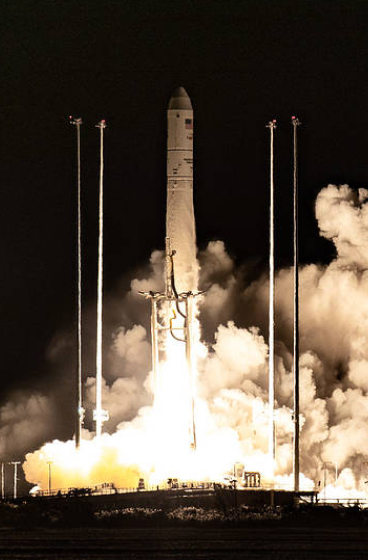
NASA’s STORIE (Storm Time O+ Ring current Imaging Evolution) mission, set to launch in May aboard SpaceX’s 34th commercial resupply mission to the International Space Station (ISS), aims to deliver an unprecedented inside-out view of the ring current. Once installed robotically on the exterior of the ISS, STORIE will act like a cosmic stethoscope, listening to the subtle rhythms of Earth’s magnetic heartbeat. This mission, part of the Space Test Program – Houston 11 (STP-H11) collaboration between NASA and the U.S. Space Force, could unlock secrets that have puzzled space physicists for over half a century.
The Hidden Dynamo: What Is the Ring Current?
At the heart of Earth’s space environment lies a phenomenon both beautiful and powerful: the ring current. Unlike the more famous Van Allen radiation belts—two concentric zones of high-energy particles trapped by Earth’s magnetic field—the ring current is a lower-energy but far more dynamic structure. It forms a vast, invisible torus encircling Earth at altitudes between 10,000 and 60,000 kilometers, overlapping the outer edge of the Van Allen belts.
Within this doughnut-shaped region, positively charged ions (mostly protons and oxygen ions) and negatively charged electrons spiral along magnetic field lines, flowing in opposite directions. This counter-streaming motion generates a massive electrical current—hence the name “ring current.” This current doesn’t just exist in isolation; it actively interacts with Earth’s magnetic field, subtly distorting it during periods of heightened solar activity.

The ring current’s behavior is closely tied to geomagnetic storms, which occur when solar eruptions—like coronal mass ejections (CMEs)—send bursts of charged particles hurtling toward Earth. When these particles collide with our magnetosphere, they inject energy into the ring current, causing it to swell in size and intensity. This swelling can compress Earth’s magnetic field on the dayside and stretch it into a long tail on the nightside, creating conditions ripe for auroras—and technological chaos.
Why the Ring Current Matters: Space Weather and Modern Life
While the ring current may seem like a distant astrophysical curiosity, its influence reaches deep into our daily lives. Space weather driven by changes in the ring current can have real-world consequences, from GPS inaccuracies to satellite malfunctions and even widespread power outages.
For example, during the infamous Carrington Event of 1859—the most intense geomagnetic storm on record—telegraph systems across Europe and North America failed, with operators reporting sparks flying from equipment and papers catching fire. If a similar event occurred today, the impact could be catastrophic. A 2021 study by the National Academy of Sciences estimated that a severe geomagnetic storm could cause up to $2 trillion in damages in the U.S. alone, with recovery taking years.
Modern satellites, many of which operate in low-Earth orbit or geostationary positions within the ring current’s domain, are especially vulnerable. Charged particles can penetrate satellite electronics, causing single-event upsets—glitches that corrupt data or disable critical systems. In 2022, SpaceX lost 40 Starlink satellites after a geomagnetic storm increased atmospheric drag, causing them to burn up in the upper atmosphere.
Understanding the ring current isn’t just about predicting auroras—it’s about protecting our technological infrastructure. By studying how and why the ring current intensifies, scientists can improve space weather forecasting models, giving satellite operators and power grid managers crucial lead time to take protective measures.

The Mystery of the Oxygen Ions: A Key Piece of the Puzzle
One of the most intriguing aspects of the ring current is its composition. While early models assumed it was dominated by protons (hydrogen ions), recent observations have revealed a surprising player: oxygen ions (O⁺), stripped from atoms in Earth’s upper atmosphere.
These oxygen ions are not just minor contributors—they can dominate the ring current’s mass during intense geomagnetic storms. Heavier than hydrogen, they carry more momentum and energy, making them a critical factor in how the current responds to solar disturbances.
The ring current can contain up to 10²⁵ joules of energy—equivalent to the output of 100 nuclear power plants running for a full year.
The current can expand from a quiet-state diameter of ~60,000 km to over 100,000 km during extreme events.
It takes only 3 to 6 hours for a solar storm to significantly inflate the ring current after impact.
STORIE will measure particle energies ranging from 10 keV to 1 MeV, covering the full spectrum of ring current dynamics.
The presence of oxygen ions suggests a direct link between Earth’s atmosphere and its space environment—a process known as atmospheric escape. During solar storms, extreme ultraviolet radiation and particle bombardment heat the upper atmosphere, causing oxygen atoms to be ionized and swept into the magnetosphere. This “atmospheric leakage” not only feeds the ring current but may also play a role in the long-term evolution of Earth’s climate and habitability.
STORIE’s Revolutionary Approach: Imaging from the Inside Out
Previous missions, such as NASA’s Van Allen Probes and the European Space Agency’s Cluster mission, have studied the ring current using in-situ measurements—flying through it and collecting data point by point. While invaluable, these methods provide a narrow, localized view, like trying to understand a hurricane by standing in one spot with a rain gauge.
STORIE flips the script. Instead of flying through the ring current, it will observe it from the outside, using a novel imaging technique to capture the entire structure in a single snapshot. Mounted on the ISS’s exterior, STORIE will use a specialized instrument called an energetic neutral atom (ENA) imager to detect neutral atoms created when charged particles in the ring current collide with sparse atoms in space.

When a fast-moving ion (like an oxygen ion) steals an electron from a neutral atom, it becomes neutral itself and flies off in a straight line—carrying information about its original energy and direction. STORIE will detect these “ghost particles,” reconstructing a 2D image of the ring current’s intensity and composition from millions of kilometers away.
This approach allows scientists to track how the ring current evolves over time, revealing patterns of growth, decay, and particle transport that were previously invisible. “We’re essentially giving the ring current a voice,” says Alex Glocer, STORIE’s principal investigator at NASA’s Goddard Space Flight Center. “By imaging its evolution, we can finally answer questions about where its particles come from and how they’re energized.”
A Closer Look: How STORIE’s Instrument Works
At the core of STORIE is a compact but powerful ENA imager designed to operate in the harsh environment of low-Earth orbit. The instrument consists of a series of detectors sensitive to neutral atoms across a wide energy range, from tens of kiloelectronvolts (keV) to over a megaelectronvolt (MeV). It uses a technique called time-of-flight mass spectrometry to distinguish between different types of atoms—such as hydrogen versus oxygen—based on their speed and mass.
As the ISS orbits Earth every 90 minutes, STORIE will sweep across the sky, collecting ENA emissions from the ring current below. Over time, these snapshots will be combined into a dynamic movie, showing how the current responds to solar storms in real time. The data will be downlinked to Earth and analyzed by a team of scientists at NASA Goddard and partner institutions.
One of STORIE’s key innovations is its ability to distinguish oxygen ions from hydrogen ions—a capability that previous ENA imagers lacked. This will allow researchers to map the distribution of heavy ions, which are critical for understanding energy transfer during storms.
The Bigger Picture: STORIE in the Context of Space Science
STORIE is more than just a single mission—it’s part of a broader effort to understand Earth’s space environment as a complex, interconnected system. It complements other NASA missions like the Magnetospheric Multiscale (MMS) mission, which studies magnetic reconnection, and the upcoming HelioSwarm mission, which will use a fleet of small satellites to study turbulence in space plasma.
Together, these missions are building a multi-scale view of space weather, from the microscopic physics of particle acceleration to the global dynamics of the magnetosphere. STORIE’s focus on the ring current fills a crucial gap, providing the first continuous, global imaging of this key component.
The mission also exemplifies the growing synergy between NASA and the U.S. Space Force. As space becomes increasingly congested and contested, understanding space weather is not just a scientific priority—it’s a national security imperative. Accurate forecasting can protect military satellites, communication systems, and even astronaut safety during deep-space missions.
Looking Ahead: What STORIE Could Reveal
When STORIE begins operations later this year, scientists expect it to answer several long-standing questions:
- How quickly does the ring current respond to solar storms?
- Where do the heavy ions come from?
- How does the ring current dissipate energy?
Previous models suggest a delay of several hours, but STORIE’s real-time imaging could reveal faster or more complex dynamics.
Are they primarily from the solar wind, or are they “recycled” from Earth’s own atmosphere? STORIE’s oxygen measurements will provide clues.
Understanding the mechanisms that drain energy from the current—such as wave-particle interactions or particle precipitation into the atmosphere—could improve storm prediction models.
Ultimately, STORIE’s findings could lead to better space weather forecasts, giving us the ability to predict disruptions days in advance rather than hours. This would be a game-changer for industries ranging from aviation to telecommunications to disaster response.
As humanity ventures further into space—with plans for lunar bases, Mars missions, and commercial space stations—understanding the invisible forces that shape our cosmic neighborhood has never been more important. STORIE is not just peering into Earth’s ring current; it’s helping us understand our place in the solar system, and how to live safely within it.
In the silent expanse beyond our atmosphere, a quiet revolution is underway. And with STORIE, we’re finally learning to listen.
This article was curated from NASA’s STORIE Mission to Tell Tale of Earth’s Ring Current via NASA Breaking News