Table of Contents
The Final Countdown: NASA Prepares for the Launch of the Nancy Grace Roman Space Telescope
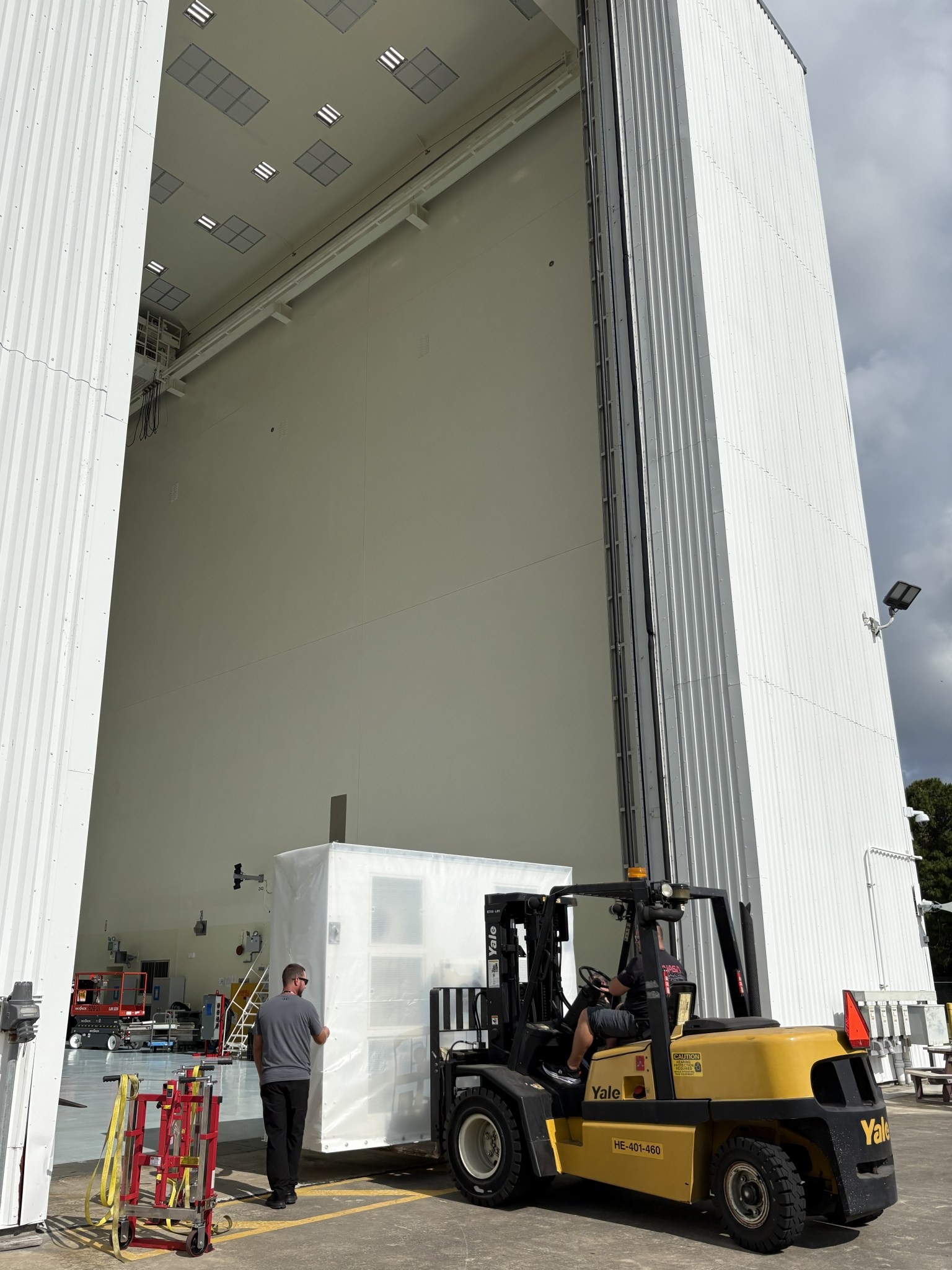
In a quiet corner of NASA’s Kennedy Space Center in Florida, a quiet but monumental shift is underway. On April 27, a fleet of heavy-duty equipment—eight massive high-efficiency particulate air (HEPA) wall modules, each weighing nearly a ton—arrived at the Payload Hazardous Servicing Facility (PHSF). These aren’t just any industrial parts; they’re the invisible guardians of one of the most ambitious space observatories ever built: the Nancy Grace Roman Space Telescope. As technicians carefully offloaded and positioned these modules, they were laying the groundwork for a mission that could redefine our understanding of the cosmos.
The Roman Space Telescope, named in honor of NASA’s first chief of astronomy and a pioneering advocate for space-based observatories, is not just another telescope. It’s a cosmic detective equipped with infrared vision and a panoramic field of view unmatched by any space telescope before it. While the Hubble Space Telescope gave us stunning close-ups of galaxies and nebulae, and the James Webb Space Telescope peers into the earliest epochs of the universe, Roman is designed to survey vast swaths of the sky with unprecedented speed and precision. Its mission? To unravel the mysteries of dark energy, map the invisible scaffolding of dark matter, and discover thousands of new exoplanets.
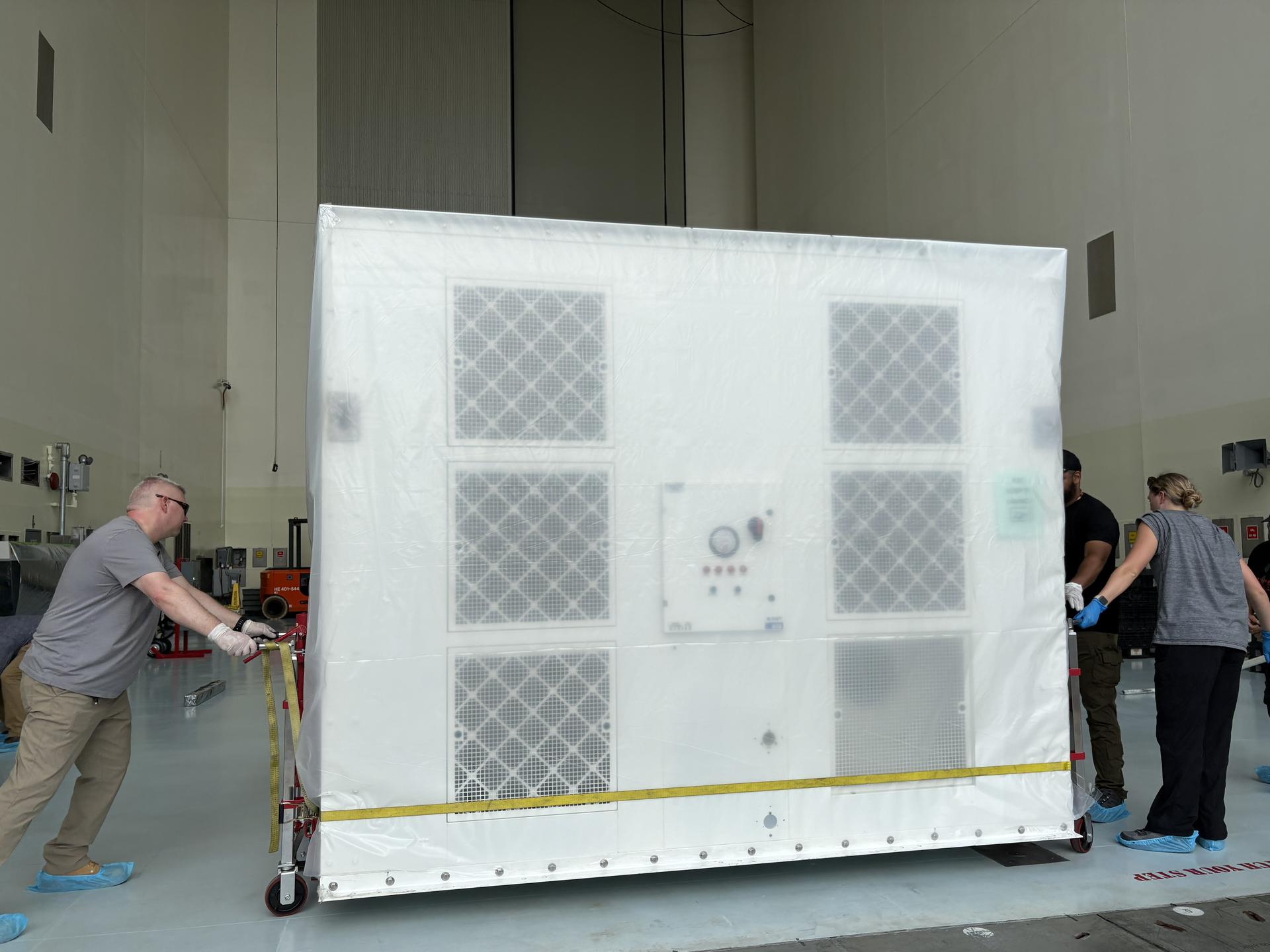
But before Roman can begin its journey into the void, it must survive one of the most meticulous preparation processes in modern engineering—a process that begins with cleanliness. The PHSF, a state-of-the-art facility built to handle spacecraft that require extreme contamination control, is now being upgraded to meet Roman’s exacting standards. The newly installed HEPA wall modules are a critical part of this effort, filtering out microscopic particles that could compromise the telescope’s sensitive instruments.
A Clean Room Fit for a Cosmic Explorer
The Payload Hazardous Servicing Facility at Kennedy is no ordinary clean room. It’s a cathedral of precision, where every speck of dust is a potential threat. For a telescope like Roman, which will operate in the cold, silent vacuum of space, even a single grain of sand could scatter light and distort images. That’s why NASA engineers have gone to extraordinary lengths to ensure the environment inside the PHSF is as pristine as possible.
Each of the eight HEPA wall modules weighs approximately 1,800 pounds and stands several feet tall. They are designed to work in concert with the facility’s existing air filtration systems, creating a laminar airflow that sweeps contaminants away from the telescope. These modules don’t just filter air—they actively scrub it, removing particles as small as 0.3 microns with 99.97% efficiency. To put that in perspective, a human hair is about 70 microns thick. These filters can catch particles over 200 times smaller.
The clean room environment is so strict that technicians must wear full-body bunny suits, complete with gloves, masks, and shoe covers. Even the tools used inside the facility are specially treated to minimize outgassing and particle shedding. Every component that enters the clean room is subjected to rigorous cleaning and inspection protocols. The entire process is akin to preparing a surgical operating room—except instead of saving lives, the goal is to preserve the integrity of a $3.2 billion scientific instrument.
The telescope will capture images with a resolution comparable to Hubble’s but cover an area of sky equivalent to 100 full moons in a single snapshot.
Over its 5-year primary mission, Roman is expected to image more than 100 million galaxies.
The telescope’s Wide Field Instrument will detect light in the near-infrared spectrum, from 0.5 to 2.0 microns.
The Coronagraph Instrument will block starlight to directly image exoplanets, a technique known as coronagraphy.
The Science Behind the Mission: Dark Energy, Dark Matter, and Exoplanets
At the heart of the Roman Space Telescope’s mission is a trio of cosmic mysteries that have puzzled scientists for decades: dark energy, dark matter, and the nature of exoplanets. Together, these phenomena make up more than 95% of the universe’s total mass-energy content, yet we know remarkably little about them.
Dark energy, the mysterious force believed to be driving the accelerated expansion of the universe, was discovered in 1998 through observations of distant supernovae. But what it is—and why it behaves the way it does—remains one of the greatest unsolved problems in physics. Roman will tackle this question using a technique called weak gravitational lensing. As light from distant galaxies travels through the universe, it gets bent by the gravity of massive objects like galaxy clusters. By measuring these subtle distortions across billions of galaxies, Roman can map the distribution of both visible and dark matter, revealing how dark energy has influenced the universe’s expansion over time.
Meanwhile, the telescope’s Coronagraph Instrument will serve as a technology demonstration, testing new methods for directly imaging exoplanets—planets orbiting stars other than our Sun. Unlike indirect methods such as the transit technique (used by Kepler and TESS), direct imaging allows scientists to study a planet’s atmosphere, composition, and even potential signs of life. The coronagraph works by blocking the blinding light of a star, much like using your hand to shield your eyes from the sun, allowing fainter objects nearby to become visible.
Roman will also conduct a microlensing survey, using the gravity of stars and planets as natural telescopes to magnify distant objects. This method is particularly effective for finding rogue planets—worlds that don’t orbit any star and drift freely through space. These elusive objects, which may outnumber stars in our galaxy, have never been systematically studied. Roman could discover thousands of them, offering new clues about how planets form and evolve.
A Legacy of Vision: Honoring Nancy Grace Roman
The telescope’s name is more than a tribute—it’s a recognition of a legacy that made missions like this possible. Nancy Grace Roman, who passed away in 2018 at the age of 93, was a trailblazer in an era when women were rarely seen in leadership roles in science. As NASA’s first chief of astronomy, she championed the idea of space-based observatories at a time when many doubted their feasibility.
Her advocacy was instrumental in the development of the Hubble Space Telescope, which revolutionized astronomy with its crystal-clear images of distant galaxies, nebulae, and star-forming regions. Roman understood that to see the universe clearly, we needed to get above Earth’s atmosphere, which distorts and blocks certain wavelengths of light. Her vision laid the foundation for a new era of space science—one that the Roman Space Telescope is now poised to continue.
The naming of the Roman Space Telescope in her honor is particularly fitting. Like Hubble, Roman will peer into the deepest reaches of space, but with a broader perspective. Where Hubble focused on deep, narrow fields, Roman will cast a wide net, surveying large portions of the sky to uncover patterns and anomalies that smaller surveys might miss.
Launch Preparations: From Clean Rooms to Falcon Heavy
With the HEPA modules now in place, the PHSF is ready to begin the next phase of Roman’s journey: spacecraft processing. Over the coming months, technicians will perform a series of critical tasks, including fuel loading, instrument calibration, and final systems checks. The telescope will be fueled with hydrazine, a highly toxic propellant used for attitude control and orbital adjustments. Because of the hazardous nature of this process, the PHSF is equipped with specialized containment systems and emergency protocols.
Once all systems are verified, Roman will be encapsulated in a protective fairing and transported to Launch Complex 39A at Kennedy Space Center. There, it will be mounted atop a SpaceX Falcon Heavy rocket, one of the most powerful launch vehicles in the world. The Falcon Heavy, capable of lifting over 60,000 pounds to low Earth orbit, is well-suited for delivering Roman to its destination: a gravitationally stable point in space known as the Sun-Earth Lagrange Point 2 (L2), located about 1 million miles from Earth.
From L2, Roman will have an unobstructed view of the universe, shielded from the heat and light of both the Sun and Earth. This vantage point is also used by the James Webb Space Telescope, allowing for stable thermal conditions and continuous communication with ground stations.
A New Era of Cosmic Discovery
When the Nancy Grace Roman Space Telescope launches—currently targeted for early September—it will mark the beginning of a new chapter in astronomy. With its wide field of view, infrared sensitivity, and advanced instrumentation, Roman will complement and extend the discoveries of Hubble and Webb. While Hubble gave us depth, and Webb gave us depth and sensitivity, Roman will give us breadth.
Imagine being able to map the entire sky in infrared light, identifying thousands of new galaxies, stars, and planetary systems in a single survey. That’s the power Roman brings. It will help answer fundamental questions: Why is the universe expanding faster over time? What is the nature of dark matter? Are we alone in the cosmos?
Beyond its scientific goals, Roman also represents a triumph of engineering, collaboration, and vision. From the HEPA modules now filtering air in Florida to the scientists analyzing data light-years away, this mission is a testament to human curiosity and ingenuity.
As the countdown to launch continues, the world watches with anticipation. The Roman Space Telescope isn’t just a machine—it’s a window into the unknown, a tool for discovery, and a legacy of one woman’s dream to see the universe more clearly. And when it finally lifts off, it will carry with it not just instruments and fuel, but the hopes of everyone who has ever looked up at the stars and wondered what lies beyond.
This article was curated from Key Support Equipment Arrives at Kennedy for Roman Space Telescope via NASA Breaking News