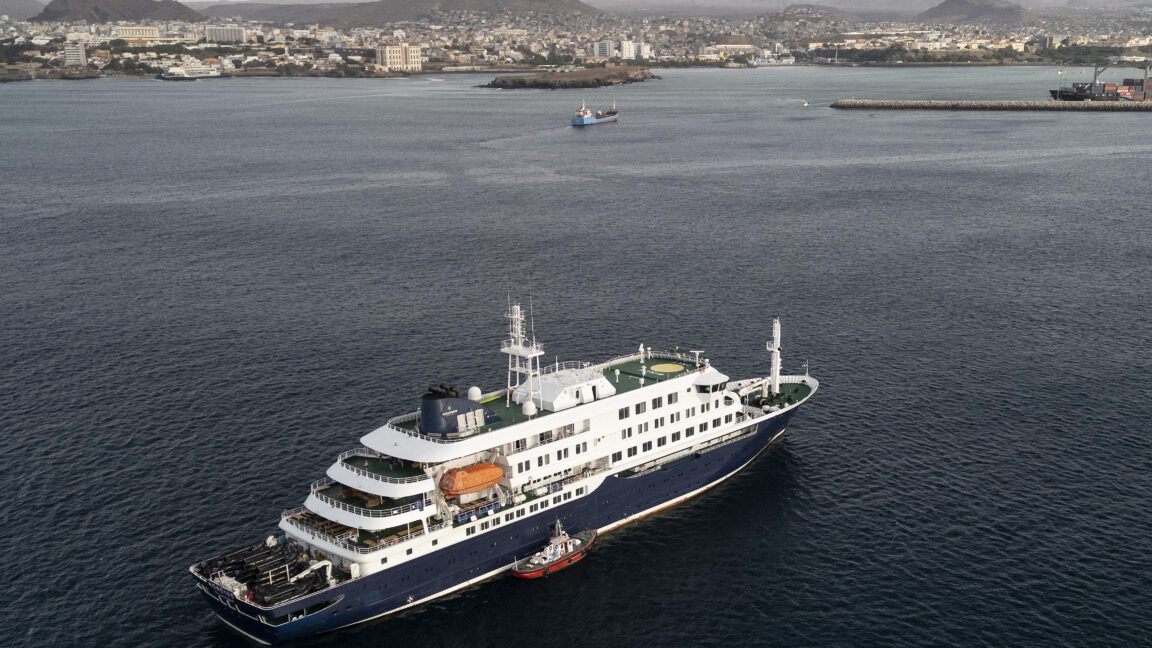
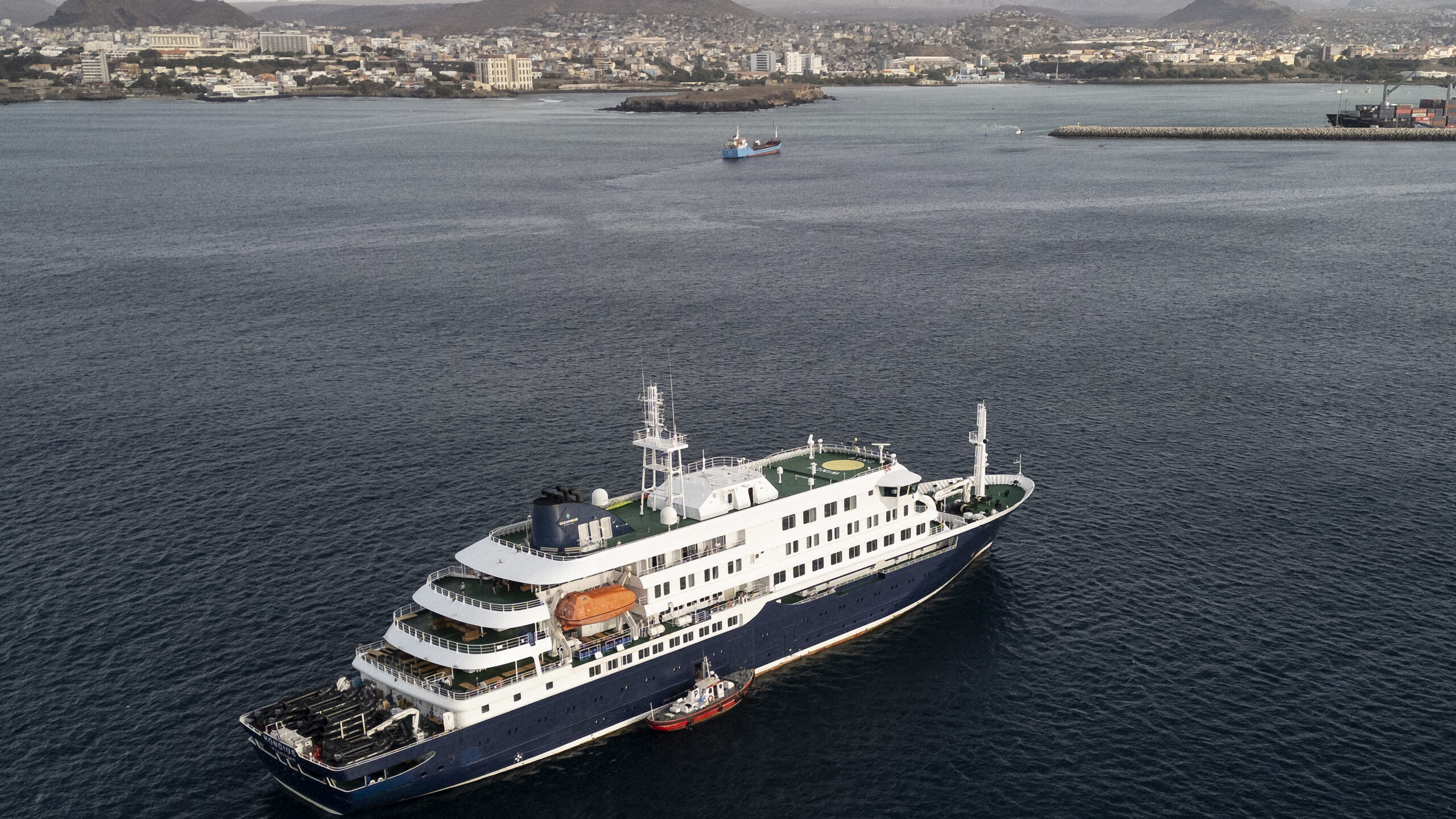
In the vast, uncharted waters off the coast of West Africa, a luxury cruise liner has become the unlikely epicenter of a modern medical mystery. The Dutch-flagged MV Hondius, a vessel designed for polar expeditions and scenic voyages, now sails under a cloud of global concern. What began as a routine journey from Ushuaia, Argentina, has spiraled into an unprecedented health crisis: an outbreak of hantavirus—a rare, often fatal disease typically associated with rodent exposure—has claimed three lives and infected five others among passengers and crew. With 147 people still aboard and the ship en route to the Canary Islands, the world watches as scientists, health officials, and maritime authorities scramble to contain a threat that defies conventional understanding.
Unlike the highly contagious viruses that dominated headlines during the pandemic, hantavirus is not transmitted from person to person. Instead, it spreads primarily through contact with rodent urine, droppings, or saliva. This makes the outbreak aboard the Hondius all the more perplexing. How did a virus with such a specific transmission route take root on a meticulously maintained cruise ship? And why now, in the middle of the Atlantic?
The answer lies in a confluence of environmental, biological, and logistical factors—each one amplifying the others in a way that has stunned epidemiologists. The ship’s journey took it through remote regions where rodent populations thrive in port facilities and cargo holds. St. Helena, a volcanic island in the South Atlantic, is known for its dense populations of invasive house mice and rats, which have adapted to human environments with alarming efficiency. It was here, on April 24, that 30 passengers disembarked—unaware that the virus had already begun its silent spread.
The first fatality occurred on April 11, when a passenger died suddenly from what was initially believed to be a severe respiratory infection. At the time, no one suspected hantavirus. Symptoms—fever, muscle aches, fatigue, and eventually acute respiratory distress—mimic those of influenza or even COVID-19. By the time a second death occurred and a third followed, the pattern became undeniable. Genetic sequencing confirmed the presence of a hantavirus strain closely related to those found in African rodents, particularly the multimammate rat (Mastomys natalensis), a known carrier in sub-Saharan Africa.
This discovery sent shockwaves through the global health community. While hantavirus cases have been reported in Africa before, they have almost always been isolated incidents linked to rural exposure. A cluster of this size, and in such an urbanized setting as a cruise ship, is unprecedented. The fact that the virus appears to have originated from a rodent species native to Africa—yet infected individuals who had never set foot on the continent—suggests that the virus may have been introduced via contaminated supplies, cargo, or even the ship’s ventilation system.
As the Hondius continues its journey toward the Canary Islands, the World Health Organization (WHO) has convened an emergency task force to develop a protocol for safe disembarkation. The challenge is immense. Unlike a land-based outbreak, where quarantine zones can be established and contact tracing conducted efficiently, a ship at sea presents unique logistical hurdles. The vessel is a floating city, with shared ventilation systems, communal dining areas, and limited medical facilities. Even if the virus isn’t airborne, the close quarters increase the risk of secondary transmission through fomites—contaminated surfaces like handrails, doorknobs, and elevator buttons.

Spanish authorities have agreed to assist, but only under strict conditions. The ship will be met by a medical team in full hazmat gear, and passengers will undergo rigorous screening before being transported to isolation facilities on Tenerife. Those who test positive or show symptoms will be treated in specialized units equipped to handle high-consequence pathogens. Meanwhile, the 30 passengers who disembarked on St. Helena are being tracked down and monitored remotely. Health officials from at least 12 countries, including the United States, are collaborating to ensure that no one falls through the cracks.
3 fatalities reported as of May 6
147 passengers and crew still on board
30 former passengers under surveillance after disembarking on St. Helena
12+ countries involved in contact tracing efforts
The psychological toll of the outbreak cannot be overstated. Passengers have been confined to their cabins, cut off from the luxury experiences they paid for—fine dining, guided excursions, social gatherings. Instead, they live in fear, unsure if they’ve been exposed, and anxious about what lies ahead. The crew, many of whom are from developing nations and work under long-term contracts, face even greater uncertainty. Will they be allowed to return home? Will they be stigmatized?

This crisis also raises broader questions about global travel and biosecurity. Cruise ships, with their high passenger turnover and international itineraries, are potential hotspots for disease transmission. While protocols exist for norovirus and influenza, hantavirus presents a new kind of challenge—one that demands a reevaluation of how we monitor and respond to zoonotic diseases in maritime environments.
Experts are now investigating whether the ship’s air filtration systems may have played a role. Modern cruise ships use advanced HVAC systems designed to minimize the spread of airborne pathogens. However, hantavirus particles can become aerosolized when dried rodent excrement is disturbed—such as during cleaning or maintenance. If the virus entered the ventilation system through an unsealed access point or contaminated filter, it could have circulated throughout the ship, exposing dozens of people in a short time.

Another theory points to food contamination. Rodents are notorious for infiltrating storage areas, and if supplies were compromised before or during the voyage, ingestion of contaminated food could have been the initial vector. However, this would not explain the rapid onset of respiratory symptoms, which are more consistent with inhalation.
The outbreak has also reignited debates about wildlife trade and invasive species. St. Helena, though remote, has a long history of human-mediated ecological disruption. Introduced species like rats, cats, and mice have decimated native bird populations and altered entire ecosystems. The presence of Mastomys natalensis on the island—likely introduced via shipping routes—highlights how global trade and travel can inadvertently transport not just goods, but deadly pathogens.
As the Hondius approaches the Canary Islands, the world is reminded that pandemics are not just about human-to-human transmission. They are the result of complex interactions between humans, animals, and the environment. Climate change, deforestation, urbanization, and global travel are all increasing the frequency of zoonotic spillover events. The hantavirus outbreak on the MV Hondius may be a harbinger of what’s to come—a world where rare diseases can emerge in the most unexpected places.
The response to this crisis will serve as a blueprint for future maritime health emergencies. The WHO’s development of a novel disembarkation protocol could set a new standard for how ships handle infectious disease outbreaks. It may also prompt cruise lines to invest in better rodent control, enhanced air filtration, and real-time pathogen monitoring systems.
In the meantime, the passengers and crew of the Hondius wait—trapped between the sea and the shore, between fear and hope. Their ordeal underscores a sobering truth: in an interconnected world, no one is truly isolated. A virus that begins in a remote corner of Africa can, within weeks, find its way onto a luxury cruise ship, challenging our assumptions about safety, travel, and the boundaries of disease.
The first death occurred on April 11, but hantavirus was not confirmed until weeks later.
The ship visited St. Helena on April 24, where 30 passengers disembarked.
As of May 6, the ship is en route to the Canary Islands.
Spanish authorities will oversee a controlled disembarkation with medical screening.
The outbreak involves a hantavirus strain linked to African rodents.
No human-to-human transmission has been documented.
The WHO is developing new protocols for maritime disease outbreaks.
This event may fade from the headlines once the passengers are safely ashore, but its implications will linger. It is a stark reminder that nature’s pathogens are always evolving, and our defenses must evolve with them. The sea, once a symbol of freedom and adventure, now carries a new kind of warning—one that demands vigilance, science, and global cooperation.
This article was curated from The unprecedented and deadly cruise ship hantavirus outbreak, explained via Ars Technica