Table of Contents
- The Legacy of Space Computing: From Apollo to Perseverance
- The Challenge: Why Space Computing Needs a Revolution
- The Breakthrough: What Makes HPSC So Powerful?
- A Partnership for the Future: NASA and Microchip Technology
- Real-World Impact: Where HPSC Will Make a Difference
- The Road Ahead: Challenges and Opportunities
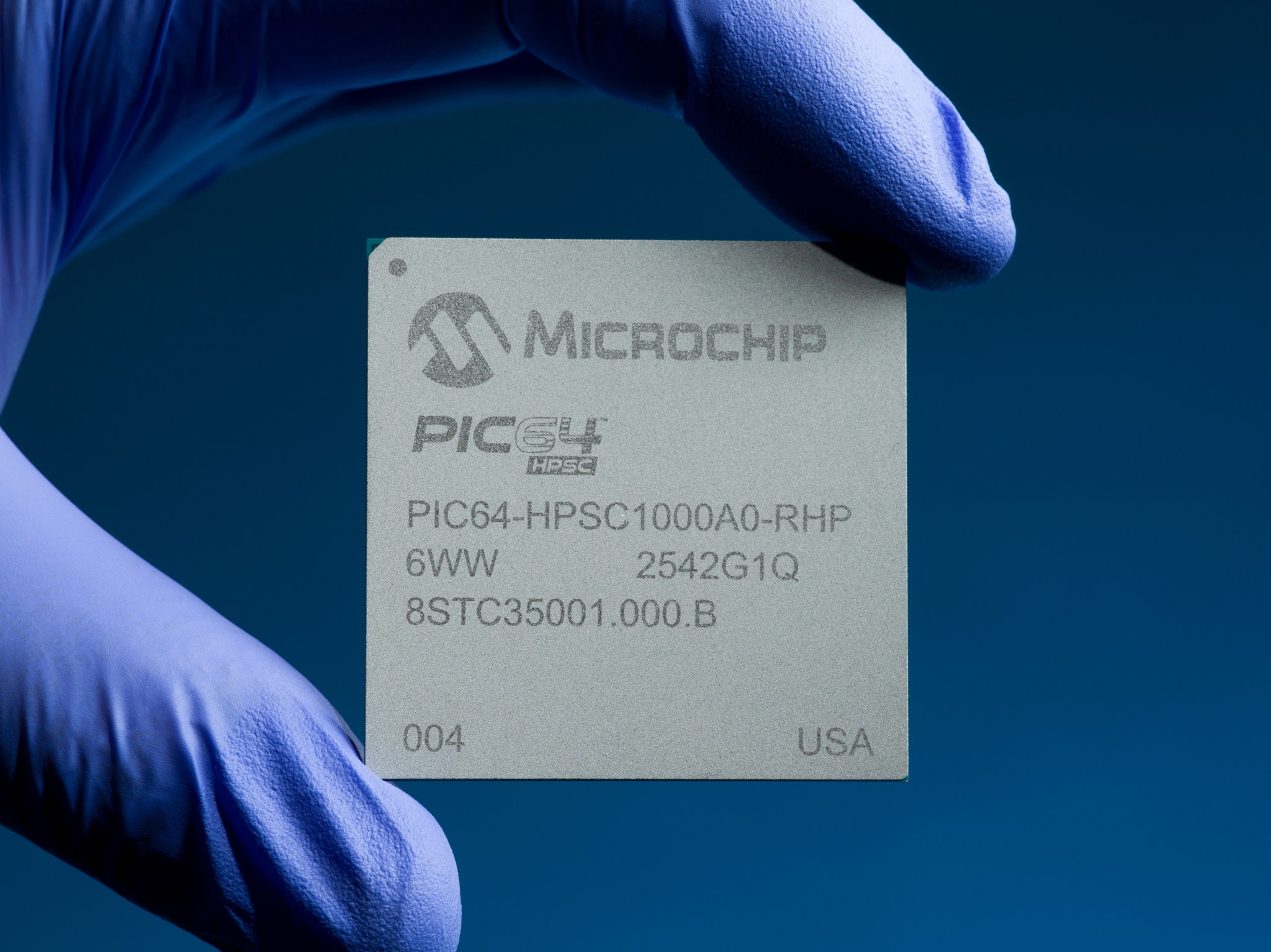
The Silent Revolution: How NASA Is Reinventing Space Computing for the Next Giant Leap
In the vast silence of space, where signals take minutes—or even hours—to reach Earth, spacecraft must think for themselves. For over half a century, NASA has relied on radiation-hardened computers to guide probes across the solar system, land rovers on alien terrain, and keep telescopes pointed at distant galaxies. But as humanity prepares for longer, more complex missions to the Moon, Mars, and beyond, the old guard of spaceflight computing is reaching its limits. Enter the High-Performance Spaceflight Computing (HPSC) system—a revolutionary leap that delivers over 100 times the processing power of current space-grade chips, all while consuming less energy and adapting dynamically to mission demands.
This isn’t just an upgrade. It’s a fundamental reimagining of how spacecraft compute, communicate, and survive in the unforgiving environment of space. Developed through a pioneering public-private partnership between NASA and Microchip Technology Inc., HPSC represents a new era of intelligent, autonomous space exploration—one where machines can make real-time decisions, process vast amounts of scientific data on the fly, and endure the cosmic radiation that has long plagued deep-space missions.
The Legacy of Space Computing: From Apollo to Perseverance
To understand the significance of HPSC, we must first appreciate the journey that brought us here. The roots of space computing stretch back to the 1960s, when NASA engineers built the Apollo Guidance Computer (AGC)—a marvel of its time. Weighing just 70 pounds and occupying less than a cubic foot, the AGC was the first computer to use integrated circuits and was responsible for navigating astronauts to the Moon and back. It performed calculations with a processor running at a mere 1 MHz, yet it succeeded in one of humanity’s greatest technological feats.
Over the decades, NASA’s computing needs evolved. The Voyager probes, launched in 1977, carried computers capable of surviving decades in deep space, sending back stunning images of Jupiter, Saturn, Uranus, and Neptune. More recently, the Mars rovers—Spirit, Opportunity, Curiosity, and Perseverance—have relied on radiation-hardened processors to analyze soil samples, navigate treacherous terrain, and transmit data across 140 million miles of interplanetary void.
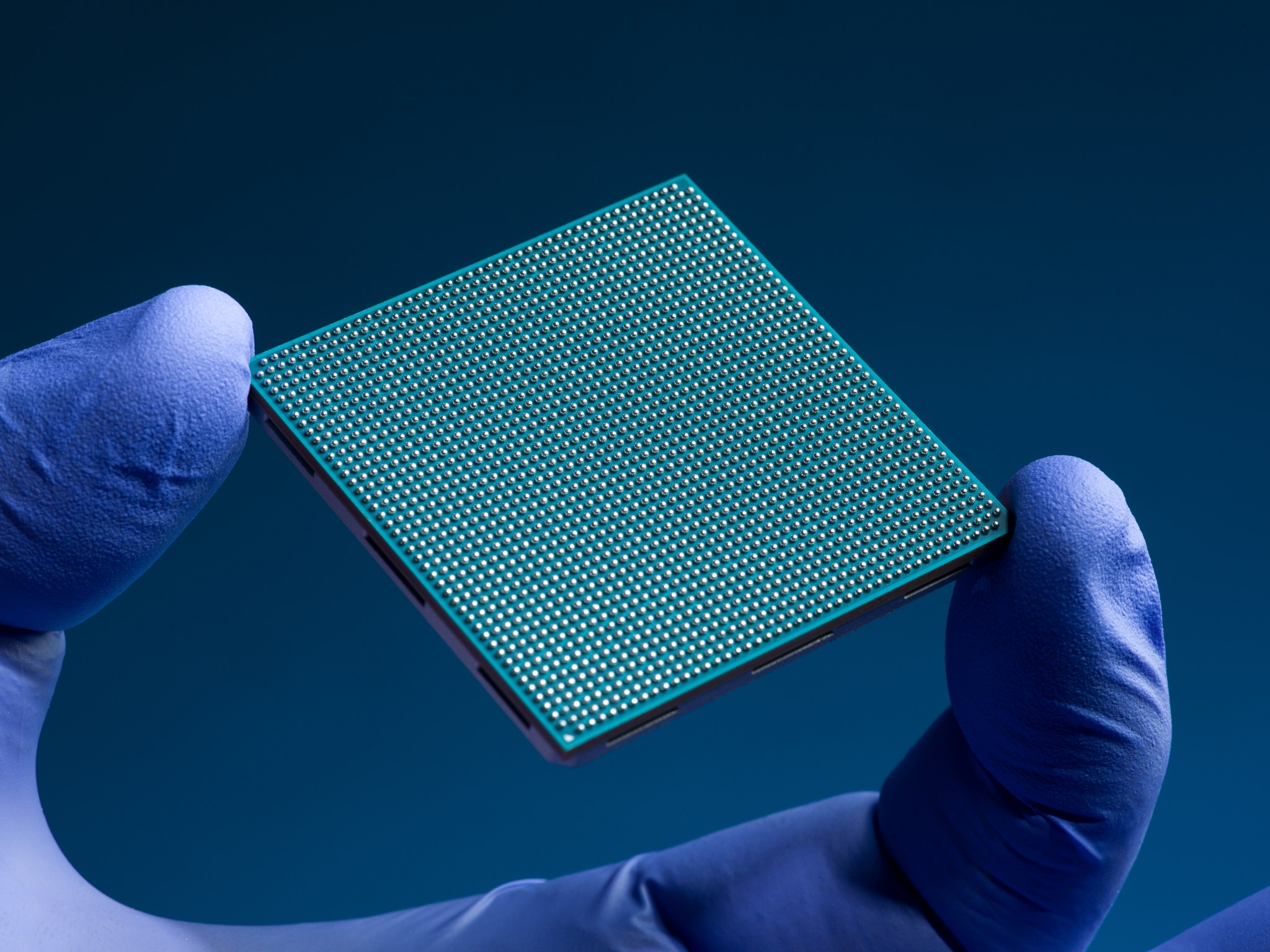
These legacy systems, while reliable, were built for specific missions with fixed capabilities. They couldn’t adapt. They couldn’t scale. And they certainly couldn’t handle the data deluge expected from future missions involving high-resolution imaging, real-time AI analysis, and autonomous navigation.
Perseverance Rover: 200 MHz RAD750 processor, 256 MB RAM
HPSC: Over 100x faster than current space processors, scalable architecture
The Challenge: Why Space Computing Needs a Revolution
Space is not a friendly place for electronics. Cosmic rays, solar flares, and high-energy particles can flip bits in memory, corrupt data, or even fry circuits. To survive, spacecraft computers must be radiation-hardened—a process that involves special materials, shielding, and error-correcting designs. But hardening comes at a cost: these chips are often decades behind commercial technology in terms of speed and efficiency.
For example, the RAD750, used in the Curiosity and Perseverance rovers, is based on a PowerPC architecture from the early 2000s. It’s reliable—no doubt—but it maxes out at about 200 MHz. Compare that to a modern smartphone, which runs at over 3 GHz and contains billions of transistors. The gap is staggering.
As NASA plans for Artemis missions to the Moon, Mars sample return missions, and deep-space telescopes, the demand for smarter, faster, and more autonomous systems is growing. Future rovers may need to identify and analyze rock formations in real time. Orbital satellites could process Earth observation data on board instead of sending raw streams back to Earth. And crewed spacecraft might require AI-driven life support and navigation systems that react instantly to emergencies.
Legacy processors simply can’t keep up. They’re too slow, too power-hungry, and too inflexible. The solution? A new kind of space computer—one that blends cutting-edge performance with space-hardened resilience.
The Breakthrough: What Makes HPSC So Powerful?
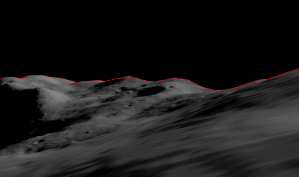
The High-Performance Spaceflight Computing (HPSC) system is not just a faster chip—it’s a system-on-chip (SoC) that integrates computing, memory, networking, and power management into a single, highly efficient package. Think of it as the brain, nervous system, and power grid of a spacecraft, all in one.
At its core, HPSC delivers over 100 times the computing capability of current space processors. But raw speed isn’t the only advantage. The system is built with a scalable architecture, meaning different missions can use different configurations depending on their needs. A small Earth-observing satellite might use a lightweight version, while a Mars-bound orbiter could deploy the full-powered variant.
One of the most innovative features is dynamic power management. Unlike older systems that run at full capacity all the time, HPSC can power down unused functions when they’re not needed. This is crucial for long-duration missions where every watt counts. For example, during a quiet period when a rover is stationary, the processor can scale back to conserve energy, then ramp up instantly when scientific instruments activate.
The HPSC family includes two key variants:
This dual approach allows NASA and private companies to use the same underlying technology across different mission profiles, reducing development time and cost.
A Partnership for the Future: NASA and Microchip Technology
What makes HPSC truly groundbreaking isn’t just the technology—it’s how it was developed. NASA didn’t go it alone. Instead, it partnered with Microchip Technology Inc., a leader in embedded control solutions, in a public-private collaboration that combined agency expertise with commercial innovation.
This model marks a shift in how NASA approaches technology development. Traditionally, the agency designed and built its own systems from scratch—a process that was thorough but slow and expensive. By partnering with industry, NASA can leverage commercial R&D, accelerate timelines, and reduce taxpayer costs.
Microchip brought decades of experience in designing reliable, low-power processors for aerospace and defense. NASA contributed deep knowledge of space environments, radiation effects, and mission requirements. Together, they created a processor that’s not only powerful but also practical for real-world space missions.
The result is a processor that’s ready for the commercial space economy. With the rise of small satellites, space tourism, and lunar infrastructure, there’s a growing demand for high-performance, affordable space computing. HPSC fills that gap, offering a scalable solution for both government and private missions.
Real-World Impact: Where HPSC Will Make a Difference
The applications for HPSC are as vast as space itself. Consider a Mars sample return mission, where a rover must identify, collect, and store rock samples for eventual return to Earth. With HPSC, the rover could use AI to analyze mineral composition in real time, decide which samples are most scientifically valuable, and adjust its path accordingly—without waiting for instructions from Earth.
Or imagine a lunar habitat on the Moon’s south pole, where astronauts rely on autonomous systems for air, water, and power. HPSC-powered computers could monitor life support, predict equipment failures, and even coordinate with rovers and drones—all with minimal human intervention.
In Earth orbit, commercial satellites equipped with HPSC could process climate data on board, detecting wildfires, tracking ice melt, or monitoring deforestation in real time. Instead of sending terabytes of raw images back to Earth, they could send only the insights—saving bandwidth and enabling faster response.
It supports real-time autonomous decision-making for deep-space missions.
The radiation-tolerant version is ideal for low Earth orbit satellites.
Dynamic power management allows unused functions to shut down, saving energy.
The technology is scalable, from small CubeSats to large interplanetary probes.
Even space telescopes could benefit. Future observatories like the Habitable Worlds Observatory will need to process massive amounts of data to search for Earth-like exoplanets. HPSC could enable on-board analysis, filtering out noise and identifying promising candidates without overwhelming ground stations.
The Road Ahead: Challenges and Opportunities
Despite its promise, HPSC is not without challenges. Radiation hardening remains a complex and expensive process. While the new architecture is more resilient, engineers must still test every component under simulated space conditions—a process that can take years.
There’s also the question of software compatibility. Legacy space software was designed for older processors. Transitioning to HPSC will require new operating systems, development tools, and coding practices. NASA is already working on this, developing software frameworks that can take full advantage of HPSC’s capabilities.
But the opportunities far outweigh the hurdles. As HPSC enters flight testing and eventual deployment, it will pave the way for a new generation of smart spacecraft—ones that can think, adapt, and explore with unprecedented autonomy.
In the end, HPSC is more than a processor. It’s a symbol of how far we’ve come—and how far we’re going. From the humble Apollo computer to the intelligent machines of tomorrow, space computing has always been about pushing the boundaries of what’s possible. With HPSC, NASA isn’t just upgrading its hardware. It’s redefining the future of exploration—one calculation at a time.
This article was curated from NASA, Industry Advance High Performance Spaceflight Computing via NASA Breaking News