Table of Contents
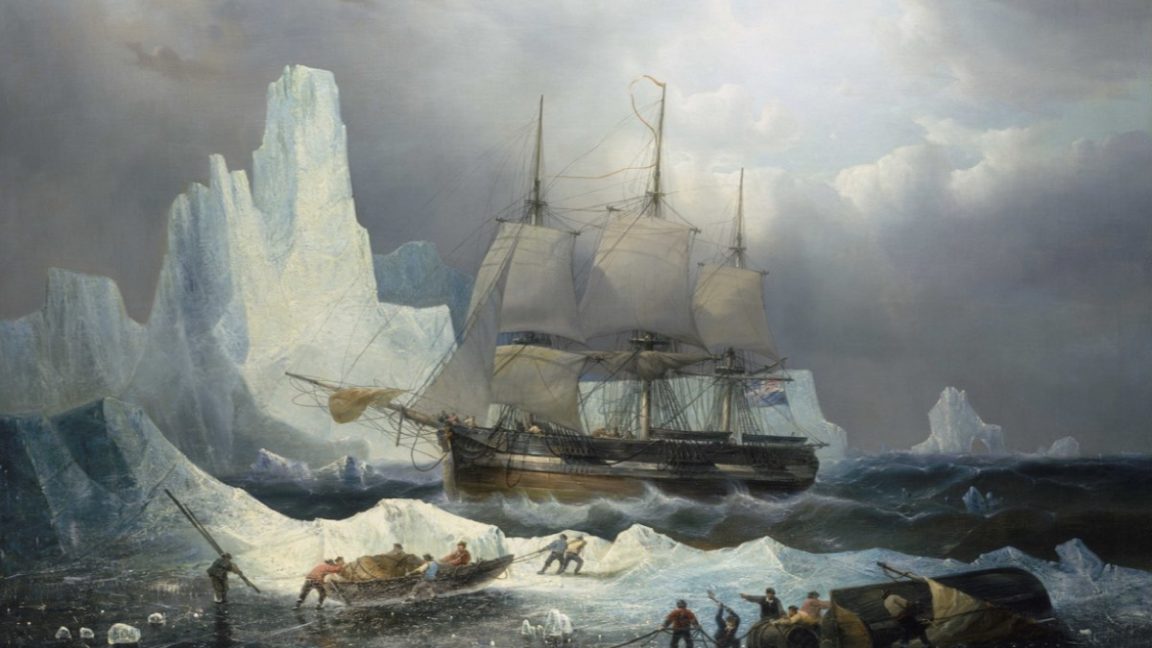
The icy grip of the Arctic has long held secrets—some of the most haunting buried beneath centuries of snow and silence. For over 175 years, the fate of Sir John Franklin’s ill-fated 1845 expedition to conquer the Northwest Passage has captivated historians, scientists, and adventurers alike. Now, cutting-edge DNA analysis has peeled back another layer of this enduring mystery, identifying four more crew members from the doomed voyage. These latest revelations, published in the Journal of Archaeological Science and Polar Record, mark a significant leap forward in our understanding of who these men were—not just as names on a ship’s log, but as individuals with lives, families, and stories lost to the ice.
Franklin’s expedition, launched with great fanfare from England, was meant to be a triumph of British naval prowess. Instead, it became one of the most tragic chapters in polar exploration. The two ships, HMS Erebus and HMS Terror, vanished without a trace after being last seen in Baffin Bay in July 1845. For decades, search parties scoured the Arctic, uncovering scattered artifacts, cryptic notes, and the graves of three crew members on Beechey Island. But it wasn’t until the 21st century, with the recovery of human remains and the application of modern forensic science, that the full human dimension of the disaster began to emerge.
A Voyage Into the Unknown
The Franklin Expedition was more than a geographical quest—it was a symbol of Victorian ambition. At a time when the British Empire prided itself on exploration and scientific discovery, Franklin’s mission to navigate the fabled Northwest Passage was seen as a crowning achievement waiting to happen. The expedition was lavishly equipped: both ships were reinforced with iron plating, steam engines, and state-of-the-art heating systems. They carried enough food for three years, including tinned goods that were considered revolutionary at the time.
Yet, despite these technological advantages, the Arctic proved merciless. The ships became trapped in the ice of Victoria Strait in September 1846, near King William Island. Franklin himself died in June 1847, and command passed to Captain James Fitzjames of the Erebus. A note found later revealed that the surviving crew abandoned the ships in April 1848, attempting a desperate trek south across the ice in hopes of reaching safety. None survived.
For over a century, the mystery deepened. Search parties found relics—buttons, cutlery, and even a single skeleton—but no definitive answers. It wasn’t until 2014 and 2016, when the wrecks of Erebus and Terror were finally located in the frigid waters of the Canadian Arctic, that a new era of investigation began. Underwater archaeologists recovered personal items, tools, and, crucially, human remains—bones that would eventually yield genetic material.
The Science of Identification: DNA in the Ice
The recent identification of four additional crew members is a triumph of forensic science applied to historical archaeology. Using mitochondrial DNA (mtDNA)—which is passed down maternally and highly stable over generations—researchers compared genetic material from skeletal remains with DNA samples from living descendants. This method has proven remarkably effective in confirming identities, even when records are incomplete or degraded.
One of the key challenges has been the preservation of DNA in Arctic conditions. While cold temperatures can slow degradation, exposure to moisture, microbial activity, and time still take their toll. However, advances in sequencing technology now allow scientists to extract usable genetic material from bones that are over 150 years old. In this latest study, researchers focused on teeth and petrous bones—the dense part of the skull behind the ear—which are among the best-preserved sources of ancient DNA.
The four newly identified men include Petty Officer John Gregory, a Royal Navy engineer; Able Seaman William Gibson; Marine Private William Braine; and an unnamed individual whose identity is still under investigation. Each represents a life cut short by the unforgiving Arctic. Gregory, for instance, was responsible for maintaining the ship’s steam engine—a critical role in a voyage that relied on both sail and steam power.

These identifications are more than just scientific milestones—they are acts of historical reclamation. By giving names to the nameless, researchers are restoring humanity to men who were once reduced to statistics in a failed expedition. Each identification opens a window into the personal stories behind the tragedy: Where were they from? Did they have families? What dreams did they carry into the ice?
Life Aboard the Doomed Ships
To understand the Franklin Expedition’s downfall, one must first understand the lives of those who sailed aboard Erebus and Terror. The crew of 129 men came from diverse backgrounds—sailors, marines, engineers, and even a few civilians, including Franklin’s own steward. Many were seasoned Arctic veterans, having served in earlier expeditions. Others were young recruits, drawn by the promise of adventure and a steady paycheck.
Life aboard the ships was regimented and hierarchical. Officers dined on fine china and enjoyed private cabins, while enlisted men slept in hammocks crammed into tight quarters. Despite the hardships, morale was initially high. The crew celebrated holidays, held concerts, and even published a shipboard newspaper called The North Georgia Gazette and Winter Chronicle. This publication, filled with jokes, poetry, and scientific observations, offers a rare glimpse into the daily lives of the men.
Yet beneath the surface, tensions simmered. The ships were overcrowded, and the long Arctic winters brought isolation and psychological strain. Scurvy, lead poisoning from poorly soldered tins, and tuberculosis likely weakened the crew long before the final abandonment. Recent analyses of bone samples have revealed high levels of lead, supporting theories that contaminated food supplies played a role in the expedition’s collapse.

The psychological toll of isolation cannot be overstated. Trapped in ice for months on end, with no contact from the outside world, the men faced what modern psychologists call “polar T3 syndrome”—a condition marked by depression, irritability, and cognitive decline. It’s possible that these mental health challenges contributed to poor judgment in the expedition’s final days.
The Final Days: A Tragic March
When the ships were finally abandoned in April 1848, the survivors faced an impossible journey. With supplies dwindling and the ice showing no sign of breaking, Fitzjames and his men set out on foot, dragging lifeboats laden with food and equipment across hundreds of miles of treacherous terrain. They hoped to reach the Great Fish River, where they might find help or cached supplies from earlier expeditions.
But the Arctic had other plans. Starvation, exposure, and disease took their toll. Inuit oral histories, later corroborated by archaeological evidence, tell of groups of men seen walking slowly, some crawling, others cannibalizing the dead. Cut marks on human bones found at campsites suggest that survival cannibalism occurred—a grim testament to the extremes of human desperation.
The final note, signed by Fitzjames and found in a cairn on King William Island, provides the last official word from the expedition. It states that Franklin died in 1847 and that the ships were abandoned after being icebound for nearly two years. Beyond that, silence.

Modern Archaeology and the Search for Truth
The rediscovery of Erebus in 2014 and Terror in 2016 marked a turning point in Franklin research. Using remotely operated vehicles (ROVs), archaeologists explored the wrecks in remarkable detail, finding intact cabins, preserved documents, and even a fully stocked medicine chest. These discoveries have allowed researchers to reconstruct daily life aboard the ships with unprecedented accuracy.
One of the most poignant finds was Franklin’s personal cabin on Erebus, which contained a leather-bound book and a pair of spectacles. On Terror, investigators uncovered a fully preserved officer’s cabin with a writing desk and personal effects. These intimate artifacts humanize the crew, transforming them from distant figures in history books into real people with belongings, routines, and relationships.
The wrecks of Erebus and Terror were found in 2014 and 2016, respectively, in the Canadian Arctic Archipelago.
DNA from 31 crew members has now been analyzed, with 27 successfully matched to living descendants.
The expedition carried 24 tons of canned food, 1,200 books, and 35,000 liters of liquor (mostly wine and brandy).
The total cost of the expedition in today’s currency would exceed $50 million.
The use of DNA analysis has been central to these efforts. By collaborating with genealogists and descendants, researchers have built family trees stretching back centuries. In one case, a great-great-grandnephew of John Gregory provided a DNA sample that confirmed the identity of his ancestor’s remains. Such connections bridge the gap between past and present, turning scientific discovery into personal reunion.
Legacy of the Franklin Expedition
The Franklin Expedition remains a powerful symbol of human ambition and vulnerability. It has inspired countless books, films, and artistic works, from Wilkie Collins’ The Frozen Deep to Dan Simmons’ novel The Terror. In Canada, the ships are now protected as national historic sites, and their story is taught in schools as part of the nation’s Arctic heritage.

But beyond the legend, the expedition offers sobering lessons. It underscores the dangers of underestimating nature, the importance of preparation, and the ethical responsibilities of leadership. Franklin, a respected but aging officer, was chosen for the mission despite concerns about his age and health. His death early in the voyage may have contributed to the lack of decisive leadership in the critical months that followed.
Today, as climate change opens new Arctic shipping routes, the Franklin story feels more relevant than ever. The Northwest Passage, once a deadly barrier, is now navigable for parts of the year—raising questions about sovereignty, environmental impact, and the legacy of exploration.
The identification of four more crew members is not the end of the story—it’s a continuation. As DNA technology improves and more remains are analyzed, we may yet learn the identities of all 129 men who perished. Each name recovered is a step toward honoring their memory and understanding the full scope of their sacrifice.
In the end, the Franklin Expedition is more than a tale of failure. It is a testament to human curiosity, resilience, and the enduring quest to explore the unknown—even when the cost is unimaginable.
This article was curated from DNA identifies four more crew members of doomed Franklin expedition via Ars Technica – Science