Table of Contents
- The Anatomy of a Supply Chain Attack
- Persistence: The Worm That Won’t Die
- The Illusion of Security: Why Provenance Failed
- AI Agents Under Attack: A New Frontier
- The Destructive Daemon: When Revocation Backfires
- 6 Actionable Steps to Protect Your Enterprise
- The Bigger Picture: Rethinking Trust in Open Source
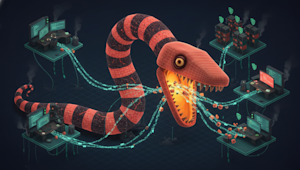
The Shai-Hulud Worm: How a Single npm Package Could Bring Down Your Entire Enterprise
In the shadowy dunes of software supply chains, a new predator has emerged—one that doesn’t just steal secrets, but burrows deep into your systems and refuses to leave. Dubbed the Shai-Hulud worm, this sophisticated malware campaign has exploited one of the most trusted ecosystems in modern development: the npm and PyPI package repositories. Named after the colossal sandworms from Dune, this threat doesn’t just surface and vanish—it tunnels through your infrastructure, harvesting credentials, hijacking AI agents, and establishing permanent footholds that survive reboots, package removals, and even token revocations.
What makes Shai-Hulud particularly insidious is not just its technical prowess, but the illusion of trust it weaponizes. These malicious packages carried valid SLSA Build Level 3 provenance attestations, meaning they passed every automated security check. They were signed, verified, and published through legitimate channels—yet they were poisoned from the inside. This isn’t a story of a lone hacker exploiting a zero-day; it’s a systemic failure in how we trust open-source software.
The Anatomy of a Supply Chain Attack
The Shai-Hulud campaign began on May 11, 2024, between 19:20 and 19:26 UTC—a mere six-minute window during which 84 malicious versions of 42 `@tanstack/*` npm packages were published. Within 48 hours, the campaign exploded to 172 compromised packages across 403 malicious versions spanning both npm and PyPI. The scale is staggering: `@tanstack/react-router`, one of the affected packages, sees 12.7 million weekly downloads. With over 518 million cumulative downloads potentially exposed, this is one of the most widespread supply chain attacks in recent memory.
But the real danger lies not in the volume, but in the stealth and persistence of the worm. Unlike traditional malware that might trigger antivirus alerts or require user interaction, Shai-Hulud operates silently within the development environment. It doesn’t just steal data—it reconfigures your tools to ensure it stays.
Once a developer installs one of the poisoned packages, the worm immediately begins harvesting credentials from over 100 file paths. This includes AWS access keys, SSH private keys, npm tokens, GitHub Personal Access Tokens (PATs), HashiCorp Vault tokens, Kubernetes service accounts, Docker configurations, shell history, and even cryptocurrency wallets. It goes further: it targets password managers like 1Password and Bitwarden—a first for this type of campaign—and steals configurations for AI agents like Claude and Kiro, including MCP server authentication tokens that grant access to external services.
Persistence: The Worm That Won’t Die
One of the most alarming aspects of Shai-Hulud is its multi-layered persistence mechanism. Simply uninstalling the malicious package does not remove the threat. The worm installs backdoors in two critical locations:
These persistence mechanisms live outside the `node_modules` directory, making them invisible to standard cleanup tools. They’re embedded in the project tree itself, meaning cloning a “clean” version of the repo could still reintroduce the worm if the `.vscode` or `.claude` folders are included.
403 malicious versions published in under 48 hours
100+ credential file paths targeted
518 million cumulative downloads affected
9.6 CVSS score for CVE-2026-45321
0-day persistence via project and system daemons
The Illusion of Security: Why Provenance Failed
At first glance, the TanStack team had everything right. They used OIDC trusted publishing, signed provenance, and enforced 2FA on every maintainer account. Their setup was textbook—what security experts call “defense in depth.” Yet the attack succeeded.
The culprit? A technique known as the “orphaned commit” attack. Here’s how it works: an attacker gains access to a GitHub account (via phishing, token theft, or insider threat) and pushes a malicious commit to a branch. Because the commit is signed and comes from a trusted maintainer, and because the CI/CD pipeline is configured to trust OIDC tokens from that repository, the build system automatically signs the package with valid SLSA provenance—even though the code is malicious.
“TanStack had the right setup on paper,” says Peyton Kennedy, senior security researcher at Endor Labs. “But what the orphaned commit technique shows is that OIDC scope is the actual control that matters here, not provenance, not 2FA.” In other words, if your CI system trusts any commit from a repo, it will sign anything—even if it’s poisoned.
This reveals a critical flaw in modern supply chain security: trust is too broad. We’ve built systems that verify who signed a package, but not what the package does. Provenance tells us the package came from a trusted source—but it doesn’t tell us if that source was compromised.
AI Agents Under Attack: A New Frontier
One of the most concerning aspects of Shai-Hulud is its focus on AI agent configurations. The worm specifically targets Claude Code and Kiro AI, stealing their MCP (Model Context Protocol) server authentication tokens. These tokens allow AI agents to connect to external services—databases, APIs, cloud platforms—on behalf of developers.
Imagine an AI assistant that can query your production database, deploy code, or access customer data. Now imagine that assistant’s credentials are stolen. The worm doesn’t just steal data—it hijacks the agent’s capabilities, potentially allowing attackers to perform actions as if they were the developer.
This represents a paradigm shift in threat modeling. We’re no longer just protecting code and credentials—we’re protecting autonomous agents that can act on our behalf. As AI tools become more integrated into development workflows, they become high-value targets.
The Destructive Daemon: When Revocation Backfires
Here’s a chilling detail: if you revoke tokens before isolating the infected machine, the worm may trigger a destructive daemon that wipes your home directory. This is a classic “dead man’s switch”—a mechanism designed to punish detection.
According to analysis by Wiz, this daemon activates when it detects that credentials have been revoked or that the system is being investigated. It’s a form of retaliatory destruction, meant to cover tracks and inflict maximum damage.
This means that traditional incident response—revoking keys, rotating secrets—can actually accelerate the attack. Organizations must now consider not just how to respond, but when and in what order.
6 Actionable Steps to Protect Your Enterprise
The Shai-Hulud worm is a wake-up call. Here’s how to defend against it—and future threats like it:
Review every package installed or updated since May 11, 2024. Use tools like `npm audit`, `pip-audit`, or SCA (Software Composition Analysis) platforms to detect known malicious versions.
Treat any machine that installed a compromised package as potentially breached. Perform full disk scans, memory analysis, and credential audits. Assume persistence mechanisms are present.
Change AWS keys, SSH keys, npm tokens, GitHub PATs, and Vault tokens. But do this after isolating the machine to avoid triggering destructive daemons.
Tighten OIDC scopes. Require manual approval for publishing. Implement code review gates that prevent direct pushes to main branches.
Store MCP tokens in secure vaults, not config files. Use short-lived credentials and audit agent activity logs.
Treat every package as potentially hostile. Use sandboxed environments for dependency installation. Consider air-gapped builds for critical projects.
The Bigger Picture: Rethinking Trust in Open Source
The Shai-Hulud worm isn’t just a technical failure—it’s a cultural one. We’ve built a development ecosystem that prioritizes speed and convenience over security. We trust packages because they’re popular, because they’re signed, because they come from known maintainers. But trust is not a binary state—it’s a spectrum.
As AI agents, CI/CD pipelines, and decentralized development grow, so too will the attack surface. The next Shai-Hulud may not come from npm—it could come from a compromised Docker image, a poisoned GitHub Action, or a hijacked AI model.
The lesson is clear: security must evolve faster than the threats. We need better tooling, stricter controls, and a fundamental shift in how we think about trust. Because in the desert of open source, the sandworms are always waiting.
This article was curated from Protect your enterprise now from the Shai-Hulud worm and npm vulnerability in 6 actionable steps via VentureBeat