Table of Contents
SpaceX Stacks a Giant: The Rise of Starship Version 3 and the Future of Deep Space Travel
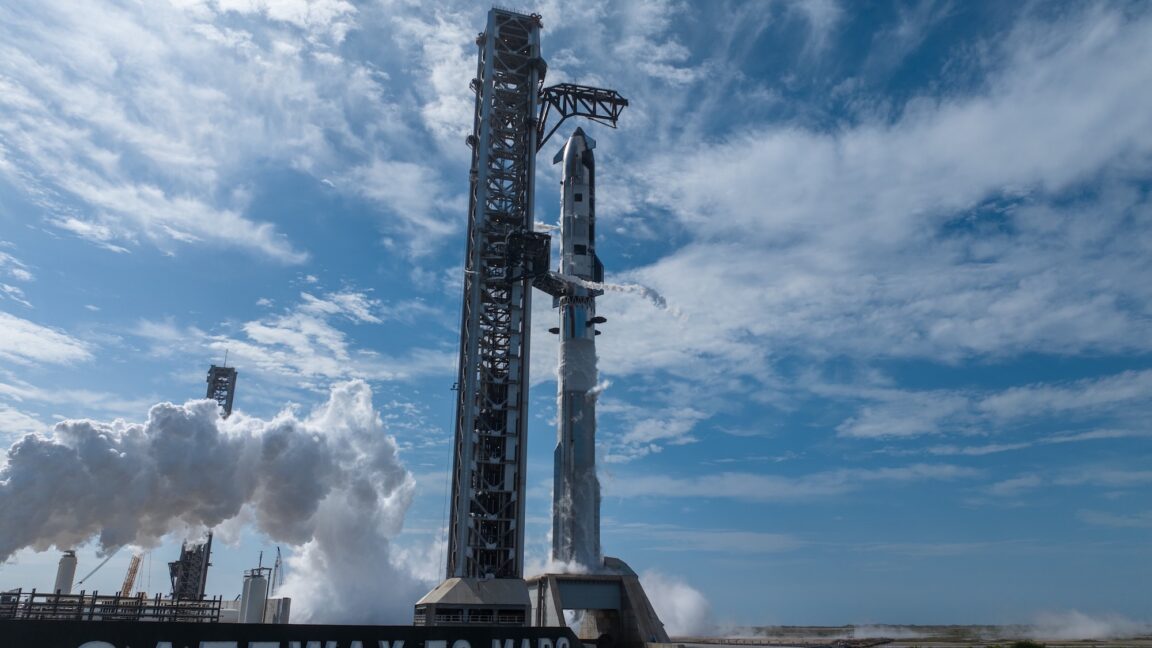
For the third time in as many years, the Texas coastline near Boca Chica has become the stage for a towering spectacle—one that could redefine humanity’s presence beyond Earth. SpaceX has once again assembled its colossal Starship rocket, this time unveiling Starship Version 3, the tallest and most advanced iteration yet. Standing taller than the Statue of Liberty and more powerful than any rocket ever built, this new version represents a pivotal leap in the company’s quest to make interplanetary travel a reality. With each iteration, SpaceX refines its vision, pushing the boundaries of engineering, reusability, and ambition.
The latest Starship V3 is not just a taller version of its predecessors—it’s a comprehensive evolution. From upgraded propulsion systems to revolutionary staging techniques, every component has been reimagined to support more ambitious missions. This isn’t just about reaching orbit; it’s about enabling sustained human presence on the Moon, Mars, and beyond. As SpaceX continues its rapid iterative development, Starship V3 marks a turning point: the transition from experimental test flights to operational spaceflight.
A Towering Achievement: The Anatomy of Starship Version 3
At over 394 feet (120 meters) tall when fully stacked, Starship V3 surpasses the height of the Saturn V—the legendary rocket that carried astronauts to the Moon during the Apollo era. To put this in perspective, that’s roughly the length of a football field, including the end zones. The sheer scale is staggering, but it’s not just about size. The rocket’s two-stage configuration—comprising the Super Heavy booster and the Starship upper stage—has been meticulously optimized for power, efficiency, and reusability.
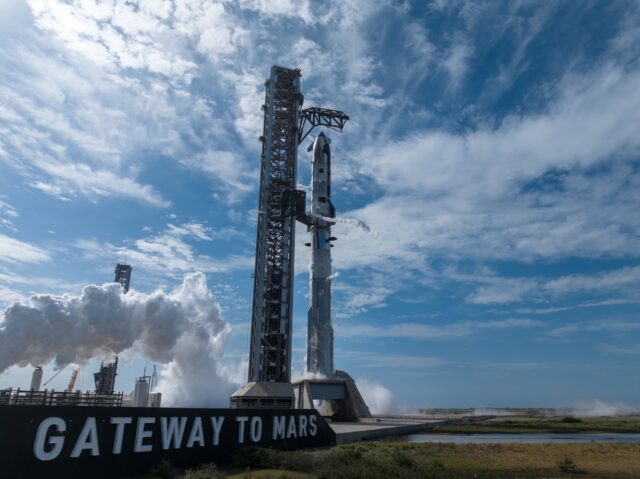
The Super Heavy booster, which forms the base of the rocket, now features 33 Raptor engines—each delivering more thrust than the previous generation. These engines, powered by a combination of liquid methane and liquid oxygen, are not only more powerful but also more fuel-efficient, a critical factor for long-duration missions. The upper stage, the Starship spacecraft itself, carries six additional Raptor engines, including three optimized for vacuum conditions in space. This dual-engine configuration allows for precise control during ascent, orbital maneuvers, and landing.
One of the most significant upgrades in V3 is the lattice-like structure at the top of the Super Heavy booster. This innovative design enables hot staging, a technique where the upper stage ignites its engines while still attached to the first stage. This method increases efficiency by maintaining thrust continuity and reducing the time spent in the upper atmosphere, where drag is most intense. Hot staging has been used in Soviet-era rockets like the N1, but SpaceX’s implementation is more refined and integrated with modern materials and control systems.
The Power of Iteration: How SpaceX Builds the Future
SpaceX’s development philosophy is rooted in rapid iteration—building, testing, failing, learning, and improving at a pace unmatched in the aerospace industry. Starship V3 is the product of this relentless cycle. Previous versions, including the high-profile test flights of Starship SN8 through SN15, were instrumental in validating key technologies such as belly flips, aerodynamic control, and precision landings. Each flight, whether it ended in a fiery explosion or a controlled touchdown, provided invaluable data.
This iterative approach is a stark contrast to traditional aerospace programs, which often take decades to develop a single vehicle. NASA’s Space Launch System (SLS), for example, has been in development for over 15 years and has flown only a handful of times. In contrast, SpaceX has launched multiple Starship prototypes in under three years. This speed is made possible by vertical integration—SpaceX designs, manufactures, and tests nearly all components in-house, allowing for faster feedback loops and design changes.

The shift from Starship V2 to V3 reflects lessons learned from earlier flights. Engineers have refined the thermal protection system, improved the structural integrity of the stainless-steel airframe, and enhanced the avionics suite. The reduction from four to three grid fins on the Super Heavy booster is another example of optimization—fewer fins mean less weight and complexity, while advanced software ensures stability during descent.
33 Raptor engines: On the Super Heavy booster
6 Raptor engines: On the Starship upper stage
15 million pounds of thrust: Total liftoff thrust, more than double that of the Saturn V
100+ metric tons: Payload capacity to low Earth orbit (LEO)
Hot Staging and Reusability: Engineering Breakthroughs
One of the most groundbreaking features of Starship V3 is its use of hot staging, a technique that could become standard for next-generation rockets. In traditional staging, the first stage shuts down before the second stage ignites, creating a brief period of zero thrust. Hot staging eliminates this gap by igniting the upper stage engines while the first stage is still firing. This continuous thrust profile increases overall efficiency and payload capacity.
The lattice structure at the top of the Super Heavy booster acts as a protective shield, allowing exhaust from the upper stage to pass through without damaging the first stage. This design is both a structural and thermal engineering marvel. It requires precise alignment, advanced materials, and sophisticated control algorithms to ensure the two stages separate cleanly after ignition.
Reusability remains a cornerstone of SpaceX’s vision. The Super Heavy booster is designed to return to the launch site, landing vertically like the Falcon 9 boosters. The Starship upper stage is also fully reusable, capable of re-entering Earth’s atmosphere, surviving extreme heat, and landing propulsively. This dual reusability could drastically reduce the cost of space access—potentially to as little as $10 million per launch, compared to hundreds of millions for traditional rockets.

The Road to the Moon: Artemis and Beyond
Starship V3 is not just a technological marvel—it’s a key enabler for NASA’s Artemis program, which aims to return humans to the Moon by the mid-2020s. SpaceX was selected to develop the Human Landing System (HLS) for Artemis III, the mission that will carry the first woman and the next man to the lunar surface. Starship will serve as the lunar lander, ferrying astronauts from lunar orbit to the Moon’s surface and back.
But getting to the Moon is only the beginning. Starship’s true potential lies in its ability to support in-orbit refueling, a capability that could revolutionize deep space exploration. By transferring propellant between Starships in orbit, SpaceX can assemble massive fuel depots, enabling missions to Mars and beyond. This concept is akin to aerial refueling for aircraft—except in the vacuum of space.
In-orbit refueling is essential for Mars missions, where spacecraft need to carry enough fuel for the journey, landing, and return. Without refueling, a Mars-bound Starship would need to be launched with nearly all its propellant on board, limiting payload and increasing risk. With refueling, multiple Starships can deliver fuel to a depot in orbit, allowing a crewed ship to “top off” before departure.
The idea of in-orbit refueling was first proposed in the 1950s by science fiction writer Wernher von Braun, who envisioned a fleet of reusable space ferries shuttling between Earth and a lunar base. SpaceX is now turning that vision into reality.
Challenges and Criticisms: The Road Ahead
Despite its promise, Starship V3 faces significant challenges. Regulatory hurdles, environmental concerns, and technical risks remain. The Boca Chica launch site has drawn scrutiny from environmental groups due to its proximity to wildlife refuges and sensitive ecosystems. SpaceX has pledged to minimize its impact, but the sheer scale of operations poses ongoing challenges.

Technical risks are also substantial. The complexity of 33 engines firing in unison, the precision required for hot staging, and the extreme conditions of re-entry all present formidable engineering problems. Previous Starship flights have ended in explosions, and while these are part of the learning process, they underscore the high stakes involved.
Moreover, the timeline for operational missions is aggressive. SpaceX aims to conduct an orbital test flight of Starship V3 in the near future, but integrating it with NASA’s Artemis schedule will require flawless execution. Delays are inevitable, but the company’s track record with Falcon 9 and Dragon suggests it can overcome obstacles.
The intense vibrations and acceleration during a Starship launch could expose astronauts to G-forces exceeding 4 Gs, comparable to those experienced by fighter pilots. NASA and SpaceX are developing advanced crew seats and suits to protect astronauts during these phases.
The Bigger Picture: A New Era of Space Exploration
Starship V3 is more than a rocket—it’s a symbol of a new era in space exploration. For the first time in decades, humanity has a vehicle capable of carrying large crews and cargo to the Moon, Mars, and beyond. It represents a shift from government-led programs to private-sector innovation, where speed, cost-efficiency, and reusability are paramount.
The implications are profound. With Starship, we could see the establishment of permanent lunar bases, the mining of asteroids for rare minerals, and the first human footsteps on Mars. It could also democratize space travel, enabling universities, research institutions, and even private citizens to participate in space missions.
As SpaceX continues to refine Starship, the world watches with bated breath. Each launch is a step toward a future where space is not a distant frontier, but a place we call home.
It uses 33 Raptor engines on the booster stage, each more powerful than a Falcon 9 Merlin engine.
Hot staging increases efficiency by maintaining continuous thrust during stage separation.
The rocket is designed for full reusability, potentially reducing launch costs by 99%.
Starship will serve as NASA’s lunar lander for the Artemis III mission.
In-orbit refueling could enable missions to Mars and beyond.
The stainless-steel design was chosen for its strength, heat resistance, and low cost.
SpaceX aims to conduct hundreds of Starship launches per year once operational.
This article was curated from Once again, SpaceX has set a new record for the tallest rocket ever built via Ars Technica – Science