Table of Contents
- The Muon Mystery Solved: A Quantum Puzzle Finally Put to Rest
- What Makes the Muon So Special?
- The Great Muon Anomaly: A 20-Year Puzzle
- The Hidden Flaw: A Computational Breakthrough
- Why This Matters: The Strength of the Standard Model
- What’s Next for Particle Physics?
- Conclusion: A Quiet Victory for Science
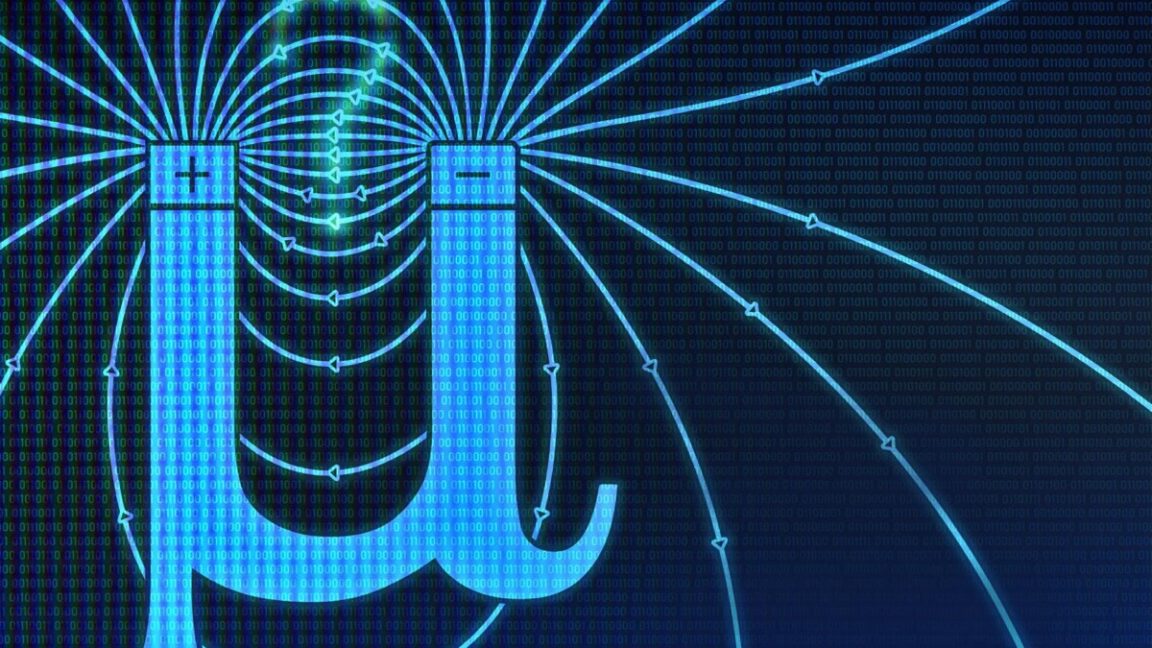
The Muon Mystery Solved: A Quantum Puzzle Finally Put to Rest
For over two decades, physicists around the globe have been captivated—and perplexed—by a tiny particle with an outsized reputation. The muon, a fleeting subatomic cousin of the electron, has been at the center of a scientific drama that threatened to upend one of the most successful frameworks in modern physics: the Standard Model. This model, painstakingly constructed over the past century, describes the fundamental particles and forces that make up the universe with astonishing precision. But a persistent anomaly in the muon’s magnetic moment—a property known as g-2—suggested a crack in that foundation. Could there be a fifth fundamental force lurking beyond the known four—gravity, electromagnetism, and the strong and weak nuclear forces?
Now, a groundbreaking study published in Nature has delivered a surprising resolution: the discrepancy wasn’t a sign of new physics, but a subtle error in theoretical calculations. Using a revolutionary computational method, researchers have recalculated the muon’s predicted magnetic behavior and found that it aligns perfectly with experimental results. The Standard Model, it turns out, remains intact—and more robust than ever.
This revelation marks the end of a long-standing scientific mystery, but it also highlights the incredible precision and complexity of modern particle physics. The journey to solve the muon puzzle involved decades of theoretical refinement, massive particle accelerators, and cutting-edge quantum field theory. And while the absence of new physics may disappoint some theorists hoping for a paradigm shift, it underscores the remarkable predictive power of the Standard Model.
What Makes the Muon So Special?
To understand why physicists were so obsessed with the muon, we must first grasp what makes this particle unique. The muon is a lepton—a class of elementary particles that includes electrons, taus, and their associated neutrinos. It resembles the electron in almost every way: same charge, same spin, and similar behavior in electromagnetic fields. But there’s one critical difference: the muon is about 207 times more massive than the electron.
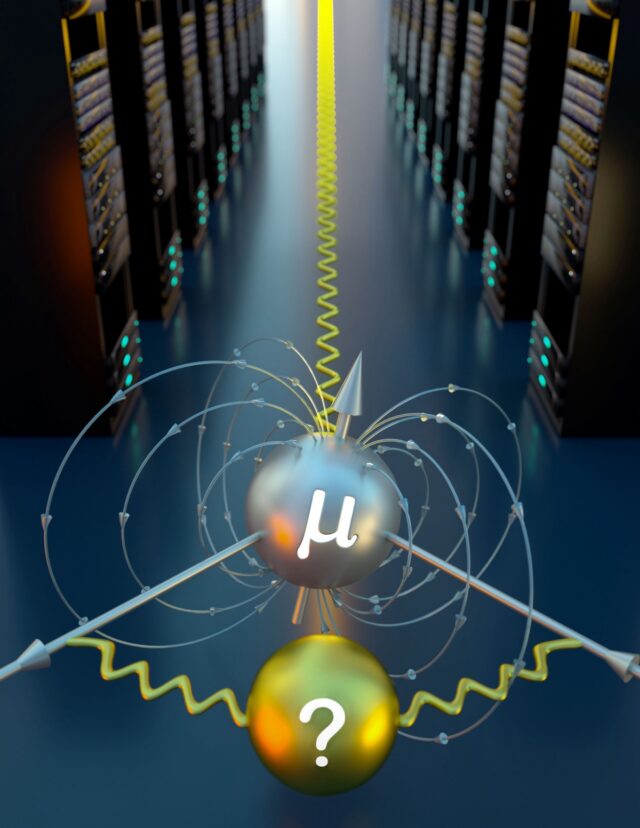
This extra mass makes the muon a powerful probe into the quantum realm. According to quantum field theory, empty space isn’t truly empty. Instead, it’s a seething foam of “virtual particles” that constantly pop into and out of existence, borrowing energy from the vacuum for fleeting moments before annihilating. These ephemeral particles include quarks, gluons, photons, and even Higgs bosons.
Because the muon is heavier, it interacts more strongly with these virtual particles. Think of it like a boat in a stormy sea: a small dinghy (the electron) might barely rock, but a larger ship (the muon) feels every wave. This sensitivity allows physicists to measure how the muon’s magnetic moment—its tendency to wobble in a magnetic field—is influenced by the quantum vacuum.
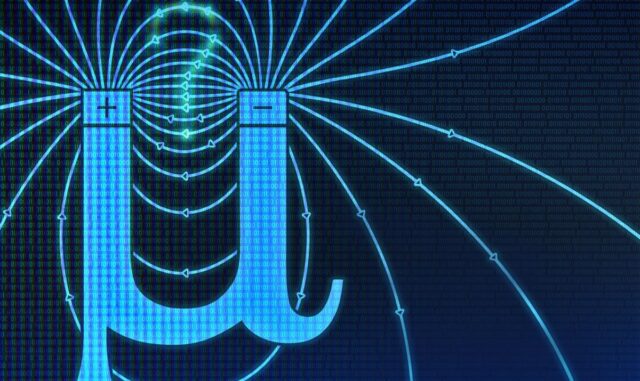
The magnetic moment of any particle is described by a dimensionless number called g. For a perfect, point-like particle, g should be exactly 2. But due to interactions with virtual particles, the actual value—known as g-2—is slightly higher. Measuring this tiny deviation with extreme precision allows physicists to test the Standard Model’s predictions against reality.
The Great Muon Anomaly: A 20-Year Puzzle
The muon g-2 anomaly first emerged in the early 2000s when experiments at Brookhaven National Laboratory measured the particle’s magnetic moment with unprecedented accuracy. The result? A value that was 3.7 standard deviations higher than the theoretical prediction. In particle physics, a discrepancy of 3 sigma is considered strong evidence, and 5 sigma is the gold standard for discovery. While 3.7 wasn’t enough to claim a new force, it was tantalizingly close.
This anomaly sparked a global race to confirm or refute the finding. In 2021, the Muon g-2 experiment at Fermilab in Illinois repeated the measurement with even greater precision and confirmed the Brookhaven result. The tension between theory and experiment only grew, fueling speculation that the Standard Model was incomplete.
Many physicists began exploring exotic possibilities: new particles like leptoquarks or dark photons, extra dimensions, or even a fifth fundamental force. The idea of discovering physics beyond the Standard Model was electrifying. After all, the model, while incredibly successful, has known limitations—it doesn’t explain dark matter, neutrino masses, or why gravity is so weak compared to other forces.
Over 15,000 muons per second were analyzed in the Fermilab experiment.
The theoretical prediction involves over 12,000 Feynman diagrams—complex calculations representing particle interactions.
The discrepancy, if real, would imply new particles with masses up to 10 TeV, within reach of future colliders.
The Standard Model has successfully predicted particle behavior with less than 0.0001% error in many cases.
But as experiments grew more precise, so did the theoretical calculations. And here’s where the plot thickened.
The Hidden Flaw: A Computational Breakthrough
The key to resolving the muon mystery lay not in new particles, but in a better understanding of quantum chromodynamics (QCD)—the theory describing the strong nuclear force that binds quarks together. The theoretical prediction for the muon’s g-2 depends heavily on how virtual quarks and gluons interact with the muon. These interactions are notoriously difficult to calculate because the strong force is, well, strong—and highly nonlinear at low energies.

For decades, physicists relied on a method called lattice QCD, which simulates quark and gluon interactions on a discrete spacetime grid. But early lattice calculations disagreed with experimental data from particle colliders, creating a confusing split in the theoretical community.
Enter Zoltan Fodor and his team at Penn State University. They developed a new lattice QCD technique that more accurately models the behavior of virtual hadrons—particles made of quarks—in the quantum vacuum. Their approach used advanced algorithms and supercomputing power to simulate the strong force with unprecedented detail.
When Fodor’s team applied their improved method, the theoretical prediction for the muon’s magnetic moment shifted—just enough to align with the experimental results. The long-standing discrepancy vanished. “We showed that the old interactions can explain the value completely,” Fodor said. “The new interaction we hoped for simply is not there.”
This doesn’t mean the search for new physics is over. But it does mean that one of the most promising hints of physics beyond the Standard Model has been resolved—not with a bang, but with a recalculated equation.

Why This Matters: The Strength of the Standard Model
The resolution of the muon anomaly is a triumph for theoretical physics. It demonstrates the power of collaborative science, where experimentalists and theorists work in tandem to push the boundaries of knowledge. It also reaffirms the Standard Model as one of the most accurate scientific theories ever developed.
Consider this: the Standard Model predicts the behavior of particles with a precision comparable to measuring the distance from New York to Los Angeles with an error of less than the width of a human hair. That level of accuracy is unprecedented in science.
Yet, physicists aren’t ready to declare victory. The Standard Model still can’t explain why the universe is made of matter rather than antimatter, or what dark matter is. The Higgs boson, discovered in 2012, completed the model’s particle roster, but it also raised new questions about the stability of the vacuum and the hierarchy problem—why the Higgs is so much lighter than expected.
The muon g-2 saga is a reminder that science advances not just through dramatic discoveries, but through meticulous refinement. Sometimes, the most important breakthroughs are the ones that confirm what we already know—with greater certainty.
What’s Next for Particle Physics?
With the muon mystery solved, physicists are turning their attention to other frontiers. The Large Hadron Collider (LHC) at CERN is undergoing upgrades to increase its energy and luminosity, enabling searches for heavier particles and rare processes. Future experiments will probe the nature of neutrinos, the possibility of proton decay, and the properties of dark matter.
Meanwhile, new technologies are emerging. Quantum sensors, AI-driven data analysis, and next-generation colliders like the proposed Future Circular Collider (FCC) could open new windows into the subatomic world.
And the muon itself isn’t done making headlines. Scientists are exploring its use in muon tomography—a technique that uses cosmic-ray muons to image the interiors of large structures, like volcanoes or nuclear reactors. In 2017, researchers used muon detectors to discover a hidden chamber in the Great Pyramid of Giza.
The resolution of the muon g-2 anomaly may close one chapter, but it opens another: a renewed confidence in our fundamental understanding of the universe, and a clearer path forward in the search for what lies beyond.
Conclusion: A Quiet Victory for Science
In the end, the muon mystery wasn’t solved by a flashy new particle or a revolutionary force. It was solved by patience, precision, and a better algorithm. This quiet victory underscores a profound truth about science: sometimes, the most important discoveries are the ones that confirm the rules, not break them.
The Standard Model remains the best map we have of the subatomic world. And while it may not be the final word, it continues to guide us with remarkable accuracy. As physicists turn their gaze to new horizons, they do so with the knowledge that the universe, at its smallest scales, is both deeply strange and beautifully consistent.
The muon, once a harbinger of upheaval, now stands as a testament to the power of human curiosity—and the enduring strength of scientific inquiry.
This article was curated from Physicists think they've solved the muon mystery via Ars Technica – Science