Table of Contents
- The Forgotten Architects of Civilization: How Ancient Persia Built the Modern World
- The Royal Road: The Internet of the Ancient World
- The First Postal System: Speeding Up the Flow of Information
- The Birth of Human Rights: Cyrus the Great’s Revolutionary Decree
- A Model of Multicultural Governance
- Legacy in Language, Law, and Daily Life
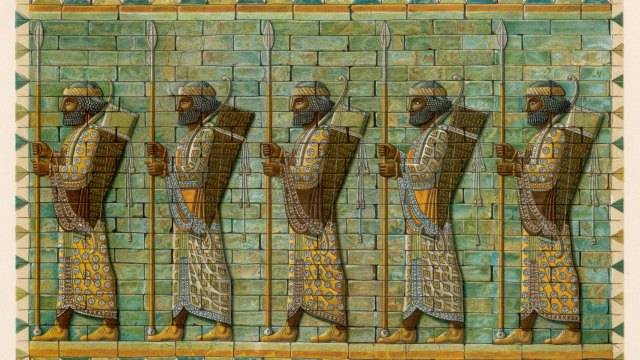
The Forgotten Architects of Civilization: How Ancient Persia Built the Modern World
For centuries, the story of human progress has been told through a narrow lens—one that glorifies Greece, Rome, and Western Europe while casting ancient Persia as a shadowy antagonist of freedom and reason. From Herodotus’s tales of decadent kings to Hollywood’s portrayal of Xerxes as a vengeful despot, the Persian Empire has long been painted as the “other”—the exotic, tyrannical foil to Western ideals. But this narrative is not just incomplete; it’s fundamentally misleading. Behind the myths lies a civilization of astonishing innovation, administrative brilliance, and cultural sophistication that laid the groundwork for many of the systems we take for granted today.
Long before the Roman legions marched across Europe or the British Empire claimed dominion over the seas, the Persian Empire stretched from the Indus Valley to the Aegean Sea—a vast, diverse, and surprisingly well-managed realm that redefined what an empire could be. Under the Achaemenid Dynasty, founded by Cyrus the Great in 550 BCE, Persia didn’t just conquer lands; it integrated them. It respected local customs, promoted religious tolerance, and built infrastructure that connected distant provinces in ways previously unimaginable. The Persians weren’t just warriors—they were visionaries of governance, communication, and human rights.
And yet, their legacy has been systematically downplayed. Why? Partly because history, as the saying goes, is written by the victors—and the Greeks, though defeated in battle, won the war of ideas. Their historians shaped the narrative, casting Persia as the embodiment of Eastern despotism. Over time, this caricature became entrenched in Western education, leaving Persia’s true contributions buried beneath centuries of bias. But as we peel back the layers of myth, a startling truth emerges: many of the foundations of modern civilization—from postal systems to human rights declarations—were first pioneered not in Athens or Rome, but in the heart of ancient Persia.
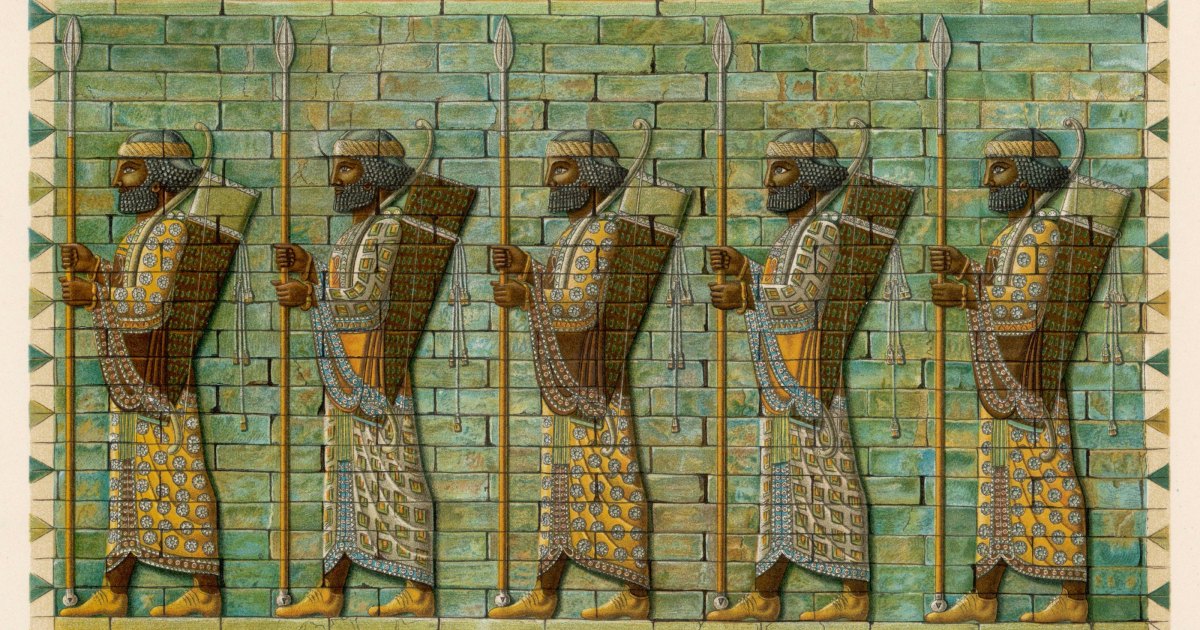
The Royal Road: The Internet of the Ancient World
Long before fiber optics and satellite networks, the Persians built the closest thing to a global communication system the ancient world had ever seen: the Royal Road. Stretching over 2,500 kilometers from Sardis in modern-day Turkey to Susa in Iran, this engineered marvel wasn’t just a dirt path—it was a meticulously planned highway complete with waystations, relay stations, and mounted couriers who could cover the entire route in just seven days. That’s faster than many modern delivery services.
The Royal Road was more than a transportation route; it was the backbone of imperial administration. Messages, tax records, military orders, and diplomatic correspondence zipped across the empire at unprecedented speeds. A system of pirradaziš—mounted couriers who changed horses at relay posts—ensured that no message was delayed. This network allowed the central government in Persepolis to maintain control over a territory spanning three continents, a feat that would have been impossible without such rapid communication.
The impact of this infrastructure extended far beyond military efficiency. Merchants used the roads to transport goods like silk, spices, and lapis lazuli, fostering an early form of international trade. Ideas, religions, and artistic styles also traveled along these arteries, creating a cultural exchange that predated globalization by millennia. In many ways, the Royal Road was the ancient equivalent of the internet—connecting people, information, and economies across vast distances.

The First Postal System: Speeding Up the Flow of Information
Tied closely to the Royal Road was the Persian Chapar Khaneh system—an early postal network that functioned with remarkable efficiency. At regular intervals along the road, couriers would hand off messages to fresh riders and rested horses, ensuring continuous movement. This system, established under Darius the Great, was so advanced that it allowed a message to travel from one end of the empire to the other in under a week—a journey that would take months by foot.
The Chapar Khaneh wasn’t just for military use. It facilitated everything from tax collection to diplomatic correspondence. Provincial governors could report to the king, merchants could coordinate shipments, and even ordinary citizens could send petitions. This level of administrative connectivity was unheard of in the ancient world and laid the groundwork for later systems like the Roman cursus publicus and, eventually, modern postal services.
The Persian postal system also introduced concepts like standardized messaging, secure transmission, and centralized record-keeping. These innovations didn’t just improve governance; they created a sense of unity across a vast and diverse empire. In an age when most people never traveled more than a day’s walk from their birthplace, the ability to send a message across continents was revolutionary.

The Birth of Human Rights: Cyrus the Great’s Revolutionary Decree
Perhaps the most profound—and least recognized—contribution of ancient Persia is the concept of human rights. In 539 BCE, Cyrus the Great conquered Babylon and issued the Cyrus Cylinder, a clay artifact often hailed as the world’s first charter of human rights. Unlike other conquerors who imposed their culture and religion by force, Cyrus allowed displaced peoples to return to their homelands, restored temples, and declared freedom of religion.
The cylinder, inscribed in Akkadian cuneiform, records Cyrus’s policy of tolerance and restoration. He freed Jewish captives, permitted the rebuilding of the Temple in Jerusalem, and encouraged ethnic and religious diversity within his empire. This wasn’t mere propaganda; it was a deliberate policy of inclusion that helped stabilize his rule and win the loyalty of diverse populations.
Cyrus’s approach was revolutionary for its time. While other empires practiced forced assimilation or mass enslavement, Persia embraced pluralism. This philosophy of governance—respect for local laws, languages, and customs—became a hallmark of Achaemenid rule and influenced later empires, including the Romans and even the British.

A Model of Multicultural Governance
The Persian Empire wasn’t just large; it was diverse. At its height, it encompassed over 44% of the world’s population and included more than 20 distinct ethnic groups, from Egyptians and Greeks to Indians and Scythians. Managing such a mosaic of cultures would have been impossible without a flexible and inclusive administrative system.
Rather than imposing a single language or religion, the Persians allowed local rulers—called satraps—to govern their regions with significant autonomy. They collected taxes in local currencies, used regional languages for administration, and even incorporated local deities into the imperial pantheon. This decentralized model reduced resistance and fostered loyalty, proving that empire didn’t have to mean cultural erasure.
This approach to governance was centuries ahead of its time. Modern federal systems, like those in the United States or the European Union, echo the Persian model of balancing central authority with regional autonomy. The Persians understood that unity didn’t require uniformity—a lesson many modern nations are still learning.

Legacy in Language, Law, and Daily Life
Persia’s influence extends far beyond politics and infrastructure. The Persian language, once the lingua franca of the Middle East and Central Asia, left a lasting imprint on languages from Urdu to Turkish. Words like “paradise” (from pairi-daiza, meaning “walled garden”), “bazaar,” and “checkmate” all have Persian roots.
In law, the concept of a centralized legal code—like the one Darius the Great implemented—prefigured modern legal systems. The idea that laws should be written, publicly known, and applied equally (at least in theory) was a Persian innovation that influenced later civilizations.
Even in daily life, Persian contributions are everywhere. The qanat system—an underground aqueduct that transported water from mountain sources to arid plains—allowed agriculture to flourish in desert regions. This technology spread across the Islamic world and into Spain, where it’s still used today.
The word “paradise” comes from an Old Persian term for a royal garden.
Persian astronomers developed early star charts that influenced Islamic and European science.
The game of chess originated in Persia as shatranj.
Persian carpets were so prized in medieval Europe that they were often used as currency.
From the roads we drive on to the rights we cherish, the fingerprints of ancient Persia are everywhere. Yet, for too long, their story has been overshadowed by myth and misrepresentation. As we reevaluate the roots of civilization, it’s time to give Persia its due—not as a villain in someone else’s story, but as a foundational architect of the world we live in today.
This article was curated from 5 ways ancient Persia shaped our modern world via Big Think