From Moon Bases to Modern Cities: How NASA’s Lunar Habitat Challenge is Reinventing Earthly Construction
In the race to build sustainable habitats on the Moon, NASA didn’t just push the boundaries of space exploration—it quietly revolutionized how we build on Earth. What began as a visionary challenge to construct shelters for astronauts on the lunar surface has now evolved into a groundbreaking construction technology that’s reshaping skylines, reducing waste, and redefining architectural aesthetics. At the heart of this transformation is Branch Technology, a Chattanooga-based innovator whose 3D printing techniques—originally developed for extraterrestrial living—are now being used to create stunning, efficient, and structurally sound buildings right here at home.
The journey from lunar dreams to terrestrial reality began in 2015, when NASA launched its 3D-Printed Habitat Challenge, a multi-phase competition designed to inspire new ways of building in space. The goal? To create autonomous construction systems capable of using local materials—like lunar regolith—to build safe, durable habitats for future astronauts. Among the many entrants, one company stood out not for brute-force printing, but for elegance in design and material efficiency: Branch Technology.
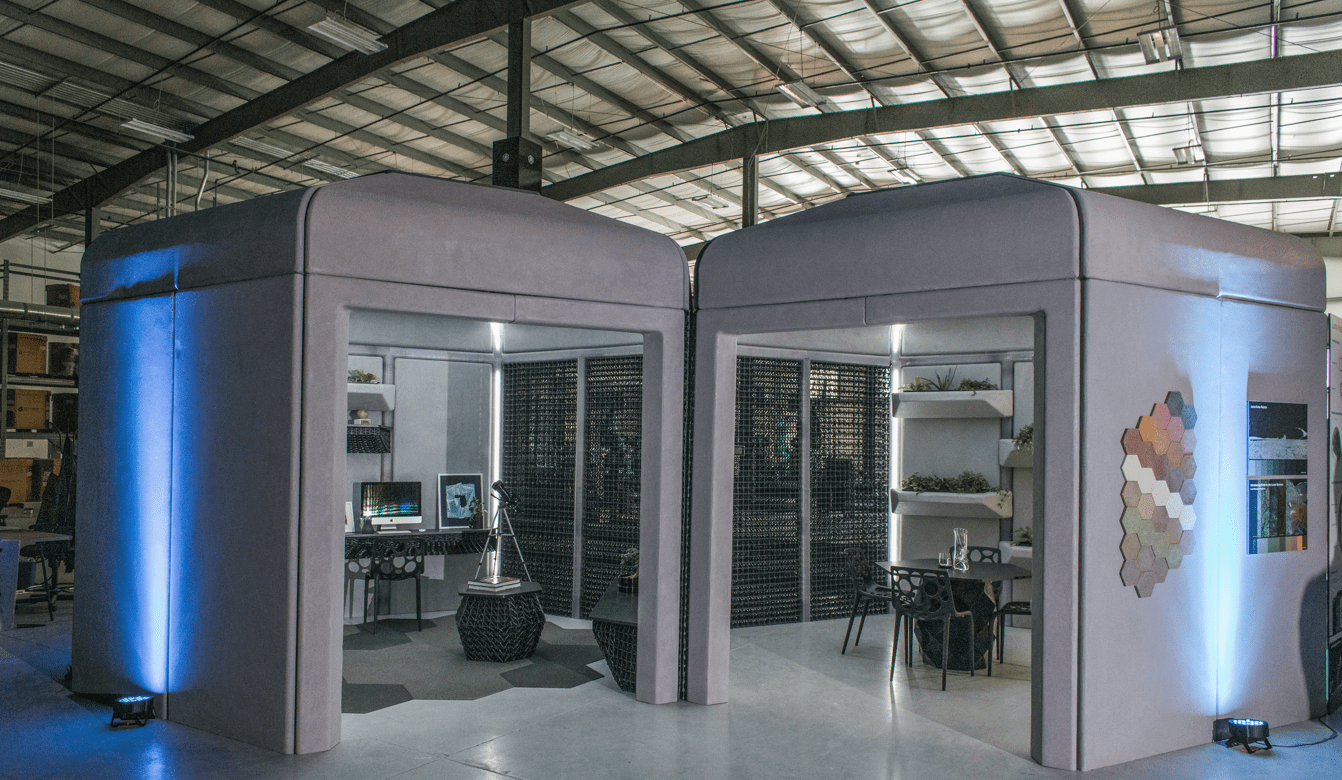
Instead of the conventional layer-by-layer 3D printing method, Branch developed a process it calls Freeform 3D Printing. This technique allows the printer to move freely in three dimensions, depositing material only where structurally necessary, creating intricate lattice frameworks that resemble the internal structure of bones or honeycombs. These lightweight, open frameworks can then be filled with insulation, concrete, or other materials, or left exposed for aesthetic effect. The result? Buildings that are not only stronger and lighter but also far more resource-efficient.
David Goodloe, who leads Branch’s Advanced Concepts team and manages its NASA collaborations, explains the significance: “Our process eliminates a ton of material from something that otherwise might be printed solid all the way through.” This isn’t just about saving money—it’s about rethinking the entire philosophy of construction. Traditional 3D printing often results in solid, heavy walls that consume vast amounts of concrete and energy. Branch’s approach, by contrast, uses up to 70% less material while maintaining—or even exceeding—structural integrity.
This innovation didn’t happen overnight. It was born from NASA’s rigorous demands. For the 3D-Printed Habitat Challenge, competitors had to design habitats that could withstand extreme temperature swings, radiation, micrometeorite impacts, and low gravity. These constraints forced Branch to innovate beyond standard printing techniques. They developed dual-capability nozzles that could switch between printing dense, solid sections—ideal for anchoring walls or supporting heavy loads—and delicate lattice structures that provided strength without weight.
Tracie Prater, a technical manager at NASA’s Marshall Space Flight Center and a subject matter expert for the challenge, worked closely with Branch under a cooperative agreement. She noted that the company’s adaptability was key. “They weren’t just building a prototype—they were solving real engineering problems that NASA faces in deep space,” she said. “Their ability to merge traditional and lattice printing gave them a unique edge.”
The implications of this technology extend far beyond the Moon. On Earth, where construction accounts for nearly 40% of global carbon emissions, reducing material use and energy consumption is no longer optional—it’s essential. Branch Technology’s approach offers a path toward sustainable urban development. Their wall panels and cladding systems are not only lighter and stronger but also allow for complex, organic shapes that were previously impossible or prohibitively expensive to build.
One of the most striking examples is the “Catalyst” project in Chattanooga, a 1,200-square-foot home designed by architect Sir David Adjaye and built using Branch’s Freeform printing. The structure features sweeping, curvilinear walls that resemble natural rock formations, yet they were constructed with minimal waste and in a fraction of the time of traditional methods. The design wouldn’t have been feasible without the precision and flexibility of Freeform printing.

This efficiency isn’t just about speed—it’s about design freedom. Architects are no longer constrained by the limitations of rectangular forms and right angles. With Freeform printing, they can create buildings that respond to environmental conditions, optimize natural light, and blend harmoniously with their surroundings. In a world increasingly focused on biophilic design—architecture that connects people to nature—this capability is transformative.
But perhaps the most profound impact lies in material sustainability. Concrete is the second most consumed substance on Earth after water, and its production is a major source of CO₂ emissions. By using lattice structures, Branch reduces concrete use dramatically. Moreover, the open framework allows for better integration of insulation, reducing energy needs for heating and cooling. Some of their panels incorporate recycled materials, further lowering the environmental footprint.
The Science Behind the Lattice: Nature as the Ultimate Engineer
The secret to Branch’s success lies in biomimicry—the practice of emulating nature’s designs. The lattice structures they print are inspired by natural load-bearing systems found in bones, plant stems, and even spider webs. These biological structures achieve maximum strength with minimum material, a principle known as topological optimization.
In engineering terms, topological optimization uses algorithms to determine the most efficient distribution of material within a given space. Branch’s software applies this principle in real time, allowing the printer to adapt its path based on structural requirements. The result is a custom-engineered framework that uses material only where stress is highest, eliminating waste without compromising safety.
This approach also enhances thermal performance. The air gaps within the lattice act as natural insulators, reducing the need for additional materials. In colder climates, this can significantly lower heating costs. In hotter regions, it helps keep interiors cool without over-reliance on air conditioning.
NASA’s role in this innovation underscores the broader mission of its Technology Transfer Program, part of the Space Technology Mission Directorate. For over 50 years, NASA has documented how space research leads to everyday benefits—from memory foam to water purification systems. Branch Technology’s Freeform printing is a modern example of this “spinoff” effect, where technologies developed for the extreme conditions of space find powerful applications on Earth.
The 3D-Printed Habitat Challenge ran from 2015 to 2019 and involved over 60 teams from around the world.
Freeform 3D printing can reduce construction waste by up to 90% compared to traditional methods.
Branch Technology’s panels are fire-resistant, mold-resistant, and meet or exceed International Building Code standards.
The company has partnered with major firms like Gensler and Skidmore, Owings & Merrill to integrate Freeform printing into large-scale urban projects.
Looking ahead, the potential for this technology is vast. Imagine entire neighborhoods built with minimal environmental impact, where every home is uniquely designed yet constructed with unprecedented speed and efficiency. Or disaster relief shelters that can be printed on-site using local materials, providing immediate, durable housing after earthquakes or hurricanes.
NASA’s vision of lunar colonies may still be years away, but the tools to build them are already transforming life on Earth. Branch Technology’s journey—from a competition entry to a leader in sustainable construction—proves that the greatest innovations often begin with a question: What if we could build differently?
As cities grow and climate challenges mount, the answer may lie not in the stars, but in the lattices of a 3D printer—printing a better future, one layer at a time.
This article was curated from NASA-Supported Space Tech Advances Earthly Construction via NASA Breaking News