Table of Contents

Is the Universe the Same Age Everywhere? The Cosmic Clock Conundrum
When we gaze up at the night sky, we’re not just looking at distant stars and galaxies—we’re peering into the past. Every photon that reaches our telescopes has traveled across vast stretches of space and time, carrying with it a story written billions of years ago. From our vantage point on Earth, nestled within the Milky Way, we measure the age of the Universe as 13.8 billion years. But what if we stood on a planet orbiting a star in a galaxy halfway across the cosmos? Would that observer see the same age? Is time flowing uniformly throughout the Universe, or does the cosmic clock tick differently depending on where—and when—you are?
This isn’t just a philosophical musing. It’s a profound question at the heart of modern cosmology, one that challenges our intuitive understanding of time, space, and relativity. The short answer? Yes, the Universe is 13.8 billion years old—but only from a very specific frame of reference. To understand why, we must dive into the fabric of spacetime, the expansion of the cosmos, and the subtle but critical role of cosmic perspective.
The Illusion of a Universal Clock
At first glance, saying the Universe is 13.8 billion years old sounds like a universal truth—like declaring that Mount Everest is 8,849 meters tall. But unlike a mountain’s height, cosmic age isn’t a fixed measurement in space. It’s a measurement in time, and time, as Einstein taught us, is not absolute.
When we say the Universe is 13.8 billion years old, we’re referring to the time that has elapsed since the hot Big Bang—the moment when the Universe emerged from an extremely hot, dense state and began expanding. This age is calculated based on observations of the cosmic microwave background (CMB), the afterglow of the Big Bang, and the rate at which the Universe is expanding today (the Hubble constant). These measurements are made from Earth, in our local frame of reference.
But here’s the twist: every observer in the Universe, no matter where they are, will also measure the Universe to be 13.8 billion years old—provided they’re at rest relative to the cosmic expansion. This is because the Universe doesn’t have a center or an edge. There’s no privileged location. Instead, space itself is expanding uniformly, and every point in the cosmos sees itself as the “center” of the expansion.
So while it might seem like we’re claiming a special status by measuring the Universe’s age from Earth, we’re not. Any civilization in any galaxy, as long as they’re not moving at extreme speeds relative to the cosmic expansion, would arrive at the same number: 13.8 billion years.
Time Dilation and the Expanding Universe
Now, let’s complicate things—because relativity loves to do that. According to Einstein’s theory of general relativity, time isn’t a universal metronome. It can stretch and compress depending on gravity and motion. This means that clocks in different parts of the Universe might not tick at the same rate.
For example, a clock near a massive black hole would run slower than one floating in intergalactic space. Similarly, an observer moving at near-light speed relative to the cosmic rest frame would experience time dilation—their clock would tick more slowly compared to a stationary observer.
But here’s the key: when we say the Universe is 13.8 billion years old, we’re referring to the proper time experienced by a comoving observer—one who is at rest with respect to the expanding Universe. These observers are like passengers on a smoothly expanding balloon; they’re not moving through space, but space itself is carrying them apart.
In this frame, time flows uniformly, and the age of the Universe is well-defined. But if an observer were zipping through space at a significant fraction of the speed of light, their experience of cosmic history would be different. They might see galaxies evolving faster or slower, and the light from the early Universe would be Doppler-shifted in complex ways.
Still, even with these relativistic effects, the global age of the Universe remains 13.8 billion years in the comoving frame. It’s the baseline from which all cosmic timelines are measured.
Looking Back in Time: The Cosmic Horizon
One of the most mind-bending aspects of cosmology is that we can’t see the Universe as it is today—only as it was in the past. Light takes time to travel, and the farther away an object is, the longer its light has been journeying to reach us.
The most distant light we can observe comes from the cosmic microwave background, emitted about 380,000 years after the Big Bang. That light has traveled for nearly 13.8 billion years to reach us, but because the Universe has been expanding during that time, the actual distance to the source of that light is now about 46.1 billion light-years away.
This defines our cosmic horizon—the maximum distance from which light could have reached us since the beginning of time. Beyond that, the Universe is invisible to us, not because it doesn’t exist, but because light from those regions hasn’t had enough time to reach us.

The farthest galaxy ever observed, JADES-GS-z13-0, is seen as it was 13.4 billion years ago—just 320 million years after the Big Bang.
The CMB was emitted when the Universe was only 380,000 years old.
The Hubble constant, which measures the expansion rate, is about 70 km/s/Mpc—meaning galaxies recede 70 km/s faster for every million parsecs of distance.
This means that when we look at distant galaxies, we’re seeing them as they were in the distant past. A galaxy 10 billion light-years away is seen as it was 10 billion years ago—when the Universe was only about 3.8 billion years old.
Could Another Civilization See a Younger Universe?
Now, back to Steven Dzik’s question: If we were located elsewhere in the Universe, would we see a younger cosmos?
The answer is both yes and no—and it hinges on perspective.
Suppose an alien civilization lives in a galaxy 10 billion light-years away from us. From their point of view, they are at the center of their own observable Universe. They look out and see galaxies receding from them, just as we do. They measure the CMB, analyze its fluctuations, and calculate the age of the Universe.
And what do they find? 13.8 billion years.

Why? Because time since the Big Bang is the same everywhere—in the comoving frame. The Universe didn’t start at a point in space; it started everywhere at once. The Big Bang wasn’t an explosion in space; it was the expansion of space itself.
So while they see different galaxies and different light, their measurement of cosmic time since the beginning is identical to ours. Their observable Universe is centered on them, just as ours is centered on us. And just as we see the CMB as it was 13.8 billion years ago, they see their own version of the CMB—equally ancient, equally uniform.
This symmetry is a cornerstone of modern cosmology: the cosmological principle, which states that the Universe is homogeneous and isotropic on large scales. No matter where you are, the large-scale structure and evolution of the cosmos look the same.
The Role of Inflation and Cosmic Clocks
To truly understand why the age is the same everywhere, we must consider cosmic inflation—the theory that the Universe underwent an exponential expansion in the first fraction of a second after the Big Bang.
Inflation explains why the Universe appears so uniform and flat. It stretched quantum fluctuations to cosmic scales, seeding the large-scale structure we see today. These fluctuations are imprinted in the CMB and in the distribution of galaxies.
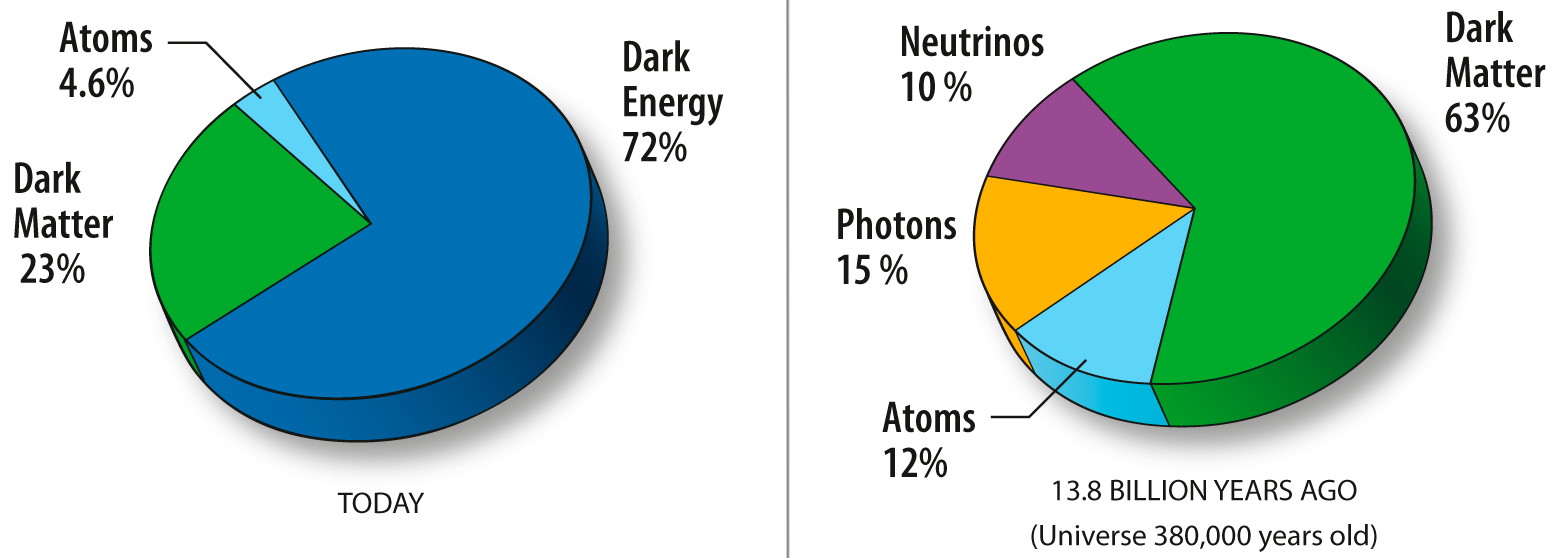
Crucially, inflation also establishes a universal “starting point” for time. After inflation ended, the Universe entered the hot Big Bang phase—and that’s when our cosmic clock began ticking. Because inflation happened everywhere simultaneously (in a quantum sense), the subsequent expansion and cooling proceeded uniformly across space.
Thus, 13.8 billion years represents the time elapsed since the end of inflation and the onset of the hot Big Bang—a moment that occurred everywhere at once, in the comoving frame.
The Bottom Line: A Shared Cosmic Timeline
So, is the Universe the same age everywhere? Yes—but with a critical caveat. The age of 13.8 billion years is not a property of space itself, but of time as measured by observers who are at rest relative to the expanding Universe. These observers, no matter where they are, will all agree on the age of the cosmos.
Time dilation, motion, and gravity can distort local experiences of time, but the global timeline—anchored to the Big Bang and the cosmic rest frame—remains consistent. It’s like being on different floors of a skyscraper: each person experiences gravity slightly differently, but they all agree on the building’s total height.
In the end, the Universe doesn’t have a single clock—but it does have a shared history. And from every corner of the cosmos, that history reads the same: 13.8 billion years since the beginning of everything.
This article was curated from Ask Ethan: Is the Universe the same age everywhere? via Big Think