Table of Contents

What Physics Gets Wrong About the Idea of “Fundamental”
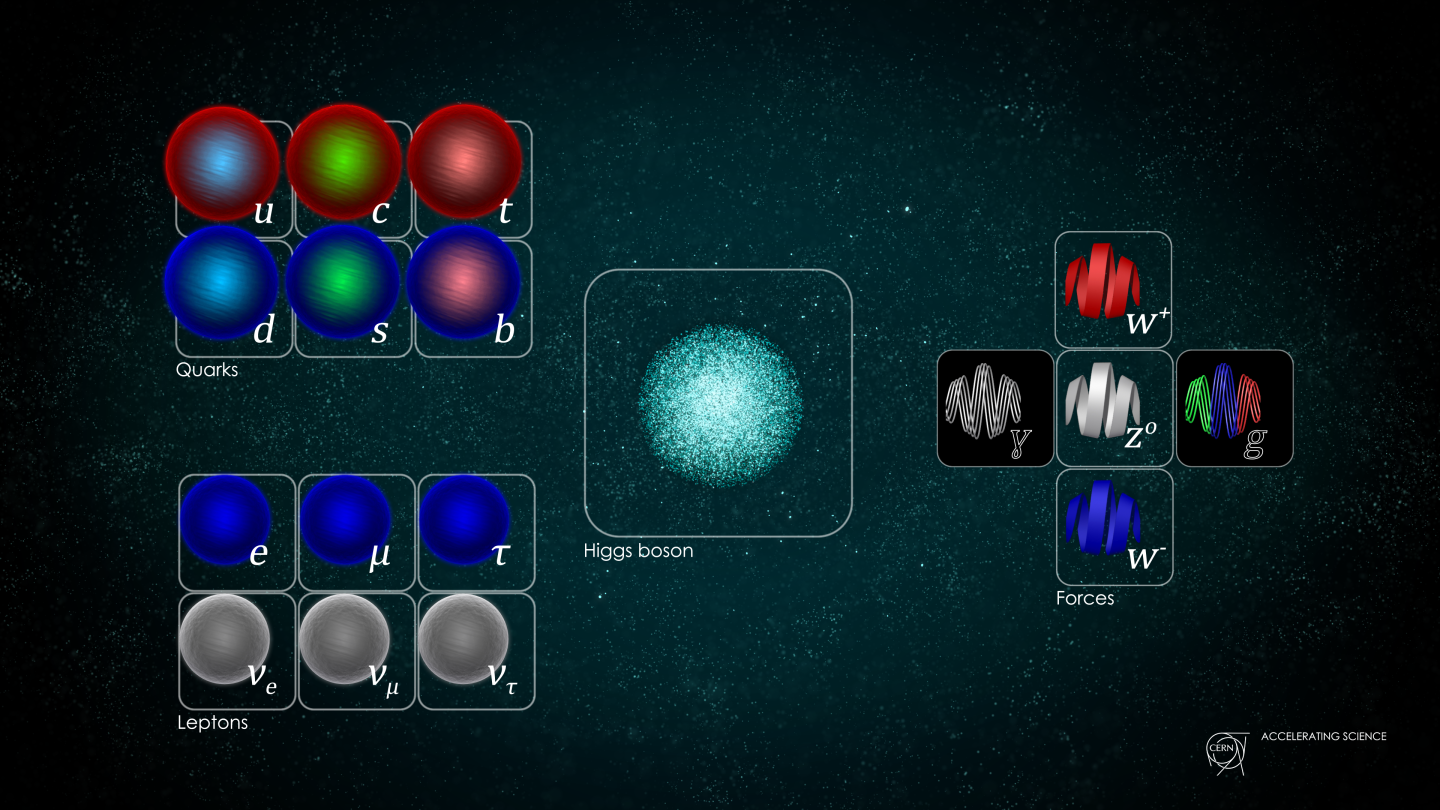
For centuries, physicists have operated under a powerful and seductive assumption: that the deepest truths about the universe lie at its smallest scales. If we can just identify the tiniest building blocks—the elementary particles and the forces that govern them—we can, in principle, reconstruct everything else. This is the heart of reductionism, the dominant paradigm in modern physics. From atoms to galaxies, from cells to consciousness, everything is seen as an emergent consequence of fundamental laws acting on fundamental particles. The Standard Model, with its quarks, leptons, and force-carrying bosons, is often hailed as the crowning achievement of this approach—a near-complete recipe for reality.
But what if this vision, for all its brilliance, is incomplete? What if the idea of “fundamental” is not just a matter of what exists at the smallest scale, but also how those pieces are arranged, constrained, and influenced by their environment? Recent insights from cosmology, quantum field theory, and complex systems suggest that reductionism, while powerful, may be missing two crucial ingredients: boundary conditions and top-down causation. These concepts challenge the notion that everything can be built from the bottom up, and instead point to a universe where context, structure, and global constraints play an equally vital role in shaping reality.
The Allure—and Limits—of Reductionism
Reductionism has been remarkably successful. It’s the reason we understand how stars shine, how DNA encodes life, and how semiconductors power our devices. By breaking complex systems into simpler components, scientists have unlocked the secrets of matter and energy with astonishing precision. The Standard Model, for instance, describes 17 elementary particles and three of the four fundamental forces (electromagnetism, the strong nuclear force, and the weak nuclear force) with mathematical elegance. It predicts particle behavior to parts per billion accuracy—something no other scientific framework has achieved.
Yet, this success comes with a hidden cost: the assumption that the whole is nothing more than the sum of its parts. Take a human being. We are, indeed, made of atoms—about 7 octillion of them, mostly hydrogen, oxygen, carbon, and nitrogen. Those atoms form molecules, which build cells, tissues, and organs. But does knowing the quantum state of every quark and electron in your body explain why you love music, fear death, or remember your first kiss? Clearly not. Consciousness, memory, and emotion are emergent properties—phenomena that arise from complex interactions but cannot be deduced from the properties of individual particles alone.
Even in physics, reductionism stumbles. Consider superconductivity: a phenomenon where certain materials conduct electricity with zero resistance at low temperatures. While it arises from the behavior of electrons and atomic lattices, the full explanation requires collective quantum effects that only emerge when trillions of particles interact. You can’t predict superconductivity by studying a single electron. It’s a system-level property, born from organization, not just ingredients.
The Missing Pieces: Boundary Conditions and Top-Down Causation
If reductionism is the “bottom-up” approach to understanding reality, then boundary conditions and top-down causation represent the often-overlooked “top-down” forces that shape how those building blocks behave. Boundary conditions refer to the constraints that define the limits of a system—its edges, initial states, or environmental influences. In physics, these aren’t just details; they can determine the very laws that govern a system.
For example, consider the double-slit experiment in quantum mechanics. When electrons are fired one at a time through two slits, they create an interference pattern—suggesting they behave like waves. But if you place a detector to observe which slit each electron passes through, the interference vanishes. The act of measurement—a boundary condition imposed by the experimental setup—alters the outcome. The particles don’t “decide” to act like particles; their behavior is shaped by the context in which they’re observed.
Top-down causation takes this further. It suggests that higher-level structures can influence lower-level components. In biology, this is evident in epigenetics: environmental factors like stress or diet can turn genes on or off without altering the DNA sequence itself. The organism’s overall state—a high-level property—affects the behavior of molecules. Similarly, in neuroscience, conscious decisions may influence neural firing patterns, creating a feedback loop where the mind shapes the brain.
Emergence: When the Whole Is More Than the Sum
Emergence is the phenomenon where complex systems exhibit properties that their individual parts do not possess. It’s not magic—it’s the result of interactions, feedback loops, and organizational principles. A classic example is temperature: it’s not a property of individual molecules, but a statistical measure of their average kinetic energy. You can’t say a single atom is “hot” or “cold.”
But emergence goes far beyond thermodynamics. Life itself is an emergent property. No single molecule is alive, yet when arranged in the right way—with membranes, metabolism, and information storage—life emerges. Similarly, consciousness may be an emergent phenomenon of neural networks, even if no single neuron is conscious.
A single ant colony can exhibit problem-solving abilities far beyond any individual ant.
The human genome contains only about 20,000 genes—fewer than a banana—yet produces vastly more complexity through regulation and interaction.
In fluid dynamics, turbulence emerges from simple equations but produces chaotic, unpredictable patterns.
These examples illustrate a profound truth: complexity isn’t just additive—it’s multiplicative. When components interact in structured ways, entirely new behaviors arise. And these behaviors often feed back into the system, creating loops of influence that defy purely reductionist explanations.

The Universe as a Structured Whole
If we zoom out from particles and forces to the cosmos itself, the role of structure becomes even more apparent. The universe isn’t just a random collection of matter; it’s organized into galaxies, stars, planets, and life-bearing worlds. This large-scale structure didn’t emerge by accident. It was shaped by gravity, dark matter, and the initial conditions of the Big Bang.
But here’s the twist: those initial conditions—the boundary conditions of the universe—may be just as fundamental as the particles themselves. Why is the universe so uniform on large scales? Why does it expand at a specific rate? These questions point to fine-tuned parameters that can’t be explained by the Standard Model alone. Some physicists, like Roger Penrose, argue that the low entropy of the early universe—a highly ordered state—is a boundary condition that sets the arrow of time and enables complexity to arise.
This perspective flips reductionism on its head. Instead of asking “what are the smallest pieces?” we might need to ask “what are the organizing principles?” The laws of physics may not just govern particles—they may emerge from deeper, structural constraints.
Rethinking “Fundamental” in a Complex Universe
So what does it mean for something to be “fundamental”? Traditionally, it’s been equated with the smallest, most indivisible entities. But if boundary conditions and top-down causation are essential to how reality unfolds, then fundamentality may be relational, not absolute. A law or structure could be fundamental not because it’s small, but because it’s necessary for the existence of everything else.
Consider the concept of symmetry in physics. The Standard Model is built on symmetry groups like SU(3) × SU(2) × U(1), which dictate how particles interact. These symmetries aren’t made of particles—they’re abstract mathematical principles. Yet, they are arguably more fundamental than any individual particle, because they govern the behavior of all particles. Without them, the universe as we know it couldn’t exist.
This shift in perspective has profound implications. It suggests that physics needs a new framework—one that integrates bottom-up construction with top-down constraints. Some researchers are exploring information theory, network science, and complexity theory as ways to describe how global patterns influence local behavior.
The Future of Fundamental Physics
The journey to understand reality may not end with smaller and smaller particles. Instead, it may lead us toward a deeper appreciation of structure, context, and interdependence. The next breakthrough in physics might not be a new particle, but a new principle—one that explains how order emerges from chaos, how life arises from chemistry, and how consciousness springs from matter.
This doesn’t mean the Standard Model is wrong. It’s a masterpiece of human ingenuity. But it may be a chapter in a larger story—one where the universe is not just built from the bottom up, but also shaped from the top down.
As we peer into black holes, simulate quantum systems, and search for life beyond Earth, we’re learning that the universe is not just a machine—it’s a story. And in that story, the characters (particles) matter, but so do the setting (boundary conditions), the plot (emergent laws), and the narrator (conscious observers).
The idea of “fundamental” is evolving. And perhaps, that’s the most fundamental truth of all.
This article was curated from What physics gets wrong about the idea of “fundamental” via Big Think