Table of Contents
- NASA Calls on Private Industry to Build a Martian Internet
- Why Mars Needs Its Own Internet
- The Role of Private Industry in Interplanetary Infrastructure
- A Glimpse Into the Future: What the Network Could Enable
- Challenges on the Road to Martian Connectivity
- The Bigger Picture: A Stepping Stone to a Multi-Planet Civilization
- What’s Next for the Mars Network?

NASA Calls on Private Industry to Build a Martian Internet
Imagine standing on the rust-colored plains of Mars, holding a tablet that streams high-definition video from Earth in near real time. While that may sound like science fiction, NASA is taking bold steps to make interplanetary connectivity a reality. In a groundbreaking move, the agency has issued a formal Request for Proposal (RFP) inviting private aerospace companies to help design and deploy a Mars Telecommunications Network—a sophisticated orbital relay system that will serve as the Red Planet’s first-ever high-bandwidth data highway.
This isn’t just about faster downloads for future Martian settlers. The network is essential for transmitting vast amounts of scientific data, real-time navigation signals, and even live video feeds from rovers and human explorers. With missions like Perseverance already sending back stunning imagery—such as its detailed photo of the distant hill “Santa Cruz”—the need for a robust, scalable communication backbone has never been more urgent. NASA’s vision extends far beyond current robotic missions: it’s laying the groundwork for sustained human presence on Mars by the 2030s.
Why Mars Needs Its Own Internet
Unlike Earth, where satellites and ground stations provide near-instant communication, Mars faces unique challenges. The average distance between Earth and Mars is about 140 million miles (225 million kilometers), and signals traveling at the speed of light still take between 4 and 24 minutes to make the one-way journey. This delay makes real-time control of rovers impossible and severely limits the volume of data that can be sent directly to Earth.

Currently, missions rely on a patchwork of orbiters like NASA’s Mars Reconnaissance Orbiter (MRO) and ESA’s Trace Gas Orbiter to act as data relays. These spacecraft collect information from surface missions and then beam it back to Earth during brief windows when they pass over the horizon. But this system is inefficient—like sending a letter via a series of postal drops across continents, with long waits between each transfer.
The new Mars Telecommunications Network aims to change that. By establishing a constellation of high-performance orbiters dedicated solely to communication, NASA hopes to create a continuous, high-bandwidth link between Mars and Earth. This would allow rovers to transmit data almost as soon as it’s collected, enabling faster scientific discoveries and more responsive mission operations.
The Role of Private Industry in Interplanetary Infrastructure
NASA’s decision to issue an RFP to commercial partners marks a strategic shift in how space exploration is conducted. Rather than building all infrastructure in-house, the agency is leveraging the innovation, agility, and cost-efficiency of private companies—many of which already have experience in satellite communications, deep-space missions, and orbital logistics.
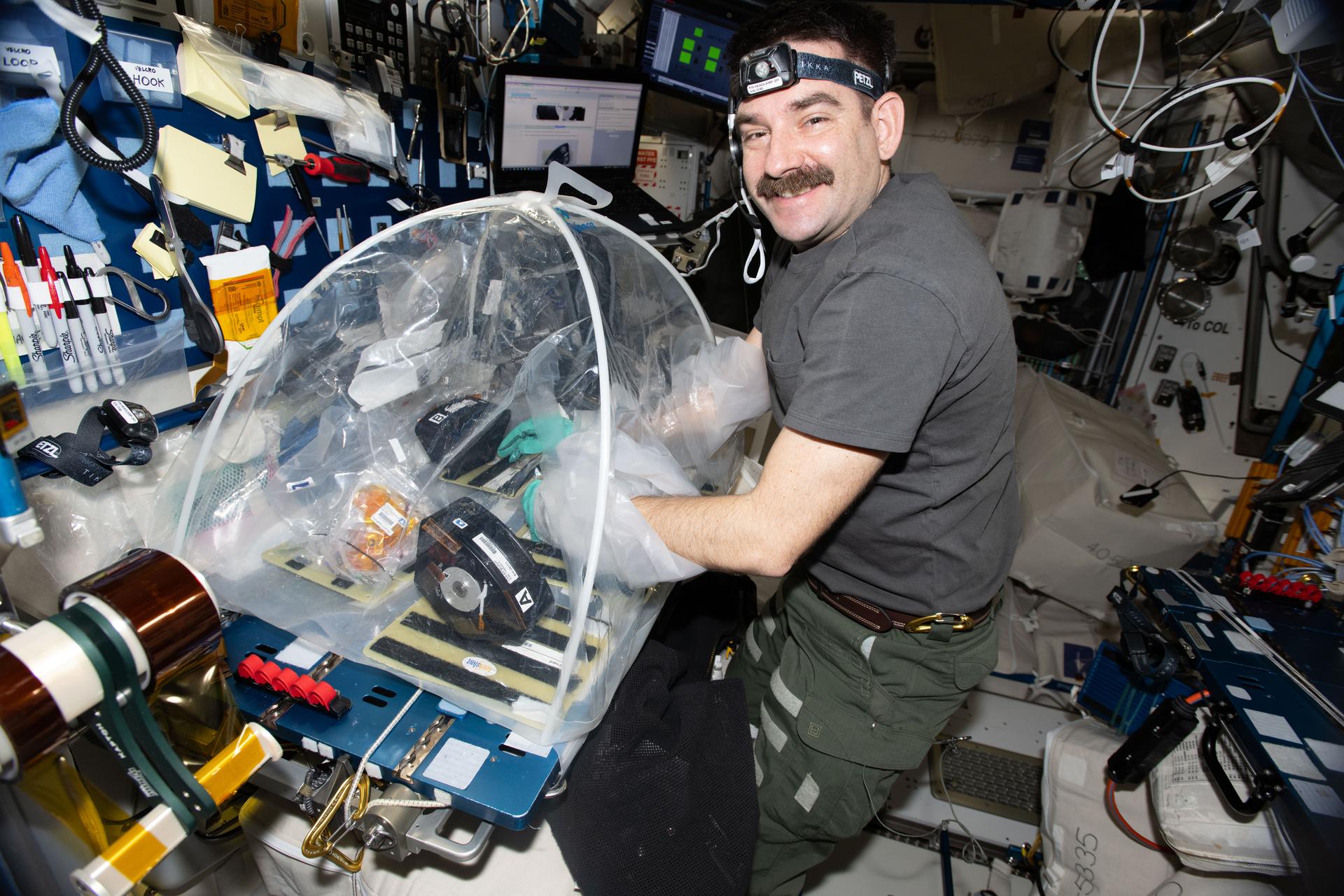
This collaborative model mirrors NASA’s successful Commercial Resupply Services program, which partnered with SpaceX and Northrop Grumman to deliver cargo to the International Space Station. By opening the Mars network to industry, NASA can tap into cutting-edge technologies—such as laser-based optical communication, advanced antenna arrays, and AI-driven data compression—that may not yet be fully mature within government labs.
The RFP specifically calls for proposals that support both current missions and future human exploration. Companies are encouraged to design modular, scalable systems that can evolve as mission needs grow. For example, a network that starts by supporting robotic rovers could later expand to handle live video conferencing between astronauts on Mars and mission control on Earth.
Proposals are due within 30 days of the RFP’s April 2024 posting.
The network will support surface, orbital, and human missions.
It is part of NASA’s broader Moon to Mars strategy under the SCaN Program.
Funding is enabled by the Working Families Tax Cut Act passed by Congress.
A Glimpse Into the Future: What the Network Could Enable
With a reliable telecommunications backbone, the possibilities for Mars exploration expand dramatically. Scientists could receive near-real-time data from multiple rovers exploring different regions simultaneously, allowing for coordinated experiments and rapid hypothesis testing. High-definition video streams could give researchers on Earth a “rover’s-eye view” of Martian landscapes, enhancing geological analysis and mission planning.
For future human missions, the network would be nothing short of revolutionary. Astronauts could conduct live medical consultations with Earth-based doctors, stream educational content to students back home, or even participate in virtual reality training sessions. Emergency communications—critical during dust storms or equipment failures—would become far more reliable.
Moreover, the network could serve as a testbed for technologies that will eventually support missions to the outer planets. Concepts like delay-tolerant networking (DTN), which allows data to be stored and forwarded across intermittent connections, were first tested on Mars orbiters and are now being refined for use on missions to Jupiter and beyond.
Challenges on the Road to Martian Connectivity
Building a telecommunications network around another planet is no small feat. The extreme environment of space—radiation, temperature swings, and micrometeoroid impacts—requires hardware built to last decades with minimal maintenance. Orbiters must maintain precise trajectories to ensure continuous line-of-sight with both surface assets and Earth, a task complicated by Mars’ irregular gravity field and atmospheric drag.

Power is another critical challenge. Unlike Earth-orbiting satellites that can rely on constant sunlight, Mars orbiters may pass through extended eclipses behind the planet, forcing them to depend on batteries or nuclear power sources. Thermal management is equally vital: electronics must operate in temperatures that can swing from -200°F (-130°C) in shadow to over 80°F (27°C) in direct sunlight.
Security is also a growing concern. As more missions connect to the network, the risk of cyber threats increases. NASA is working with industry partners to develop encryption protocols and intrusion detection systems tailored for deep-space environments—where a hacker’s signal could originate from millions of miles away.
The Bigger Picture: A Stepping Stone to a Multi-Planet Civilization
The Mars Telecommunications Network is more than a technical achievement—it’s a foundational element of humanity’s long-term vision for becoming a multi-planet species. Just as the internet revolutionized life on Earth by connecting people and information across continents, a Martian network could do the same for the Red Planet.

This effort is part of NASA’s broader Moon to Mars strategy, which aims to establish sustainable exploration architectures across the inner solar system. The lessons learned from building and operating the Mars network will directly inform future efforts on the Moon, where NASA’s Artemis program is already deploying lunar relay satellites like the Lunar Pathfinder.
Eventually, these networks could interconnect, forming a Solar System Internet—a decentralized web of data pathways linking Earth, the Moon, Mars, and beyond. Scientists envision a future where autonomous probes on Europa, Titan, and Enceladus can upload their findings to a relay satellite, which then beams the data to Mars, and onward to Earth.
What’s Next for the Mars Network?
With industry responses due within 30 days, NASA is moving quickly to evaluate proposals and select partners. The agency plans to award contracts in phases, starting with design and prototyping, followed by flight hardware development and launch. The goal is to have at least one operational orbiter in place by the late 2020s, with a full constellation deployed by 2030.
The success of this initiative will depend not only on technological innovation but also on international collaboration. While NASA is leading the effort, agencies like ESA, JAXA, and CNSA are also investing in deep-space communications. Shared standards and interoperable systems will be essential to avoid a fragmented, incompatible network.
As humanity prepares to take its next giant leap, the Mars Telecommunications Network stands as a symbol of our growing capability to explore, communicate, and thrive beyond Earth. It’s not just about sending data—it’s about building bridges across the void, connecting distant worlds, and ensuring that when we finally walk on Mars, we’re never truly alone.
In the end, the Mars Telecommunications Network isn’t just a tool for scientists—it’s a promise. A promise that one day, a child on Mars will be able to video-call their grandparents on Earth, that a rover’s discovery will be shared with the world in real time, and that the Red Planet will no longer be a silent, distant world—but a connected node in humanity’s expanding digital frontier.
This article was curated from NASA Draws on Industry for Mars Telecommunications Network via NASA Breaking News