Table of Contents
- The Hidden Physics Behind Olympic Weightlifting: How Elite Lifters Harness the Barbell’s “Whip”
- The Science of Resonance: Why Timing is Everything
- Engineering the Perfect Bar: From Steel to Performance
- The Future of the Whip: Technology Meets Training
- Conclusion: The Unseen Force That Lifts Champions

The Hidden Physics Behind Olympic Weightlifting: How Elite Lifters Harness the Barbell’s “Whip”
At first glance, Olympic weightlifting appears to be a raw display of strength—athletes hoisting massive weights overhead in explosive bursts of power. But beneath the surface of these gravity-defying feats lies a subtle yet powerful interplay of physics, biomechanics, and engineering. One of the most intriguing yet underappreciated elements in elite weightlifting is the barbell’s “whip”—a term used by athletes to describe the elastic rebound that occurs when a loaded barbell bends and then springs back during a lift. Far from being a flaw or inconsistency, this flexural bending is now understood to be a critical performance enhancer, exploited by top-tier lifters to gain a competitive edge.
Olympic weightlifting consists of two primary lifts: the snatch, where the barbell is lifted from the floor to overhead in one continuous motion, and the clean and jerk, which splits the lift into two phases. Both require explosive power, precise timing, and flawless technique. But what many don’t realize is that the barbell itself is not a rigid, unyielding rod—it’s a dynamic system that responds to force, weight, and motion. When a lifter dips down during the clean or snatch, the sudden application of force causes the bar to bend slightly. As the lifter drives upward, the stored elastic energy in the bent bar recoils, adding a crucial burst of upward momentum. This phenomenon, known in physics as flexural bending, is what athletes colloquially call the “whip.”
Understanding and harnessing this whip is not just about strength—it’s about timing, coordination, and an almost intuitive grasp of mechanical resonance. Elite lifters don’t just lift the bar; they dance with it, feeling its subtle vibrations and adjusting their movements to sync with its rebound. As Joshua Langlois, a graduate student at Pennsylvania State University and competitive Strongman, discovered through his research, this isn’t just anecdotal wisdom—it’s quantifiable physics.

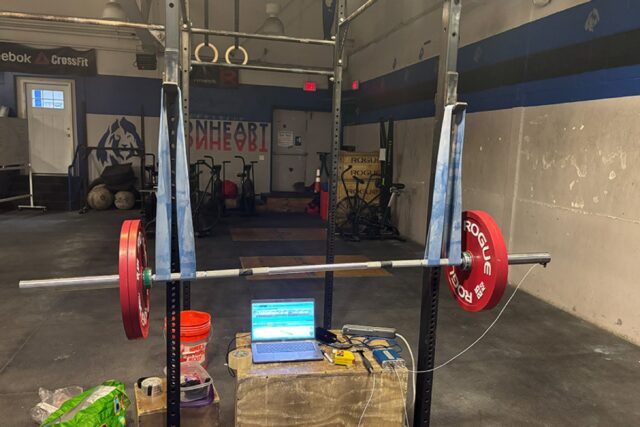
Langlois, whose passion for strength sports led him to study the mechanics of the barbell, set out to demystify the whip. Using a technique called modal analysis, he measured how different barbells vibrate when force is applied. By suspending four 20-kilogram men’s barbells (each loaded with 50 kg on both ends) from elastic bands—essentially creating a “floating” bar—he could isolate vibrations without interference from external surfaces. Accelerometers were placed at key points on the bar, and a small hammer was used to tap various locations, simulating the impact of a lifter’s pull. The resulting data revealed distinct vibrational patterns, or modes, that varied depending on the bar’s design and load.
The results were eye-opening. Not all barbells flex the same way. Some bars exhibited a sharp, high-frequency rebound—ideal for quick, explosive lifts like the snatch. Others had a slower, more sustained flex, better suited for the clean and jerk. The difference, Langlois found, comes down to material composition, shaft diameter, and the internal structure of the bar. High-performance Olympic barbells are engineered with a specific degree of flexibility—enough to store and release energy efficiently, but not so much that control is lost.
The implications of this research extend far beyond the weight room. Understanding how materials respond to dynamic loads has applications in robotics, aerospace engineering, and even sports equipment design. For instance, the same principles that govern a barbell’s flex are used in designing tennis rackets that maximize power without sacrificing control. In both cases, the goal is to optimize the transfer of energy from the user to the object, using elasticity as a performance multiplier.
But how exactly do lifters exploit this whip in real time? It’s not something that can be easily taught in a textbook. It’s a sensory skill—developed over years of training—where athletes learn to feel the bar’s response. When a lifter performs a clean, for example, they begin by pulling the bar off the floor with maximum force. As the bar reaches knee height, they drop under it into a squat, a movement known as the “dip.” This rapid downward motion causes the bar to bend backward. The moment the lifter begins to drive upward, the bar recoils, adding a spring-like boost.
Timing is everything. If the lifter drives too early, they miss the rebound. If they drive too late, the energy dissipates. The best lifters, like Olympic gold medalist Lasha Talakhadze, seem to have an innate sense of this rhythm. Their movements are so synchronized with the bar’s flex that the lift appears effortless—even when they’re moving over 500 pounds.
Langlois’s research also highlights the importance of bar standardization in elite competition. The International Weightlifting Federation (IWF) specifies strict guidelines for barbell dimensions and materials, but even within those parameters, subtle differences can affect performance. Some bars are stiffer, others more whippy. Top athletes often have preferences—some swear by a particular brand or model, claiming it “feels right” under load. Now, with tools like modal analysis, coaches and engineers can objectively measure these differences and tailor equipment to individual lifters.

This personalized approach is becoming more common in elite sports. Just as runners use custom shoes and swimmers wear tailored suits, weightlifters are beginning to benefit from equipment optimized to their biomechanics. In the future, we may see “smart barbells” embedded with sensors that provide real-time feedback on flex, vibration, and timing—helping athletes refine their technique down to the millisecond.
The Science of Resonance: Why Timing is Everything
At the heart of the whip effect is a concept called mechanical resonance—the tendency of a system to oscillate with greater amplitude at certain frequencies. When a lifter’s movement matches the natural frequency of the barbell, the flex and rebound are maximized. This is similar to how a child on a swing moves higher when pushed in rhythm with their natural back-and-forth motion.
In weightlifting, resonance occurs during the transition phase of the lift—the moment when the lifter switches from pulling the bar upward to dropping under it. If the lifter times their dip and drive to coincide with the bar’s natural rebound frequency, they can amplify the upward force. This is why elite lifters often appear to “pause” or “catch” the bar at a specific point—they’re not hesitating; they’re syncing with the bar’s vibration.

Elite lifters can adjust their movement timing to within 20–30 milliseconds to match the bar’s rebound.
The whip effect is more pronounced in the clean than in the snatch due to the deeper dip and longer acceleration phase.
Women’s barbells (15 kg) are slightly more flexible than men’s (20 kg), requiring different timing strategies.
The whip contributes more to performance at heavier weights, where even small energy gains are critical.
This synchronization is not just physical—it’s neurological. The human brain processes sensory feedback from muscles, joints, and the inner ear at incredible speeds. Elite lifters develop what scientists call proprioceptive acuity—the ability to sense the position and movement of their body and the bar in space. This allows them to make micro-adjustments in real time, aligning their force output with the bar’s flex.
Interestingly, this skill can be trained. Coaches use drills like “paused cleans” and “tempo lifts” to help athletes develop a better sense of timing. By slowing down the movement, lifters can focus on the feel of the bar’s rebound and learn to anticipate it. Over time, this becomes second nature—like a pianist playing a complex piece without looking at the keys.
Engineering the Perfect Bar: From Steel to Performance
Not all barbells are created equal. The design of an Olympic barbell is a masterpiece of engineering, balancing strength, flexibility, and durability. The shaft is typically made from high-tensile steel, with a knurled grip in the center for stability. The sleeves rotate freely to reduce torque on the lifter’s wrists during the turnover phase.

But the real magic lies in the taper and whip profile—the way the bar’s diameter and material density change along its length. High-end bars have a slightly thinner shaft in the middle, allowing for greater flex. This controlled bending stores energy like a spring, which is then released during the upward drive. Cheaper bars, in contrast, are often too stiff or too flexible, reducing the effectiveness of the whip.
Manufacturers like Eleiko, Werksan, and Rogue spend years refining their designs based on feedback from elite lifters and scientific testing. Some bars are engineered for speed (ideal for snatches), while others prioritize stability (better for heavy cleans). The best bars offer a balance—responsive enough to enhance performance, but predictable enough to maintain control.
Today’s bars are tested in labs using the same modal analysis techniques Langlois employed. Engineers measure how the bar vibrates under load, identifying resonant frequencies and damping characteristics. This data helps them fine-tune the design for optimal performance. Some companies even use finite element analysis (FEA)—a computer simulation technique—to model how stress and strain distribute across the bar during a lift.
The Future of the Whip: Technology Meets Training
As our understanding of the whip deepens, new technologies are emerging to help athletes harness it more effectively. Wearable sensors, high-speed cameras, and AI-driven motion analysis are now being used to study lifting mechanics in unprecedented detail. Coaches can now see not just how much weight a lifter moves, but how they move it—down to the millimeter and millisecond.
In the near future, we may see smart training systems that provide real-time feedback on bar flex, timing, and force application. Imagine a barbell that vibrates gently when the lifter hits the optimal rebound point, or a training app that analyzes video footage to suggest timing adjustments. These tools could democratize access to elite-level coaching, helping athletes at all levels improve their technique.
Moreover, the principles of the whip are being applied beyond weightlifting. In gymnastics, pole vaulters use the flex of the pole to convert horizontal speed into vertical lift. In high jump, the bend of the fiberglass pole stores energy that propels the athlete over the bar. Even in everyday activities like jumping on a trampoline, we rely on elastic rebound to enhance performance.
Conclusion: The Unseen Force That Lifts Champions
The story of the barbell’s whip is more than a tale of physics—it’s a testament to the synergy between human ingenuity and natural law. What began as an intuitive trick used by elite lifters has evolved into a scientifically validated performance enhancer, reshaping how we understand strength, timing, and movement.
From the Soviet coaches who first noticed the phenomenon to modern researchers like Joshua Langlois, the journey to understand the whip reflects a broader truth: in sport, as in science, the smallest details often hold the greatest power. The next time you watch an Olympic weightlifter explode under a barbell heavier than a refrigerator, remember—they’re not just lifting weight. They’re riding a wave of physics, harnessing the invisible force of the whip to defy gravity, one perfectly timed rebound at a time.
This article was curated from The physics of how Olympic weightlifters exploit barbell's "whip" via Ars Technica – Science