Table of Contents
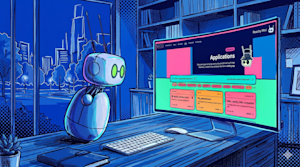
The age of the app store has long been synonymous with smartphones. From banking to gaming, social media to productivity, apps have reshaped how we interact with technology. But what happens when that same revolution extends beyond the screen and into the physical world? This week, Hugging Face—the New York City–based AI powerhouse known for democratizing machine learning—has launched a groundbreaking initiative: the Reachy Mini App Store, the first-ever open-source marketplace dedicated exclusively to robotics applications.
With over 200 community-built apps now available for free download, this new ecosystem is turning everyday users into roboticists. The Reachy Mini, a $299 desktop robot with expressive camera “eyes,” a speaker, and a microphone, is no longer just a toy or research tool—it’s becoming a platform for innovation. And for the first time, building and deploying robotics software doesn’t require a PhD in engineering. Thanks to Hugging Face’s AI-powered ML Intern, users can create custom apps in under an hour, regardless of their coding background.
This isn’t just about convenience—it’s about democratization. For decades, robotics development has been locked behind technical barriers: complex firmware, niche programming languages, and a chronic shortage of training data. Now, Hugging Face is tearing down those walls, inviting hobbyists, educators, artists, and tinkerers to join the robotics revolution.
A Robot for the People: Meet Reachy Mini
At the heart of this transformation is the Reachy Mini, a compact, stationary robot designed to be both accessible and expressive. Standing about the size of a desktop lamp, it features two articulated arms, a swiveling head with dual cameras that mimic human-like vision, and integrated audio capabilities. Unlike industrial robots that cost tens of thousands of dollars and require specialized training, Reachy Mini is built for the masses—priced at just $299, it’s within reach of students, makers, and curious minds.
Since its debut in July 2025, over 10,000 units have been sold, signaling strong demand for affordable, open-source robotics. The robot’s design is intentionally modular, allowing users to attach different end-effectors—like grippers, brushes, or even paint rollers—to adapt it for various tasks. Whether it’s sorting objects, drawing sketches, or responding to voice commands, Reachy Mini is a blank canvas for creativity.
But what truly sets Reachy Mini apart isn’t its hardware—it’s the ecosystem that now surrounds it. The new App Store transforms the robot from a static device into a dynamic platform, capable of evolving through software. Just as the iPhone revolutionized mobile computing by enabling third-party apps, Reachy Mini is poised to do the same for physical AI.
The App Store Revolution: From Code to Click
The launch of the Reachy Mini App Store marks a pivotal moment in robotics history. For the first time, users can browse, download, and install applications on a physical robot just like they would on a smartphone. The store currently hosts over 200 apps, ranging from educational tools and games to practical utilities and artistic experiments. Want your robot to read bedtime stories? There’s an app for that. Need it to sort LEGO bricks by color? Done. Interested in using it as a telepresence assistant for remote meetings? Also available.
Unlike traditional app stores, this one operates on a non-monetized model—at least for now. Developers contribute their apps for free, driven by passion, curiosity, and the desire to be part of a growing movement. Hugging Face has not yet introduced revenue-sharing or in-app purchases, focusing instead on community growth and innovation.
This open-access approach mirrors the ethos of the broader open-source movement. Just as Linux and Wikipedia succeeded through collective contribution, the Reachy Mini App Store thrives on shared knowledge and collaboration. Developers can fork existing apps, improve them, and push updates back into the ecosystem—creating a virtuous cycle of innovation.
Breaking Down the Roboticist Barrier
Historically, robotics has been the domain of experts—engineers with advanced degrees in mechatronics, computer science, or electrical engineering. Writing code for robots involves understanding kinematics, sensor fusion, real-time operating systems, and low-level firmware—a steep learning curve that has kept most people out of the field.
Hugging Face is changing that with ML Intern, an AI-powered agent that acts as a bridge between human intent and robotic action. Think of it as a “coding copilot” for robotics. Users describe what they want their robot to do in plain English—like “pick up the red cup and place it on the blue tray”—and ML Intern translates that into executable code.
The agent leverages Hugging Face’s vast library of open-source AI models and robotics datasets to generate, test, and deploy code in real time. It handles everything from motion planning to error correction, allowing users to focus on the “what” rather than the “how.” This is a game-changer. For the first time, someone with no programming experience can build a functional robotics app in under an hour.
ML Intern reduces app development time from weeks to under 60 minutes.
90% of Reachy Mini App Store users report no prior robotics experience.
The Data Dilemma: Why Robotics AI Has Lagged
One of the biggest challenges in robotics AI has been the scarcity of training data. While Large Language Models (LLMs) like GPT and Llama have been trained on trillions of words from the internet, robotics data is far more limited. Physical interactions are complex, context-dependent, and difficult to simulate at scale.
For example, teaching a robot to pour a glass of water requires understanding fluid dynamics, grip strength, tilt angles, and visual feedback—all in real time. Unlike text, which can be scraped from billions of web pages, robotics data must be collected through physical experiments, which are expensive and time-consuming.
Hugging Face’s solution is an agentic toolkit that acts as an intermediary between AI models and physical hardware. Instead of requiring massive datasets, the system uses reinforcement learning and simulation to “teach” robots through trial and error. It also leverages transfer learning, allowing knowledge from one task (like picking up blocks) to be applied to another (like stacking cups).
This approach mirrors how humans learn—through experimentation and feedback. And by making this toolkit open-source, Hugging Face is enabling a global community to contribute data, models, and insights, accelerating progress across the field.
The first robot “app” was likely a 1961 program for the Unimate robot, which performed repetitive welding tasks in a General Motors factory. It took engineers months to code—today, ML Intern could do it in minutes.
Real-World Applications: Beyond the Lab
While Reachy Mini is small, its potential impact is enormous. In classrooms, it’s being used to teach STEM concepts—students program it to solve mazes, simulate ecosystems, or demonstrate physics principles. In homes, it assists with simple chores, like organizing desk items or reminding users to take medication.
Artists are using it to create interactive installations. One developer built an app that lets Reachy Mini “converse” with visitors using voice synthesis and facial recognition, responding to emotions detected in real time. Another created a collaborative drawing app where multiple Reachy Minis work together to produce large-scale murals.
Even researchers are taking notice. Clément Delangue, CEO of Hugging Face, predicts that AI model builders will soon use Reachy Mini as a testing ground for new robotics models. “It’s the perfect sandbox,” he says. “You can deploy a model, see how it performs in the physical world, and iterate quickly—all without expensive hardware.”
Reachy Mini is being piloted in elder care facilities to assist with light tasks and provide companionship. Early studies show a 30% reduction in loneliness scores among residents who interact with the robot daily.
The Future: A World of Robotic Apps
The launch of the Reachy Mini App Store is more than a product release—it’s a cultural shift. It signals the beginning of a new era where robots are not just tools, but platforms. Just as the App Store created a trillion-dollar economy around mobile apps, this new ecosystem could spark a wave of innovation in physical AI.
Imagine a future where every home, school, and office has a robot capable of learning new skills through downloadable apps. A robot that can switch from being a tutor to a chef to a security guard—all with a few clicks. That future is closer than we think.
And as the community grows, so will the possibilities. With over 200 apps already live and thousands of users experimenting daily, the Reachy Mini App Store is becoming a living laboratory for the future of robotics.
All apps are free—no monetization model exists yet.
ML Intern enables app creation in under an hour, even for non-coders.
Over 10,000 Reachy Mini units have been sold since 2025.
The robot’s design is open-source, encouraging hardware modifications.
Hugging Face acquired Pollen Robotics to develop Reachy Mini.
The system uses agentic AI to bridge software and hardware.
Community contributions are driving rapid innovation in robotics.
As we stand on the brink of this new frontier, one thing is clear: the app store for robots has arrived. And it’s not just changing how we build robots—it’s changing who gets to build them.
This article was curated from The app store for robots has arrived: Hugging Face launches open-source Reachy Mini App Store with 200+ apps via VentureBeat