Table of Contents
- The Final Frontier’s Fuel Dilemma: Why Only Antimatter Can Power Our Journey to the Stars
- The Energy Crisis of Deep Space
- The Physics Behind Antimatter Propulsion
- The Three Great Challenges of Antimatter
- A Glimpse of the Future: Antimatter in Science and Fiction
- The Road Ahead: From Lab Curiosity to Starship Fuel
- Why Antimatter Is Our Only Real Option
- Conclusion: The Antimatter Imperative

The Final Frontier’s Fuel Dilemma: Why Only Antimatter Can Power Our Journey to the Stars
As humanity stands on the cusp of a new era in space exploration—fresh off the triumph of Artemis II, which carried astronauts farther from Earth than any crewed mission since 1972—the dream of interstellar travel feels tantalizingly close. Yet, despite our growing mastery of lunar and near-Earth missions, the vast gulf between stars remains a formidable barrier. The nearest star system, Alpha Centauri, lies over 4 light-years away. With current propulsion technology, a one-way trip would take tens of thousands of years. To cross such distances within a human lifetime, we need a revolution in energy—not just an upgrade, but a fundamental leap. And that leap, many physicists argue, points to one of the universe’s most exotic and powerful phenomena: antimatter.
Unlike chemical or even nuclear fuels, antimatter offers near-perfect energy conversion. When matter and antimatter collide, they annihilate each other, transforming 100% of their combined mass into energy, as dictated by Einstein’s famous equation, E=mc². This efficiency dwarfs even the most advanced fusion reactors, which convert less than 1% of mass into energy. For interstellar travel, where every gram of fuel and every joule of energy counts, antimatter isn’t just an option—it may be the only viable path forward.
The Energy Crisis of Deep Space
To understand why antimatter is so crucial, we must first grasp the staggering scale of interstellar distances. The Voyager 1 probe, humanity’s farthest-reaching spacecraft, has traveled over 16 billion kilometers since its 1977 launch. Yet even at that distance, it would take over 70,000 years to reach Proxima Centauri, the closest star to the Sun. That’s longer than modern humans have existed as a species.
Current propulsion systems are simply too slow. Chemical rockets, like those used in the Saturn V that launched Apollo 17—the last crewed Moon mission—convert less than 0.0001% of their fuel’s mass into kinetic energy. Even advanced nuclear fission engines, such as those proposed in NASA’s Project Orion, would only reach about 0.1% efficiency. Fusion propulsion, while promising, maxes out around 0.7%. These numbers may seem small, but they reflect a fundamental limit: the more mass you need to accelerate, the more fuel you require, leading to a vicious cycle known as the “tyranny of the rocket equation.”

To break free from this cycle, we need a propulsion system that delivers enormous energy with minimal mass. Antimatter annihilation fits this requirement perfectly. A single gram of antimatter reacting with a gram of matter releases energy equivalent to about 43 kilotons of TNT—roughly three times the yield of the Hiroshima bomb. That’s enough energy to propel a spacecraft to a significant fraction of the speed of light, potentially enabling a journey to Alpha Centauri in just a few decades.
The Physics Behind Antimatter Propulsion
At its core, antimatter propulsion relies on the principle of mass-energy equivalence. When a particle of matter—say, an electron—meets its antimatter counterpart, a positron, they annihilate, producing gamma rays and other particles. This process is 100% efficient: every bit of mass is converted into energy, unlike nuclear reactions, which leave behind significant mass in the form of spent fuel.
In theory, an antimatter rocket could use this energy to heat a propellant, such as hydrogen, which is then expelled at high velocity to generate thrust. Alternatively, magnetic fields could direct the charged particles produced in annihilation directly out of the engine, creating a highly efficient plasma jet. Either way, the specific impulse—the measure of how effectively a rocket uses propellant—would be orders of magnitude higher than any current technology.
One proposed design, the antimatter-initiated fusion rocket, uses small amounts of antimatter to trigger fusion reactions in a deuterium-tritium pellet. The antimatter acts as a “spark plug,” igniting the fusion fuel with far less input energy than traditional methods. This hybrid approach could combine the high energy density of antimatter with the abundance of fusion fuels, offering a practical stepping stone toward full antimatter propulsion.

The Three Great Challenges of Antimatter
Despite its promise, antimatter propulsion faces monumental hurdles. Scientists have identified three primary challenges that must be overcome before we can even consider building an antimatter-powered starship.
The first is production. While we can create antimatter in particle accelerators like CERN’s Large Hadron Collider, the process is incredibly inefficient. It takes vastly more energy to produce antimatter than we get back from its annihilation. Current global production is measured in nanograms per year—enough to power a lightbulb for a few seconds, not a spaceship for decades.
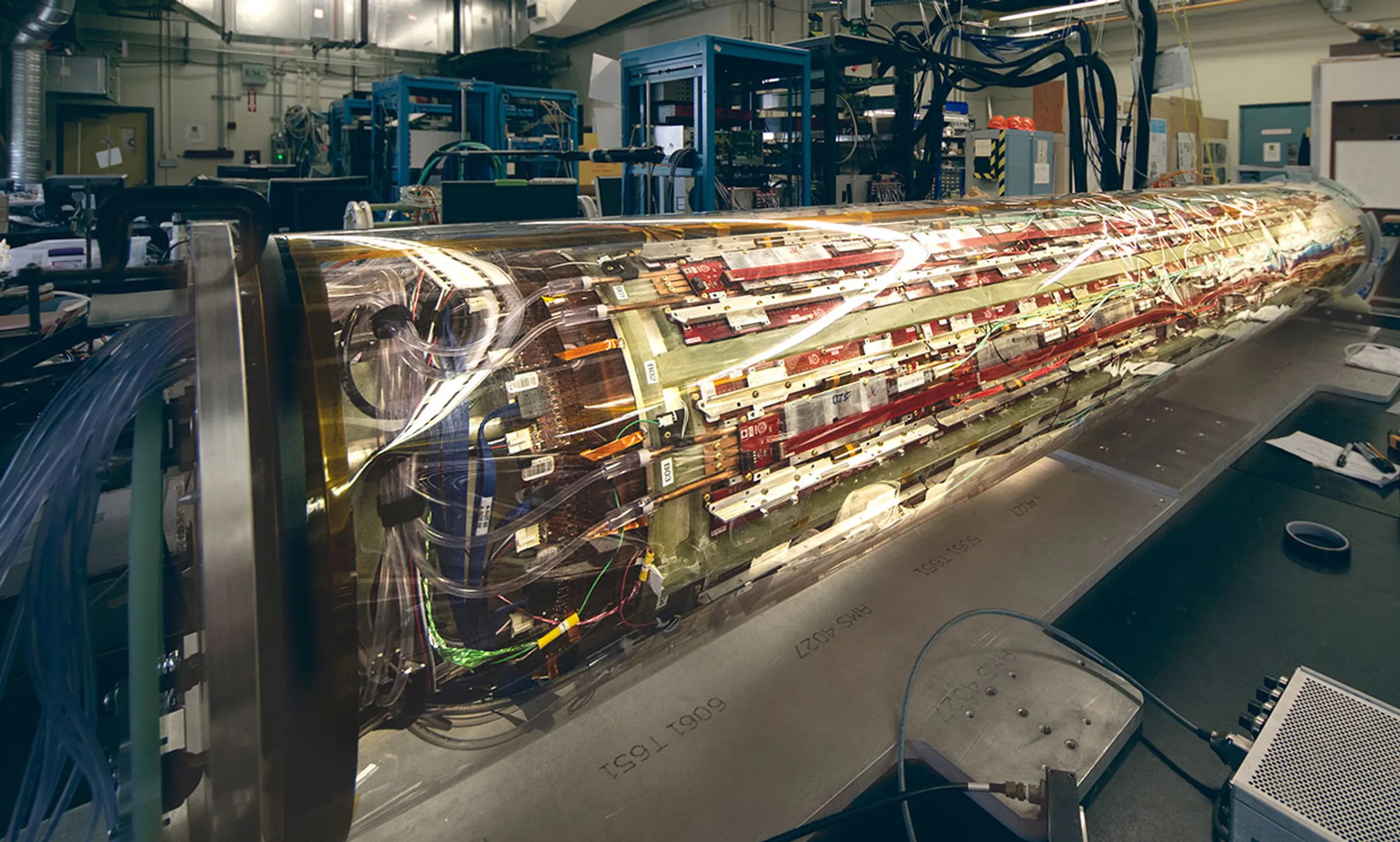
The second challenge is storage. Antimatter cannot touch ordinary matter without annihilating, so it must be contained using magnetic or electric fields in a vacuum. Current traps, such as Penning traps, can store only tiny amounts for limited durations. Scaling this up to kilograms—the amount needed for interstellar travel—would require breakthroughs in superconducting magnets and ultra-high vacuum technology.
The third challenge is cost. Producing one gram of antimatter with current technology would cost an estimated $62.5 trillion—more than the GDP of most nations. Even if we could produce it efficiently, the infrastructure required would be unprecedented, involving massive particle accelerators in space or on the Moon.

Storage duration record: 405 days for a single antiproton (CERN, 2023).
Estimated cost per gram: $62.5 trillion.
Energy yield per gram: 1.8 × 10¹⁴ joules (equivalent to 43 kilotons of TNT).
Required fuel mass for Alpha Centauri mission: ~10 kg of antimatter.
A Glimpse of the Future: Antimatter in Science and Fiction
The idea of antimatter propulsion isn’t new. It has long captured the imagination of scientists and storytellers alike. In Dan Brown’s Angels & Demons, a fictional antimatter bomb threatens Vatican City. While the science is exaggerated, it reflects real concerns about antimatter’s destructive potential. In reality, however, the energy release is controlled and scalable—making it ideal for propulsion, not destruction.
NASA and other space agencies have explored antimatter concepts for decades. The Antimatter Propulsion for Interstellar Missions (APIS) study in the early 2000s examined the feasibility of using antiprotons to trigger fusion pulses. More recently, researchers at the University of Maryland proposed a “catalyzed fusion” engine that uses antimatter to enhance reaction rates, potentially reducing fuel requirements by orders of magnitude.
Private companies are also entering the fray. Positron Dynamics, a startup founded by physicist Ryan Weed, is developing compact antimatter production systems using radioactive isotopes. Their goal is to create portable antimatter sources for small satellites and deep-space probes. While still in early stages, such innovations could pave the way for larger-scale applications.
The Road Ahead: From Lab Curiosity to Starship Fuel
So, is antimatter propulsion science fiction or inevitable future? The answer lies somewhere in between. While we are decades—if not centuries—away from building an antimatter starship, the foundational science is sound. The real bottleneck isn’t physics, but engineering and economics.

One promising path is in-space production. By building particle accelerators on the Moon or in orbit, we could harness solar energy to create antimatter without the atmospheric interference of Earth. Lunar water ice could provide hydrogen for fuel, and regolith could shield production facilities from radiation. Such a setup might one day become a “gas station” for interstellar travelers.
Another possibility is harvesting antimatter from natural sources. While space contains trace amounts of antimatter, concentrations are too low for practical collection. However, some theories suggest that certain regions near neutron stars or black holes could produce antimatter in detectable quantities. Future telescopes may one day map these “antimatter oases,” though harvesting them remains a distant dream.
Exposure to antimatter annihilation would be instantly lethal due to intense gamma radiation. However, in a properly shielded spacecraft, the radiation could be managed using layered materials like lead, water, and polyethylene—similar to how nuclear reactors are shielded on Earth.
Why Antimatter Is Our Only Real Option
As we look to the stars, we must confront a hard truth: no other known energy source comes close to antimatter in terms of efficiency and energy density. Solar sails, ion drives, and even warp drives (still theoretical) have their place, but none can match the raw power of matter-antimatter annihilation.
Consider this: a spacecraft powered by antimatter could reach 10% the speed of light with just a few hundred kilograms of fuel. At that velocity, a trip to Proxima Centauri would take about 40 years—well within a human lifespan. With advanced life support and generational crew planning, such a mission becomes not just possible, but plausible.
Moreover, antimatter propulsion could revolutionize more than just interstellar travel. It could enable rapid transit within our own Solar System, turning Mars into a weekend destination and Jupiter’s moons into accessible outposts. The same technology that takes us to the stars could also transform how we explore our cosmic backyard.
Conclusion: The Antimatter Imperative
The dream of interstellar travel has long been constrained by the limits of our technology. But as we push the boundaries of physics and engineering, antimatter emerges as the only fuel source capable of bridging the unimaginable distances between stars. It’s not just a theoretical curiosity—it’s a necessity.
The challenges are immense, but so too are the rewards. To reach another star system, to walk on an alien world, to see the cosmos not as distant points of light but as places we can visit—these dreams demand nothing less than the ultimate energy source. And in the silent, perfect annihilation of matter and antimatter, we may find the key to our future among the stars.
As we honor the legacy of Apollo 17 and look ahead to Artemis and beyond, let us remember: the next giant leap won’t be measured in kilometers, but in light-years. And it will be powered by the most exotic fuel in the universe.
This article was curated from Only antimatter provides the energy we need for interstellar travel via Big Think