Table of Contents

Mapping the Hidden Ice: How NASA’s SPHEREx Is Rewriting the Story of Water in the Cosmos
In the vast, star-dusted expanse of the Cygnus X region—a cosmic cradle where new stars burst to life in violent, radiant glory—something quietly extraordinary is taking place. Amid the chaos of stellar nurseries, where temperatures soar and radiation blazes, delicate layers of water ice are forming on microscopic dust grains, shielded from destruction by the very darkness that surrounds them. Now, for the first time, NASA’s SPHEREx mission has captured a detailed map of this hidden ice, revealing not just where it exists, but how it survives in one of the galaxy’s most extreme environments. This groundbreaking observation, published in The Astrophysical Journal in April 2026, offers a new window into the origins of water—and potentially, life—in our galaxy.
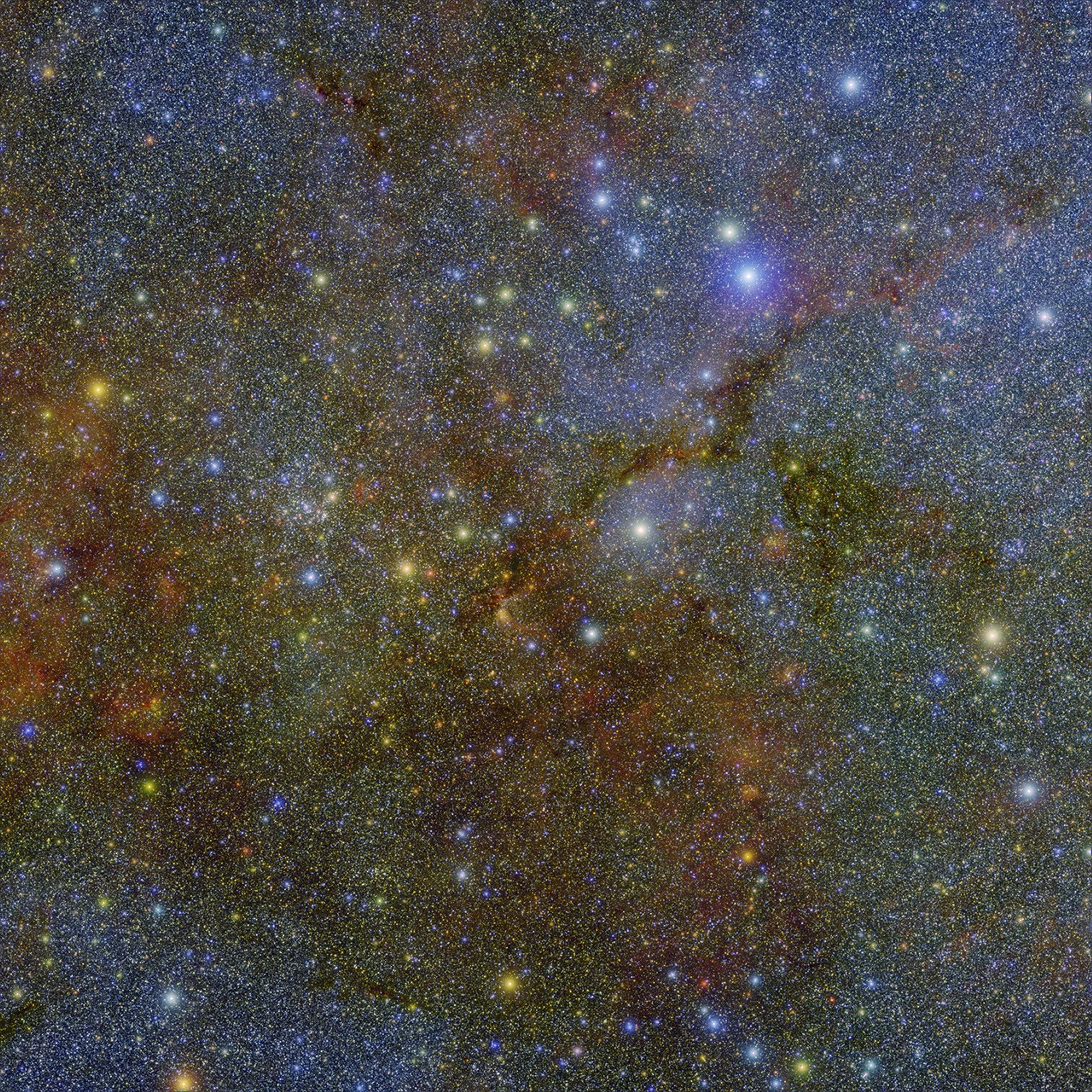
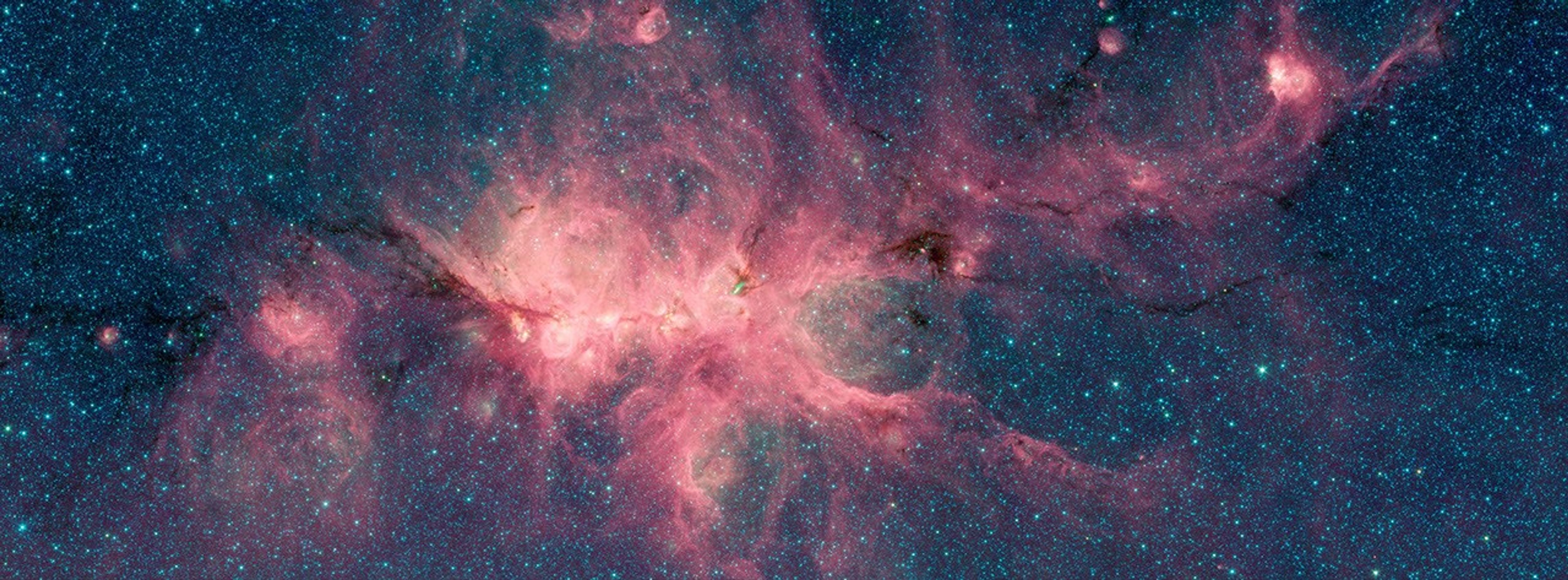
The discovery centers on Cygnus X, a sprawling complex of gas and dust located about 4,500 light-years from Earth in the constellation Cygnus. This region is one of the most active star-forming zones in the Milky Way, hosting thousands of young stars and protostellar cores. It’s a place of immense energy and turbulence, where ultraviolet radiation from newborn stars can strip molecules apart in seconds. Yet, within this inferno, SPHEREx has detected vast reservoirs of water ice—frozen H₂O locked onto the surfaces of minuscule dust particles no larger than smoke particles from a candle flame.
What makes this finding revolutionary is not just the presence of ice, but the precision with which SPHEREx mapped its distribution. Unlike previous telescopes that could detect icy molecules in isolated regions, SPHEREx is the first mission designed to conduct a full-sky survey in 102 distinct infrared wavelengths. This spectral richness allows scientists to distinguish between different types of ices and organic compounds with unprecedented clarity. In the case of Cygnus X, the data revealed a striking correlation: the densest concentrations of water ice align almost perfectly with the densest clouds of interstellar dust. These dusty lanes act like cosmic umbrellas, shielding the fragile ice from the destructive ultraviolet light pouring out from nearby stars.
The SPHEREx observatory, launched on March 11, 2025, from Vandenberg Space Force Base aboard a SpaceX Falcon 9 rocket, represents a leap forward in infrared astronomy. Managed by NASA’s Jet Propulsion Laboratory in Southern California, the spacecraft carries a state-of-the-art spectro-photometer capable of splitting incoming light into 102 separate color bands. This allows it to detect subtle chemical fingerprints—such as the unique absorption features of water ice and polycyclic aromatic hydrocarbons (PAHs)—across the entire sky. By late 2025, SPHEREx had completed its first of four planned all-sky maps, charting the positions of hundreds of millions of galaxies in three dimensions. But its mission goes beyond cosmology: it’s also a detective story about the chemistry of the universe.
The Science Behind the Ice: How Water Survives in Star-Forming Regions
To understand why this discovery matters, we must first grasp the hostile environment of regions like Cygnus X. When massive stars ignite, they emit intense ultraviolet (UV) radiation—energy so powerful it can break apart molecules like water in a process called photodissociation. In theory, this should prevent ice from forming or surviving anywhere near these stellar beacons. Yet SPHEREx’s observations show that ice not only exists but thrives in dense, shielded pockets within the molecular clouds.
The key lies in the dust. Interstellar dust grains, composed of silicates, carbon, and other elements, act as tiny platforms for chemical reactions. In the cold, dense cores of molecular clouds—where temperatures hover just a few degrees above absolute zero—gas-phase water molecules collide with these grains and stick, freezing into a thin layer of ice. Over time, this ice can grow, incorporating other volatiles like carbon dioxide, methane, and ammonia. The dust also serves as a protective barrier: its opacity blocks UV photons, creating safe zones where ice can persist for millions of years.
The SPHEREx data confirms this shielding effect in striking detail. In Figure A of the published study, the same region of Cygnus X is shown in three different infrared wavelengths, color-coded to highlight various chemical signatures. Bright blue reveals the presence of water ice, while orange traces polycyclic aromatic hydrocarbons—complex organic molecules often found in space. The image clearly shows that the brightest ice emissions coincide with the darkest, dustiest lanes—regions where light cannot penetrate easily. This visual correlation provides strong evidence that dust density directly governs ice survival.
A New Era of Infrared Astronomy: What Makes SPHEREx Unique
While other space telescopes have detected water ice before, none have done so with the scope and precision of SPHEREx. The James Webb Space Telescope (JWST), for example, can peer into individual star-forming regions with incredible resolution, but it surveys only tiny patches of sky at a time. Spitzer, though it mapped large areas, operated in fewer infrared bands and lacked SPHEREx’s spectral resolution.
SPHEREx’s innovation lies in its ability to perform a full-sky spectral survey. Every six months, it scans the entire sky in 102 colors, building a multi-wavelength map that captures not just where objects are, but what they’re made of. This is akin to upgrading from a black-and-white photograph to a high-definition, multi-spectral video of the cosmos. The mission’s design allows it to detect faint signals from icy molecules across vast distances, making it ideal for studying the chemical evolution of galaxies.
The spacecraft itself is a marvel of engineering. Built by BAE Systems in Boulder, Colorado, the telescope and spacecraft bus were designed for stability and precision. Operating from a polar orbit around Earth, SPHEREx uses a combination of cryogenic cooling and advanced detectors to minimize noise and maximize sensitivity. Its data is processed at IPAC (the Infrared Processing and Analysis Center) at Caltech, where scientists analyze millions of spectra to extract chemical information.
From Dust to Planets: The Cosmic Journey of Water
The implications of SPHEREx’s findings extend far beyond Cygnus X. Water is not just a molecule—it’s a cornerstone of life as we know it. Understanding how and where it forms in space helps answer one of humanity’s oldest questions: Are we alone?
The prevailing theory is that much of Earth’s water was delivered by comets and asteroids during the early days of the solar system. These icy bodies, formed in the cold outer regions of the protoplanetary disk, carried water and organic molecules that eventually found their way to our planet. But where did that water come from? SPHEREx suggests it may have originated in interstellar clouds like Cygnus X, where ice forms on dust grains long before stars and planets even begin to take shape.
As these icy dust grains are incorporated into new planetary systems, they bring with them not just water, but the raw ingredients for life. PAHs, for instance, are considered precursors to amino acids and other biomolecules. When comets formed from these icy grains, they preserved this chemistry for billions of years—potentially delivering it to early Earth.
Looking Ahead: What’s Next for SPHEREx?
With three more all-sky surveys planned, SPHEREx is just getting started. Each map will refine our understanding of cosmic chemistry, revealing how water and organics are distributed across different types of galaxies and star-forming environments. The mission will also contribute to studies of the early universe, helping scientists understand how the first galaxies formed and evolved.
One of SPHEREx’s long-term goals is to trace the “water trail” from interstellar clouds to planetary systems. By comparing ice maps of different regions—some young and turbulent, others older and more quiescent—scientists hope to piece together the lifecycle of water in the galaxy. This could shed light on why some planets are water-rich while others are dry, and whether Earth’s oceans are a common outcome of planetary formation.
It observes the sky in 102 infrared wavelengths, enabling detailed chemical analysis.
The mission will produce four all-sky maps over two years.
It’s managed by NASA’s Jet Propulsion Laboratory for the agency’s Astrophysics Division.
The telescope was built by BAE Systems in Boulder, Colorado.
As SPHEREx continues its survey, it’s not just mapping ice—it’s mapping the hidden architecture of life itself. Every grain of dust coated in frozen water is a potential seed for oceans, for atmospheres, for worlds where chemistry might one day spark into biology. In the turbulent heart of Cygnus X, where stars are born in fire and ice, we may be witnessing the quiet beginnings of life’s grandest story.
This article was curated from NASA’s SPHEREx Mission Maps Water Ice Throughout Cygnus X via NASA Breaking News