Table of Contents
The Cosmic Lottery: Science’s Boldest Gambles in the Search for Alien Life
Few questions stir the human spirit like the possibility that we are not alone in the universe. From ancient myths of sky gods to modern sci-fi epics, the idea of extraterrestrial life has captivated us for millennia. Yet, despite centuries of wonder and decades of advanced scientific exploration, we remain alone in our confirmed knowledge of life—confined to the thin biosphere of Earth. But that may soon change. As we peer deeper into the cosmos with increasingly powerful tools, science is placing three monumental bets on the existence of alien life. These aren’t wild guesses—they’re carefully calculated hopes, grounded in discovery, technology, and a growing understanding of life’s potential resilience.
We’ve been fooled before. The “canals” of Mars, once thought to be engineering marvels by intelligent beings, turned out to be optical illusions. The Viking lander’s ambiguous chemical signals in the 1970s sparked excitement but ultimately pointed to reactive soil, not biology. The mysterious “Wow! Signal” in 1977 remains unexplained, but no repeat has ever been detected. Even the famed Martian meteorite ALH84001, with its microscopic structures resembling fossilized bacteria, failed to convince the scientific consensus. And while Tabby’s Star’s erratic dimming once fueled speculation about alien megastructures, natural explanations like dust clouds now seem more plausible.
Yet, each false alarm has refined our methods. We’ve learned to be skeptical, to demand stronger evidence, and to expand our definition of what life might look like. Today, the search for extraterrestrial life is more sophisticated than ever—driven by three powerful scientific hopes that could redefine our place in the cosmos.
1. The Habitable Zone: Where Water Meets Possibility
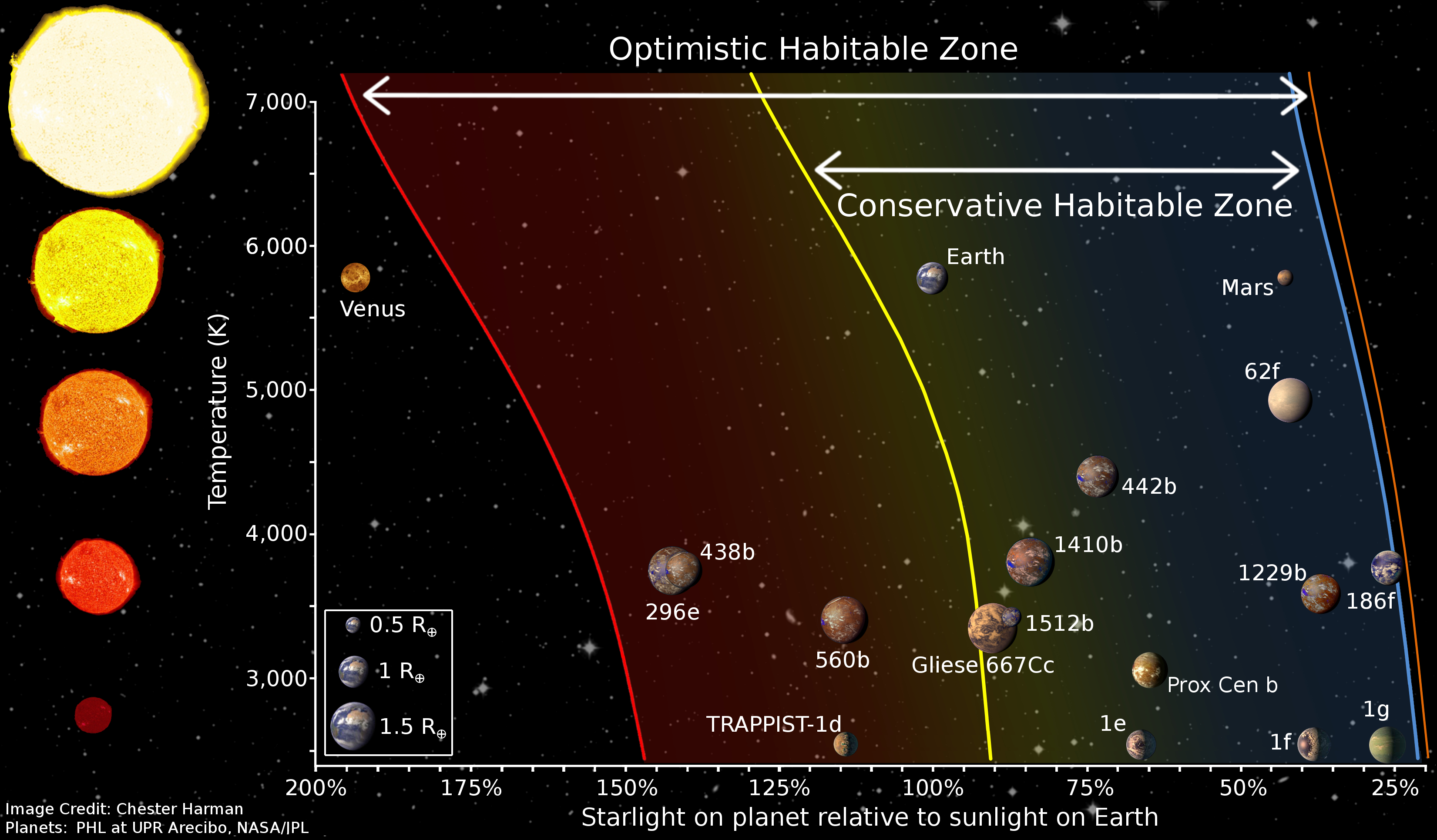
At the heart of the search for alien life lies the concept of the habitable zone—the region around a star where conditions might allow liquid water to exist on a planet’s surface. This “Goldilocks zone” isn’t too hot, not too cold, but just right. On Earth, liquid water is the foundation of life as we know it, so scientists naturally look for planets orbiting within this zone as prime candidates for life.
But the habitable zone is more than just a distance measurement. It depends on a star’s type and luminosity. A red dwarf, for example, burns cooler and longer than our Sun, so its habitable zone lies much closer. Proxima Centauri b, an Earth-sized exoplanet just 4.2 light-years away, orbits within its star’s habitable zone—but it’s likely tidally locked, with one side permanently facing the star and the other in eternal darkness. Could life survive in such extreme conditions? Maybe, if atmospheric circulation redistributes heat or if life thrives in the twilight boundary between light and dark.
The habitable zone model is a starting point, not a guarantee. Venus orbits within the Sun’s theoretical habitable zone but is a scorching 900°F inferno due to a runaway greenhouse effect. Mars, once warmer and wetter, may have hosted liquid water billions of years ago. These examples remind us that location alone doesn’t ensure habitability—atmosphere, geology, and planetary history matter just as much.
2. Exoplanets: A Universe of New Worlds
Since the first confirmed exoplanet discovery in 1992, we’ve identified over 5,500 exoplanets, with thousands more candidates awaiting confirmation. These worlds come in astonishing varieties: gas giants larger than Jupiter, rocky super-Earths, lava worlds, and even “water worlds” shrouded in global oceans. The Kepler and TESS space telescopes have been instrumental in this revolution, using the transit method to detect tiny dips in starlight as planets pass in front of their stars.
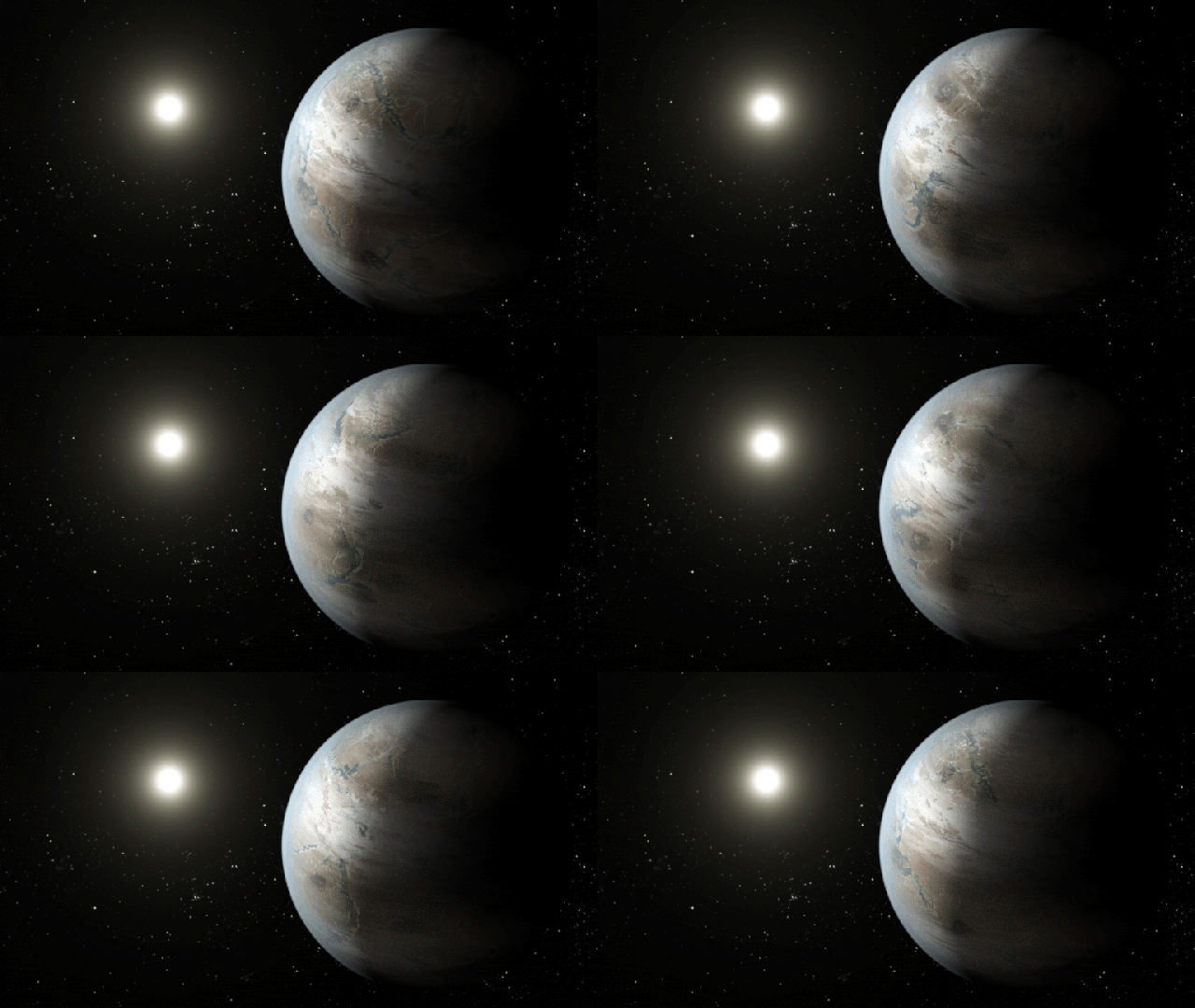
What’s most exciting is that many of these exoplanets are Earth-sized and orbit within their stars’ habitable zones. Kepler-186f, for example, is about 10% larger than Earth and receives just enough starlight to potentially support liquid water. TRAPPIST-1, a system 40 light-years away, hosts seven Earth-sized planets, three of which lie in the habitable zone. Could any of them harbor life?
But finding a planet is one thing; confirming life is another. The next frontier is atmospheric analysis. Using spectroscopy, scientists can study the light passing through an exoplanet’s atmosphere during a transit, revealing the presence of gases like oxygen, methane, or water vapor—potential biosignatures. The James Webb Space Telescope (JWST), launched in 2021, is already making strides in this area, detecting carbon dioxide and even possible signs of clouds on distant worlds.
Still, false positives are a real risk. Oxygen can be produced abiotically through photolysis of water vapor, and methane can come from volcanic activity. The real challenge is finding a combination of gases that, together, strongly suggest biological processes—like oxygen and methane coexisting, which on Earth is a clear sign of life.
3. Beyond Earth: Life in Our Own Solar System
While exoplanets capture headlines, our own cosmic backyard may hold the first definitive evidence of alien life. Mars, once a warm, wet planet with a thick atmosphere, shows clear signs of ancient river valleys, lakebeds, and minerals that form in water. NASA’s Perseverance rover is currently exploring Jezero Crater, a former river delta, collecting rock samples that may contain fossilized microbes.

But Mars isn’t the only contender. Europa, one of Jupiter’s moons, hides a global ocean beneath an icy crust. Tidal heating from Jupiter’s gravity keeps this ocean liquid, and hydrothermal vents on the seafloor could provide energy and nutrients—just like the ecosystems found near Earth’s deep-sea vents. NASA’s upcoming Europa Clipper mission, launching in 2024, will study the moon’s ice shell and plumes of water vapor erupting from its surface, which may contain organic molecules.
Then there’s Enceladus, a small moon of Saturn that shoots geysers of water ice and organic compounds into space from its south pole. The Cassini spacecraft flew through these plumes and detected molecular hydrogen—a potential energy source for microbial life. Scientists believe Enceladus’s ocean may have all the ingredients for life: liquid water, chemical energy, and organic molecules.
Even Titan, Saturn’s largest moon, with its thick atmosphere and methane lakes, presents a bizarre but fascinating possibility. Life there wouldn’t rely on water but on liquid methane as a solvent—a radical departure from Earth-based biology. While no missions have yet confirmed life beyond Earth, the evidence is mounting that our solar system is far more biologically promising than once thought.
4. The Fermi Paradox: Where Is Everybody?
If the universe is so vast and full of potentially habitable worlds, why haven’t we found any signs of intelligent life? This question, posed by physicist Enrico Fermi in 1950, is known as the Fermi Paradox. With trillions of galaxies, billions of stars per galaxy, and potentially billions of habitable planets, the probability of life—and even intelligent life—should be high. So where are the aliens?

One explanation is the Great Filter—a hypothetical barrier that prevents life from reaching interstellar communication. The filter could be behind us (e.g., the improbability of life arising at all) or ahead of us (e.g., advanced civilizations inevitably self-destruct). If the filter is ahead, it’s a sobering warning for humanity.
Another possibility is that intelligent life is rare, short-lived, or simply not interested in communication. Maybe advanced civilizations transcend physical form, upload their consciousness, or exist in dimensions we can’t perceive. Or perhaps they’re out there, but we’re not listening correctly.
At least 20 billion of those may host Earth-sized planets in the habitable zone.
The universe is 13.8 billion years old—plenty of time for life to evolve elsewhere.
We’ve only been searching for radio signals for about 70 years.
The observable universe contains over 2 trillion galaxies.
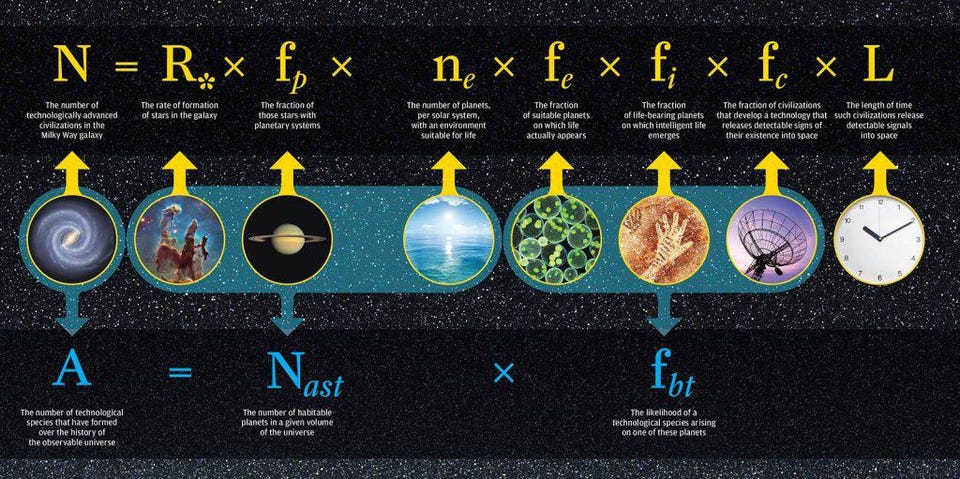
The paradox deepens when we consider the Drake Equation, a formula that estimates the number of detectable civilizations in our galaxy. While many variables remain unknown, even conservative estimates suggest we should have detected something by now. The silence may not mean we’re alone—it may mean we’re not looking in the right way.
5. The Search for Biosignatures and Technosignatures
As our tools improve, so does our ability to detect subtle signs of life. Biosignatures are chemical or physical indicators of biological activity—like oxygen, ozone, methane, or even seasonal changes in atmospheric composition. The James Webb Space Telescope is already analyzing the atmospheres of exoplanets like K2-18 b, where it detected methane, carbon dioxide, and possibly dimethyl sulfide—a compound on Earth produced only by life.

But life doesn’t have to be biological. Technosignatures—evidence of technology, such as radio signals, laser pulses, or megastructures—could reveal intelligent civilizations. Projects like SETI (Search for Extraterrestrial Intelligence) scan the skies for narrow-band radio signals that nature can’t easily produce. While no confirmed signal has been found, new AI algorithms are helping sift through vast amounts of data faster than ever.
The future may bring even more innovative approaches. Astronomers are now looking for artificial light on exoplanets, industrial pollutants in atmospheres, or even waste heat from alien civilizations. The Breakthrough Listen initiative, backed by Yuri Milner, is investing $100 million over 10 years to scan millions of stars for signs of technology.
6. The Philosophical and Cultural Impact of Discovery
Finding alien life—whether microbial or intelligent—would be one of the most profound events in human history. It would reshape our understanding of biology, philosophy, religion, and our place in the cosmos. Would we see ourselves as unique, or as one of many? Would it unite humanity or deepen divisions?
Already, the search has inspired global collaboration. Missions like the Mars rovers, the James Webb Space Telescope, and Europa Clipper involve scientists from dozens of countries. The discovery of life beyond Earth could become a unifying moment, reminding us that we are all inhabitants of a small, fragile planet in a vast, mysterious universe.
As we continue to explore, one truth becomes clear: the universe is not just a place of stars and planets—it’s a cosmic lottery, with life as the ultimate prize. And with every new telescope, every mission, and every discovery, we increase our odds of winning.
This article was curated from Science’s three big hopes for finding alien life via Big Think