Table of Contents
- The Lunar Crucible: How NASA’s New Heat-Resistant Material Could Turn Moon Dust Into Building Blocks
- The Corrosive Challenge of Lunar “Lava”
- A Pink Powder with a Built-In Thermometer
- Surviving the Heat: A Material That Defies Expectations
- From Moon Dust to Moon Structures: The Bigger Picture
- Earthly Spin-Offs: When Space Tech Comes Home
- The Road Ahead: From Lab to Lunar Surface
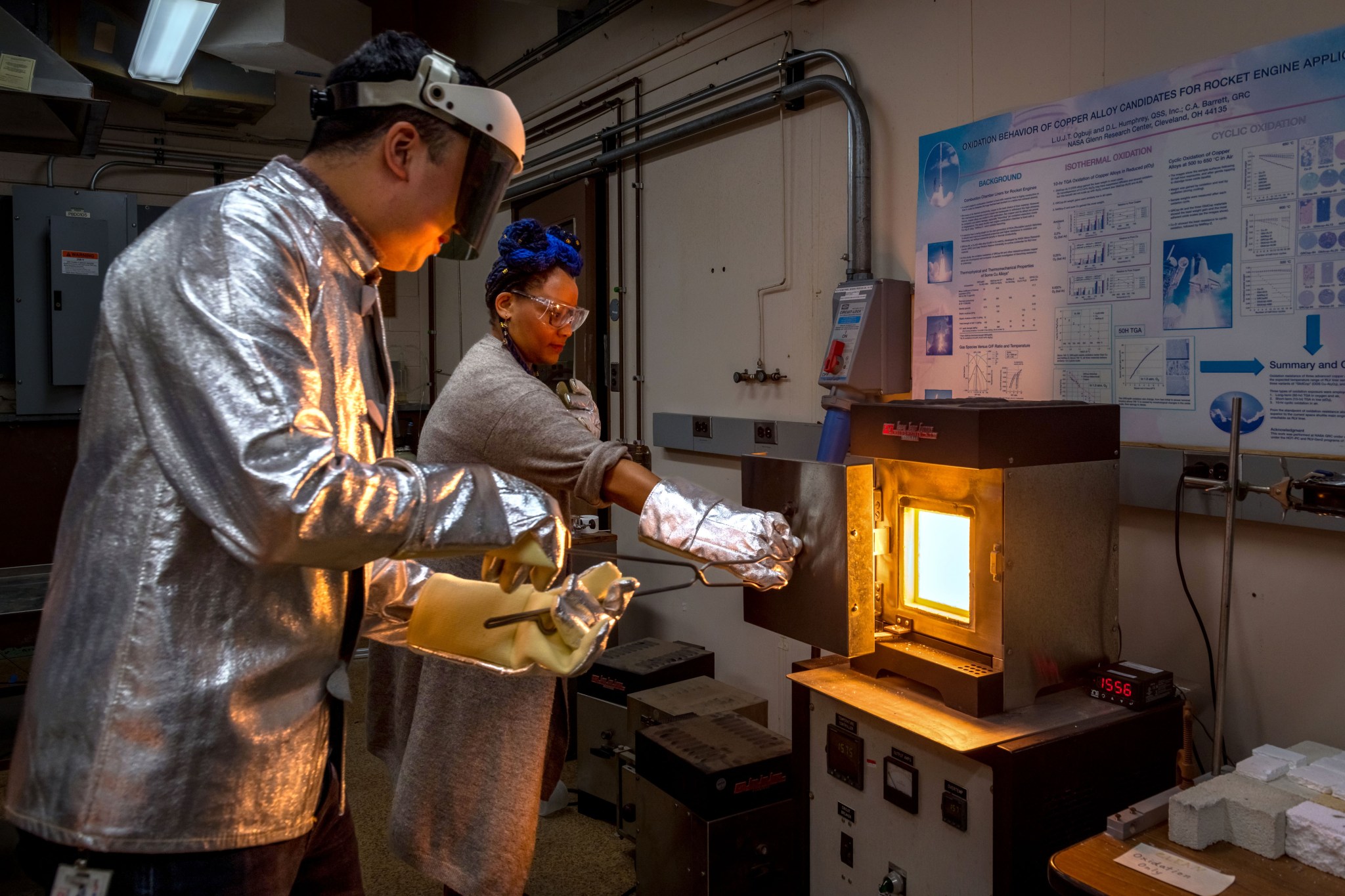
The Lunar Crucible: How NASA’s New Heat-Resistant Material Could Turn Moon Dust Into Building Blocks
Imagine a world where astronauts don’t haul every brick, beam, or bolt from Earth to construct lunar bases. Instead, they use the Moon itself—its rocks, dust, and regolith—as raw material. This futuristic vision is inching closer to reality, thanks to a breakthrough in materials science at NASA’s Jet Propulsion Laboratory (JPL). Scientists have developed a novel, heat-resistant compound capable of withstanding the extreme conditions required to melt lunar soil—a process that could one day power in-situ resource utilization (ISRU) on the Moon. This isn’t just about building shelters; it’s about unlocking the Moon’s potential as a self-sustaining outpost for deep-space exploration.
The challenge? Lunar regolith, when melted, behaves like a superheated, corrosive lava. It’s not just hot—it’s chemically aggressive, capable of eating through most known refractory materials in minutes. Traditional ceramics and metals, even those used in industrial furnaces on Earth, fail rapidly under such conditions. Enter a team of materials scientists who refused to accept that limitation. They set out to create a material that could not only survive but thrive in this hostile environment—ushering in a new era of lunar construction.
The Corrosive Challenge of Lunar “Lava”
To understand the magnitude of the problem, consider this: lunar regolith isn’t just dirt. It’s a complex mixture of crushed rock, glass particles formed by micrometeorite impacts, and minerals like ilmenite and pyroxene. When heated beyond 1,400°C (over 2,550°F), it melts into a viscous, silicate-rich liquid—akin to terrestrial lava but far more chemically reactive. This molten Moon dust is highly corrosive, attacking the very containers meant to hold it.

“You could call it lava, because it’s basically rocks that are crushed up and then melted,” explains a JPL technologist involved in the project. “It’s very corrosive, and it will very quickly eat through a lot of commonly used refractory, or heat-resistant, materials.” This corrosion isn’t just a surface issue—it leads to rapid structural degradation, contamination of the melt, and failure of critical components. For any mission aiming to extract oxygen, metals, or construction materials from lunar soil, such a failure could be catastrophic.
Historically, high-temperature processes on Earth—like steelmaking or glass production—rely on refractories made from alumina, zirconia, or graphite. But these materials, while effective in controlled environments, crumble under the unique chemical assault of molten regolith. Even platinum-group metals, known for their inertness and high melting points, are prohibitively expensive for large-scale lunar operations. The team needed something entirely new—a material that could endure temperatures six times hotter than a standard kitchen oven while resisting chemical degradation.
A Pink Powder with a Built-In Thermometer
The breakthrough came in the form of a custom-engineered oxide composite, meticulously crafted from eight basic oxide components. The process began with grinding and mixing these oxides in ethyl alcohol—a solvent chosen for its ability to ensure uniform particle distribution. Once mixed into a fine slurry, the material was baked in a furnace at temperatures exceeding 2,900°F (about 1,600°C), initiating a solid-state reaction that transformed the powder into a stable, high-performance ceramic.
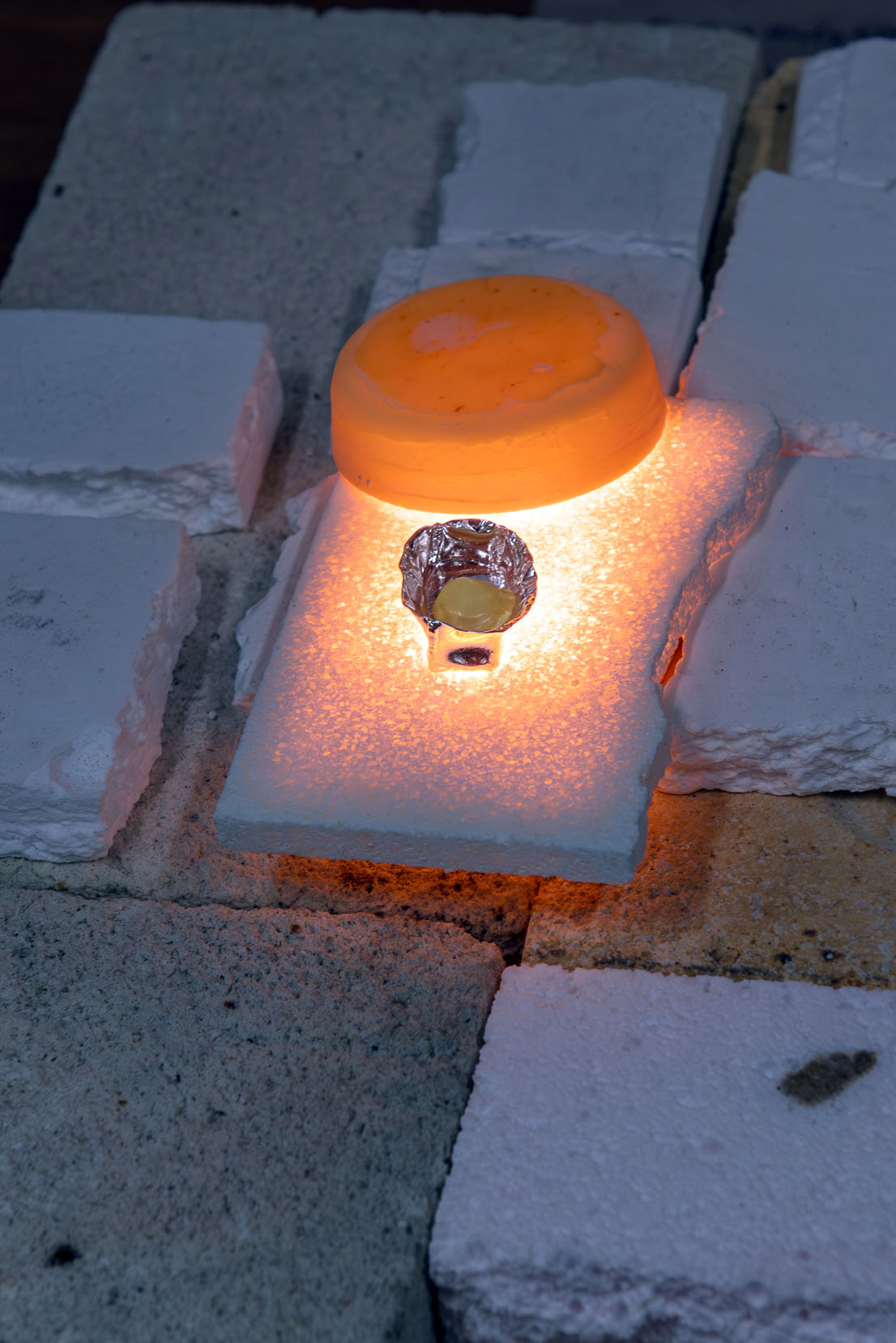
What’s remarkable about this material isn’t just its thermal resilience—it’s also its visual feedback system. “It’s actually a very cool-looking powder; it goes in pink, almost like strawberry milk,” says Dr. Yu, a materials scientist on the team. “It has a built-in color indicator, so by the time you’re done with it, it turns to a light beige or tan color, and that’s how you know the reaction has proceeded the way you wanted it to.”
This color change isn’t just aesthetic—it’s a critical quality control feature. The pink hue comes from specific transition metal ions in the scandium oxide matrix, which shift oxidation states during sintering. When the material reaches the desired crystalline structure, the color shifts to beige, signaling that the material has achieved optimal density and phase purity. This built-in indicator eliminates the need for complex post-processing analysis, making it ideal for future automated manufacturing on the Moon.
Surviving the Heat: A Material That Defies Expectations
After synthesis, the team subjected the new material to rigorous testing. They exposed it to molten lunar simulant—a lab-made replica of Moon dirt—at temperatures up to 1,600°C. The results were striking: while conventional refractories degraded within minutes, the new composite showed minimal corrosion even after prolonged exposure. Its secret lies in its tailored microstructure and chemical stability. The inclusion of scandium oxide enhances grain boundary cohesion, reducing the pathways through which corrosive ions can penetrate.

Moreover, the material’s thermal shock resistance is exceptional. Unlike brittle ceramics that crack when rapidly heated or cooled, this composite maintains integrity through repeated thermal cycles—a necessity for lunar furnaces that may operate intermittently due to power constraints or mission schedules. Its low thermal expansion coefficient means it won’t warp or fracture when subjected to the extreme temperature gradients common in space environments.
It resists corrosion from molten lunar regolith, lasting significantly longer than traditional refractories.
It includes scandium oxide, a rare but increasingly important element in advanced ceramics.
The material changes color during processing, providing a visual cue for successful synthesis.
It costs less than platinum-based alternatives, making large-scale lunar use feasible.
From Moon Dust to Moon Structures: The Bigger Picture
The implications of this material extend far beyond laboratory experiments. NASA’s Artemis program aims to establish a sustainable human presence on the Moon by the end of the decade. Central to that goal is in-situ resource utilization—using local materials to build habitats, produce fuel, and generate oxygen. Melting regolith could enable 3D printing of lunar structures, extraction of metals like iron and titanium, and even the production of water from hydrated minerals.
“You can have the best idea in the world for a structure or a vehicle, but if you don’t have the materials that have the right properties to make your vision come true, it’s not going to succeed no matter how well you design it,” says Dr. Jamesa Stokes, a materials expert at NASA. This new refractory isn’t just a component—it’s an enabler. Without it, furnaces, reactors, and processing units would fail prematurely, jeopardizing entire missions.
Imagine a lunar base where robots use solar-powered furnaces to melt regolith into bricks, walls, or radiation shields. The new material could line these furnaces, ensuring they operate efficiently for years without replacement. It could also be used in electrolysis cells to extract oxygen from ilmenite, a common lunar mineral—turning Moon dirt into breathable air.
The concept of using lunar materials for construction dates back to the 1970s, when NASA first explored “lunarcrete”—a concrete-like material made from regolith and binders. However, without durable containment materials, large-scale processing remained theoretical—until now.
Earthly Spin-Offs: When Space Tech Comes Home
While the primary goal is lunar exploration, the development of this material has profound implications for life on Earth. High-performance refractories are essential in industries ranging from aerospace to renewable energy. The insights gained from designing a material that resists extreme heat and corrosion could lead to more efficient solar furnaces, cleaner steel production, and advanced nuclear reactors.
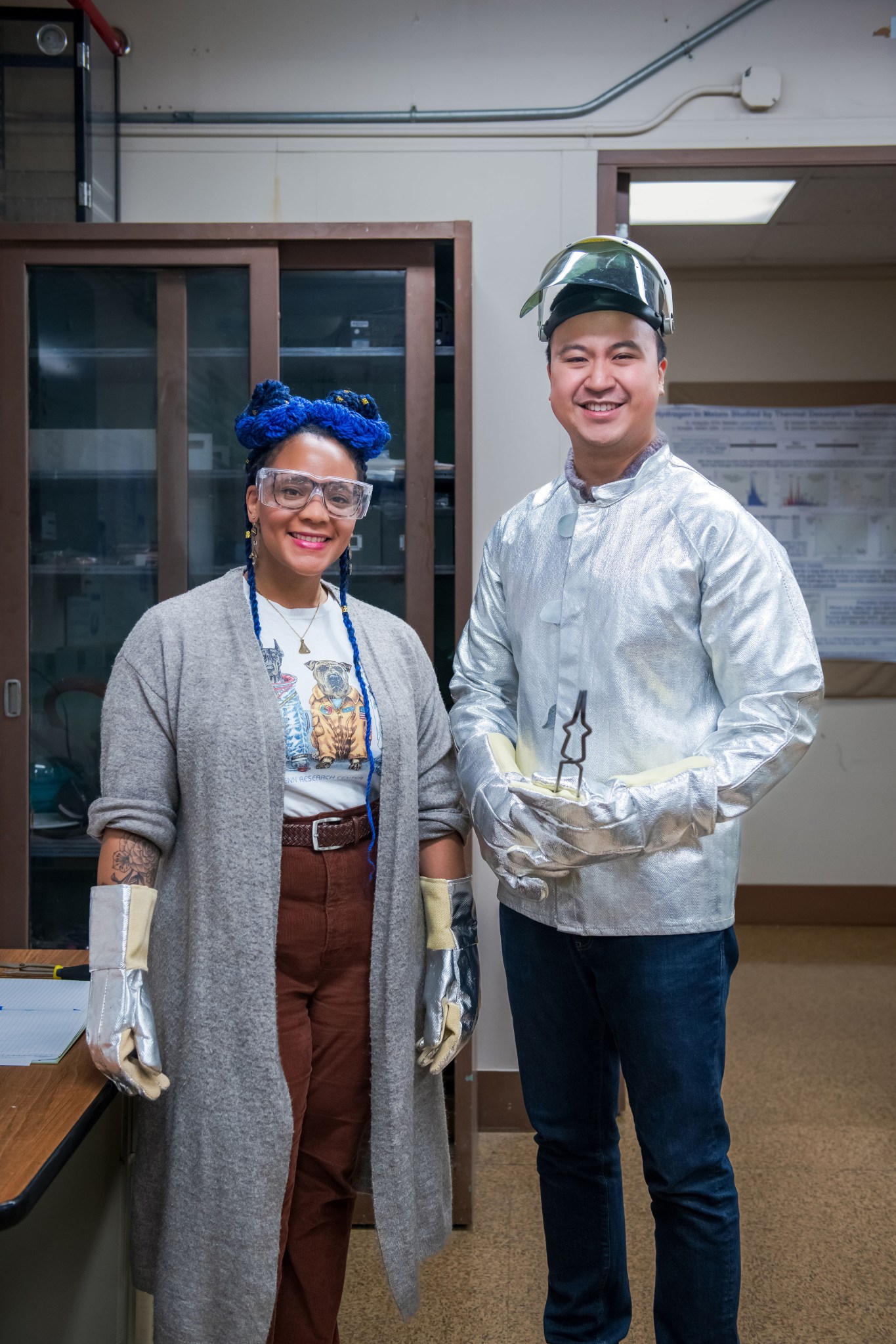
“I think trying to push what’s possible with materials also allows for a lot of breakthroughs on the terrestrial side,” says Dr. Yu. “Having a better understanding of materials for all sorts of applications is what gets me excited to go to work in the morning. That’s why I love NASA’s mission; it’s for the benefit of all.”

For example, the same principles used to stabilize scandium oxide in a lunar furnace could improve thermal barrier coatings for jet engines, allowing them to operate at higher temperatures and greater fuel efficiency. Similarly, corrosion-resistant ceramics could extend the lifespan of industrial reactors, reducing downtime and environmental impact.
Advanced ceramics developed for space applications have already found use in medical implants. Their biocompatibility and wear resistance make them ideal for hip and knee replacements, improving patient outcomes and implant longevity.
The Road Ahead: From Lab to Lunar Surface
The journey from discovery to deployment is long, but NASA is already planning next steps. The team is working to scale up production of the material and test it in larger furnaces that simulate real-world lunar conditions. They’re also exploring additive manufacturing techniques to 3D-print components directly from the powder, reducing waste and enabling on-demand fabrication.
Future missions could carry small batches of the material to the Moon for in-situ testing. If successful, it could become a cornerstone of lunar infrastructure—literally holding together the machines that will build humanity’s first permanent off-world settlement.
As we stand on the brink of a new space age, materials like this remind us that exploration is as much about chemistry as it is about courage. The Moon may be barren and hostile, but with the right tools, it could become a stepping stone to the stars. And it all starts with a pink powder that turns beige—and a vision of turning rocks into homes.
This article was curated from New Material Could Help NASA Melt Moon Rocks, Harness Lunar Resources via NASA Breaking News