Table of Contents
- The Antarctic Advantage: Nature’s Perfect Laboratory
- Building on a Legacy: From ANITA to PUEO
- The Game-Changer: Interferometric Phased Array Triggering
- Squeezing More Power into Less Space
- What Are We Looking For? The Hunt for Cosmic Messengers
- The Road Ahead: What Comes After PUEO?
- A New Era of Discovery
Floating Above the Frozen Void: How a Balloon Over Antarctica Is Unlocking the Universe’s Most Energetic Secrets
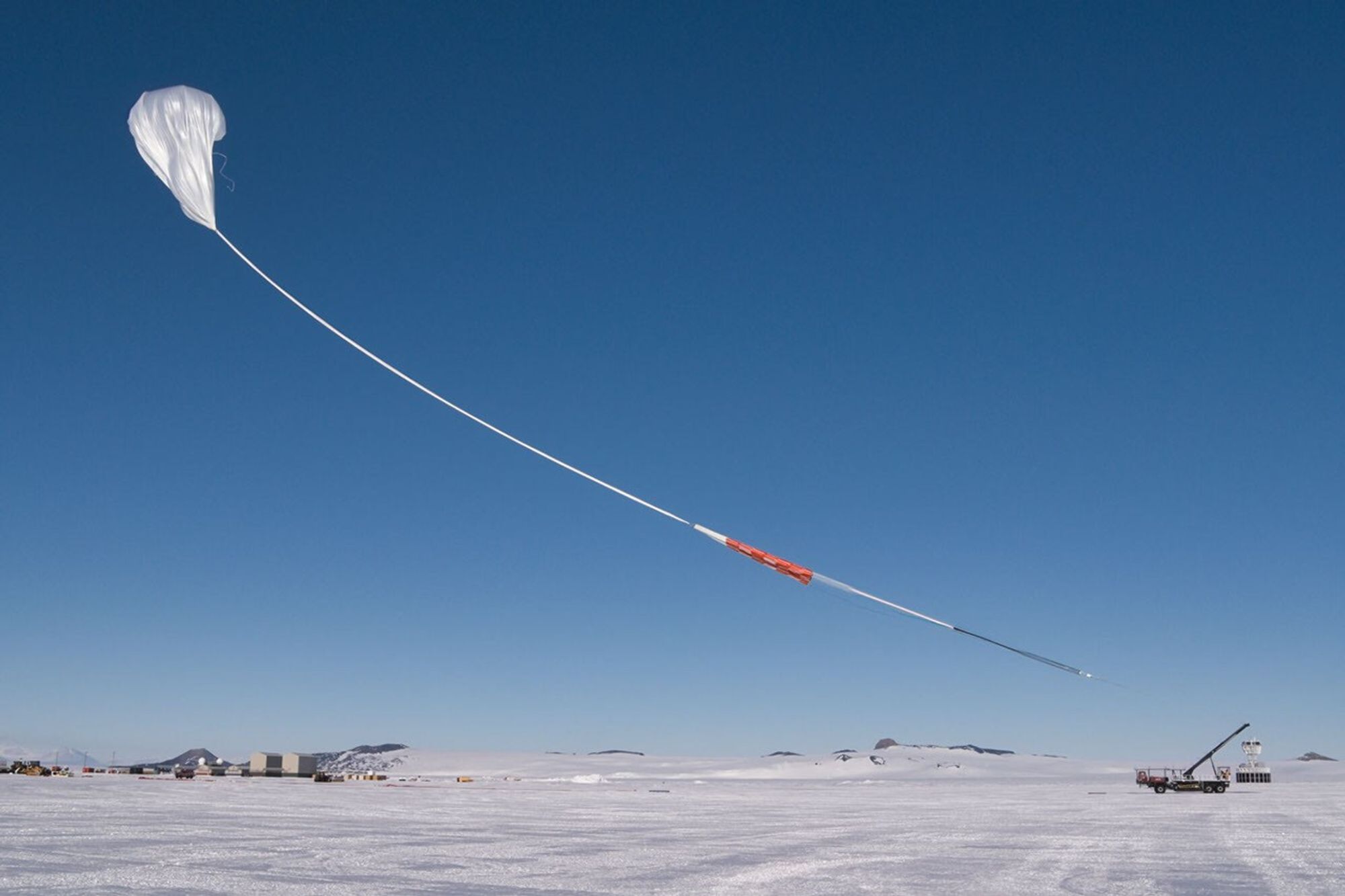
Perched atop a colossal balloon drifting 23 miles above the Antarctic ice sheet, a revolutionary instrument named PUEO has just completed a groundbreaking mission—one that could redefine our understanding of the most extreme phenomena in the cosmos. Launched on December 20, 2025, from NASA’s Long Duration Balloon Facility near McMurdo Station, PUEO soared for 23 days in the thin, frigid air of the stratosphere, silently scanning the vast expanse of ice below for whispers from the universe’s most elusive particles: ultra-high-energy neutrinos.
This isn’t science fiction. It’s the next frontier in astrophysics. PUEO—short for Payload for Ultrahigh Energy Observations—represents a leap forward in humanity’s quest to detect particles so energetic they defy conventional detection methods. By turning the entire Antarctic ice sheet into a cosmic particle detector, PUEO is probing energies far beyond what Earth’s most powerful particle accelerators can produce—energies that may originate from black holes, neutron star mergers, or even unknown physics lurking at the edge of spacetime.
The Antarctic Advantage: Nature’s Perfect Laboratory
Antarctica isn’t just the coldest, driest, and most remote continent on Earth—it’s also one of the best places in the world to study the universe’s most extreme events. The continent’s thick, transparent ice acts as a natural medium for detecting high-energy particles, while its high altitude and stable atmospheric conditions make it ideal for balloon-borne observatories.
PUEO’s flight path took it in a slow, circular trajectory around the South Pole, carried by stratospheric winds at an altitude of 120,000 feet—nearly four times higher than commercial airliners fly. From this vantage point, the instrument had an unobstructed view of millions of cubic kilometers of ice below. When ultra-high-energy neutrinos—particles with energies exceeding a billion times those produced in the Large Hadron Collider—slam into the ice, they create cascades of charged particles that emit faint radio waves. These signals, known as Askaryan radiation, are what PUEO was designed to detect.
The choice of Antarctica is no accident. The continent’s ice is exceptionally pure, with minimal impurities or air bubbles that could scatter or absorb radio signals. Moreover, the extreme cold reduces thermal noise, allowing instruments like PUEO to detect much fainter signals than would be possible elsewhere. It’s like having a giant, naturally cooled radio telescope buried in ice.
Building on a Legacy: From ANITA to PUEO
PUEO didn’t emerge from a vacuum. It’s the spiritual successor to the Antarctic Impulsive Transient Antenna (ANITA), a series of NASA-sponsored balloon missions that flew between 2006 and 2016. ANITA made headlines not only for its ambitious science goals but also for its controversial detection of a few anomalous signals that some speculated could be evidence of new physics—though most were later attributed to background noise or instrumental effects.
Like ANITA, PUEO uses an array of radio-frequency antennas suspended beneath a high-altitude balloon. But where ANITA was a proof-of-concept mission, PUEO is a precision instrument built for discovery. It carries forward the core principles of its predecessor—monitoring the ice for radio bursts from neutrino interactions—but with dramatic improvements in sensitivity, data processing, and detection capability.
One of the biggest challenges in these missions is the sheer volume of data. The Antarctic ice sheet is enormous, and the balloon drifts over it for weeks, generating terabytes of raw radio data. PUEO’s onboard system must distinguish between real astrophysical signals and false positives caused by cosmic rays, human-made interference, or natural radio emissions from the atmosphere.

The instrument monitored a volume of ice equivalent to 10 trillion cubic meters—enough to fill Lake Michigan 2.5 times.
PUEO’s data drives were recovered intact and are now being analyzed—a process expected to take up to a year.
The mission cost less than $15 million, a fraction of the price of a satellite observatory.
PUEO is the first of NASA’s Astrophysics Pioneers missions to launch, a program designed to support innovative, low-cost space science.
The Game-Changer: Interferometric Phased Array Triggering
At the heart of PUEO’s technological leap is a revolutionary detection system known as the interferometric phased array trigger. This isn’t just an upgrade—it’s a paradigm shift in how scientists detect rare cosmic events.
Traditional neutrino detectors rely on simple threshold triggers: if a signal exceeds a certain strength, it’s recorded. But this approach misses faint signals buried in background noise. PUEO’s new system, however, combines signals from multiple antennas in real time, effectively creating a “smart” detector that can sense much weaker events.
Imagine trying to hear a whisper in a crowded room. A normal microphone might only pick up the loudest voices. But PUEO’s trigger is like a team of listeners who combine their ears, focusing on a specific direction and filtering out the noise. By coherently summing signals from multiple antennas, the system can detect radio pulses that are ten times fainter than what ANITA could see.
This breakthrough allows PUEO to probe deeper into the universe, searching for neutrinos so energetic they may have traveled billions of light-years across space. These particles could carry clues about the origins of cosmic rays—mysterious high-energy particles that bombard Earth from deep space—or reveal new physics beyond the Standard Model.
Squeezing More Power into Less Space
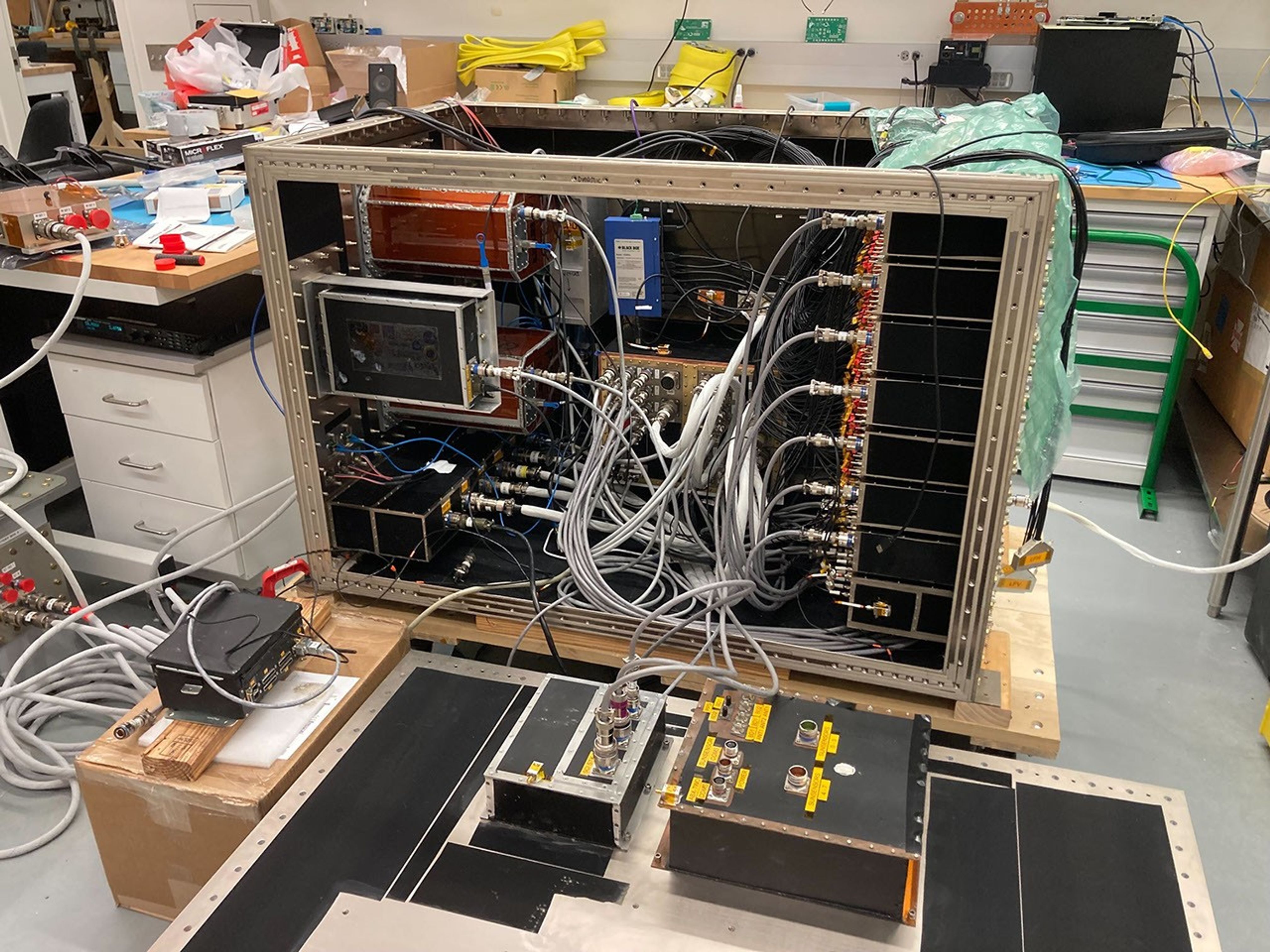
Another major engineering achievement of PUEO was fitting a more sensitive instrument into the same balloon platform used by ANITA. Despite the physical constraints—balloons have strict weight and volume limits—the PUEO team managed to double the antenna collecting area for frequencies above 300 MHz.
How did they do it? By rethinking the antenna design. The team increased the low-frequency cutoff of the antennas, allowing them to be smaller while still capturing the high-frequency radio signals produced by neutrino interactions. This clever optimization meant more antennas could be packed into the same space, increasing sensitivity without exceeding launch limits.
It’s akin to upgrading from a single-lens camera to a multi-lens smartphone camera—more sensors, better resolution, all in a compact form. The result is an instrument that’s not only more powerful but also more efficient.
Moreover, the data acquisition system was rebuilt from the ground up to handle the increased data flow. With more channels and faster processing, PUEO can analyze signals in real time, deciding instantly whether to save the data or discard it. This “smart filtering” reduces the amount of data that needs to be stored and later analyzed—a critical advantage when every gram of payload weight matters.
The human body can’t survive at 120,000 feet without a pressurized suit—conditions are similar to those on Mars. Yet PUEO’s electronics operate flawlessly in this extreme environment, thanks to rigorous thermal and radiation hardening.
What Are We Looking For? The Hunt for Cosmic Messengers
So why go to all this trouble to detect neutrinos? Because these ghostly particles are among the most enigmatic in the universe. Unlike light or charged particles, neutrinos interact so weakly with matter that they can travel across the cosmos unimpeded, carrying information from the most violent and distant events.
Ultra-high-energy neutrinos—those with energies above 10^18 electron volts—are especially rare. They may be produced in the jets of active galactic nuclei, the mergers of neutron stars, or even in the decay of hypothetical dark matter particles. Detecting them could help answer fundamental questions: What accelerates particles to such extreme energies? Are there new forces or particles at play?
PUEO is particularly sensitive to neutrinos that skim the Earth’s atmosphere or pass through the ice at a shallow angle. When such a neutrino interacts with an atom in the ice, it creates a shower of secondary particles that emit a brief, powerful radio pulse. PUEO listens for these pulses, triangulating their origin and measuring their energy.
If a signal is detected, it could be the first direct evidence of a source of ultra-high-energy cosmic rays—a mystery that has puzzled scientists for over a century.
The first high-energy neutrino was detected in 1987, originating from a supernova in the Large Magellanic Cloud. Since then, only a handful of ultra-high-energy neutrinos have been confirmed—most by the IceCube detector in Antarctica.
The Road Ahead: What Comes After PUEO?
With the data now in hand and analysis underway, the PUEO team faces a year-long journey of discovery. Each terabyte of data must be scrutinized for the faintest hints of a signal. Machine learning algorithms will help sift through the noise, searching for patterns that match theoretical models of neutrino interactions.
If PUEO detects even a single confirmed ultra-high-energy neutrino, it will be a landmark achievement—opening a new window onto the universe. But even if no signals are found, the mission will provide valuable constraints on theoretical models, helping scientists refine their understanding of particle acceleration and cosmic ray origins.
Looking ahead, the success of PUEO could pave the way for larger, more ambitious missions. A permanent neutrino observatory in Antarctica—perhaps a network of balloon-borne detectors or a next-generation ice-based array—could one day provide continuous monitoring of the high-energy sky.
And beyond neutrinos, the technology developed for PUEO has broader applications. The interferometric trigger, for example, could be adapted for gravitational wave detection, exoplanet imaging, or even deep-space communication.
Number of neutrinos passing through your body every second: 100 trillion—yet almost all pass through without interaction.
Distance neutrinos can travel without interacting: over 100 million light-years.
A New Era of Discovery
PUEO represents more than just a scientific instrument—it’s a symbol of human ingenuity and curiosity. By turning a frozen continent into a cosmic observatory and launching a balloon into the stratosphere, scientists are reaching beyond the limits of traditional astronomy.
In an era of billion-dollar space telescopes and massive particle colliders, PUEO proves that innovation doesn’t always require scale. Sometimes, the most profound discoveries come from clever engineering, bold ideas, and the willingness to look where no one has looked before.
As the data from PUEO’s 23-day journey is slowly unraveled, one thing is certain: we are on the brink of a new era in astrophysics. The universe’s most extreme secrets may finally be within our grasp—floating silently above the ice, waiting to be heard.
This article was curated from New Instrument Used Antarctic Ice Sheet to Probe Extreme Universe via NASA Breaking News