Table of Contents
The Moon’s New Messengers: Artemis II Crew Set to Share Historic Journey in Postflight Briefing
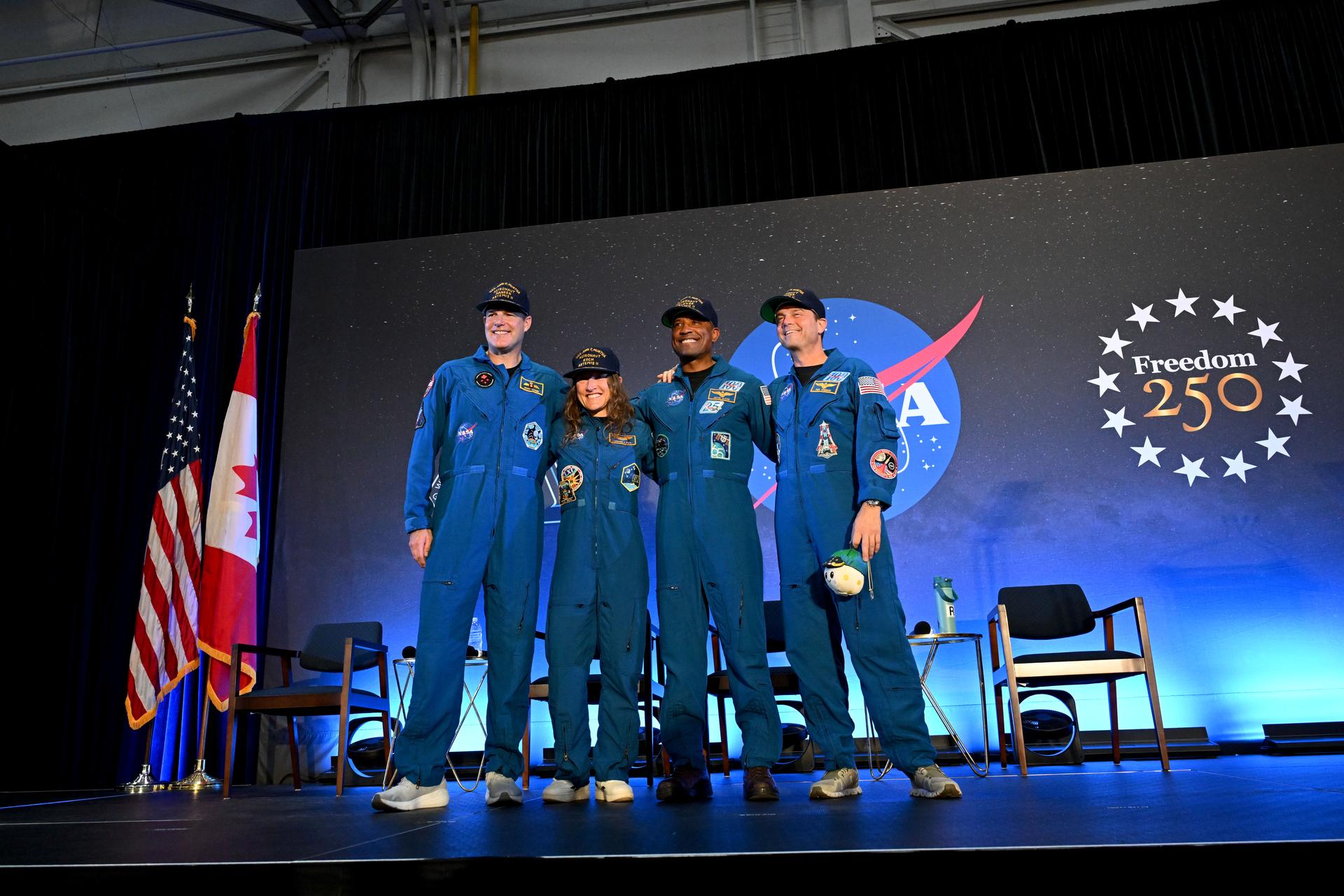
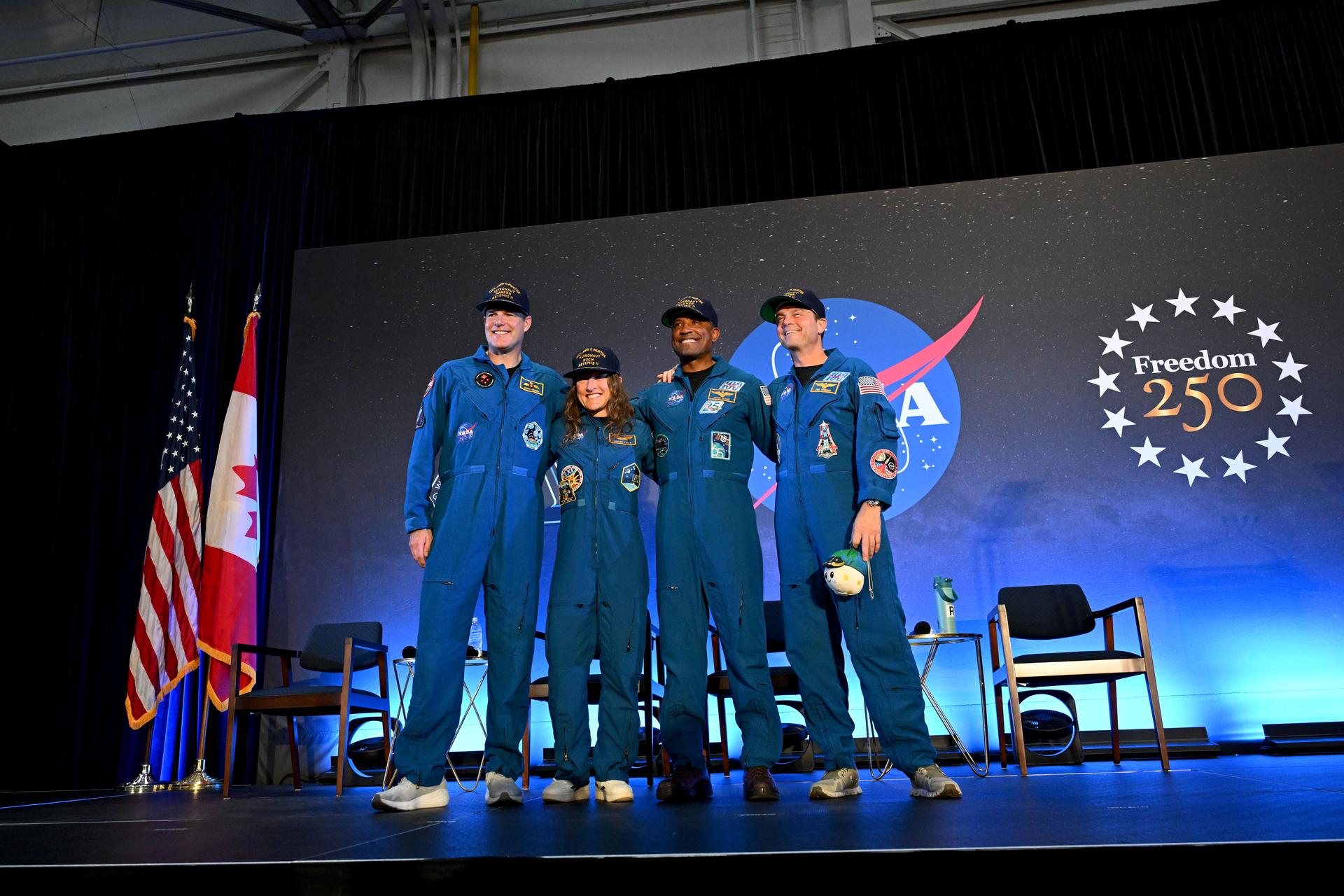
After nearly a decade of anticipation, NASA’s Artemis II mission has not only returned humanity to deep space—it has redefined what’s possible. On April 10, 2026, the four astronauts aboard the Orion spacecraft splashed down off the coast of San Diego, concluding a groundbreaking 10-day journey around the Moon. Now, just days after their triumphant return, NASA astronauts Reid Wiseman, Victor Glover, and Christina Koch, alongside Canadian Space Agency (CSA) astronaut Jeremy Hansen, are preparing to step into the global spotlight. On Thursday, April 16, at 2:30 p.m. EDT, the crew will host a postflight news conference at NASA’s Johnson Space Center in Houston, offering the world their first in-depth account of what it truly means to fly beyond low Earth orbit.
This isn’t just another space mission debrief—it’s a pivotal moment in the next chapter of human space exploration. Artemis II marked the first crewed flight of the Orion spacecraft and the powerful Space Launch System (SLS) rocket, launching on April 1 from Kennedy Space Center in Florida. The mission’s success has set the stage for Artemis III, which aims to land the first woman and the next man on the lunar surface by 2027. But before that historic step, the world wants to hear from the pioneers who just circled the Moon.
A Journey Beyond the Horizon
The Artemis II mission was more than a technical test—it was a human odyssey. For the first time since the Apollo era, humans traveled beyond low Earth orbit, venturing into deep space with a destination that hadn’t seen human eyes in over 50 years: the Moon. The crew spent nearly ten days in space, covering more than 430,000 miles (692,000 kilometers), reaching a maximum distance of 270,000 miles (435,000 kilometers) from Earth during their lunar flyby. This made them the farthest-traveling humans in history, surpassing even the Apollo 13 crew’s record.
During their journey, the astronauts conducted critical tests of Orion’s life support systems, navigation tools, and communication networks. They manually piloted the spacecraft, executed precise maneuvers to adjust their trajectory, and captured unprecedented images of the Moon’s far side—a region never directly observed by humans before. These images, now being analyzed by scientists, could provide new insights into the Moon’s geology and the early history of the solar system.
The mission’s success is a testament to decades of engineering innovation. The SLS rocket, standing 322 feet tall and generating 8.8 million pounds of thrust at liftoff, is the most powerful rocket ever built. It outperformed even the Saturn V used during Apollo, delivering Orion into a precise trajectory toward the Moon. The spacecraft itself, equipped with advanced heat shields capable of withstanding re-entry temperatures of up to 5,000°F (2,760°C), demonstrated its readiness for future deep-space missions.

The Human Element: Life in Deep Space
While the technology was impressive, it was the human crew that made Artemis II truly historic. Reid Wiseman, a seasoned NASA astronaut and former commander of the International Space Station, served as mission commander. Victor Glover, the pilot, brought experience from his previous long-duration spaceflight and became the first person of color to travel beyond low Earth orbit. Christina Koch, known for her record-setting 328-day stay on the ISS, became the first woman to fly on a deep-space mission. And Jeremy Hansen, representing the Canadian Space Agency, became the first non-American to journey around the Moon.
Living and working in the confined quarters of Orion for ten days presented unique challenges. The crew had to adapt to microgravity, manage limited resources, and maintain physical and mental health far from Earth. They conducted regular exercise routines to combat muscle atrophy and bone loss, used advanced medical monitoring systems, and participated in psychological support sessions via secure communication links.
Despite the isolation, the crew reported moments of awe and wonder. “Seeing Earth as a pale blue dot from 270,000 miles away changes you,” said Koch during a brief post-landing statement. “It’s a reminder of how fragile and interconnected our planet is.” These reflections echo the sentiments of Apollo astronauts, who often described the “overview effect”—a cognitive shift in awareness that comes from viewing Earth from space.

Preparing for the Press: What to Expect at the News Conference
The upcoming news conference on April 16 will be a milestone in public science communication. Held at NASA’s Johnson Space Center, the event will allow the crew to share their experiences with the world, answer questions from journalists, and reflect on the mission’s broader implications. Media can attend in person—limited to those previously credentialed—or participate remotely by phone.
NASA has emphasized the importance of this briefing not just for journalists, but for the global public. “This is a moment for humanity,” said NASA Administrator Bill Nelson in a recent statement. “The Artemis II crew didn’t just represent the United States and Canada—they represented all of us, reaching for the stars together.”
Experts expect the crew to discuss several key themes: the technical performance of the spacecraft, the psychological and physical challenges of deep-space travel, the scientific value of their observations, and the significance of international collaboration. Hansen, in particular, is likely to highlight Canada’s contributions, including the advanced robotic arm system that will be used on future lunar missions.

The briefing will also serve as a bridge to future missions. With Artemis III on the horizon, NASA is eager to gather public feedback and build momentum for sustained lunar exploration. The agency hopes that the crew’s stories will inspire a new generation of scientists, engineers, and explorers.
A Legacy of Firsts
Artemis II is more than a mission—it’s a symbol of progress. It marks the first time a woman and a person of color have traveled beyond low Earth orbit. It’s the first crewed mission to the Moon since 1972. And it’s the first time a non-American has flown on a NASA-led deep-space mission. These milestones reflect a broader shift in space exploration: from national competition to global collaboration.
The inclusion of Jeremy Hansen also underscores the growing role of international partners. The Artemis Accords, a set of principles for peaceful space exploration signed by over 30 nations, have helped foster cooperation. Canada, Japan, the European Space Agency, and others are contributing key technologies and expertise, ensuring that the next era of space exploration is truly global.

The Road Ahead: From Orbit to Surface
With Artemis II complete, NASA’s focus now shifts to Artemis III, which aims to land astronauts on the lunar South Pole by 2027. This region is of particular interest due to the presence of water ice in permanently shadowed craters—a potential resource for drinking water, oxygen, and rocket fuel. The success of Artemis II’s systems, including life support and navigation, gives engineers confidence that a lunar landing is within reach.
But challenges remain. The development of the Human Landing System (HLS), a reusable lunar lander being built by SpaceX, is still underway. NASA is also working on the Lunar Gateway, a small space station that will orbit the Moon and serve as a staging point for surface missions. These components are essential for building a sustainable presence on and around the Moon.
The Lunar Gateway will be about one-sixth the size of the International Space Station.
NASA plans to establish a permanent lunar base by the 2030s.
Water ice at the South Pole could support up to 1,000 people with proper infrastructure.
Artemis missions will test technologies needed for future Mars exploration.
The Artemis program is not just about returning to the Moon—it’s about preparing for Mars. The Moon serves as a proving ground for long-duration spaceflight, resource utilization, and international cooperation. Every lesson learned from Artemis II brings us one step closer to sending humans to the Red Planet.
A New Era of Exploration
As the Artemis II crew prepares to address the world, their journey stands as a beacon of what humanity can achieve when we work together. They didn’t just fly around the Moon—they carried the hopes of millions, the dreams of scientists, and the legacy of explorers who came before them.
In the coming weeks, NASA will release thousands of images, hours of video, and reams of data from the mission. Scientists will study the radiation exposure experienced by the crew, the performance of onboard systems, and the psychological effects of deep-space travel. These findings will shape the future of human spaceflight for decades.
But perhaps the most powerful legacy of Artemis II is inspiration. In an age of uncertainty, the sight of four humans circling the Moon reminds us that exploration is not just a scientific endeavor—it’s a human one. It’s about curiosity, courage, and the unrelenting desire to reach beyond our limits.
When the crew steps up to the microphone on April 16, they won’t just be answering questions. They’ll be sharing a story—one that belongs to all of us. And in doing so, they’ll light the way for the next giant leap.
This article was curated from NASA to Host Artemis II Crew Postflight News Conference via NASA Breaking News