Table of Contents
- The Heart of the Rocket: Anatomy of the SLS Core Stage
- A Journey Across Water: The Pegasus Barge and the Path to Kennedy
- Collaboration at Scale: NASA, Boeing, and L3Harris Technologies
- Artemis III: The Mission That Will Return Humans to the Moon
- The Road Ahead: Challenges and the Future of Deep Space Exploration
NASA’s Artemis III Rocket Stage Begins Epic Journey from New Orleans to the Moon
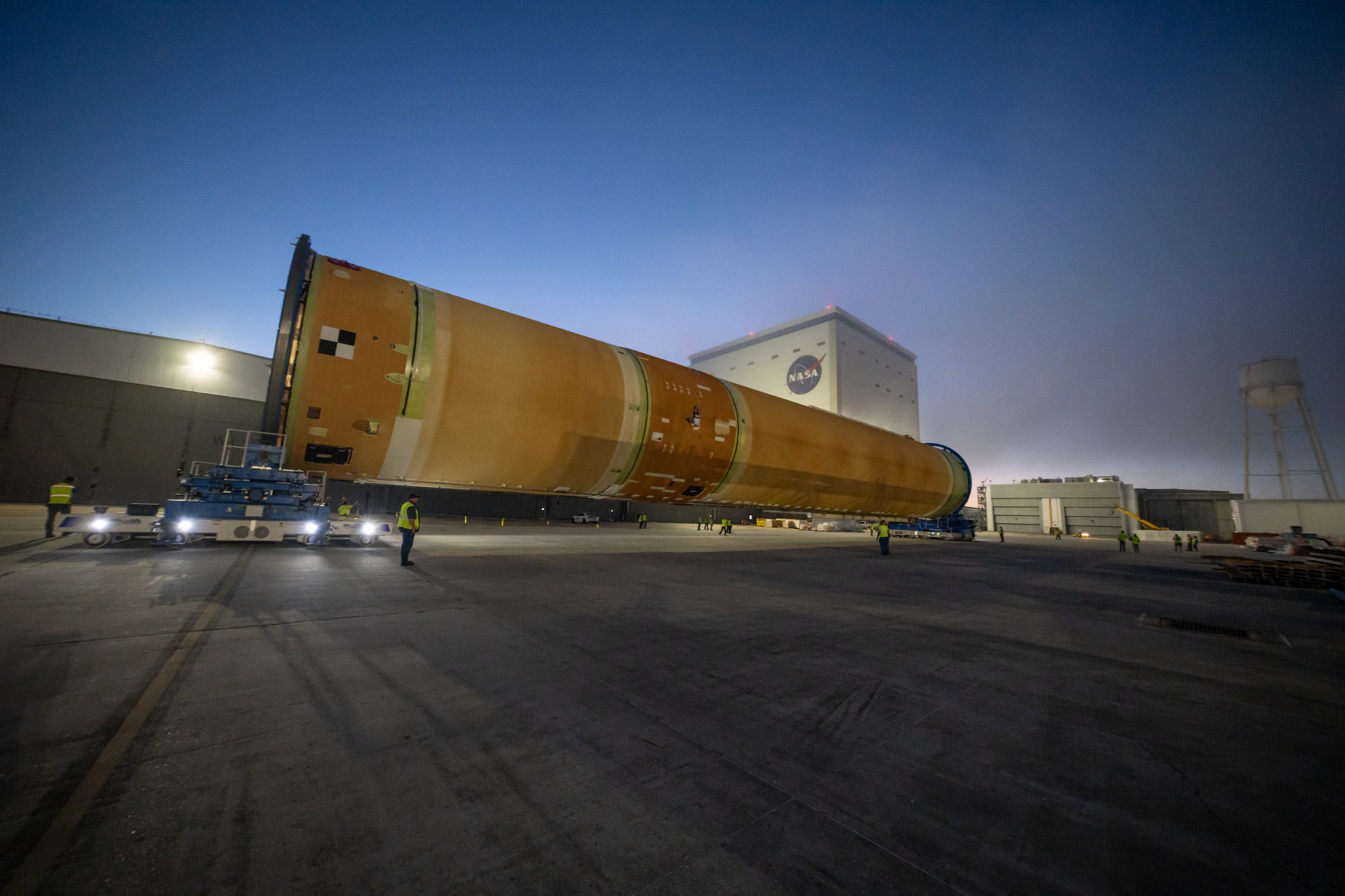
In a historic moment that marks a pivotal step toward returning humans to the lunar surface, NASA is set to roll out the largest section of the Space Launch System (SLS) rocket core stage from its Michoud Assembly Facility in New Orleans on April 20. This monumental event isn’t just a logistical milestone—it’s a symbolic launchpad for the next era of deep space exploration. The top four-fifths of the SLS core stage, a towering marvel of engineering containing the liquid hydrogen and oxygen tanks, intertank, and forward skirt, will be carefully loaded onto the agency’s Pegasus barge for a slow, deliberate voyage to Kennedy Space Center in Florida. This journey represents more than just transportation; it’s the physical manifestation of a decades-long dream to send astronauts back to the Moon—and eventually, to Mars.
The Artemis III mission, currently slated for launch in 2027, aims to land the first woman and the next man on the lunar surface, specifically targeting the Moon’s scientifically rich South Pole. But before that historic touchdown can occur, the rocket that will carry them must be assembled, tested, and launched. The core stage, often referred to as the “backbone” of the SLS, is the largest and most powerful rocket stage NASA has ever built. Standing over 200 feet tall and weighing nearly 2 million pounds when fueled, it’s a testament to modern aerospace innovation and international collaboration.
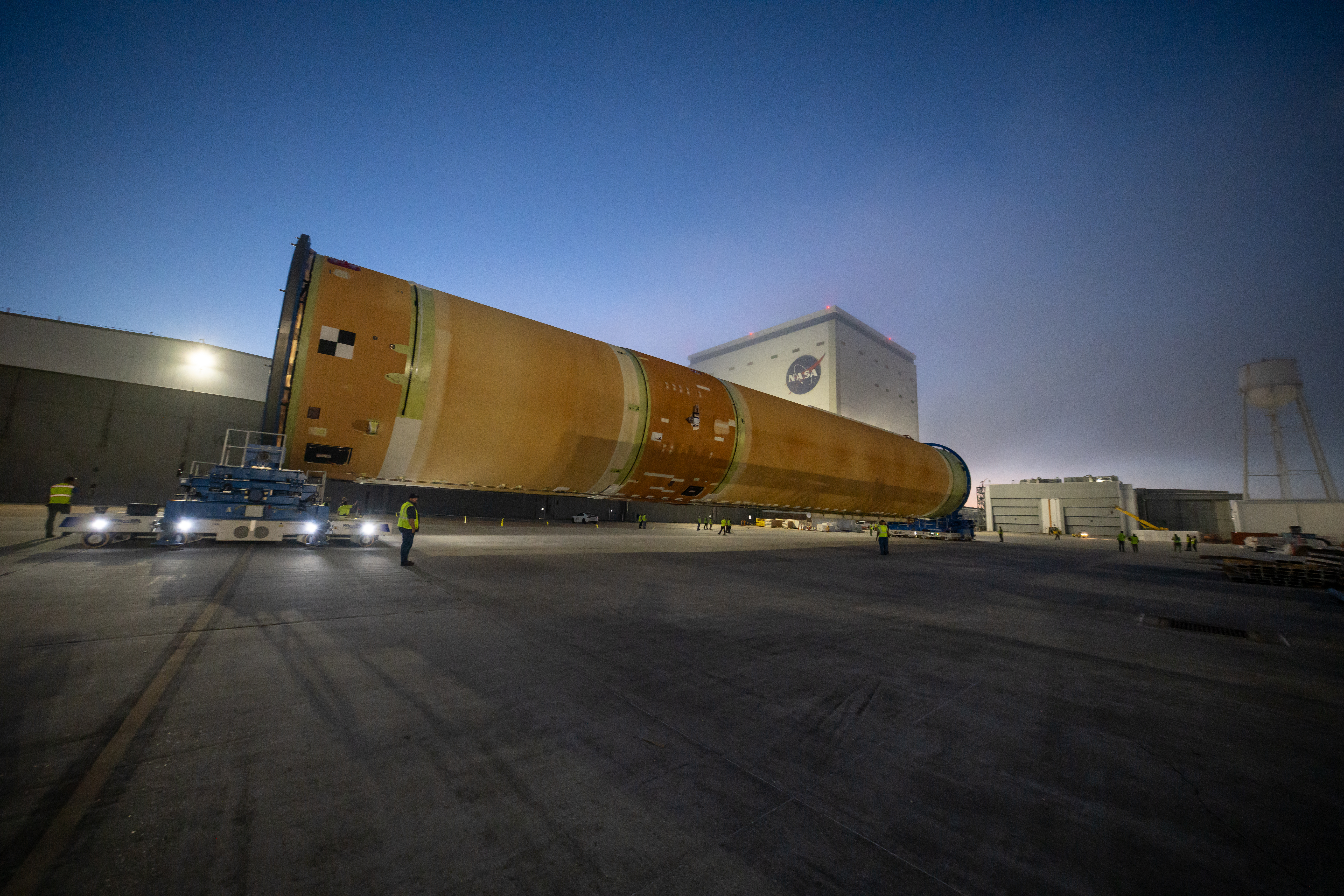
This rollout event is more than a photo op—it’s a carefully orchestrated moment in a complex, multi-year process. Media representatives will have the rare opportunity to witness the stage being moved from the cavernous Michoud facility, hear from NASA and industry leaders, and speak with engineers and scientists who have spent years perfecting every weld, seal, and circuit. The event underscores the scale of ambition behind Artemis, a program that aims not just to revisit the Moon, but to establish a sustainable human presence there by the end of the decade.
The Heart of the Rocket: Anatomy of the SLS Core Stage
At the center of NASA’s Artemis ambitions lies the SLS core stage, a technological titan that powers the rocket through the first eight minutes of flight. This section, which makes up the top four-fifths of the stage, houses two of the most critical components: the liquid hydrogen (LH2) tank and the liquid oxygen (LOX) tank. These cryogenic propellants, stored at temperatures as low as -423°F and -297°F respectively, are mixed and ignited in the four RS-25 engines to produce a staggering 2 million pounds of thrust—enough to lift the entire 5.75-million-pound rocket off the launchpad.
The intertank, a structural component that connects the LOX tank to the engine section, plays a crucial role in distributing loads and housing avionics. Meanwhile, the forward skirt, located at the very top of the core stage, contains critical flight computers, navigation systems, and communication equipment. Together, these five major structures—manufactured entirely at Michoud—form a seamless, high-performance engine of exploration.

What makes the core stage particularly remarkable is its reusability of legacy technology. The RS-25 engines, for instance, are refurbished versions of the Space Shuttle Main Engines, which flew on 135 missions over three decades. This blend of proven reliability and cutting-edge upgrades allows NASA to leverage decades of flight heritage while incorporating modern materials and manufacturing techniques. For example, the engines now feature 3D-printed components and improved thermal protection systems, increasing efficiency and reducing maintenance time.
It holds 733,000 gallons of liquid hydrogen and 226,000 gallons of liquid oxygen.
The RS-25 engines burn fuel at a rate of 1,500 gallons per second.
The core stage generates enough power to supply 17,000 homes for one hour during launch.
It takes over 100,000 individual parts to assemble a single core stage.
A Journey Across Water: The Pegasus Barge and the Path to Kennedy
Transporting a rocket stage the size of a skyscraper is no small feat. Once the core stage is complete at Michoud, it must travel over 1,000 miles via water to reach Kennedy Space Center in Florida. This journey begins with the loading of the stage onto the Pegasus barge, a vessel originally built in 1999 to carry space shuttle external tanks. After extensive modifications—including reinforced decks, updated navigation systems, and climate-controlled enclosures—Pegasus was reborn as the primary transporter for SLS components.
The voyage from New Orleans to Kennedy takes approximately two weeks, depending on weather and river conditions. The barge navigates the Gulf Intracoastal Waterway, passes through the Panama City Canal, and enters the Atlantic Ocean before docking at the Turn Basin near Kennedy’s Vehicle Assembly Building (VAB). This route avoids the logistical nightmares of overland transport, such as bridge clearances, tunnel restrictions, and road weight limits. It’s a slow but steady journey, with NASA engineers monitoring every mile for vibrations, temperature fluctuations, and structural integrity.

Once at Kennedy, the core stage will undergo final outfitting—installing electrical systems, thermal protection, and instrumentation—before being moved to the VAB for vertical integration. There, it will be stacked with the upper stage, solid rocket boosters, and the Orion spacecraft, forming the complete SLS rocket. This vertical assembly process, reminiscent of the Apollo era, is a carefully choreographed ballet of cranes, technicians, and precision engineering.
Collaboration at Scale: NASA, Boeing, and L3Harris Technologies
The construction and transport of the SLS core stage is a triumph of public-private partnership. NASA leads the program, but the actual manufacturing and integration are carried out by a coalition of industry giants. Boeing, the prime contractor for the core stage, oversees design, assembly, and testing at Michoud. With over 1,800 employees working on the project, Boeing has transformed the facility into a state-of-the-art production hub, using advanced robotics, laser-guided alignment systems, and digital twin technology to ensure precision.
L3Harris Technologies, meanwhile, is responsible for the RS-25 engines. These engines, though based on shuttle-era designs, have been upgraded with modern avionics, improved fuel efficiency, and enhanced durability. Each engine undergoes rigorous testing at NASA’s Stennis Space Center in Mississippi, where they are fired for up to 500 seconds—simulating the full duration of launch—to ensure they can withstand the extreme forces of spaceflight.

This collaboration extends beyond American borders. While the core stage is built in the U.S., international partners like the European Space Agency (ESA) contribute key components, such as the Orion service module. This global effort reflects the shared ambition of humanity to explore beyond Earth, echoing the spirit of the International Space Station but aiming even higher—toward the Moon and Mars.
Artemis III: The Mission That Will Return Humans to the Moon
Artemis III is more than a mission—it’s a promise. Scheduled for launch in 2027, it will carry four astronauts aboard the Orion spacecraft on a journey to lunar orbit, where two will transfer to the Human Landing System (HLS) for a descent to the Moon’s South Pole. This region, rich in water ice and permanently shadowed craters, holds the key to future lunar habitation and deep space exploration.
The SLS core stage is the linchpin of this mission. Its four RS-25 engines will ignite at Launch Complex 39B at Kennedy, propelling Orion out of Earth’s atmosphere and onto a trans-lunar injection trajectory. The stage will burn for eight minutes before separating, having delivered the spacecraft to the precise speed and altitude needed to reach the Moon. Without this immense thrust, the mission would be impossible.

Artemis III follows the successful Artemis II mission, which completed a lunar flyby in April 2025, marking the first time humans have traveled beyond low Earth orbit since Apollo 17 in 1972. That mission validated Orion’s life support systems, navigation, and communication capabilities, paving the way for the landing attempt. Artemis III will build on that success, incorporating lessons learned and new technologies, including advanced spacesuits and autonomous landing systems.
The Road Ahead: Challenges and the Future of Deep Space Exploration
Despite the excitement, the path to Artemis III is not without challenges. Delays in engine delivery, supply chain issues, and the complexity of integrating new systems have pushed timelines. The RS-25 engines, for example, are scheduled to ship from Stennis no later than July 2026—leaving a tight window for integration and testing. Additionally, the Human Landing System, being developed by SpaceX, must undergo rigorous testing to ensure it can safely land on the Moon and return.
Yet, these hurdles are not insurmountable. NASA’s iterative approach—testing, learning, and improving—has proven effective in past programs. The agency is also investing in next-generation technologies, such as the Exploration Upper Stage (EUS), which will increase the SLS’s payload capacity and enable more ambitious missions, including crewed flights to Mars.
The long-term vision is clear: Artemis is not just about planting flags and footprints. It’s about building a sustainable lunar economy, with habitats, rovers, and resource utilization. The Moon will serve as a proving ground for technologies needed for Mars, where the challenges are even greater—longer travel times, harsher environments, and greater isolation.
As the SLS core stage begins its journey from New Orleans to Florida, it carries with it the hopes of a new generation of explorers. This rollout is more than a logistical milestone—it’s a beacon of human ingenuity, collaboration, and the unrelenting drive to reach beyond our world. The Moon is waiting. And thanks to the tireless efforts of thousands of engineers, scientists, and dreamers, we’re finally on our way back.
This article was curated from NASA Invites Media to Rollout Event for Artemis III Moon Rocket Stage via NASA Breaking News