Table of Contents
- The End of an Era: The LHC’s Legacy and Limitations
- Enter the Future Circular Collider: A Precision Machine for a New Age
- Why Precision Matters: The Search for Cracks in the Standard Model
- Beyond the Higgs: Probing the Dark Universe
- A Global Collaboration for the Future of Science
- Challenges and Controversies: Is the FCC Worth the Cost?
- The Road Ahead: A Century of Discovery

The Future Circular Collider: How CERN Plans to Decode the Universe’s Deepest Secrets
In the grand quest to understand the fundamental nature of reality, human curiosity has always pushed the boundaries of what’s possible. From Galileo’s telescope to Einstein’s equations, each leap forward has been fueled by one essential ingredient: data. In particle physics, where the invisible architecture of the universe is written in the language of quantum fields and subatomic particles, that data comes from machines of staggering complexity and ambition. Now, as the Large Hadron Collider (LHC) at CERN approaches the twilight of its scientific journey, a new titan is rising—one that could define the course of physics for the rest of the 21st century. Meet the Future Circular Collider (FCC), the next-generation particle accelerator that promises to unlock mysteries ranging from dark matter to the origins of mass itself.
The decision to pursue the FCC isn’t just a scientific upgrade—it’s a strategic vision for the future of human knowledge. After two years of rigorous evaluation, the CERN Council has officially endorsed the FCC as the cornerstone of the updated European Strategy for Particle Physics. This isn’t merely about building a bigger collider; it’s about building a smarter one, designed not just to confirm existing theories but to venture into uncharted territory where the Standard Model of particle physics begins to fray at the edges.
The End of an Era: The LHC’s Legacy and Limitations
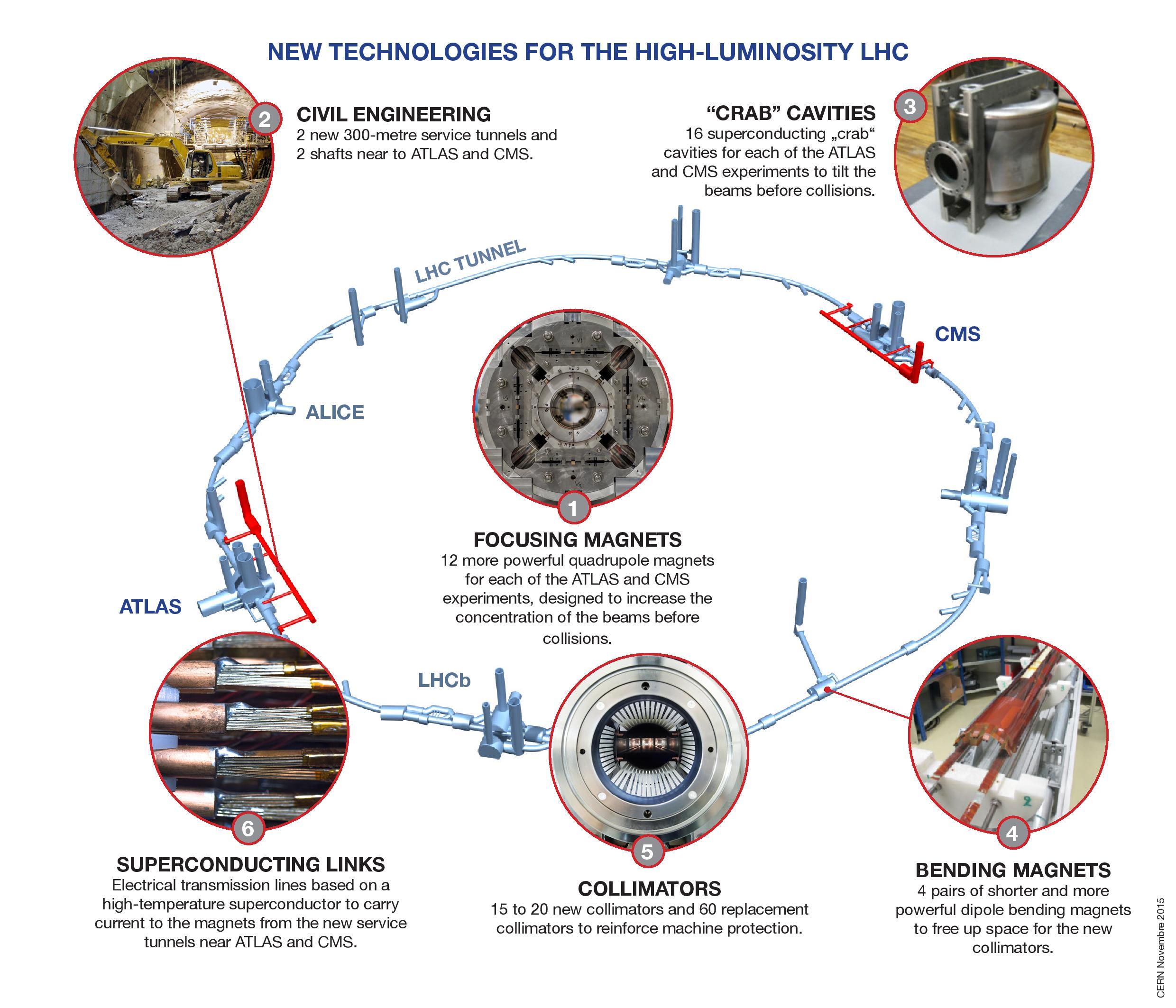
Since its first collisions in 2008, the Large Hadron Collider has been nothing short of revolutionary. Nestled beneath the Franco-Swiss border, this 27-kilometer ring of superconducting magnets and detectors has redefined our understanding of the subatomic world. Its crowning achievement—the 2012 discovery of the Higgs boson—completed the Standard Model, the theoretical framework that describes all known fundamental particles and forces (except gravity). The Higgs, often dubbed the “God particle,” was the final puzzle piece, confirming how particles acquire mass through interactions with the Higgs field.
But the LHC’s triumphs have also revealed its limits. While it operates at energies up to 13.6 TeV (tera-electronvolts), it hasn’t found evidence of supersymmetry, extra dimensions, or other phenomena predicted by theories beyond the Standard Model. This “nightmare scenario”—a Higgs without companions—has left physicists at a crossroads. The machine has pushed its design to the brink, and further upgrades can only go so far.
Moreover, the LHC is a hadron collider, meaning it smashes protons—composite particles made of quarks and gluons. These collisions are messy, producing a spray of debris that makes it difficult to isolate rare events. While powerful for discovery, this approach lacks the precision needed to probe subtle deviations from the Standard Model. That’s where the FCC comes in.
Enter the Future Circular Collider: A Precision Machine for a New Age
The FCC represents a paradigm shift in particle accelerator design. Unlike the LHC, which accelerates protons, the FCC will initially function as an electron-positron collider—a “Higgs factory” capable of producing millions of Higgs bosons with unprecedented clarity. Electrons and positrons are elementary particles, so their collisions are clean and predictable, allowing physicists to measure particle properties with extraordinary precision.
The FCC’s proposed ring spans 91 kilometers—more than three times the length of the LHC—buried in a tunnel deep beneath the Geneva basin. This vast circumference allows particles to reach energies up to 365 GeV (giga-electronvolts) in its first phase, optimized for Higgs studies. Later, the same tunnel could host a proton-proton collider capable of reaching energies up to 100 TeV, far surpassing the LHC’s capabilities.
This two-stage approach ensures longevity and adaptability. The electron-positron phase will act as a precision instrument, measuring the Higgs boson’s mass, spin, and coupling strengths with accuracy up to 10 times better than current technology. These measurements could reveal tiny deviations from Standard Model predictions—clues that might point to new physics, such as dark matter particles or hidden dimensions.
Why Precision Matters: The Search for Cracks in the Standard Model
The Standard Model is one of the most successful theories in science, verified by countless experiments. But it’s also incomplete. It doesn’t explain why the universe is made of matter and not antimatter, what dark matter is, or how gravity fits into the quantum framework. These gaps suggest that the Standard Model is not the final word—it’s a shadow cast by a deeper, more fundamental theory.
The FCC’s precision measurements could expose these cracks. For example, the Higgs boson’s self-coupling—how it interacts with itself—is a key prediction of the Standard Model. If the FCC finds that this coupling differs even slightly from expectations, it could signal new particles or forces at play. Similarly, precise measurements of rare particle decays could reveal CP-violation beyond what’s currently known, potentially explaining the matter-antimatter asymmetry that allowed our universe to exist.
Its detectors will capture data at a rate of 1 petabyte per second—equivalent to streaming 200,000 HD movies simultaneously.
The project is estimated to cost €20 billion over 30 years, with construction beginning in the 2030s.
It will require breakthroughs in superconducting magnet technology, with fields up to 16 Tesla—nearly twice as strong as the LHC’s.
This level of scrutiny is akin to examining a masterpiece painting under a microscope, not to admire the brushstrokes, but to find the artist’s hidden signature. Every anomaly, no matter how small, could be a doorway to a new realm of physics.
Beyond the Higgs: Probing the Dark Universe
While the Higgs is central to the FCC’s mission, its reach extends far beyond. One of the most pressing mysteries in modern physics is dark matter—the invisible substance that makes up about 27% of the universe’s mass-energy content. We know it’s there because of its gravitational effects on galaxies and galaxy clusters, but we’ve never detected it directly.
The FCC could change that. If dark matter particles interact weakly with ordinary matter—as many theories suggest—they might be produced in high-energy collisions and leave subtle signatures in the detector. Even if they escape undetected, their presence could be inferred from missing energy and momentum, much like a ghost leaving footprints in the snow.
Similarly, dark energy—the mysterious force accelerating the expansion of the universe—remains entirely unexplained. While the FCC won’t directly study dark energy, its insights into the Higgs field and the nature of the vacuum could shed light on why empty space has energy at all. The Higgs field gives particles mass, but it also contributes to the vacuum energy density. Understanding this connection could be a step toward solving the dark energy puzzle.
A Global Collaboration for the Future of Science
The FCC isn’t just a European project—it’s a global endeavor. CERN, originally founded by 12 European nations in 1954, now includes 23 member states and collaborates with over 110 countries. The FCC will amplify this spirit of international cooperation, drawing scientists, engineers, and students from every continent.

This collaboration extends beyond academia. The technological innovations driven by the FCC—such as advanced superconductors, quantum sensors, and AI-driven data analysis—will have ripple effects across industries. Medical imaging, renewable energy, and cybersecurity could all benefit from spin-off technologies developed for the collider.
Moreover, the FCC will serve as a training ground for the next generation of physicists. Thousands of PhD students and postdocs will contribute to its design, construction, and operation, gaining skills that transcend particle physics. In an era where STEM education is more critical than ever, the FCC represents a long-term investment in human capital.
Challenges and Controversies: Is the FCC Worth the Cost?
Of course, such an ambitious project is not without controversy. Critics argue that the €20 billion price tag—roughly equivalent to the annual GDP of a small country—could be better spent on climate change mitigation, global health, or education. Others question whether the scientific payoff justifies the investment, especially given the LHC’s lack of discoveries beyond the Higgs.
But proponents counter that fundamental research has historically yielded unforeseen benefits. The World Wide Web was invented at CERN to share scientific data. MRI machines rely on superconducting magnet technology developed for particle accelerators. And GPS systems depend on corrections derived from Einstein’s theory of relativity—a theory tested and confirmed through precision experiments.

The FCC isn’t just about finding new particles; it’s about pushing the boundaries of human ingenuity. It’s a testament to our species’ unrelenting curiosity and our desire to understand our place in the cosmos.
The Road Ahead: A Century of Discovery
As the 21st century unfolds, the Future Circular Collider stands poised to become the new frontier of particle physics. It will not only deepen our understanding of the Higgs boson but also probe the darkest corners of the universe—where matter, energy, space, and time converge in ways we’ve yet to imagine.
With its unprecedented precision, global collaboration, and potential for transformative discoveries, the FCC isn’t just a machine. It’s a beacon of hope for science, a symbol of what humanity can achieve when we unite in the pursuit of knowledge. The questions it seeks to answer—What is dark matter? Why is there something rather than nothing?—are as old as philosophy itself. And now, for the first time, we may have the tools to answer them.
The 21st century will be defined not just by technological progress, but by our willingness to ask bold questions and build the instruments to answer them. With the FCC, CERN is leading the way—ensuring that the next chapter in the story of the universe will be written not in theory alone, but in the language of discovery.
This article was curated from CERN to lead particle physics throughout the 21st century via Big Think