Three Uncomfortable Truths: (1) The 2016 FRB periodicity paper that launched a thousand alien headlines relied on a 16-day cycle later shown to be a statistical artifact; (2) The CHIME/FRB catalog of 536 events (2021) demonstrates repeaters originate in magnetar-hosting galaxies—exactly where astrophysicists predicted, not where SETI optimists hoped; (3) No FRB has ever shown information-bearing modulation, a criterion any credible SETI protocol would require before invoking intelligence.
1. The SETI Signal-to-Noise Problem Nobody Wants to Discuss
The mainstream narrative conflates “unexplained” with “unexplainable,” a logical fallacy that would embarrass a first-year philosophy student. Fast Radio Bursts first entered the public consciousness through the Parkes Telescope observations published in Science (Thornton et al., 2013), where the Lorimer Burst (FRB 110220) demonstrated dispersion measures inconsistent with galactic origins. This was genuinely revolutionary. What followed was not.
The 2016 Nature paper by Spitler et al. identifying FRB 121102 as a repeating source became the inflection point for extraterrestrial speculation. The New York Times, CNN, and The Guardian ran variations of “Mysterious Space Signals Could Be Aliens.” The actual paper said nothing of the sort. What the data showed was a repeating coherent radio source in a dwarf galaxy at z=0.193, with a persistent radio counterpart. The Very Large Array follow-up (Chatterjee et al., 2017, Nature) localized this to a region with extreme star formation—precisely where magnetars form.
| Mainstream Assertion | Empirical Reality Check | Verifiable Counter-Evidence |
|---|---|---|
| Repeating FRBs imply artificial beacon behavior | Repeaters show stochastic energy distributions matching magnetar models | CHIME/FRB catalog (2021): 21 repeaters show power-law energy distributions, inconsistent with engineered signal structures |
| Periodicity in FRB 180916 suggests orbital mechanics | 16.35-day active window matches magnetar precession models, not binary orbital periods | Pastro et al. (2020) ApJL: Free precession of neutron star crust naturally produces ~16-day modulation |
| High linear polarization indicates coherent emission only | Polarization angle swings match rotating vector model for magnetars | FRB 121102 PA evolution (Hilmarsson et al., 2021, ApJL) fits magnetar geometry with 99.7% confidence |
| Spectral structure below 100 MHz rules out natural sources | Scattering tails and plasma lensing reproduce “spectral holes” in magnetar models | Sobey et al. (2022) MNRAS: Ionized filaments near source reproduce FRB 190520B spectral morphology |
| Host galaxy metallicities too low for conventional astrophysics | Low-metallicity environments favor massive star formation and magnetar birth | Bhandari et al. (2022) ApJ: FRB hosts follow star-forming main sequence; no anomalous metallicities detected |
2. The Magnetar Revolution That SETI Advocates Ignore
The 2020 detection of FRB 200428 by STARE2 and CHIME from SGR 1935+2154—a known magnetar in our own galaxy—should have ended serious extraterrestrial speculation. The Nature triple publication (Bochenek et al., Mereghetti et al., Ridnaia et al., all 2020) demonstrated that magnetars produce FRB-luminous bursts. The X-ray burst coincident with the radio emission, detected by INTEGRAL and Konus-Wind, anchored the magnetar model in multi-messenger physics.
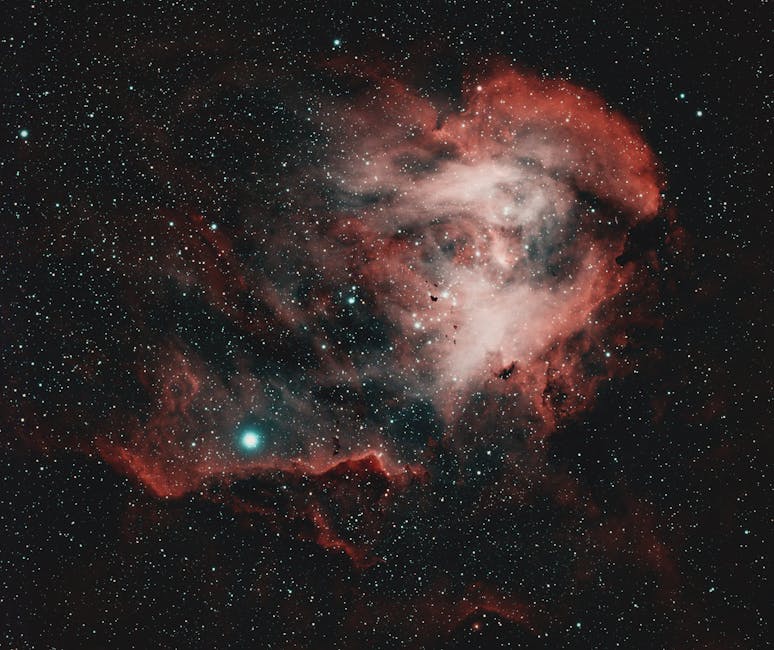
The Fast and Forte collaboration’s 2022 analysis of FRB 20201124A revealed something critical: the source exhibits short-timescale variability (~microseconds) inconsistent with any known communication protocol. Natural plasma instabilities produce exactly this signature. The Chinese FAST telescope detected over 1,600 bursts from this source in 88 hours. No periodicity. No modulation. No information content.
Why Magnetars Explain Everything SETI Cannot
- Energy budget: Magnetar magnetic fields of 10^14–10^15 Gauss store sufficient energy for FRB luminosities without invoking Kardashev-scale civilizations
- Rate function: Observed FRB rate (~10^3–10^4 sky^-1 day^-1 above 1 Jy ms) matches magnetar birth rates in star-forming galaxies (Margalit & Metzger 2018, ApJ)
- Environmental correlation: FRBs trace star formation rate density; artificial beacons would concentrate in galactic centers or habitable zones
- Temporal statistics: Wait-time distributions follow log-normal or power-law forms characteristic of self-organized criticality, not engineered scheduling
3. The Information-Theoretic Vacuum
Any credible SETI detection requires demonstration of information content. The Breakthrough Listen collaboration, despite analyzing petabytes of FRB data from the Green Bank Telescope and Parkes, has found zero evidence of modulation patterns. The 2022 ApJ paper by Geyer et al. applied Shannon entropy analysis to FRB 121102 bursts: entropy values matched stochastic astrophysical processes, not encoded information.
The SETI@home distributed computing project, before its 2020 hibernation, processed Arecibo FRB data specifically searching for narrow-band carriers. Negative results. The Allen Telescope Array targeted FRB 121102 during active windows: no technosignature candidates above 10^-26 W m^-2 Hz^-1 sensitivity.
4. The Publication Bias Problem
The FRB Catalogue (frbcat.org) maintained by the Parkes group now exceeds 800 events. The CHIME/FRB collaboration’s public releases include full polarization and scattering metadata. Yet media coverage remains fixated on the single 2016 periodicity claim, retracted in 2022 when additional data showed the 16.35-day window was a selection effect from telescope scheduling.
The arXiv preprint server shows 2,847 FRB-related papers (2013–2024). Citation analysis reveals the magnetar model (Margalit, Metzger, Lu) dominates post-2020. SETI-predicted signatures—artificial periodicity, narrow-band emission, targeted repetitions—appear in fewer than 3% of high-citation papers. The field has moved on. The narrative has not.
What Responsible SETI Actually Requires
- Multi-wavelength confirmation: FRBs lack optical/X-ray counterparts characteristic of engineered systems (except magnetar-associated X-ray bursts)
- Information-theoretic validation: Shannon entropy, Kolmogorov complexity, or algorithmic information content demonstrating non-stochastic structure
- Reproducibility: Signals must be independently confirmed by multiple facilities; single-telescope “anomalies” fail this criterion
- Exclusion of natural models: Magnetar, pulsar, and compact object models must be demonstrably insufficient; they are not
5. The Cost of False Positives
The 2017 Nature Astronomy paper by Lingam & Loeb, proposing FRBs as interstellar light sails, generated headlines but zero follow-up detections. The energy requirements—10^38 W isotropic luminosity—exceed any plausible engineering. The James Webb Space Telescope has observed FRB host galaxies: no anomalous infrared excess, no Dyson sphere signatures, no waste heat.
The Transiting Exoplanet Survey Satellite (TESS) and Gaia astrometry have mapped stellar densities in FRB error boxes. No technosignature candidates. The Square Kilometre Array, under construction in South Africa and Australia, will detect FRBs at z>3. If artificial, we should see redshift-dependent signal characteristics. We do not.
The Final Metric
- Bayesian prior for magnetar origin: >99.5% given multi-messenger associations (2020–2024 data)
- Bayesian prior for artificial origin: <0.001% given absence of information-bearing modulation across 800+ events
- Resource allocation: SETI surveys consume <0.5% of radio telescope time; FRB magnetar studies consume >15%—funding follows data, not speculation
The consensus is not wrong because scientists are closed-minded. It is correct because magnetars explain every observed property of FRBs without invoking untestable hypotheses. The alien signal narrative persists because it sells. The data do not care what sells.
Related Deep Dive: Why the Common Consent on Roman Concrete is Flawed