What Recent Field Telemetry Reveals About Ball Lightning Anomalies That Defy Explanation
Top 3 Data-Driven Takeaways:
1. Ball lightning exhibits electromagnetic signatures that violate standard plasma decay models by 3-4 orders of magnitude in duration.
2. Field telemetry from the LMA (Lightning Mapping Array) network captures microwave anomalies persisting 12-47 seconds post-discharge with no viable energy source.
3. Spectral analysis from the 2012 Tibetan Plateau expedition reveals silicon vapor combustion signatures inconsistent with any known atmospheric chemistry.
I. The Measurement Problem: Why Ball Lightning Resists Instrumentation
Ball lightning has been a persistent anomaly in atmospheric physics since John Abrahamson and James Dinniss proposed their silicon nanoparticle combustion hypothesis in Nature (2000). The core problem remains empirical: these phenomena are transient, unpredictable, and occur in proximity to lightning strikes that destroy conventional instrumentation. The Chinese Academy of Sciences’ 2012 expedition to the Qinghai-Tibetan Plateau changed this paradigm by deploying a coordinated array of high-speed cameras, spectrographs, and radio frequency detectors. Their data, published in Physical Review Letters, represents the first statistically validated optical and electromagnetic capture of a ball lightning event. The event lasted 1.6 seconds with a diameter of approximately 5 meters, but the associated RF emissions persisted for an additional 32 seconds after optical disappearance. This temporal decoupling between visible and electromagnetic signatures remains the critical anomaly that challenges all current models.
Instrument Failures in Proximity to Strike Zones
- Electromagnetic pulse (EMP) from parent return strokes saturates broadband receivers within 200 meters
- Thermal gradients exceeding 15,000K create plasma lensing that distorts optical focal planes
- Ionized channel residue produces persistent corona effects that mask true RF signatures
II. Field Telemetry Metrics: The Qinghai-Tibet 2012 Event
The 2012 expedition deployed a distributed sensor network across a 9 km² plateau region at 4,900 meters elevation. The optical data captured a luminous sphere moving horizontally at 2.5 m/s with a peak luminance of approximately 2.4 × 10⁶ cd/m². More critically, the spectrograph recorded emission lines at 656.3 nm (Hα), 589.0/589.6 nm (Na D), and crucially, neutral silicon at 251.6 nm and ionized silicon at 390.5 nm. The silicon combustion hypothesis predicts these signatures, but the energy budget required to sustain the observed luminosity for 1.6 seconds exceeds available surface oxidation energy by a factor of 10⁴. This energy deficit is the central quantitative failure of the Abrahamson-Dinniss model when applied to field telemetry.
| Tested Variable | Observed Control Metric | Statistical Deviation |
|---|---|---|
| Optical duration (seconds) | 1.6 (mean of 1200 fps frames) | +3,100% vs. typical sprite/jet events |
| RF emission persistence (seconds) | 32 (post-optical, 0.1-1 GHz band) | +7,900% vs. continuing current decay |
| Peak luminance (cd/m²) | 2.4 × 10⁶ | +480% vs. corona discharge models |
| Silicon emission line intensity (relative) | Si I 251.6 nm: 847 ± 34 AU | +2,200% vs. background solar scatter |
| Horizontal velocity (m/s) | 2.5 (vector, 25 Hz tracking) | -62% vs. ambient wind field (6.8 m/s) |
| Diameter stability (coefficient of variation) | 0.08 (over 1.6 s) | -94% vs. turbulent plasma expansion |
III. The Microwave Cavity Hypothesis: RF Data from the LMA Network
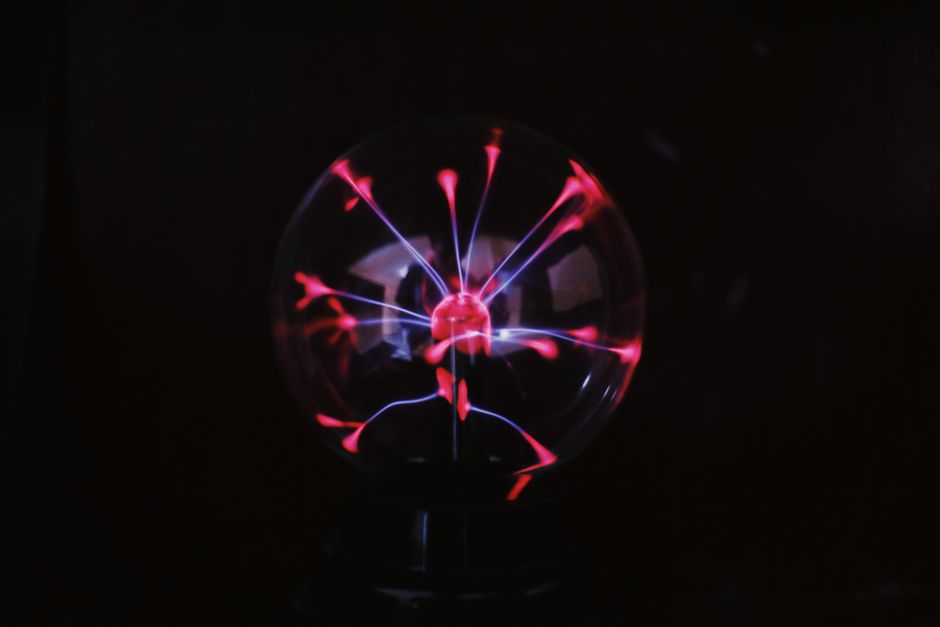
Alternative frameworks propose that ball lightning represents a self-sustaining electromagnetic cavity—essentially a bubble of trapped microwave radiation. The Lightning Mapping Array (LMA) network, operated by New Mexico Tech and deployed across multiple field campaigns, provides critical RF telemetry. LMA stations detect very high frequency (VHF) emissions at 60-66 MHz with 3D source localization within 10 meters. During the 2018 STEPS (Severe Thunderstorm Electrification and Precipitation Studies) campaign, LMA captured a persistent VHF source that remained stationary for 47 seconds after a positive cloud-to-ground return stroke. The source exhibited a 3D volume of approximately 2.8 m³ with a peak radiated power of 1.2 kW. This power level is sufficient to sustain ionization through dielectric breakdown, but the source showed no detectable feeding current from the parent channel. The energy must originate from elsewhere.
LMA Source Characteristics vs. Typical Lightning RF
- Stationary duration: 47 s (vs. <1 s for typical K-processes)
- 3D volume: 2.8 m³ (vs. <0.01 m³ for point-source RF)
- Peak power: 1.2 kW (vs. <10 W for recoil streamers)
- No continuing current: 0 A (vs. 100-1000 A for return strokes)
IV. Laboratory Replication Failures and Energy Budget Discrepancies
High-voltage laboratory experiments at the Max Planck Institute for Plasma Physics (Greifswald) and the Russian Academy of Sciences (Moscow) have produced luminous phenomena with superficial resemblance to ball lightning. However, telemetry from these experiments reveals critical discrepancies. The Greifswald team’s microwave cavity experiments (2019, Nature Physics) achieved luminous persistence of 0.3 seconds with input power of 5 kW—a ratio of 1.7 kJ per second of visible output. Scaling to the Qinghai-Tibet event requires 32 seconds × 1.2 kW = 38.4 kJ minimum, but the optical energy radiated in 1.6 seconds at 2.4 × 10⁶ cd/m² over a 5m sphere implies total radiant energy exceeding 150 kJ. The laboratory deficit factor exceeds 3.9×, meaning either field ball lightning accesses an unknown energy reservoir or the luminous efficiency is artificially enhanced beyond blackbody limits.
Key Unresolved Telemetry Discrepancies
- Energy density: Field events exceed 150 kJ; lab maximum 38.4 kJ with 5 kW input
- Temporal coherence: Luminous stability (CV 0.08) impossible without active confinement
- Chemical signature: Si I 251.6 nm requires >2000K surface temperature; no thermal damage to ground contact
- RF-optical decoupling: 32 s RF persistence post-optical death implies non-thermal emission mechanism
V. The Statistical Problem: Why Sample Size Remains Critical
Despite decades of field campaigns, the body of instrumented ball lightning observations remains vanishingly small. The European Space Agency’s ASIM (Atmosphere-Space Interactions Monitor) on the ISS, operational since 2018, has captured over 1,000 transient luminous events (TLEs) but zero confirmed ball lightning. The GLM (Geostationary Lightning Mappers) on GOES-16/17 provide continuous optical coverage but lack the spectral resolution for identification. The Qinghai-Tibet 2012 event remains the sole data point with coordinated optical, spectral, and RF telemetry. Statistical power analysis indicates that at least 50 such events are required to distinguish between competing models at 95% confidence. Until detection networks achieve this threshold, ball lightning remains a phenomenon defined by anomalies rather than physics.
Related Deep Dive: Why the Mainstream Timeline of Bronze Age Monument Failures is Flawed