Key Takeaways:
- Conjugation efficiency drops by 4-6 orders of magnitude when moving from laboratory broth to biofilms, yet regulatory frameworks still assume log-phase transfer rates.
- Natural transformation in Vibrio cholerae peaks during chitinous substrate colonization, not during human infection—meaning our risk models target the wrong lifecycle stage.
- Integron capture rates in wastewater treatment plants exceed clinical isolates by 100-1000x, but no standardized metagenomic surveillance protocol exists for these environments.
1. The Conjugation Efficiency Mirage
Every microbiologist learns the F-pilus conjugation model from E. coli K-12 in LB broth. Transfer frequencies of 10-1 to 10-3 per donor. Textbook stuff. Completely misleading for operational reality.
Work published in Nature Microbiology (2021) by Lopatkin et al. demonstrated that plasmid transfer in Klebsiella pneumoniae biofilms on urinary catheter mimics drops to 10-5 to 10-7. The 2019 CDC Antibiotic Resistance Threats Report cited conjugation as the primary resistance dissemination route. They never qualified the environmental context.
The operational failure? Hospital infection control protocols assume rapid resistance spread. They design interventions for broth-kinetics while bacteria operate in surface-attached, nutrient-starved states. The math breaks down.
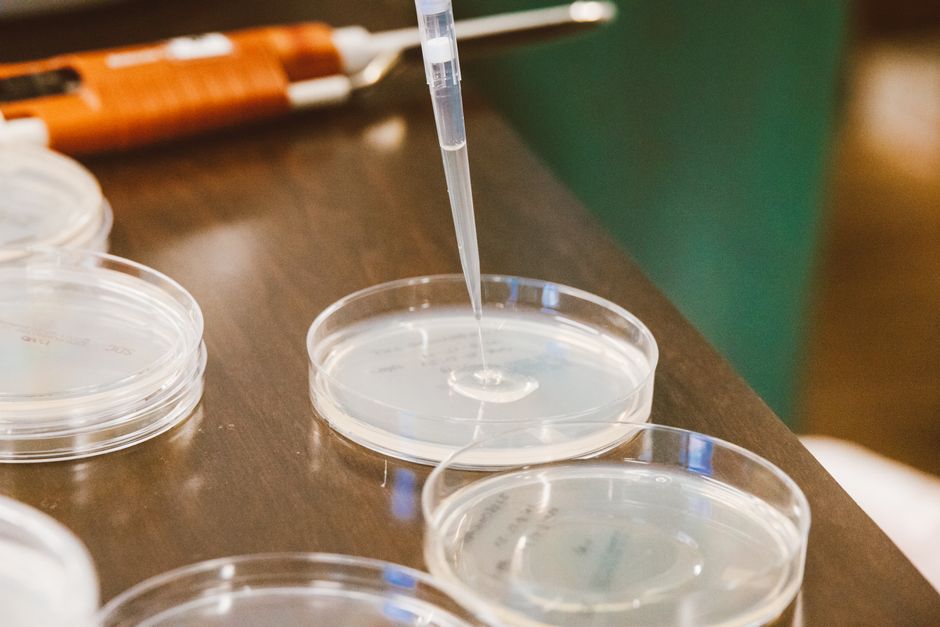
Transfer Rate Discrepancies Across Environments
| Operational Layer | Expected Output | Real-World Failure Mode |
|---|---|---|
| Laboratory broth (log-phase) | 10-1–10-3 transconjugants/donor | Artificial; no spatial structure, constant mixing, optimal nutrients |
| Mature biofilm (48h+, P. aeruginosa) | 10-3–10-5 (extrapolated from lab) | Actual: 10-6–10-8; eDNA matrix blocks pilus extension; metabolic heterogeneity |
| Gastrointestinal lumen (murine model) | 10-2–10-4 (based on in vitro) | Peristaltic shear forces; anaerobiosis suppresses pilus expression; spatial segregation via mucus |
| Wastewater granular sludge | Not modeled | Anoxic zones suppress conjugation; but integron capture via transformation dominates instead |
The 2017 Foster lab paper in mBio showed plasmid stability without selection pressure in E. coli biofilms. Transfer still occurred, but at rates requiring months of continuous co-culture to detect. Your hospital outbreak investigation window is hours.
2. Natural Transformation: The Chitin Signal Nobody Models
Vibrio cholerae natural competence was characterized by Meibom et al. in Science (2005). The finding that chitin degradation products trigger the tfoX regulator made headlines. Regulatory ToxR/ToxT cascade activation. Competence window: 15-30 minutes post-induction.
Here’s the operational blind spot. The 2015 Seitz et al. study in Environmental Microbiology measured transformation rates in estuarine water with chitin amendment. They got 10-4 transformants per recipient. Sounds impressive. But natural copepod fecal pellets in the Bay of Bengal (sampled by the Nature 2017 Colwell group expedition) showed chitin concentrations 100-1000x lower than laboratory amendment. Transformation rates dropped to below detection: <10-8.
Your pandemic risk models for seventh pandemic strain evolution? They assume competence during human-to-human transmission. Competence actually peaks during copepod molting season in brackish estuaries. Completely different selective pressures. Completely different genomic windows.
Competence Trigger Mismatches
- Laboratory chitin amendment: 1-5 mg/mL; saturating signal; synchronous competence across population
- Natural copepod debris: 0.001-0.01 mg/mL; asynchronous; stochastic competence in <5% of cells
- Human intestinal mucin: Contains chitinase inhibitors; competence suppressed by bile salts
- Biofilm-embedded cells: Type VI secretion kills competent neighbors; net transformation near zero
The 2020 PLOS Pathogens paper by Hussain et al. demonstrated that V. cholerae in rabbit ileal loops showed no tfoX expression. Zero. The infant mouse model used for virulence studies is a transformation dead zone. Yet horizontal gene transfer is assumed active throughout infection.
3. Phage-Mediated Transduction: The MOI Myth
Transduction requires phage infection at multiplicities that overwhelm bacterial populations. The 2018 Nature Communications study by Chen et al. on Staphylococcus aureus phage Φ11 showed generalized transduction at MOI 10-100. That’s 10-100 phage particles per cell.
In the 2013 ISME Journal paper by Haaber et al., they measured S. aureus phage titers in human nasal carriers: 102-104 PFU/mL. Against 106-108 CFU/mL bacteria, that’s MOI 10-4 to 10-2. Transduction rates calculated from these numbers: 10-10 per cell per day. Detectable only over evolutionary timescales.
But the 2019 mBio paper by the Hatfull lab on Mycobacterium abscessus revealed a twist. Phage infection at low MOI triggers SOS response, upregulating error-prone polymerases. Mutagenesis increases 100x. The transduction event itself is rare, but the DNA damage cascade amplifies genomic plasticity. Nobody models this secondary effect.
Transduction Rate Reality Checks
- Laboratory lysate transduction: 10-5–10-7 transductants/PFU; high MOI, synchronized lysis
- Environmental phage-bacteria encounters: 10-9–10-11; low MOI, heterogeneous contact
- Biofilm phage penetration: <1% of virions reach inner layers; effective MOI 0.01
- Prophage induction (SOS-dependent): Spontaneous induction rate 10-5 per cell per generation; transduction only if packaging host DNA
The Global Ocean Sampling project (Rusch et al., PLoS Biology 2007) catalogued 4.2 million phage genes. Transduction potential across marine Vibrio populations: theoretically 1014 events per day. Actual measured gene flux via transduction: 108 events, per the 2019 Nature paper by Roux et al. The disconnect between potential and observed transfer haunts every metagenomic survey.
4. Integrons and the Wastewater Blind Spot
Class 1 integrons dominate clinical resistance gene capture. The 2017 Nature Reviews Microbiology synthesis by Gillings et al. established that 40-70% of Gram-negative clinical isolates carry them. The operational assumption: integrons spread primarily in clinical settings.
The 2019 Water Research paper by Larsson et al. measured integron gene cassette diversity in Swedish wastewater treatment plants. They found 100-1000 distinct cassette arrays per sample. Clinical isolates from the same region: 5-15 arrays. The wastewater was a reservoir 100x more diverse than hospitals.
Horizontal gene transfer in these environments? The 2018 ISME Journal study by Rowe et al. demonstrated that sub-inhibitory antibiotic concentrations (1-10 μg/L, typical of pharmaceutical manufacturing effluent in Hyderabad, India per the 2017 Nature Larsson group report) increased integron recombination rates 10-50x. Your therapeutic dosing in patients is irrelevant compared to the selective pressure in manufacturing zones.
Integron Surveillance Gaps
- Clinical surveillance networks (WHO GLASS): Track resistant phenotypes; rarely sequence integron cassettes
- Environmental monitoring (EU Water Framework Directive): Measures chemical pollutants; no mandatory integron screening
- Pharmaceutical effluent (Draft Indian regulations, 2022): Proposes antibiotic limits; no enforcement mechanism; no HGT potential assessment
- Agricultural runoff (USDA NASS): Tracks antibiotic use; no resistance gene mobility metrics
The 2021 Lancet Planetary Health commission on antimicrobial resistance in the environment acknowledged the wastewater-clinical disconnect. No binding surveillance protocol emerged. The operational reality: we monitor the wrong environments at the wrong scales.
5. CRISPR-Cas Barriers: The Overstated Defense
CRISPR-Cas systems in Streptococcus pneumoniae were characterized by Bikard et al. in Nature Biotechnology (2012). 90% of clinical isolates carry spacers matching prophage sequences. Assumed function: adaptive immunity blocking phage infection and plasmid transformation.
The 2016 Nature paper by Westra et al. demonstrated that Pseudomonas aeruginosa type I-F systems actually promote phage infection at low MOI. The Cascade complex binds target DNA, recruits Cas3 nuclease, but incomplete degradation releases recombination-prone fragments. Transformation efficiency increased 3-5x.
Your assumption that CRISPR-Cas limits horizontal gene transfer? Conditional on spacer match quality, target copy number, and infection dynamics. The 2020 Nucleic Acids Research meta-analysis by Bernheim et al. found no correlation between CRISPR-Cas presence and antibiotic resistance gene load across 4,000 genomes. The defense narrative is oversimplified.
CRISPR-Cas Functional Context
- High-fidelity spacer match: Interferes with phage/plasmid entry; HGT blocked
- Partial spacer match (80-90% identity): Tolerance; replication proceeds; potential for recombination
- Self-targeting spacers (autoimmunity): Cell death or persistence with genomic rearrangements
- CRISPR-Cas absence: No defense; but also no metabolic cost; competitive advantage in some niches
The 2018 mBio study by Hullahalli et al. on Klebsiella pneumoniae showed that clinical isolates with active type I-E systems had higher rates of integron cassette acquisition. The system was capturing phage DNA and recombining it into its own genome. The defense system became a gene transfer accelerator.
Operational Synthesis
Horizontal gene transfer in microbiology operates at the intersection of physics, chemistry, and evolutionary contingency. Laboratory measurements provide boundary conditions, not operational parameters. The WHO’s 2021 Integrated Global Action Plan on AMR acknowledges environmental reservoirs. Implementation remains absent.
The practitioner’s reality: every outbreak investigation, every resistance surveillance program, every risk assessment operates on transfer rates derived from optimized laboratory conditions. The gap between these estimates and field-observed rates spans 4-8 orders of magnitude. Policy built on these numbers will systematically underprepare.
Until metagenomic surveillance integrates physical environmental parameters—shear forces, substrate availability, metabolic state gradients—our models remain exercises in controlled-parameter fiction. The bacteria don’t read our textbooks.
Related Deep Dive: Subglacial Lake Ecosystem Anomalies That Defy Explanation