Interstellar Comet 3I/Atlas Unleashes Massive X-Ray Glow Stretching 250,000 Miles Through Space

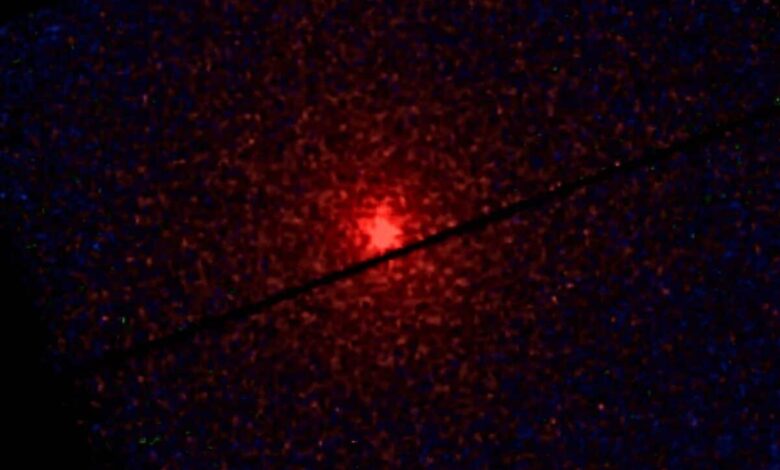
A glowing streak 400,000 kilometers long has emerged from an alien object passing through our solar system—an interstellar comet that has become the first of its kind to emit detectable X-ray radiation. The discovery comes from coordinated observations by two of the world’s most advanced X-ray space telescopes, and it’s already reshaping how researchers study deep space objects formed around other stars.
Named 3I/ATLAS, the comet is only the third confirmed interstellar object ever identified, and the first to display this kind of high-energy response to the solar wind. Its intense X-ray glow offers a rare opportunity to study gases—particularly light elements like hydrogen and nitrogen—that normally escape detection in traditional observations.
Unlike 1I/ʻOumuamua, which passed silently and left no tail, 3I/ATLAS is active and radiating. These emissions allow scientists to analyze an alien body with unprecedented detail before it disappears into the dark.
X-Ray Telescopes Detect Energy Plume from 250,000 Miles Away
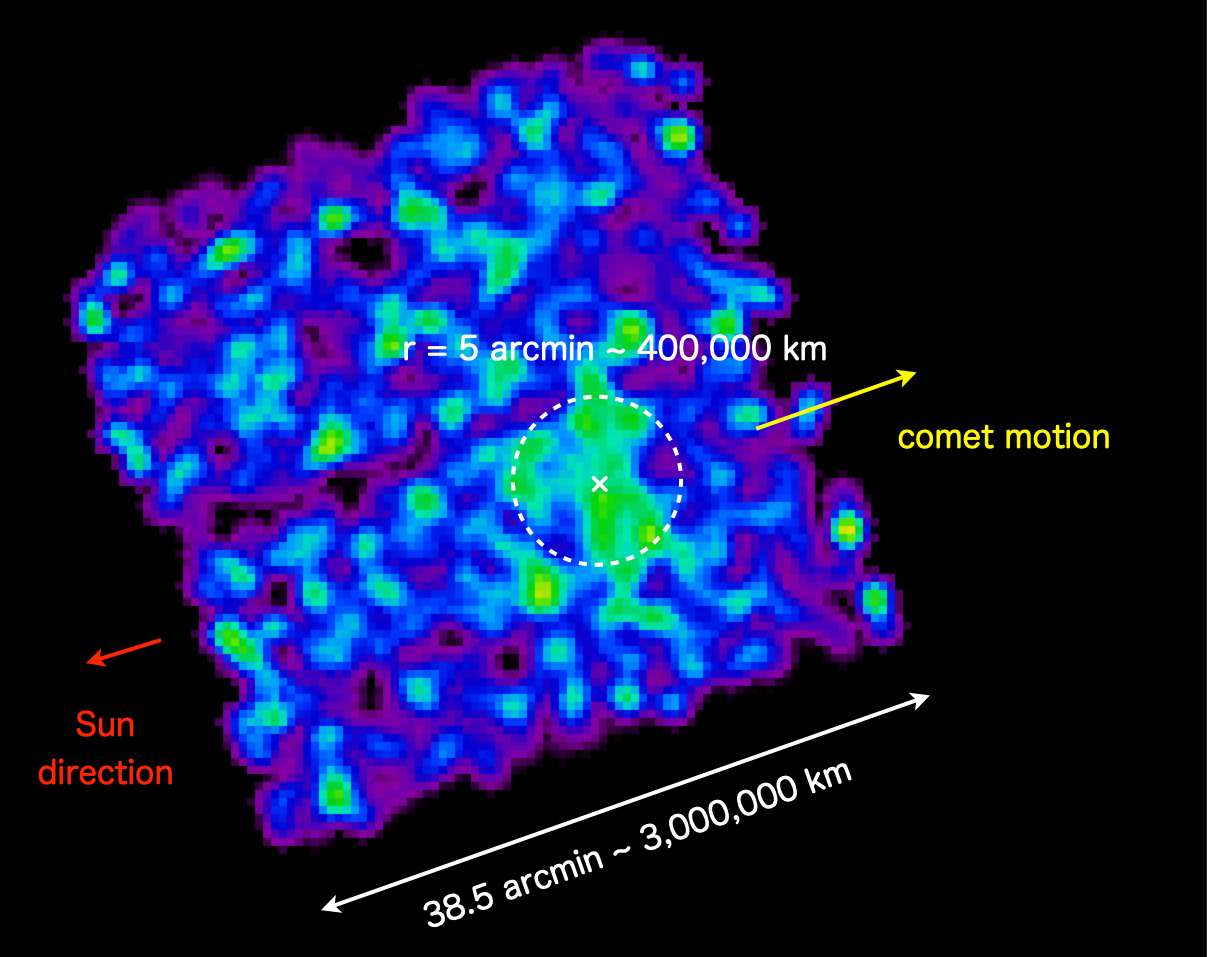
Between November 26 and 28, Japan’s XRISM (X-Ray Imaging and Spectroscopy Mission), in partnership with NASA and ESA, observed 3I/ATLAS for more than 17 hours using its Xtend soft X-ray imager. It recorded a dramatic halo of X-ray emission extending about 250,000 miles—roughly the distance from Earth to the Moon.
The glow didn’t originate from the comet itself. It formed through charge exchange, a process where solar wind ions collide with neutral gases released from the comet’s nucleus. This interaction strips electrons from the gas and releases X-ray photons across a wide field.
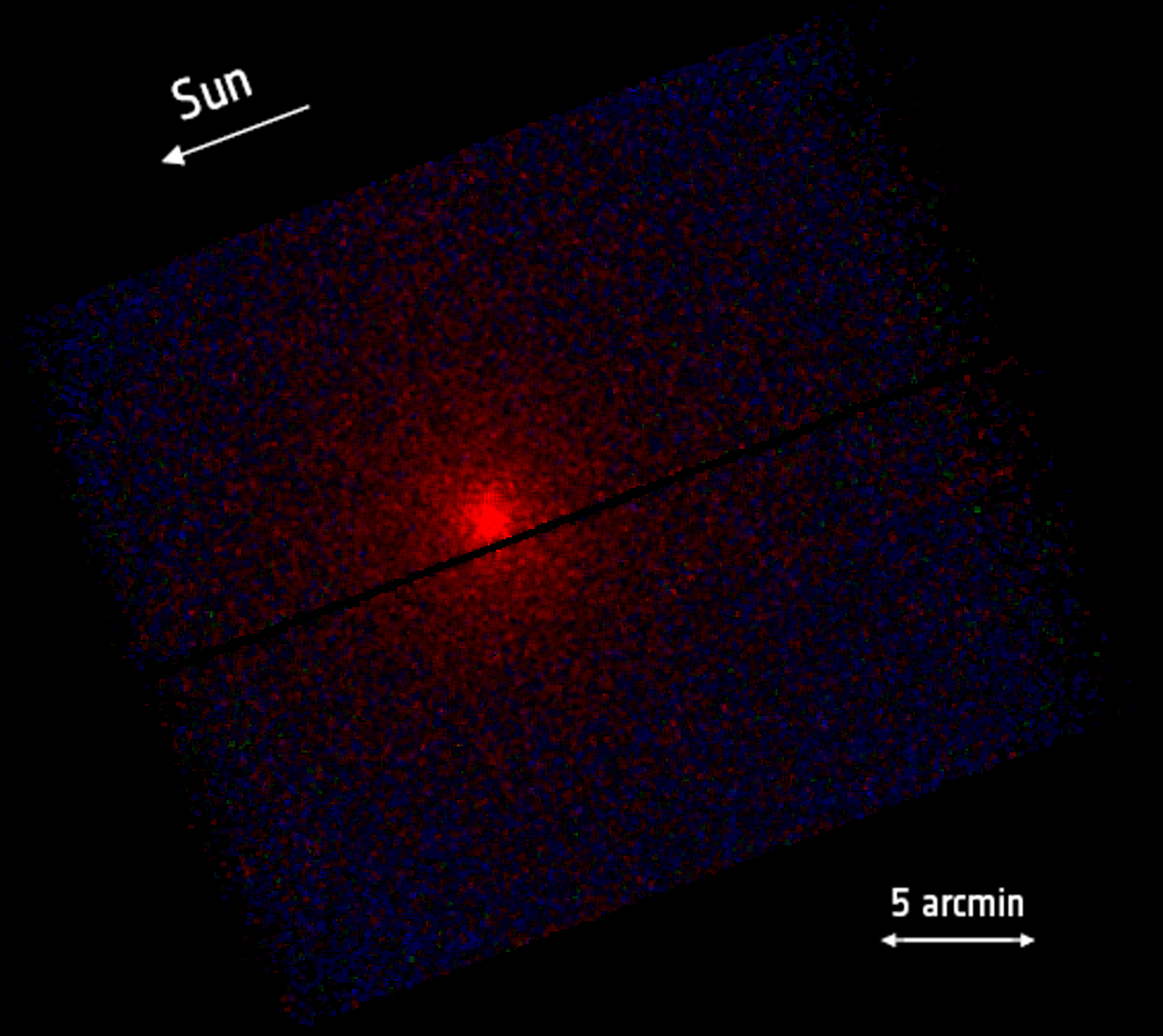
On December 3, ESA’s XMM-Newton observatory followed up with a 20-hour observation using its EPIC-pn camera, its most sensitive X-ray detector. The resulting image revealed a vivid red glow at the nucleus, framed by fainter gradients representing less energized regions—effectively a map of solar wind activity within the comet’s coma.
These X-rays trace elements such as carbon, oxygen, and nitrogen, and unlike optical or infrared instruments, they can also pick up molecular hydrogen and atomic nitrogen, which are nearly invisible in other parts of the spectrum. ESA officials emphasized that this data reveals gases otherwise “almost invisible to optical and ultraviolet instruments.”
Decoding Alien Chemistry with X-Ray Astronomy
Earlier observations by the James Webb Space Telescope and NASA’s SPHEREx mission had already detected common cometary compounds—carbon monoxide, carbon dioxide, and water vapor. But XRISM’s and XMM-Newton’s X-ray data now adds an entirely new layer of information: the presence of lighter, more volatile gases not captured by traditional telescopes.
This capability is central to understanding how interstellar comets may differ from those formed in our own planetary neighborhood. Some researchers have previously proposed that 1I/ʻOumuamua could have been made of exotic ices, such as pure molecular hydrogen, though the lack of a visible tail left this idea unconfirmed.
Now, 3I/ATLAS provides a testable case. Its active coma and extended X-ray halo suggest a rich and dynamic mix of materials, and the data could help determine whether this interstellar visitor shares characteristics with solar system comets—or represents a more primitive class of cosmic object.
The XRISM data also contains spectral signatures of carbon, nitrogen, and oxygen, which will allow researchers to identify how these elements are distributed in the comet’s gaseous envelope and how they interact with high-energy radiation near the Sun. This gives astronomers a direct look into alien chemistry under solar system conditions.
Interstellar Objects May Be More Complex than We Thought
Comet 3I/ATLAS was first identified in 2023 and confirmed as interstellar by its hyperbolic orbit and escape trajectory, which show it’s not gravitationally bound to the Sun. These orbital properties make it a one-time visitor and separate it clearly from comets originating in the Oort Cloud or Kuiper Belt.
While previous interstellar visitors like ʻOumuamua and 2I/Borisov generated interest, both presented observational challenges. ʻOumuamua lacked a visible coma and left no outgassing signature, while Borisov passed quickly and offered a narrow observational window. By contrast, 3I/ATLAS is bright, active, and accessible, offering scientists a sustained look at material formed in an entirely different star system.
This kind of visibility also allows cross-spectrum coordination. X-ray telescopes can be paired with infrared and radio observatories to build a three-dimensional view of the comet’s structure, its gas composition, and how it interacts with solar wind pressure and radiation.
A Fleeting Chance to Study a Visitor from Another Star
3I/ATLAS will make its closest approach to Earth on December 19 and will then continue on its outbound journey into the interstellar void. No spacecraft is in position to intercept it, and its speed ensures it won’t be seen again. That puts pressure on observatories worldwide to capture as much data as possible now, across all wavelengths.
Researchers are already compiling datasets from X-ray, optical, and infrared telescopes, using the combined information to understand the thermal structure, gas dynamics, and solar wind interactions at play in this foreign object. Once processed, this material will serve as a template for identifying and studying future interstellar objects.
The ongoing campaign around 3I/ATLAS represents one of the best chances to study the building blocks of planetary systems beyond our own. And through X-ray astronomy—still an underutilized tool in planetary science—researchers now have a powerful method to probe what lies hidden behind the glow of ordinary light.
Interstellar Comet 3I/Atlas Unleashes Massive X-Ray Glow Stretching 250,000 Miles Through Space
Discover more from GTFyi.com
Subscribe to get the latest posts sent to your email.