This Island Spider That Deletes Half Its DNA, and Scientists Say It Shouldn’t Be Possible

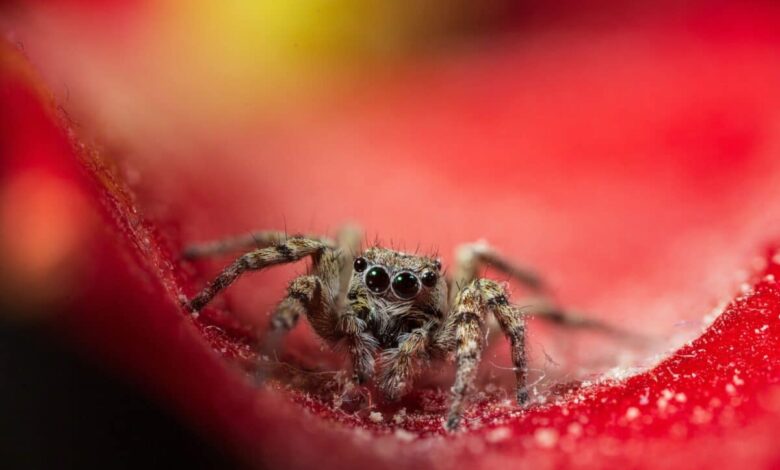
A spider species found only on the Canary Islands is forcing scientists to rethink long-held assumptions about how evolution works. Rather than expanding its genome like most island species, Dysdera tilosensis has reduced its DNA content by half, an unprecedented case of genome downsizing in an animal.
The findings, recently published in Molecular Biology and Evolution describe how this island spider defies expectations by maintaining high genetic diversity while carrying a genome significantly smaller than that of its mainland relatives.
The research was led by a team from the University of Barcelona, in collaboration with institutions including the Spanish National Research Council (CSIC) and the University of Neuchâtel. Using high-quality sequencing methods, the scientists compared two closely related spiders. D. tilosensis, which lives only on Gran Canaria, and Dysdera catalonica, a continental species found in Catalonia and southern France.
Island Genome Half the Size of Its Mainland Cousin
The most striking result from the study was the scale of the genome reduction. According to the study, D. catalonica has a genome of about 3.3 billion base pairs, while D. tilosensis carries just 1.7 billion, almost exactly half. Even more surprising, the smaller genome of D. tilosensis was not accompanied by reduced genetic diversity. As Professor Julio Rozas, who led the project, explained:
“Despite having a smaller genome, the species from the Canary Islands shows greater genetic diversity.” This contradicts the usual assumption that small, isolated populations, like those found on islands, experience genetic bottlenecks and a drop in diversity due to limited founding individuals.
This contradicts the usual assumption that small, isolated populations, like those found on islands, experience genetic bottlenecks and a drop in diversity due to limited founding individuals. The chromosome numbers also differed between the two species. D. catalonica has four autosomes and one X sex chromosome, while D. tilosensis has six autosomes plus the X.

A Counterexample to Accepted Evolutionary Patterns
The findings present a paradox in the field of evolutionary biology. Traditionally, it has been believed that island species, due to reduced selection pressure, accumulate non-functional DNA and expand their genomes over time. But the case of D. tilosensis shows the reverse.
As explained by Professor Sara Guirao, one of the study’s senior researchers, genome analysis and flow cytometry measurements indicate that the common ancestor of both spiders had a genome close to 3 billion base pairs. This confirms that D. tilosensis’s smaller genome is a derived trait, the result of downsizing after the species arrived on the Canary Islands.

In evolutionary theory, genome shrinkage is much less common than expansion, especially over a short timescale. What makes this case particularly unusual is that it occurred in an animal species and happened in a relatively recent evolutionary window. Doctoral researcher Vadim Pisarenco added that the discovery challenges assumptions about the founder effect.
“We observed the opposite: island species have smaller, more compact genomes with greater genetic diversity,” he said in the SciTechDaily article.
Streamlining, Not Adapting
One of the key takeaways from the study is that natural selection may have remained strong in the island population. Rather than adapting by adding new DNA, the spider may have undergone a process of genomic streamlining, eliminating repetitive sequences that had no clear function.
According to the researchers, this points to non-adaptive mechanisms, that is, the genome became smaller not as a direct survival strategy but due to purifying selection that efficiently removed redundant or non-useful DNA. The team suggests that the D. tilosensis population may have remained large and stable for a long time after colonizing Gran Canaria.
This Island Spider That Deletes Half Its DNA, and Scientists Say It Shouldn’t Be Possible
Discover more from GTFyi.com
Subscribe to get the latest posts sent to your email.