You may be surprised to learn about the true story of the Radium Girls, a group of young women who worked in factories during the early 20th century, painting watch dials with glow-in-the-dark radium paint. This seemingly innovative and exciting job came at a horrific cost, as the women faced severe health issues from radiation exposure. Their plight not only highlighted the dangers of unchecked industrial practices but also led to significant changes in worker safety regulations. Join us as we explore the harrowing journey and lasting legacy of the Radium Girls.
The Discovery of Radium
While researching radioactive materials in the late 19th century, Marie Curie and her husband Pierre stumbled upon radium, an element that emitted a striking, visible glow. This rare discovery, derived from uranium ore, piqued the scientific and public interest, leading to its eventual commercialization in various products. You may find that this glowing element, once hailed for its potential, would later become synonymous with tragedy as its true dangers were uncovered.
The Science Behind Radium
About the time of its discovery, radium was known for its remarkable properties, such as high radioactivity and the ability to emit both alpha and gamma rays. These characteristics intrigued scientists and entrepreneurs alike, as they believed it could revolutionize medicine and industry.
Early Applications and Popularity
Between the late 1900s and the early 1920s, radium experienced a meteoric rise in popularity, becoming embedded in various consumer products, from cosmetics to household items.
But this fervent embrace of radium came with a dangerous ignorance of its devastating effects. You likely recognize radium-infused products like radium-laced water and glow-in-the-dark paints, which were marketed for their supposed health benefits and novelty. This period marked a time of rapid commercialization, as people became captivated by the mystical allure of radiant goods without understanding the severe health risks posed by prolonged exposure. As you probe deeper into the history of radium, you’ll uncover the dark side of a trend that originally seemed so promising.
The Rise of the Radium Dial Industry
Assuming you were living in the early 20th century, you would be witnessing an unprecedented boom in the watch and clock industry, with the rise of the radium dial industry at its forefront. The innovation of using radium paint to create luminous dials transformed timekeeping, making it more efficient and appealing to consumers eager for night visibility. However, this glowing invention came at a catastrophic price, as the dangers of radium exposure remained hidden from both workers and the public.
The Dial Painting Process
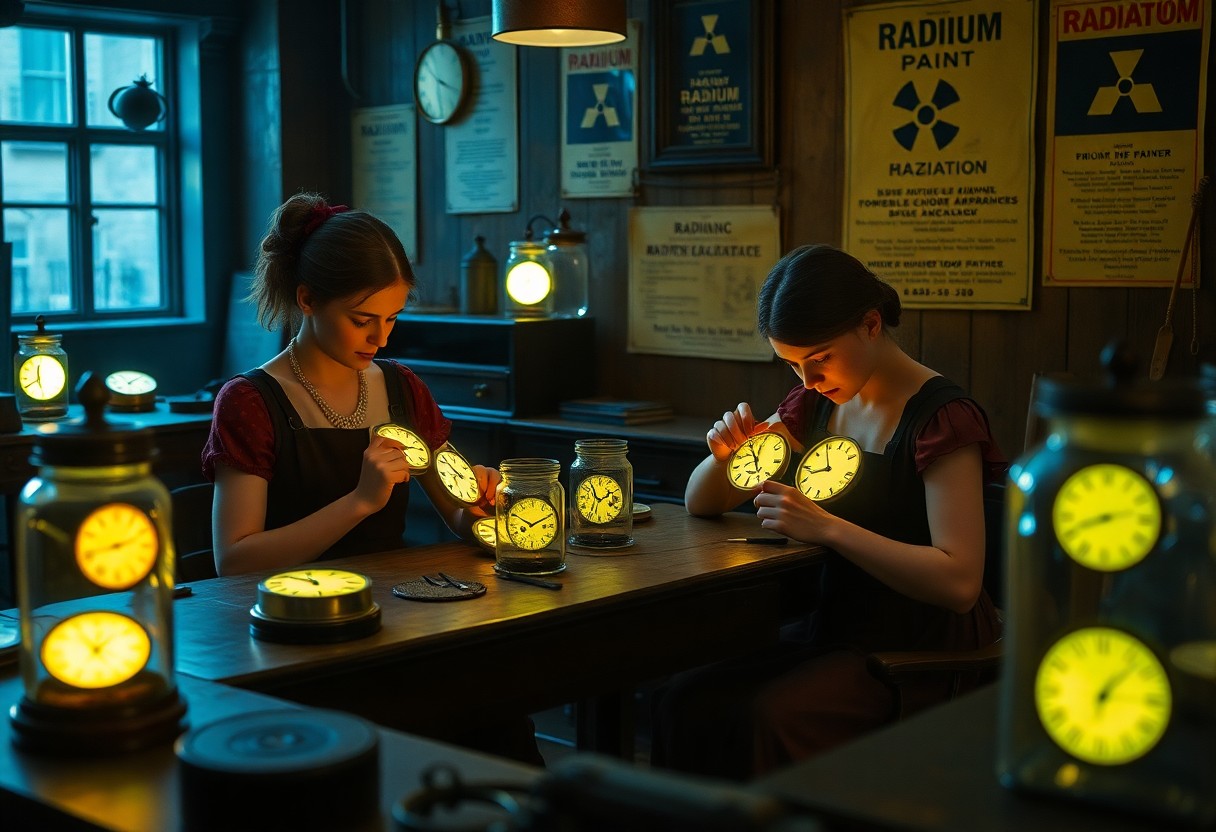
Dial painting involved the meticulous application of a radioactive paint that contained radium, which glowed in the dark. Artisans would use fine brushes to apply the paint to watch dials, often relying on their lips to create a fine point for precision. Despite the inherent risks associated with handling radium, the dial painting process was considered a delicate art and a source of pride for the workers.
The Workforce: Young Women in Danger
On the factory floor, young women comprised the majority of the workforce, drawn by the promise of good wages and stable employment during a time when opportunities were limited.
Indeed, the workforce comprised many young women, often as young as 14, who were excited about their roles in the radium dial industry. The jobs were seen as lucrative and dignified, but these girls were unknowingly exposing themselves to life-threatening levels of radiation. As they painted radium onto watch dials, the women shared tips and techniques, including the dangerous habit of using their mouths to shape brushes. This practice not only endangered their health but also their futures, as many would later suffer from serious illnesses linked to radium exposure. Tragically, the very glow that fascinated consumers would ultimately illuminate the shadows of despair in these women’s lives.
The Health Impacts of Radium
One of the most alarming aspects of the Radium Girls saga is the severe health impacts that stemmed from exposure to radium. As workers painted watch dials with luminous paint, they unwittingly absorbed the radioactive material, which had devastating consequences for their bodies over time. The symptoms they experienced, often brushed off by medical professionals, reveal a tragic reality about the dangers of radium that plagued these women for decades.
Initial Symptoms and Misdiagnosis
Misdiagnosis was rampant among the Radium Girls, as their initial symptoms often mimicked less serious ailments. Pale complexions, intermittent fevers, and joint pain were commonly dismissed as fatigue or even anemia, delaying critical medical interventions. You might find it shocking to learn that the very doctors who treated these women were unaware of the severe dangers posed by radium exposure, further complicating their health journeys.
The Long-Term Effects and Cancers
Misdiagnosis of symptoms led to significant long-term effects, including various forms of cancer that ravaged the lives of the Radium Girls. Over the years, many developed osteosarcoma, a vicious bone cancer, along with other life-threatening health conditions. You should take note of the tragic reality that the radium ingestion resulted not only in physical suffering but also in the loss of countless lives, illuminating the far-reaching consequences of this once-celebrated invention.
Another tragic outcome of radium exposure was the development of serious health conditions that emerged years later. The relentless nature of radium decay meant that, as time passed, the cumulative effect of this toxic substance manifested in devastating ways. Many survivors faced long-term complications, including disfigurement and debilitating pain, while their struggles ignited public outrage and called for stronger labor rights and safety regulations. This harrowing chapter serves as a stark reminder of how unchecked industrial practices can endanger lives.
The Fight for Justice
All the efforts of the Radium Girls began to take shape as they fought for justice against the companies that had poisoned them. Despite facing overwhelming corporate resistance, these brave women, often suffering from severe health issues, were determined to expose the truth and hold those responsible accountable. Their fight not only aimed to secure compensation for their pain but also to ensure that such corporate negligence never happened again.
Legal Battles and Public Awareness
On the legal front, the Radium Girls faced daunting challenges, as the companies wielded immense power and resources to undermine their claims. As reports of their struggles surfaced in the media, public awareness grew, fueling support for their cause and putting pressure on the corporations involved. This created a pivotal moment in the fight for workers’ rights, prompting many to stand against corporate malfeasance.
The Role of Activism and Advocacy
Legal advocacy played a significant part in amplifying the voices of the Radium Girls.
Another pivotal aspect of their fight was the emergence of strong activism and advocacy that rallied public support. Grassroots movements along with legal teams worked diligently to bring attention to the health risks faced by the women, paving the way for legislative reforms. You would see how advocates organized rallies and disseminated information, significantly raising awareness about the dangers of radium exposure. Their tireless effort contributed to establishing better workplace safety standards, ensuring that future generations of workers were protected from similar fates. This grassroots activism ultimately transformed public perception and laid the groundwork for more significant changes in labor laws.
The Legacy of the Radium Girls
For many, the story of the Radium Girls represents a moment of significant change, illustrating the extreme dangers of unchecked industrial practices. Their sacrifices led to a rising awareness of worker safety and the ethical responsibilities companies hold toward their employees. As you reflect on their legacy, consider how their fight for justice has shaped labor rights and public health standards today.
Changes in Labor Laws and Industrial Safety
By shedding light on the horrific experiences of the Radium Girls, labor laws began to transform. Your understanding of workers’ rights has evolved, emphasizing the need for safer working environments and stringent safety regulations. This historical case underlines the importance of advocacy in effecting lasting change within industries.
Influence on Public Health Regulations
Changes in public health regulations were directly influenced by the Radium Girls’ plight. Their struggle highlighted the devastating effects of hazardous materials and sparked a push for stricter health guidelines. You should acknowledge how their legacy is a cornerstone in the establishment of protective measures that aim to prevent similar tragedies in today’s workplaces.
At its core, the Radium Girls’ battle empowered you to advocate for stronger health protections. Their tragic fates prompted lawmakers to develop stringent public health policies and regulations, ensuring that toxic substances like radium are better controlled. This historical examination affirms your role in promoting awareness of workplace safety, ultimately striving for a healthier world.
The Continued Relevance of Their Story
Despite the passage of time, the harrowing experiences of the Radium Girls remain strikingly relevant today. Their fight against corporate negligence and the quest for justice serves as a sobering reminder of the importance of workplace safety regulations. As you navigate contemporary issues in various industries, you must consider how the lessons learned from this dark chapter can inform your understanding of ethical practices and the responsibility businesses have to protect their employees.
Modern Parallels in Industry
An increasing number of incidents in modern industries echo the experiences of the Radium Girls. Today’s workers continue to face health risks due to inadequate safety measures and disregard for science. As you engage with these narratives, it’s vital to apply the lessons learned from the past to advocate for better protection and accountability in your own workplace.
Commemorating the Lives Lost
Above all, the stories of the Radium Girls deserve recognition and respect. You have the power to honor these individuals by supporting efforts that aim to educate others about their tragic fate, while advocating for reforms that prevent similar injustices in the future.
Parallels can be drawn between the Radium Girls and modern-day workers who encounter hazardous environments. The memorials and educational initiatives surrounding the Radium Girls highlight the importance of workplace safety and the dangers of corporate negligence. You can contribute to this remembrance by participating in discussions and supporting campaigns aimed at honoring their legacy. It’s a powerful way to ensure that the voices of those lost are not forgotten and that their stories inspire ongoing efforts toward meaningful change in occupational health and safety regulations.
To wrap up
Conclusively, as you examine into ‘The Radium Girls – The Deadly Truth Behind a Glowing Invention,’ you gain insights into the harrowing experiences of those women who faced grave health consequences due to corporate neglect. Their struggle for justice not only highlights the dangers of industrial oversight but also serves as a powerful reminder of the importance of safety regulations in your own life. You emerge with a deeper understanding of the past and its implications for present and future workplace safety, advocating for the rights of individuals in the face of powerful entities.
Discover more from GTFyi.com
Subscribe to get the latest posts sent to your email.