Archaeologists Unearth a Mysterious Viking Grave with Scallop Shells Found in an Unexpected Location

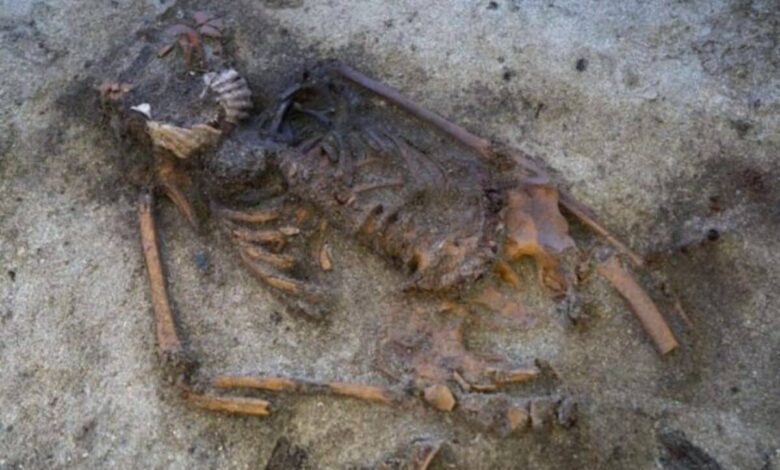
A Viking-age burial discovered in Trøndelag, Norway, has left archaeologists baffled by its unique elements. The most striking feature of the find is the placement of two scallop shells near the deceased woman’s mouth, a practice never before seen in Viking-era graves. The burial was first uncovered by metal detectorist Roy Søreng, who found a bronze brooch typical of the Viking era.
Experts from the Norwegian University of Science and Technology (NTNU) quickly arrived at the site, revealing the remains of a woman, likely from the 800s. Given the acidic soil of Norway, which typically causes rapid degradation of organic material, the well-preserved condition of the grave is considered an exceptional find.
Scallop Shells: An Unknown Viking Symbol
According to Raymond Sauvage, an archaeologist at NTNU and the head engineer at the museum’s Department of Archaeology and Cultural History, the shells were positioned with the external side facing outward and the hinge lines pointing to the woman’s cheekbones.
“The most remarkable thing is two scallop shells placed at the dead woman’s mouth. This is a practice that is not previously known from pre-Christian graves in Norway. We don’t yet know what the symbolism means,” he explained.
This is a highly unusual placement and has no known precedent in Viking-age burial customs. While scallop shells have held symbolic meanings in other cultures, such as fertility in Ancient Greece and Rome, they are not associated with Viking rituals.

A Remarkable Find: Well-Preserved Viking Remains
The discovery is particularly significant because Viking graves are typically poorly preserved due to the acidic conditions of Norwegian soil. However, this burial’s exceptional preservation has allowed archaeologists to identify several key artifacts, including two oval brooches and a ring buckle. As stated by the NTNU University Museum, these items are typical of Viking clothing and jewelry from the 800s.
“The Viking Age grave contains what we believe to be a woman, buried with a typical Viking Age costume and jewelry set from the 800s. This indicates that she was a free and probably married woman, perhaps the mistress of the farm,” he noted.

The Search for Further Connections
As indicated by Sauvage, the combination of clothing accessories and jewelry points to a well-established burial ritual for women in Viking Norway during this century. The presence of these items, in contrast to the unusual scallop shells, highlights the complexity and variability of Viking-era burial practices, which continue to surprise researchers even today.
The grave is located near another Viking burial site, which dates back to the 700s. The archaeologists are now conducting further analysis on the burial, including DNA testing and the study of the surrounding environment, in hopes of uncovering more about the woman’s identity and her possible connection to other burials in the region.
“We will examine the skeleton, preserve the objects, and take samples for dating and DNA analysis,” Sauvage explained. The goal is to learn more about the person and about possible kinship to the previous find from the same place.”
Archaeologists Unearth a Mysterious Viking Grave with Scallop Shells Found in an Unexpected Location
Discover more from GTFyi.com
Subscribe to get the latest posts sent to your email.


