Scientists Have Just Found a 7,000-Year-Old Mysterious Stone Wall Under the Ocean

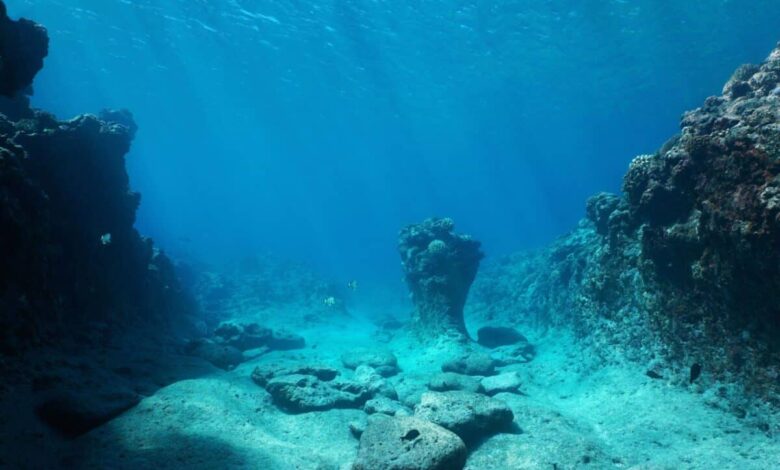
A prehistoric stone wall, submerged almost 30 feet beneath the waves off the coast of France, has uncovered secrets that could rewrite what we know about ancient civilizations. This 7,000-year-old discovery may hold the key to the first concrete evidence of a sunken city. Found near the Ile de Sein in Brittany, the ruins lie in a region filled with lore about the fabled City of Ys, a once-great city believed to have been swallowed by the sea.
A Prehistoric Monument Beneath the Waves
Marine archaeologists, working with data from radar scans, identified the submerged wall off the coast of Ile de Sein. The structure, which includes large monolithic stones, was first spotted by geologist Yves Fouquet while studying depth charts of the ocean floor. Using LIDAR technology, the team uncovered 11 human-made structures, suggesting a complex architectural design. These ruins, which date back to the Mesolithic period, are likely the remnants of a fish weir or a dyke, used either for trapping fish or protecting early settlements from rising sea levels.

A study published in the International Journal of Nautical Archaeology suggests that the size and design of the structures, including monoliths up to 10 feet tall, point to a highly organized society with advanced construction skills. The walls would have needed to withstand the force of the ocean’s tides, indicating that their creators were not only skilled in quarrying and transporting large stones, but also in managing coastal environments.
An Ancient Seafloor Landscape
The coastal landscape in which these structures were built has drastically changed over millennia. During the period between 5,800 and 5,300 BCE, when the wall is believed to have been constructed, the sea level was much lower, and human settlements would have been far from the shore.

As the sea level gradually rose, what was once dry land became submerged, leaving behind only these stone remnants. Fouquet notes that such sites, once thought to be inaccessible.
“Due to the difficulties in accessing these sites (strong tidal currents, high hydrodynamic conditions, seaweed cover), little archaeological work has been carried out in the deep areas of the Brittany coast,” he explained.
This lack of research has left much of the region’s early human history obscured, with few artifacts from the Mesolithic period recovered from the ocean floor.
The City of Ys: Myth or History?
For centuries, the people of Brittany have told tales of the City of Ys, a mythical city said to have sunk beneath the waves in the Bay of Douarnenez. According to local legend, the city was once a thriving metropolis, but was lost due to the arrogance and greed of its rulers.

The discovery of this submerged structure has led some to wonder whether the myth of Ys could have been inspired by actual events, long buried beneath the ocean. Fouquet and his team suggest that the ruins could provide a link between myth and history.
“The discoveries […] allow us to question the origin of the history of the city of Ys,” he stated, “not from the historical legends and their numerous additions, but from scientific findings that may be at the origin of this legend.”
While the exact nature of the ruins remains uncertain, the connection between this newfound structure and the ancient lore is compelling. Whether or not the sunken wall is directly tied to the legendary city, it adds another layer of mystery to the rich folklore of the region.
Scientists Have Just Found a 7,000-Year-Old Mysterious Stone Wall Under the Ocean
Discover more from GTFyi.com
Subscribe to get the latest posts sent to your email.